









WarmtelinQ drills longest heat transmission pipeline beneath Nieuwe Maas
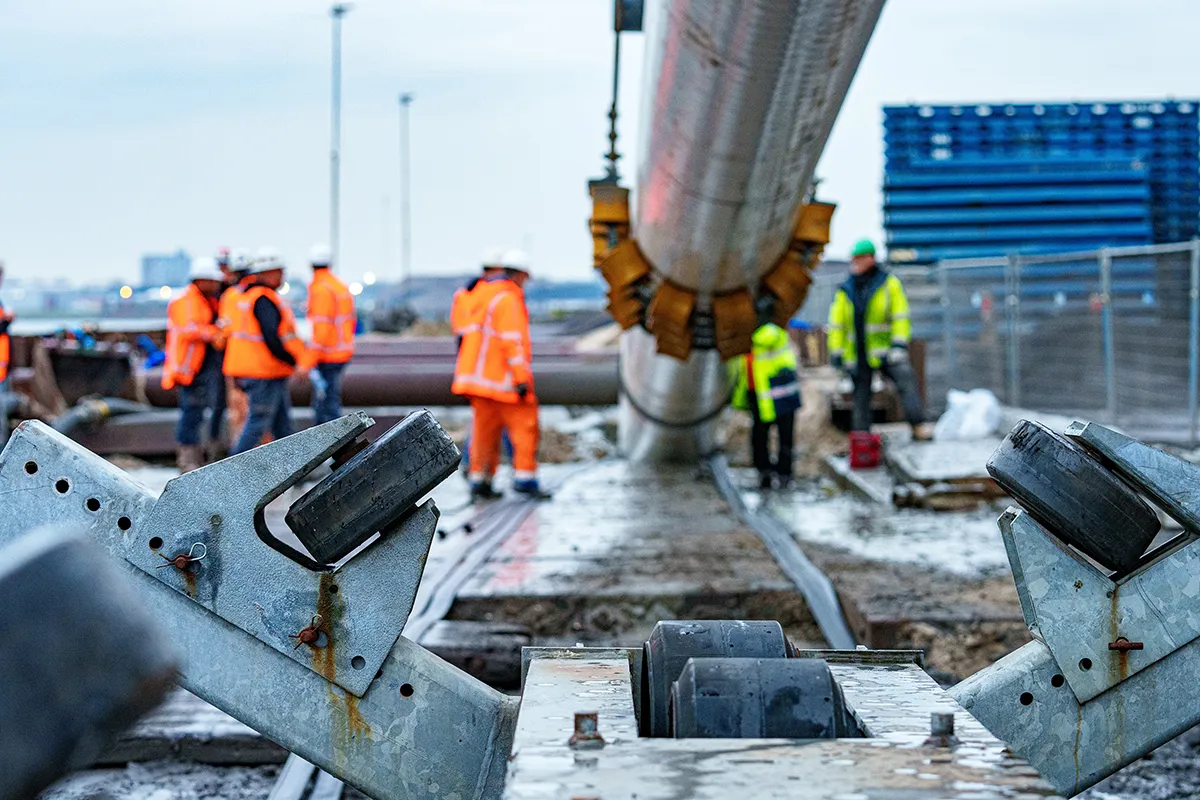
This week, WarmtelinQ is using directional drilling to install a long heat transmission pipeline beneath the Nieuwe Maas. The pipeline will run beneath the river, from Vondelingenplaat to Vlaardingen. At 1,039 metres, it is more than a kilometre long. It is one of the longest boreholes WarmtelinQ has carried out. The pipeline is intended to supply residual heat to South Holland.
The transmission pipeline is part of WarmtelinQ’s work on an underground heat transmission system that will use heat from the Port of Rotterdam to provide sustainable heating for 120,000 homes and businesses in South Holland. Heat that was previously wasted will get a second life thanks to WarmtelinQ.
Cooled residual heat
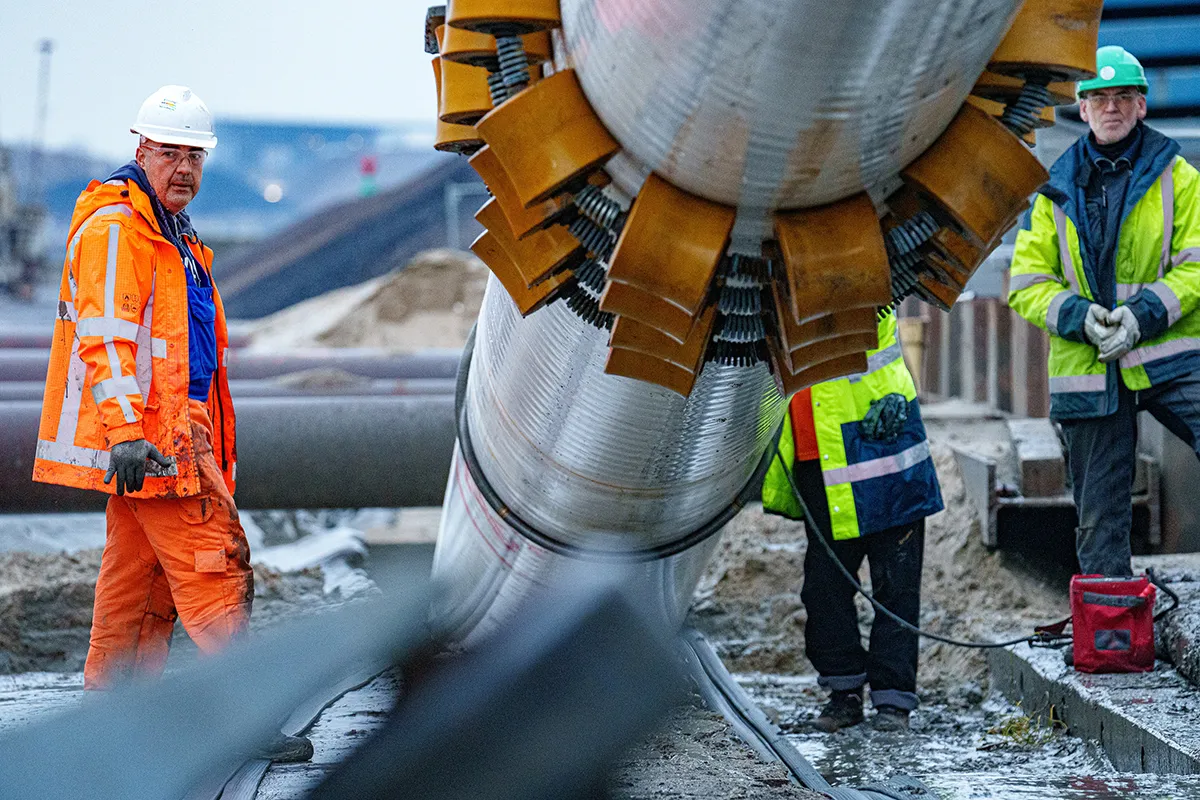
A month earlier, in November, WarmtelinQ also drilled a transmission pipeline beneath the Nieuwe Maas. This is the return pipeline. It carries the cooled residual heat back to the starting point, where it is reheated for further use. The pipeline being installed this week will transport residual heat at the right temperature for use, more than 120 degrees, to its destination: homes and businesses in South Holland.
Residual heat promotes energy independence in the Netherlands. It comes from sources close to the people and businesses using it, rather than having to be brought in from elsewhere in the world. Residual heat is home-grown energy and contributes to energy security. It also reduces dependence on gas and saves CO2.
900 millimetres
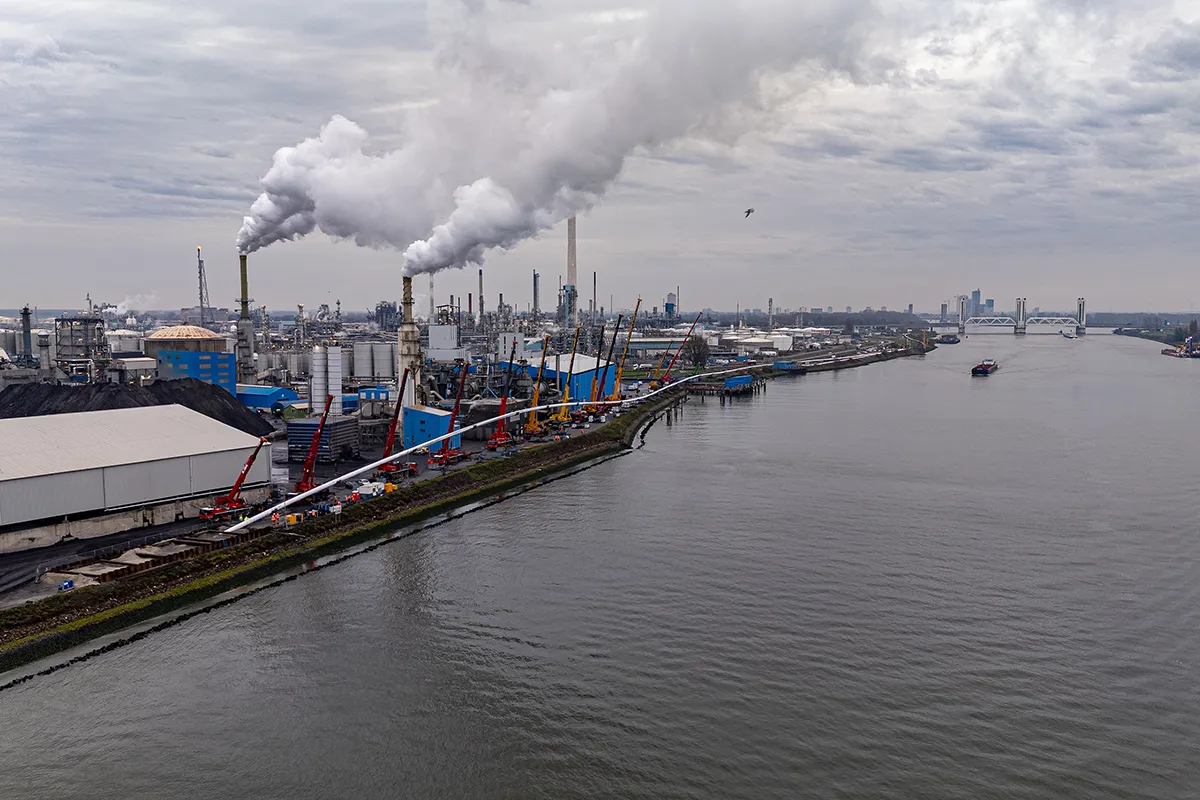
The heat transmission pipeline passes beneath the Nieuwe Maas at a depth of about 40 metres. It has a diameter of 900 millimetres. The pipeline is pulled into place at a rate of 150 metres per hour. The pulling operation takes one day in total. Ten telescopic cranes are needed to hold the pipeline in position before it enters the ground. Four mobile cranes guide the pipeline into the ground.
Unlike other directional drilling projects, where there is enough space to weld pipelines together, space for the welding work on the bore beneath the Nieuwe Maas has to be made available in a nearby car park. The welded pipeline sections are moved 600 metres and laid out in several horizontal curves before they are prepared for drilling into the ground.
Construction work
The bore beneath the Nieuwe Maas is part of WarmtelinQ’s work between Vondelingenplaat and Vlaardingen. Construction of the Vondelingenplaat-Vlaardingen route is progressing according to plan, with work on the pipelines scheduled for completion in the third quarter of 2026.
About WarmtelinQ
The Netherlands is working hard towards a sustainable future. The development includes construction of the WarmtelinQ heat transmission network. WarmtelinQ will transport surplus heat from businesses in the Port of Rotterdam to other parts of South Holland. Heat that currently escapes into the air or water will be reused to heat 120,000 homes and businesses.
WarmtelinQ is a subsidiary of N.V. Nederlandse Gasunie.
Question about this story? Ask your question
Who worked on WarmtelinQ

Keep following this
Get an email when a new story is published. No account needed.
- ProjectWarmtelinQ
- SubjectWater infrastructure







