









Van Aalsburg pilots nature-friendly banks along the Domburgse Watergang
Text Susan Peek Image Van Aalsburg
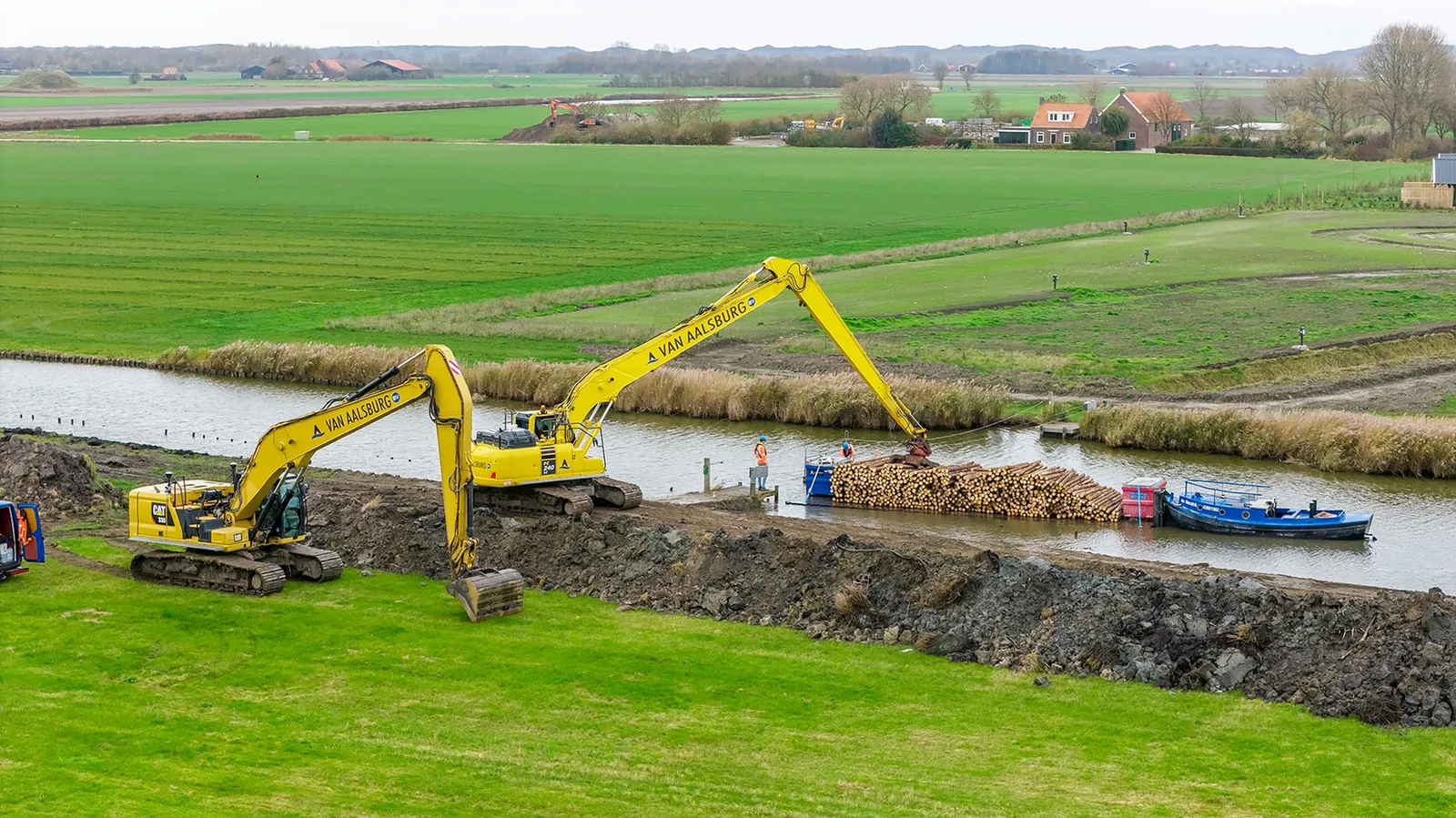
Biobased and circular working is no longer an optional ambition in water management. Water authorities are looking for solutions that demonstrably contribute to the Water Framework Directive (WFD) and are practical to implement. As part of this search, and building on the recently completed SBIR programme, Van Aalsburg is testing nature-friendly bank protection along the Domburgse Watergang, commissioned by Waterschap Scheldestromen.
Natural materials
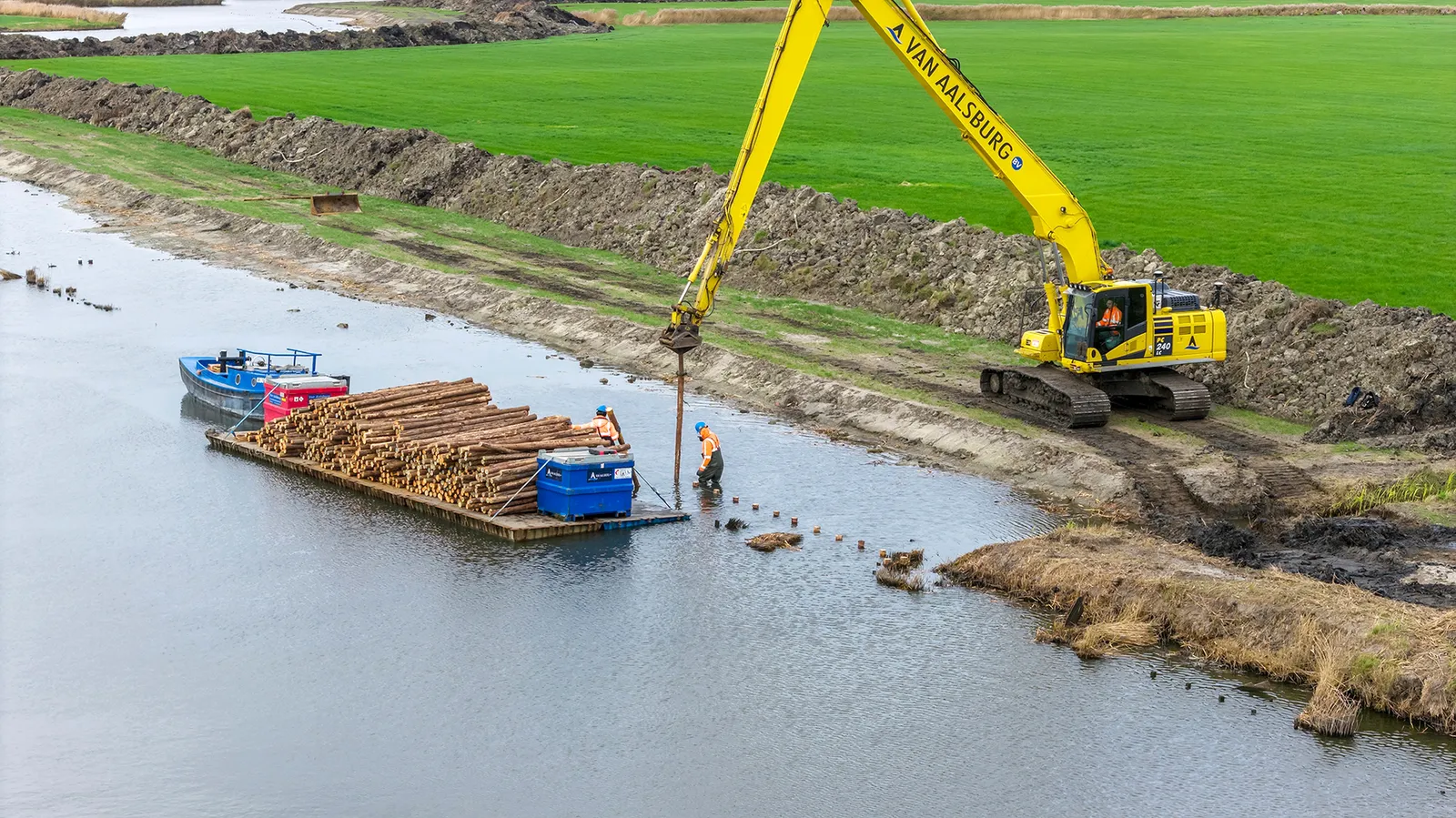
“We are testing four innovative willow bank protection structures here to find out which works best as a sturdy bank while supporting biodiversity and water quality,” says Dick van Aalsburg. One of the techniques being used is a brushwood fascine revetment, made up of two rows of stakes filled with fascines (bundles of willow branches). Jute and wool replace the conventional synthetic geotextile. “This creates a natural boundary between water and land, and takes us a step closer to better water quality and more room for flora and fauna.” If the trial is successful, Waterschap Scheldestromen intends to use these pioneering nature-friendly structures more often as an alternative to hard, man-made solutions such as plastic and concrete.
Potential WFD measure
The initial measurements are promising. The natural alternatives tested prove significantly more resistant to sand loss than many commonly used geotextiles, helping to maintain stability and prevent washout. The solution also performs well environmentally, with an Environmental Cost Indicator (MKI) value of 1.29 euros per m2. “That helps clients make an informed choice,” says Van Aalsburg. “Especially now that sustainability increasingly needs to be measurable.” Waterschap Rivierenland has already designated this type of revetment as a WFD measure. Other water authorities, including Vallei en Veluwe and Aa en Maas, also see its potential. “It is an ideal combination of a retaining structure and biodiversity. It gives a huge boost to the quality of life both below and above water,” says Van Aalsburg.
Innovation and quality
The pilot builds on Van Aalsburg’s earlier innovations, such as the fascine mattresses made with jute and wool, for which the company recently received the Cobouw Award in the Innovation category. “It drives me to see that we can combine our traditional crafts with the latest techniques to create natural solutions that improve water quality and are 100 per cent circular.”
Safety and sustainability
Safe working remains a prerequisite. Van Aalsburg has once again been certified at Safety Culture Ladder Step 3. “You can only innovate if you do so in a controlled way,” says Van Aalsburg. “For us, it always comes down to people enjoying their work and getting home safely in the evening.”
Finally, he points to a recent agreement with the Betuwe en Wind energy cooperative in Waardenburg, under which Van Aalsburg is planting willows on land around wind turbines. “It is good to see a cooperative like this looking for sustainability not only in energy generation, but also in how the landscape is managed.”
A business enquiry for Van Aalsburg BV? Get in touch
Companies in this story
Keep following this
Get an email when a new story is published. No account needed.
- ThemeLower emissions and more reuse
- SubjectWater infrastructure
- CompanyVan Aalsburg BV







