









Towards a liveable and safe dike
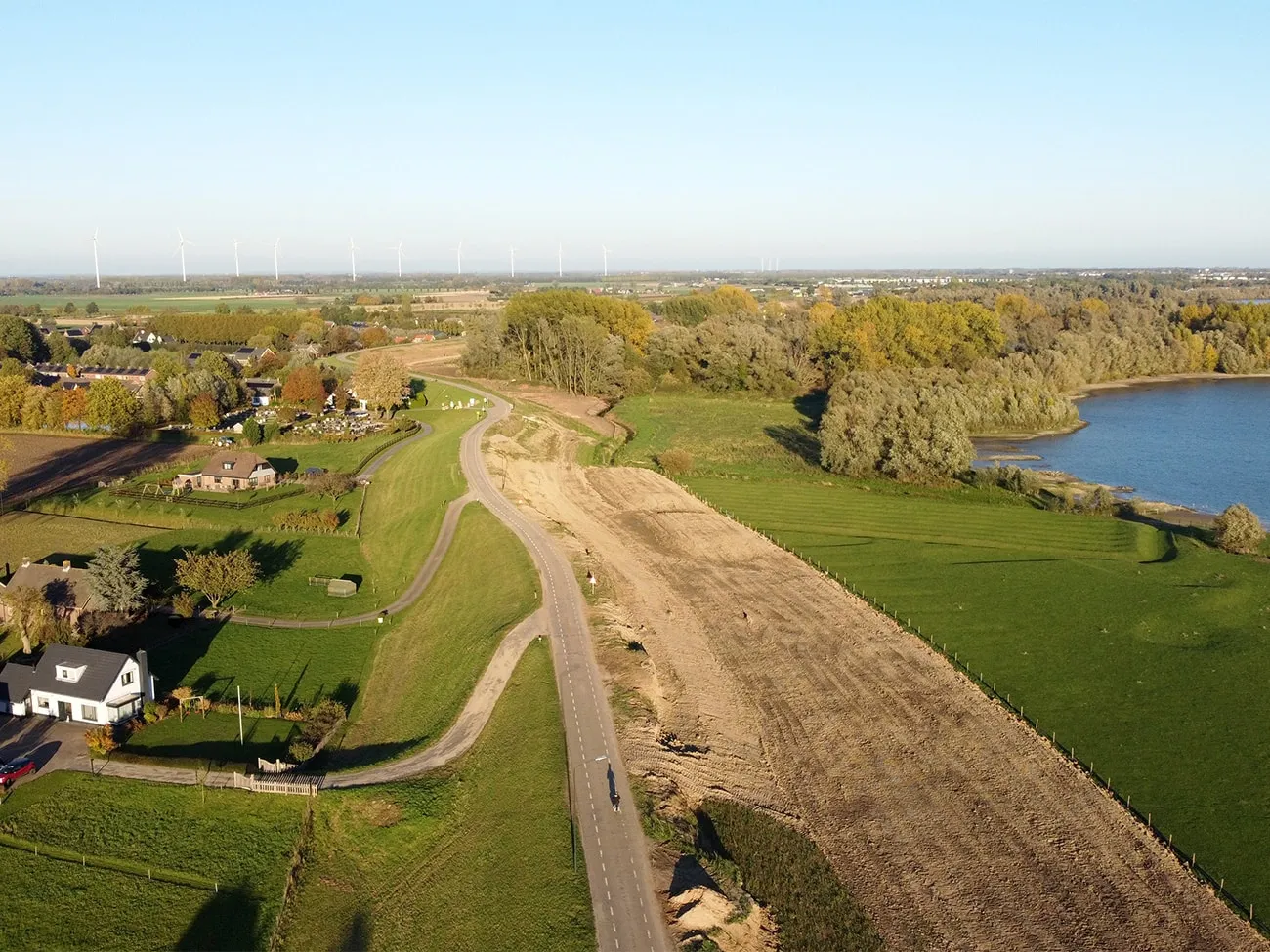
Between now and 2050, the Netherlands will carry out the largest dike reinforcement operation in its history. A total of 400 kilometres of dikes in the river region will be strengthened. The Gorinchem-Waardenburg section is one of the first projects. A new form of collaboration has been chosen for this project: an alliance between Waterschap Rivierenland and the Waalensemble contractor consortium.
To prevent disasters, Dutch dikes must meet strict safety requirements. They are assessed periodically. This assessment is unique in the world and provides an up-to-date picture of our flood safety. However, the most recent assessment round, in 2011, showed that sections of the dike along the Waal between Gorinchem and Waardenburg did not meet the new statutory safety standard. It was therefore decided to reinforce this section, which is more than 23 kilometres long, as one of the first projects.
A special collaboration
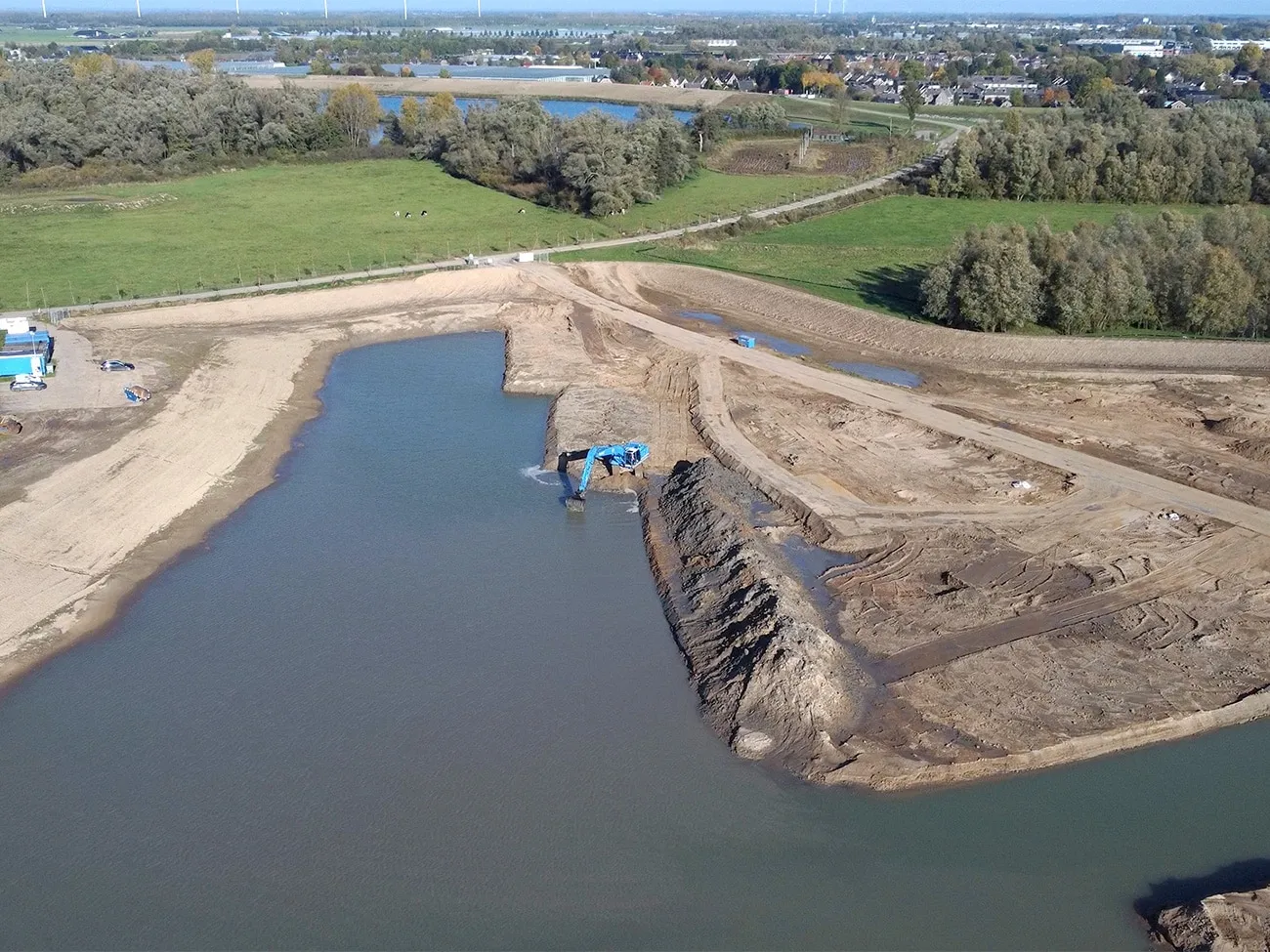
Following an extensive exploration and planning phase, work began on 7 June 2021. “The works will take five years, and the dike will meet the safety standard again in 2026,” explains Niek Ridderbos, alliance manager for the Graaf Reinaldalliantie. “We are addressing four failure mechanisms: piping, inward macro-instability, outward macro-instability and insufficient crest height. The dike reinforcement is part of the Flood Protection Programme and falls under the national Delta Programme. A special feature of this project is the collaboration between the water authority, as the client, and Waalensemble. Waalensemble comprises Heijmans, GMB and de Vries & van de Wiel, with Royal HaskoningDHV as the consultancy partner. Together, they form the Graaf Reinaldalliantie. By forming an alliance, Waterschap Rivierenland aims to make full use of the contractor’s expertise in designing this new dike and prevent the loss of knowledge at phase transitions.”
Monitoring for safety
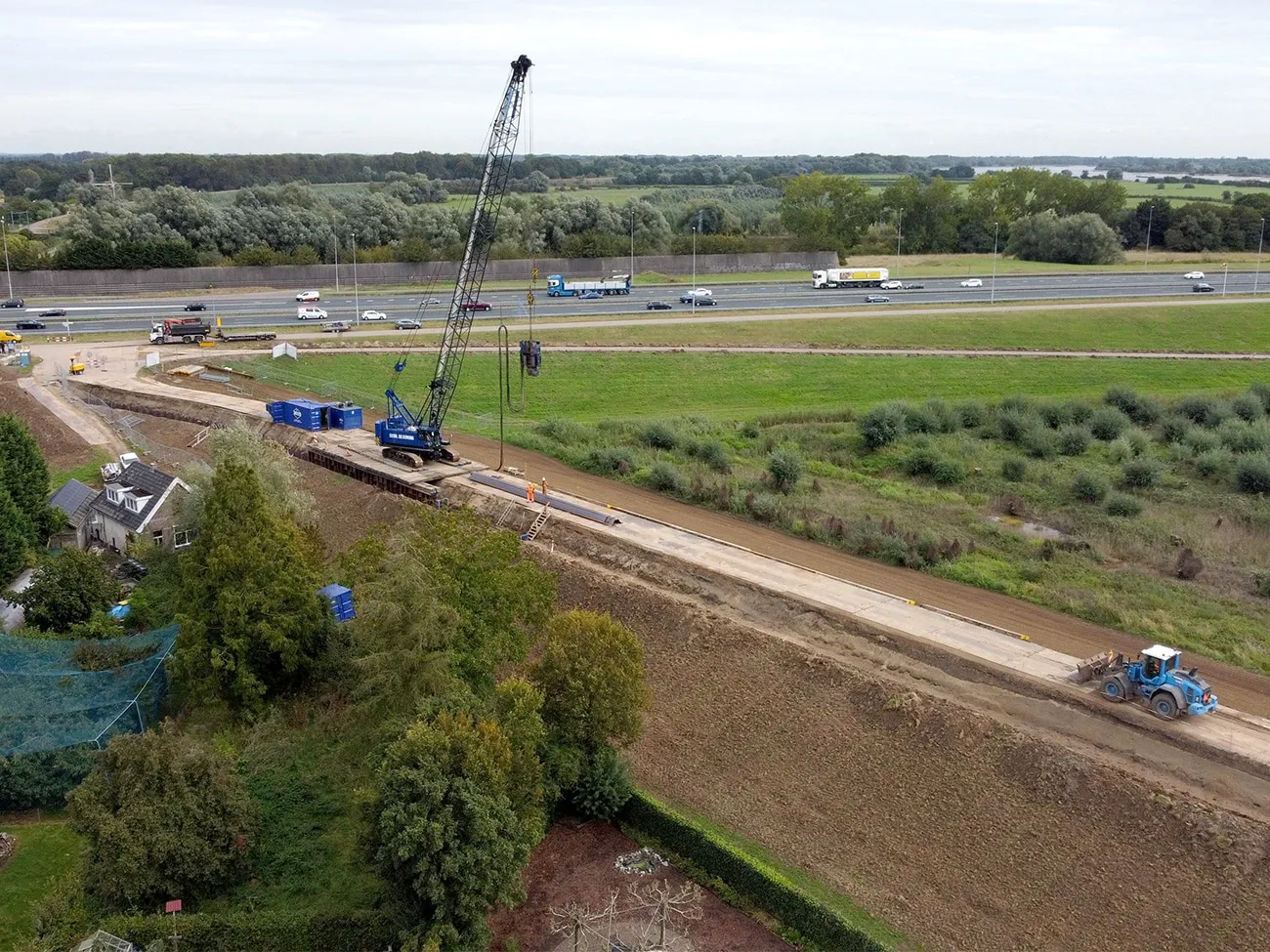
Life goes on as usual for local residents and nearby businesses while work is in full swing. This brings a number of challenges, including safety. To ensure safety, extensive monitoring and structural surveys of homes have been carried out: more than 700 homes and outbuildings stand along the dike. They were surveyed and assessed before work began in June 2021. The task took around two years. Environmental manager Max Slimmens explains why this is important. “All homes and buildings are carefully monitored during the works. This means we can intervene promptly if buildings look likely to deform. By monitoring settlement, vibration and tilt, we can keep track of whether buildings are at risk of damage and how this relates to the construction work.”
Digital tools
Monitoring homes and buildings is one of the many digital tools being used on this project. Slimmens says: “Works of all sizes are monitored and recorded. The aim is to make sure everything can be traced in the future. If a subsidence occurs somewhere along this section in a few years’ time, we will be able to use all the digital data to identify its possible cause. Other examples include automated design tools, the i-report and the BouwApp, which gives local residents and other interested parties the latest information about the works.”
Sustainability
Sustainability is another key focus. “On the one hand, the earthmoving machinery meets strict emissions standards. On the other, we are trying to use as much locally sourced soil as possible to minimise transport movements,” Ridderbos explains. “The greatest environmental impact of dike reinforcement comes from transporting soil. By extracting clay and sand from the floodplains, we also contribute to nature development.”
A liveable dike
The dike reinforcement project involves more than simply strengthening the dike. “The dike serves more purposes than just keeping the water out. Wherever possible, the reinforcement work is being combined with improvements to the quality of the landscape, nature and residents’ quality of life. We are working closely with the municipalities of Gorinchem and West Betuwe, Rijkswaterstaat and the provinces of South Holland and Gelderland. Together, for example, we are looking at the layout of the floodplains and nature development along the Gorinchem-Waardenburg section. In short, this is a comprehensive project in which we will work with the local community to create a safe, liveable dike that fits well into the landscape.”
A business enquiry for GMB? Get in touch
Companies in this story
Keep following this
Get an email when a new story is published. No account needed.
- ThemeFlood protection and climate-resilient water management
- SubjectWater infrastructure
- CompanyGMB







