









Tilting weirs and overflow chambers from Kesteren
Text Roel van GilsImage HC Waterbeheersing
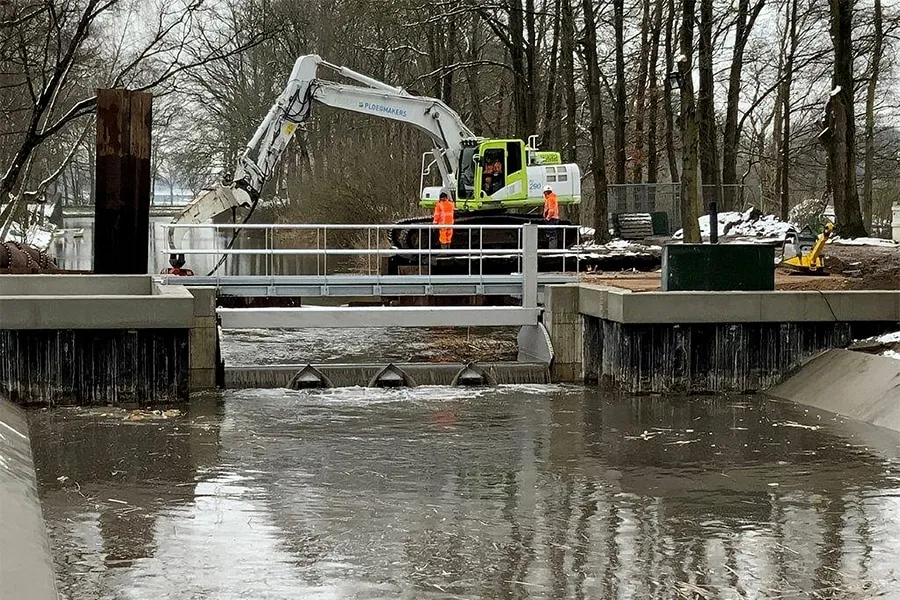
The Peel Canals Water Supply Optimisation programme is increasing water supplies to the dry sandy soils of the Peel region. To distribute the increased capacity from the main canals to the surrounding area in a controlled way, a considerable number of structures have been adapted or renewed. HC Waterbeheersing, based in Kesteren, was responsible for developing and manufacturing ten new tilting weirs and two overflow chambers.
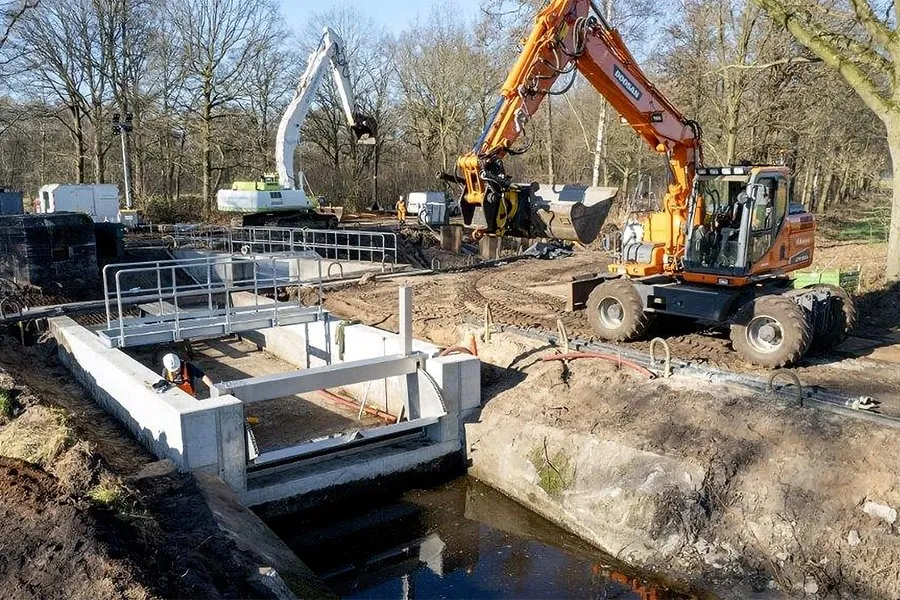
In May 2022, the main contractor Vissers Ploegmakers approached us to prepare a quotation for supplying the twelve structures, based on the specification available at the time, says Harry Gerritsen of HC Waterbeheersing. “We then invited them to Kesteren to see how we, as a weir manufacturer, approach a project like this. We are an open book in that respect. After we were awarded the contract, we analysed the sites and started the design work. We work to a particular standard and level of quality, are closely involved and want to know every last detail. We often hear people say, ‘Goodness, you ask a lot of questions.’ But it is precisely during the preparation that you earn the most.”
Infinitely adjustable
For this project, HC Waterbeheersing manufactured ten tilting weirs and two overflow chambers. “They are all bespoke and of the highest quality,” Harry assures us. “The level difference at the structures can be adjusted continuously. On the tilting weirs, this is done by means of an automated pin mechanism; at the overflow sites, by means of an overflow gate in the chamber. The chamber is located on the high-water side and connected to two pipes, each around 500 mm in diameter, which convey water into the lower-lying area. We base the design and capacity of these structures on the minimum and maximum water levels specified by the water board. The design is, of course, developed in close consultation, with us also contributing our expertise as an experienced weir manufacturer. Using all the information, we prepare the final drawings and calculations. Once approved by the client, these are converted into production drawings and manufacturing begins.”
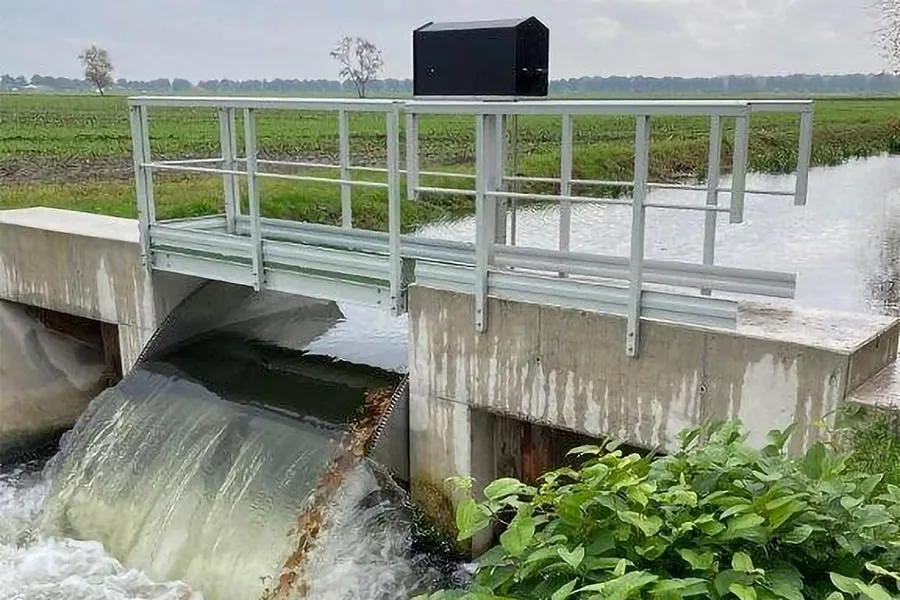
HC Waterbeheersing manufactures the structures entirely in-house in Kesteren. “A tilting weir, for example, is made from stainless steel plate, which we shape into a finished product,” Harry continues. “We have our own milling machine, press brake and plasma cutter, as well as certified welders, and use only grade 316 stainless steel. All but one of the tilting weirs on this project are automated.” All the weirs have now been delivered and installed. “We usually take care of the installation too, but in this case Vissers Ploegmakers carried it out themselves.” Harry looks back on a successful project. “Thanks to thorough preparation and a good working relationship with both the contractor and the water board, we delivered the tilting weirs and overflow chambers right on schedule.”
Question about this story? Ask your question
Keep following this
Get an email when a new story is published. No account needed.
- ThemeFlood protection and climate-resilient water management
- SubjectWater infrastructure







