









Three design-and-build projects working towards one goal
Text Roel van GilsImage Vissers Ploegmakers
Getting more water into the hinterland
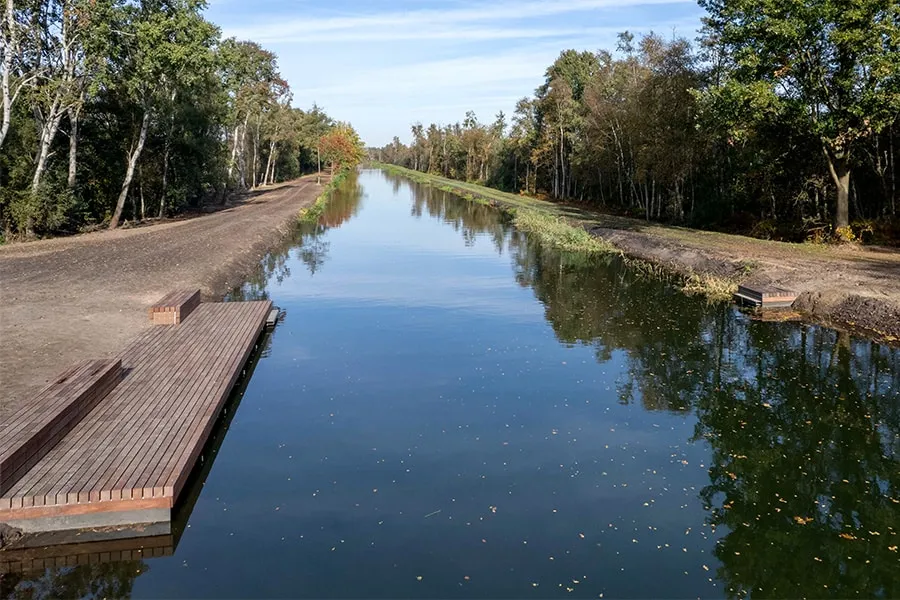
South-eastern Brabant and north-western Limburg depend largely on the Peel Canals for water supply and distribution. As summers become increasingly dry, these higher-lying sandy areas face water shortages during the summer months. More water therefore needs to be brought into the area. This has required not only the main canals to be widened, but also the entire system of weirs and pumping stations in the hinterland to be adapted to handle the increased capacity. Aannemingsbedrijf Vissers Ploegmakers was responsible for the ‘Optimalisatie wateraanvoer Peelkanalen’ programme, comprising three separate design-and-build projects.
Before the improvements, the system received a maximum of 3.4 m3 of water per second from the River Meuse. Its capacity has now been increased to 5.4 m3 per second. “A water agreement was already signed in 1994 between Waterschap Aa en Maas, Waterschap Limburg and Rijkswaterstaat,” says Ron de Mol, project manager at Vissers Ploegmakers. “The plan has now been implemented with a clear division of responsibilities: Waterschap Aa en Maas is upgrading the canals, while Waterschap Limburg is responsible for adapting all the hydraulic structures. Vissers Ploegmakers prepared all the projects in a design-and-build partnership with both water authorities, drawing on knowledge and experience from the market to achieve the best possible outcome.”
Underwater silt depots
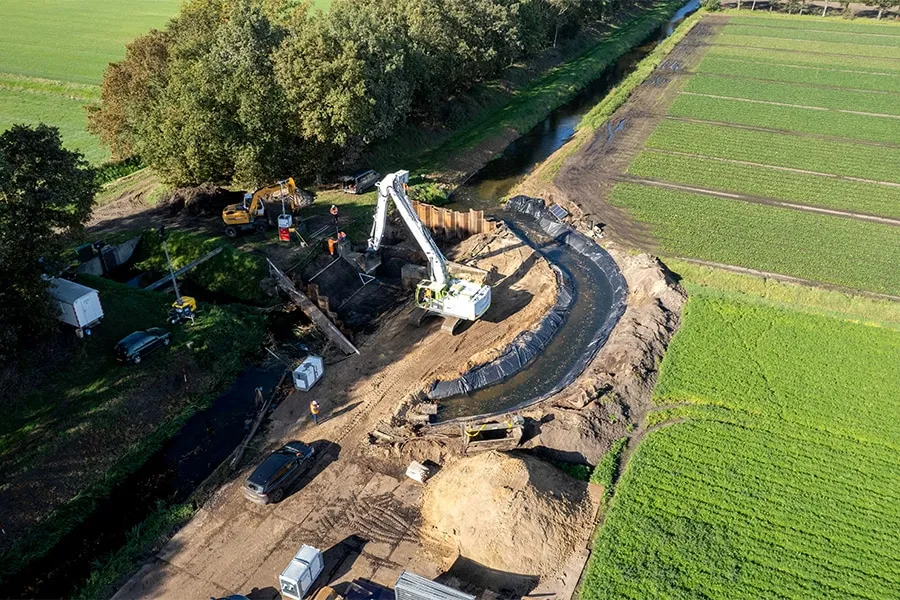
To increase the volume of water that could be carried, the Peel Canals needed upgrading, specifically the Kanaal van Deurne and the Helenavaart. “A range of factors, including those related to the surrounding area, had left the canals in need of maintenance and they had silted up considerably,” says Ron. “They needed a thorough clean-out. As well as removing more than 100,000 m3 of silt along a 21-kilometre stretch, we repaired the banks to prevent nutrient-rich water from the River Meuse flowing into the raised bog areas of Deurnese Peel and Mariapeel, both Natura 2000 sites. We also installed 4.5 kilometres of beaver-proofing.” Working in the Natura 2000 sites meant Vissers Ploegmakers could not simply transport the contaminated silt out of the area. “Together with Smals Dredging and Kurstjens, we devised an innovative method. The silt was pumped to underwater depots at four strategic locations in the two canals, outside the Natura 2000 site. Each depot consisted of a strip about 100 metres long and 10 metres wide, with several basins. The canal is 15 metres wide, ed. First, sand was separated from the silt and reused to repair the banks, keeping the earthworks in balance. A thickening agent was then added to the silt so it would settle more quickly and could be removed.”
New weirs and pumping stations
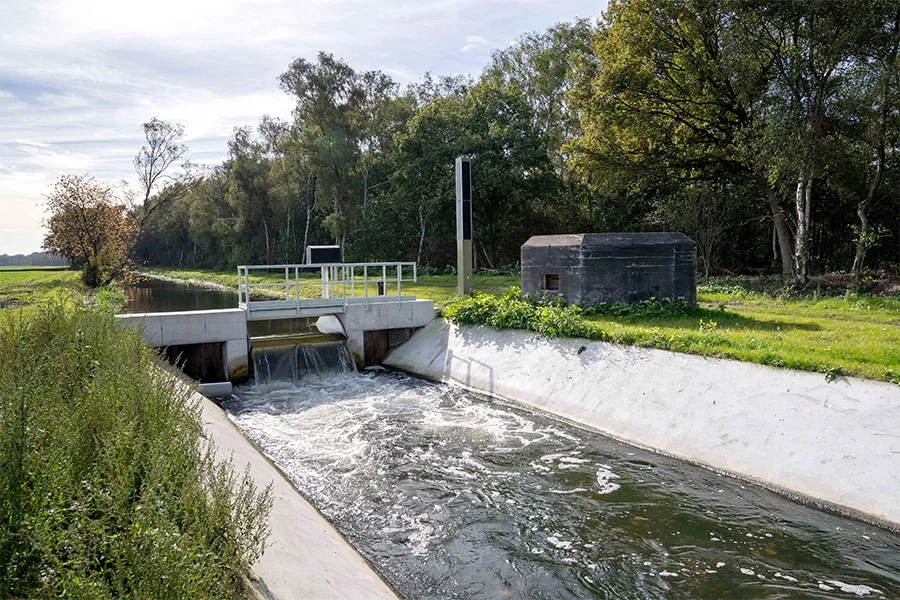
The hydraulic structures in the canals and the existing water system in the hinterland were also adapted to handle the increased capacity. “Seventeen structures in total, including weirs, pumping stations and inlet structures, were expanded and modernised to allow more water to pass through,” says Ron. “All the weirs have been automated and can be operated remotely. Where a power supply was already in place, we used the existing network. At locations without a power supply, we used solar-powered masts from Modderkolk. HC Waterbeheersing supplied ten new weirs and two overflow chambers.”
Maintaining water flows in the Peel Canals and the wider water system was, of course, also important during construction. “Depending on the location, we therefore either dug a temporary bypass or installed a temporary siphon system. One particularly challenging section was where the Peelkanaal runs through the Vredepeel military base. Beneath the runway, the three 300-metre-long box culverts had become completely filled with sand and silt. They were cleaned in situ using a specialist technique with jet pumps and sliding gates, and inspected with an underwater drone.”
Limburg’s first polder
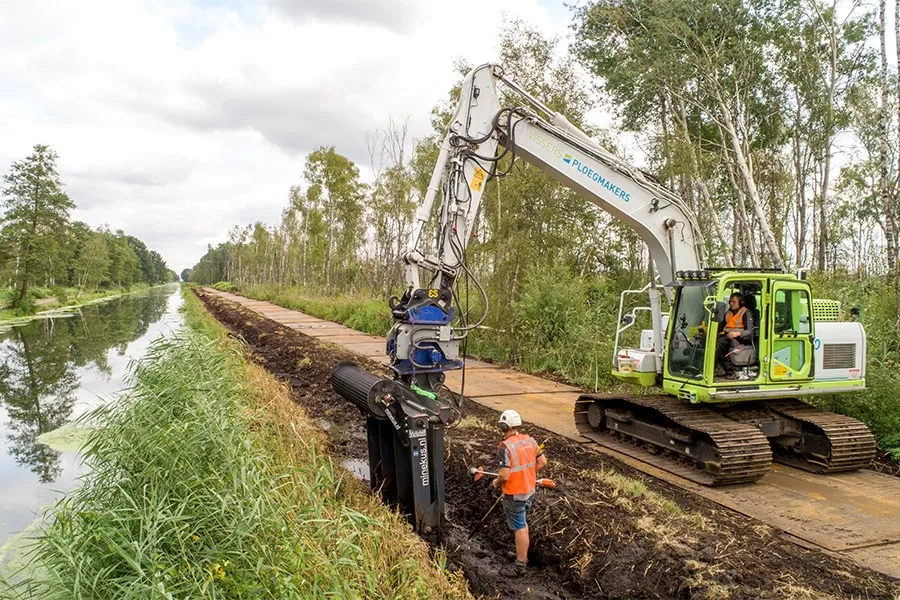
The programme’s final design-and-build project concerned water management in and around Griendtsveen. “For 20 years, work has been under way in this raised bog area to retain as much water as possible. As a result, rising water levels gradually began to cause problems for the village of Griendtsveen,” says Ron. “To manage water levels in the area effectively and limit flooding in the village, we made major changes to the water system. The project involved modifying watercourses, installing culverts and siphons, and building two new pumping stations to keep Limburg’s first polder at the required water level by mechanical means.”
Vissers Ploegmakers has now completed all three projects, making the hinterland of south-eastern Brabant and north-western Limburg better able to withstand dry summers.
Question about this story? Ask your question
Keep following this
Get an email when a new story is published. No account needed.
- ThemeViable projects and strong collaboration
- SubjectWater infrastructure







