









Thousands of samples, one goal: a safe flood defence
Text Roel van Gils Image Diseo
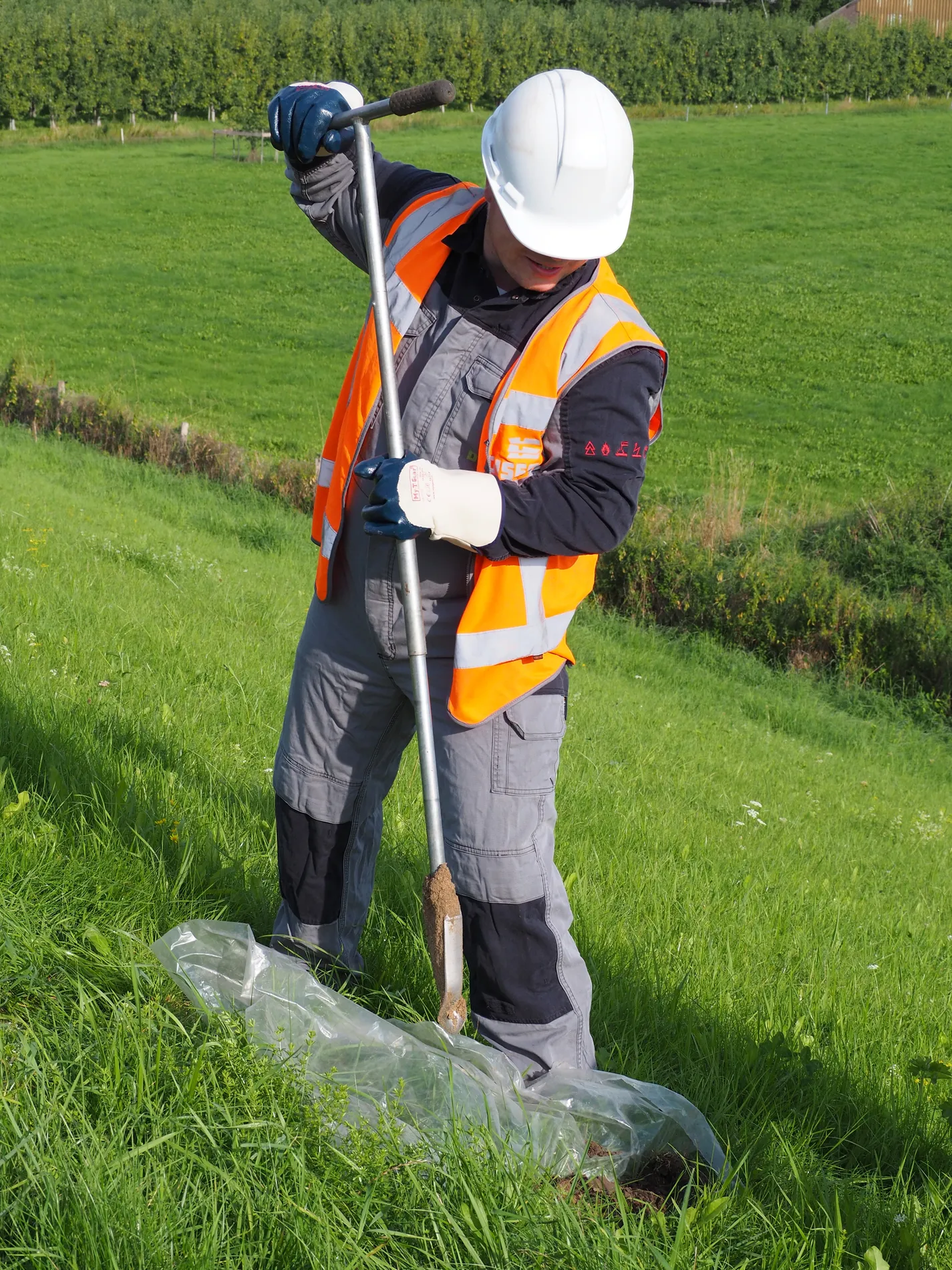
The preparatory phase of the Neder-Betuwe flood defence reinforcement project is at least as important as the construction work itself. It is essential to know exactly what lies beneath the surface. This calls for an extensive investigation programme, in which Diseo examines not only the flood defence itself, but also all temporary work sites, construction roads and loading and unloading areas. Commissioned by Dijkalliantie Neder-Betuwe, the team is carrying out a wide range of soil and environmental investigations to prevent any surprises during construction.
“We began by compiling a comprehensive inventory of previous investigations along the approximately 20-kilometre flood defence route,” says Martijn Veenhuis, director of Diseo. “These included soil and waterbed investigations, asphalt and foundation investigations, and surveys of access roads and ramps. One key question was whether existing investigation data still complied with current legislation and regulations, and whether the results were still valid. Waterbed investigations in particular have a limited validity period of three to five years.”
Extensive investigation programme
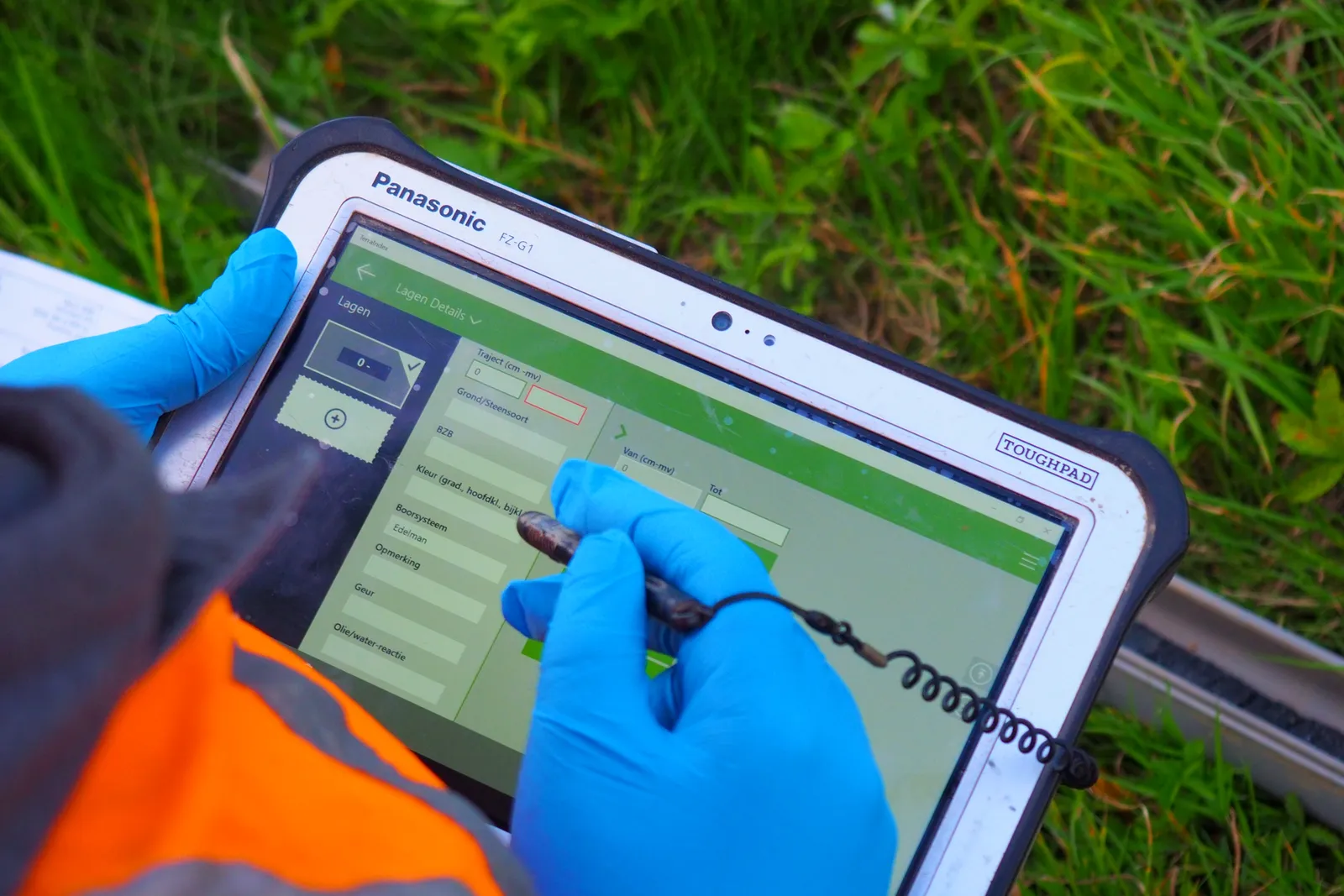
The inventory showed that some parts of the area had been investigated only to a limited extent. This informed a cost estimate and the launch of an extensive investigation programme. “We have been working on and around the flood defence since 2024,” says Twan Janssen, project manager at Diseo. “We have now taken more than 1,500 samples and are only halfway through the investigation phase.” The first step was to establish the baseline through routine soil investigations on the landward side and waterbed investigations on the river side. This provided an initial picture of the quality of the land and waterbed, and of any contamination. Further investigations proved necessary at several locations. “The current phase focuses on more precisely delineating contaminated areas, mapping differences in soil quality and investigating asbestos at locations where rubble-containing material has been found,” Martijn explains.
Complex planning
According to Martijn, the large number of ancillary sites makes the project unusual. “As well as the flood defence itself, temporary construction roads, storage sites and loading and unloading areas also need to be investigated. This is essential, as excavation in the Netherlands is not permitted without prior soil investigations. At loading and unloading areas on the water, any dredging can only take place once the waterbed has been investigated.” The scale of the project also makes planning complex. “From a project-enabling perspective, archaeologists, flora and fauna experts, explosives experts, and cable and pipeline operators are also involved. Factors such as the bird-breeding season and the high-water season also play an important role. Regular consultation is therefore essential to agree priorities.”
The thousands of samples will provide an overall picture of soil quality across the project area. “This will allow all risks to be eliminated in advance, so that when the alliance starts work on a section of the route, it knows exactly what to expect underground and construction can proceed without unnecessary delays.”
Question about this story? Ask your question
Keep following this
Get an email when a new story is published. No account needed.
- ThemeUnderground construction
- SubjectWater infrastructure







