









The largest temporary pumping installation ever is in IJmuiden
Anticipating market needs quickly and accurately comes naturally to Vanderkamp Pompen. This was demonstrated once again in April last year, when Rijkswaterstaat was faced with a pump failure at the IJmuiden pumping station due to a faulty drive motor.
To maintain the capacity of the water discharge normally handled by Europe’s largest pumping station, the Zwolle-based company signed up at record speed to supply 24 of the 34 temporary pumps required, as part of a unique partnership with client Rijkswaterstaat and SPIE, which is responsible for the station’s management and maintenance. This has helped Rijkswaterstaat carefully manage water levels in part of the western Netherlands and keep the area dry during heavy rainfall.
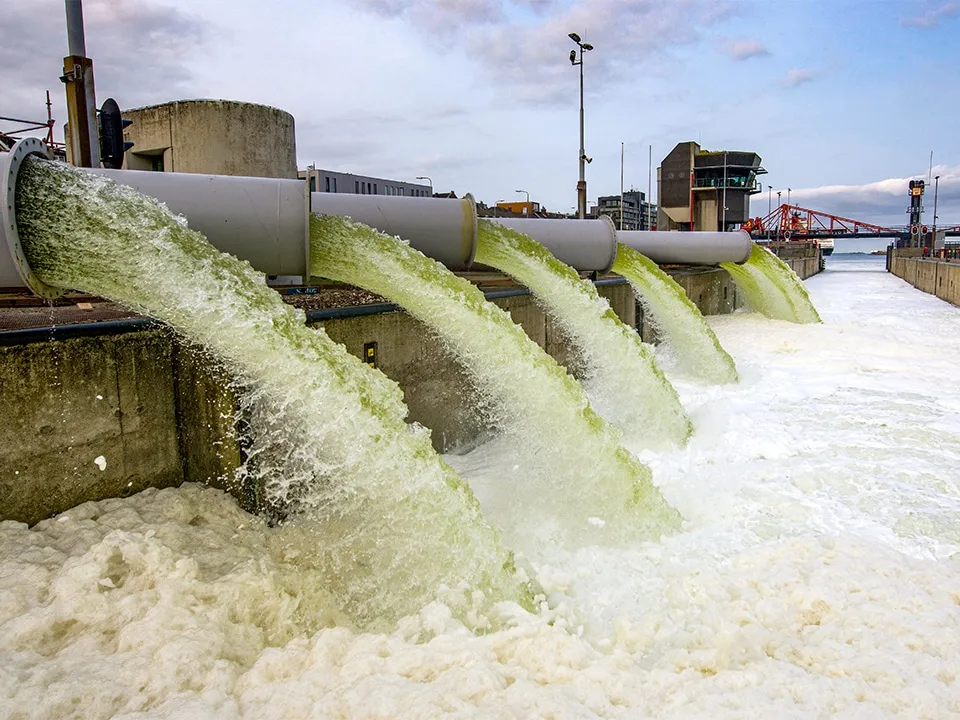
The IJmuiden pumping station normally operates six powerful submersible pumps. Four of them, dating from the 1970s, are driven by squirrel-cage three-phase motors. The other two, fitted with highly energy-efficient permanent-magnet motors, were installed in 2004. Together, the six pumps enable the station to discharge as much as 260,000 litres of water per second from the Noordzeekanaal into the sea.
Fault
At the end of April last year, following a fault report to SPIE, which has managed and maintained the pumping station for Rijkswaterstaat under a performance-based contract since 2016, a technical failure was identified in one of the two most recently installed pumps. The drive motor was faulty. To prevent the situation from worsening, Rijkswaterstaat decided to shut down the other pump as well. It soon became clear that the faulty pump would need extensive investigation and repairs, a process that would take considerable time. A solution therefore had to be found quickly to ensure sufficient pumping capacity by the start of the storm season in mid-October. The search brought Rijkswaterstaat and Vanderkamp Pompen together in June. “The message was crystal clear,” recalls Van der Kamp. “Rijkswaterstaat told us what capacity it wanted and asked whether we could provide a cost-effective solution quickly, and how. Naturally, we were keen and able to meet that request. In July, we were commissioned to supply 24 temporary pumps. Added to the ten made available by the Departementaal Coördinatiecentrum Crisisbeheersing I&W (DCC-I&W), this brought the total to a battery of 34 pumps.”
Cleverly positioned
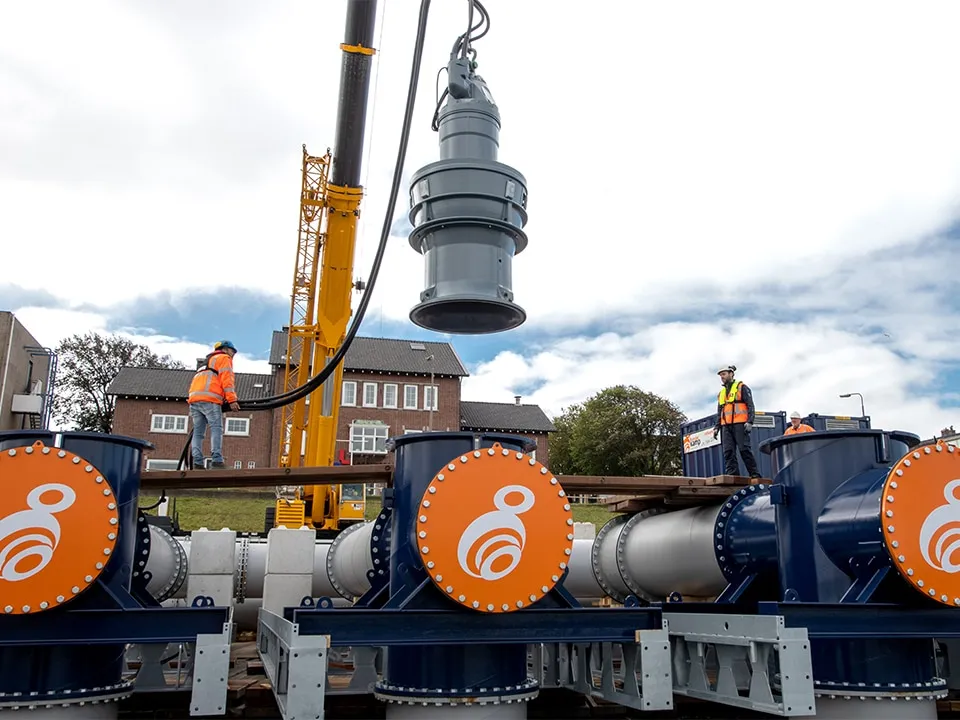
The emergency equipment was installed between July and the end of September. It was a challenging job, largely because of the limited space on the lock complex, while disruption to the surrounding area also had to be kept to a minimum. “To fit the temporary pumps in, we worked closely with SPIE and Rijkswaterstaat during the design and engineering phase, pushing things as far as we could,” says Van der Kamp. “For example, we took several hundred photographs on site from different angles so that we could create a virtual model of the surroundings. This was then used to produce a 3D model in which we could position both the pumps and the pipes.”
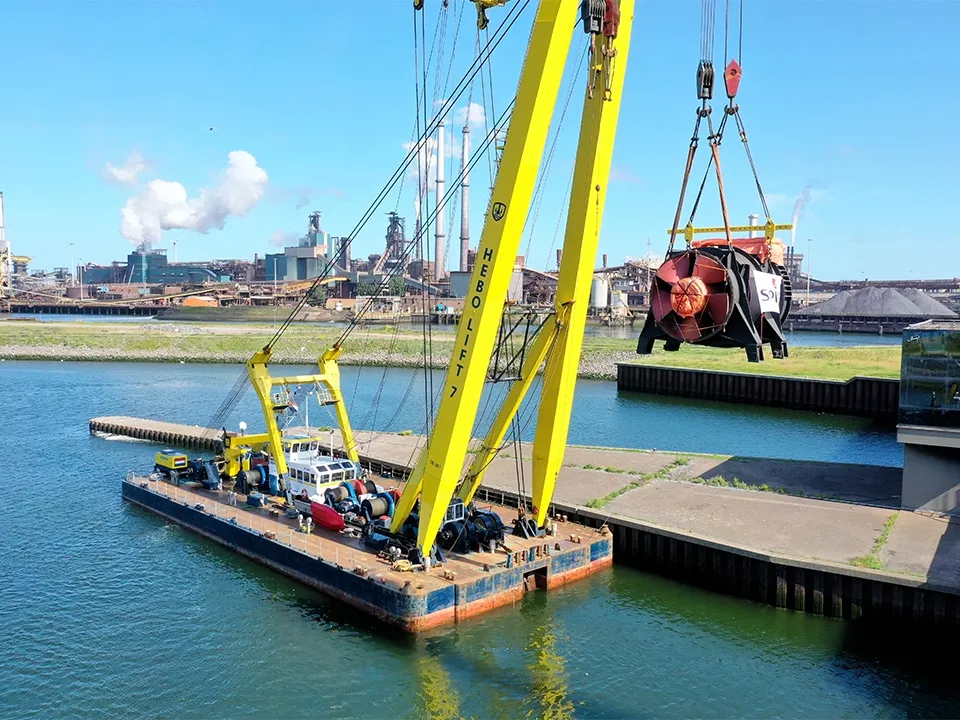
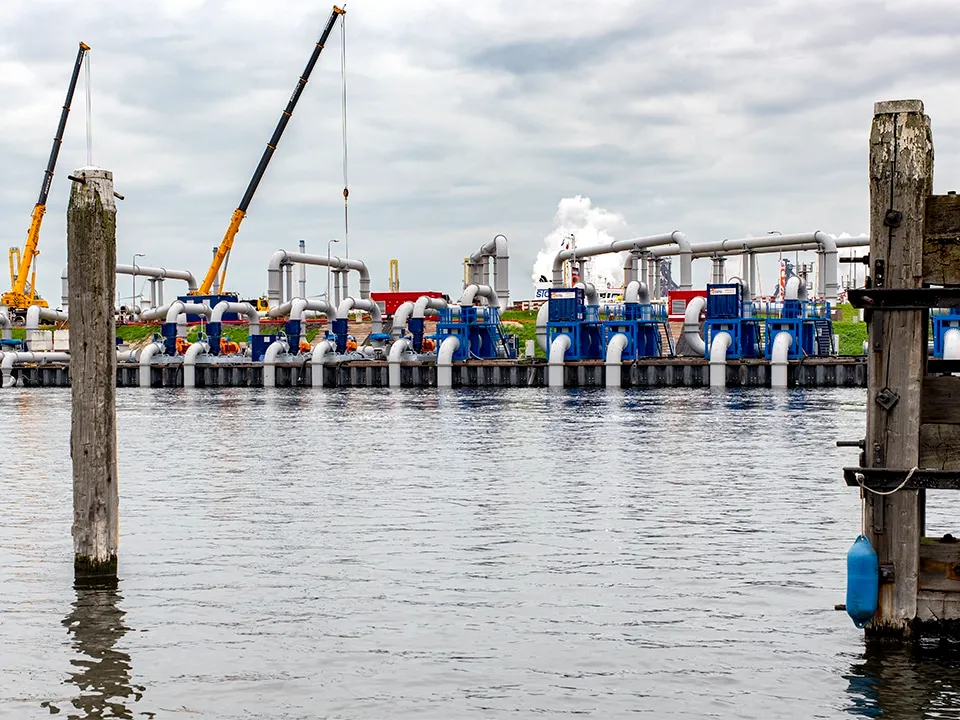
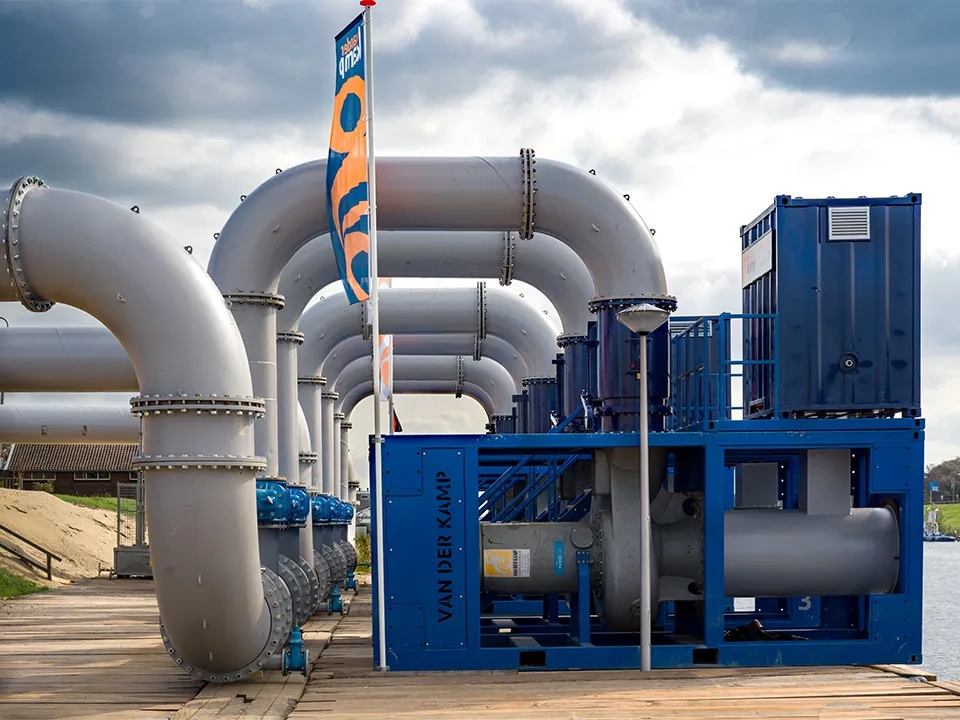
Following extensive testing and capacity measurements, the 34 temporary pumps have been on standby at two different sites since mid-October. The Kleine Sluis in IJmuiden (site A) houses eighteen pumps. Eight come from Vanderkamp Pompen’s extensive rental fleet: seven propeller pumps, each with a capacity of 3,000 to 4,500 litres per second, and one diesel-driven pump.
The company installed sixteen mixed-flow pumps along the outer head of the Middensluis (site B). These pumps can deliver more pressure than the propeller pumps. “Getting all the pumps together took a considerable amount of work,” says Van der Kamp with a laugh. “But we got there in the end. Through our extensive international network, we were able to bring all the required equipment to the Netherlands.”
Putting the pumps into operation
When weather conditions or the volume of water require additional capacity, the temporary pumps are started at Rijkswaterstaat’s request. Rijkswaterstaat and the water boards involved have agreed on a specific sequence for bringing the pumps into operation. “The pumps at site A are switched on first, followed, if necessary, by those at site B,” says Van der Kamp. “When our pumps need to be brought into operation, Rijkswaterstaat gives us five hours’ notice that pumping will be required. At the same time, we activate the operational plan with SPIE. This includes taking the necessary safety measures on site. We then make sure that at site A we bring our diesel-driven pump, the seven propeller pumps and the ten DCC-I&W pumps up to around 35 cubic metres per second. If necessary, the sixteen mixed-flow pumps at site B can then be started. This can also be done within five hours. In that case, the pumps increase capacity from 38 to a maximum of 72 cubic metres per second.”
Een zakelijke vraag aan Vanderkamp – The Dutch Water Engineers? Get in touch
Companies in this story

Keep following this
Get an email when a new story is published. No account needed.
- ThemeFlood protection and climate-resilient water management
- SubjectWater infrastructure
- CompanyVanderkamp – The Dutch Water Engineers
- CompanySPIE Nederland B.V. – Smart city







