









Tackling surface water flooding in Geldrop-Mierlo with a blue artery plan
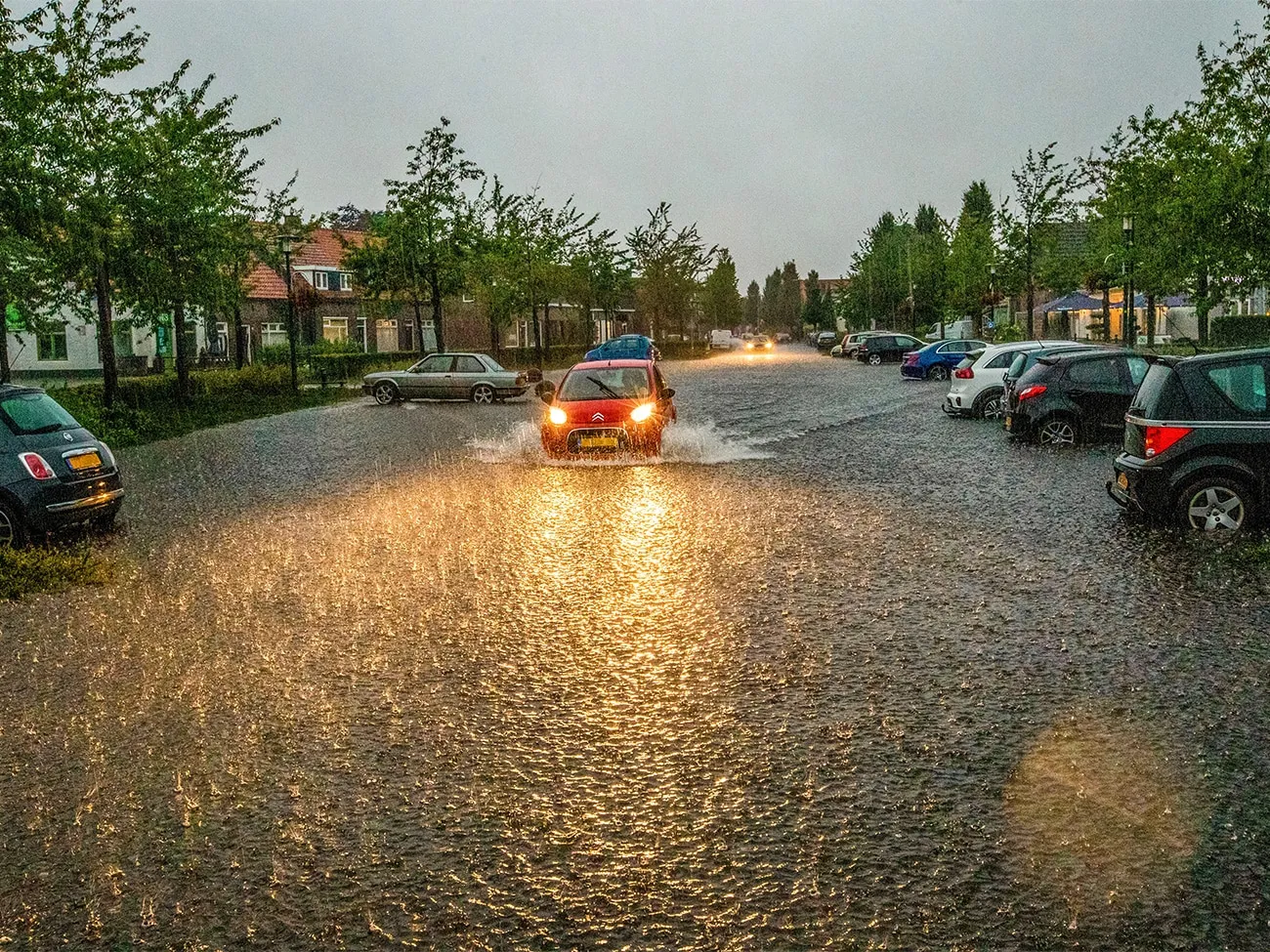
It is no longer news that we are experiencing heavy rainfall more often. There seem to be patterns in the geographical distribution of cloudbursts. The south-eastern corner of North Brabant, for example, is affected relatively often. The municipality of Geldrop-Mierlo is no exception.
In early 2020, the municipality of Geldrop-Mierlo asked Iv-Infra to develop a long-term vision for collecting, transporting and infiltrating rainwater across the entire municipality, in other words, a blue artery plan. In parallel, work began on a new basic sewerage plan (BRP), making it possible to 1) take an integrated approach and 2) focus specifically on locations affected by surface water flooding.
In the summer of 2020, just as Iv-Infra was starting work on the sewer model for the BRP, the municipality of Geldrop-Mierlo was hit by another cloudburst, causing severe surface water flooding. Streets turned into ‘rivers’, living rooms were flooded and sunken patios became swimming pools. This major disruption called for a response, an approach and action from the municipality. But where do you start, and can everything be solved? And how do you explain this to residents whose living rooms keep flooding?
Time for action
Alongside a vision for the medium and long term, urgent measures were also needed. The focus on the BRP and the blue artery plan was temporarily shifted to picking the ‘low-hanging fruit’, in other words, measures that were relatively straightforward to implement. The municipal executive made funding available and the necessary capacity was provided across a broad range of departments. This enabled elected officials, policy officers, project managers and public works staff to contribute to the response. This was an important first step, allowing concrete follow-up actions to be taken quickly.
In emergencies like these, providing information is crucial, alongside immediate assistance, of course. When a few hundred reports come in, dealing with each one personally is not feasible. After a public information evening, the municipality therefore held discussions with smaller groups, consisting of representatives of residents from specific districts or neighbourhoods. By involving residents from the outset in finding solutions, the municipality ensured they had a major input into developing ideas.
Solutions that affect public space require careful consideration of all interests and the creation of public support. These discussions were also very valuable in preparing for the risk dialogue that will take place as part of developing the climate policy. The process of implementing a measure has a long lead time. It is therefore important to maintain a steady flow of information to residents and businesses, even when there is little news to share. The municipal website is an important channel for sharing a great deal of information. An email to residents involved, for example, can also help ensure they do not feel forgotten.
Water ambassadors
At a public information evening, the issues and the proposed approach were explained in outline. Ten areas were then identified, and two representatives (the water ambassadors) from each area were invited to meet with a municipal expert. They were given an explanation of how sewer systems work in general and how rainwater is managed. The discussions also helped set realistic expectations among residents about what is and is not possible. Residents found these meetings positive. At the same time, surveys were carried out to build a more complete picture of the issues. Combined with complaints and reports already on record, this provided a comprehensive overview of all water-related problems.
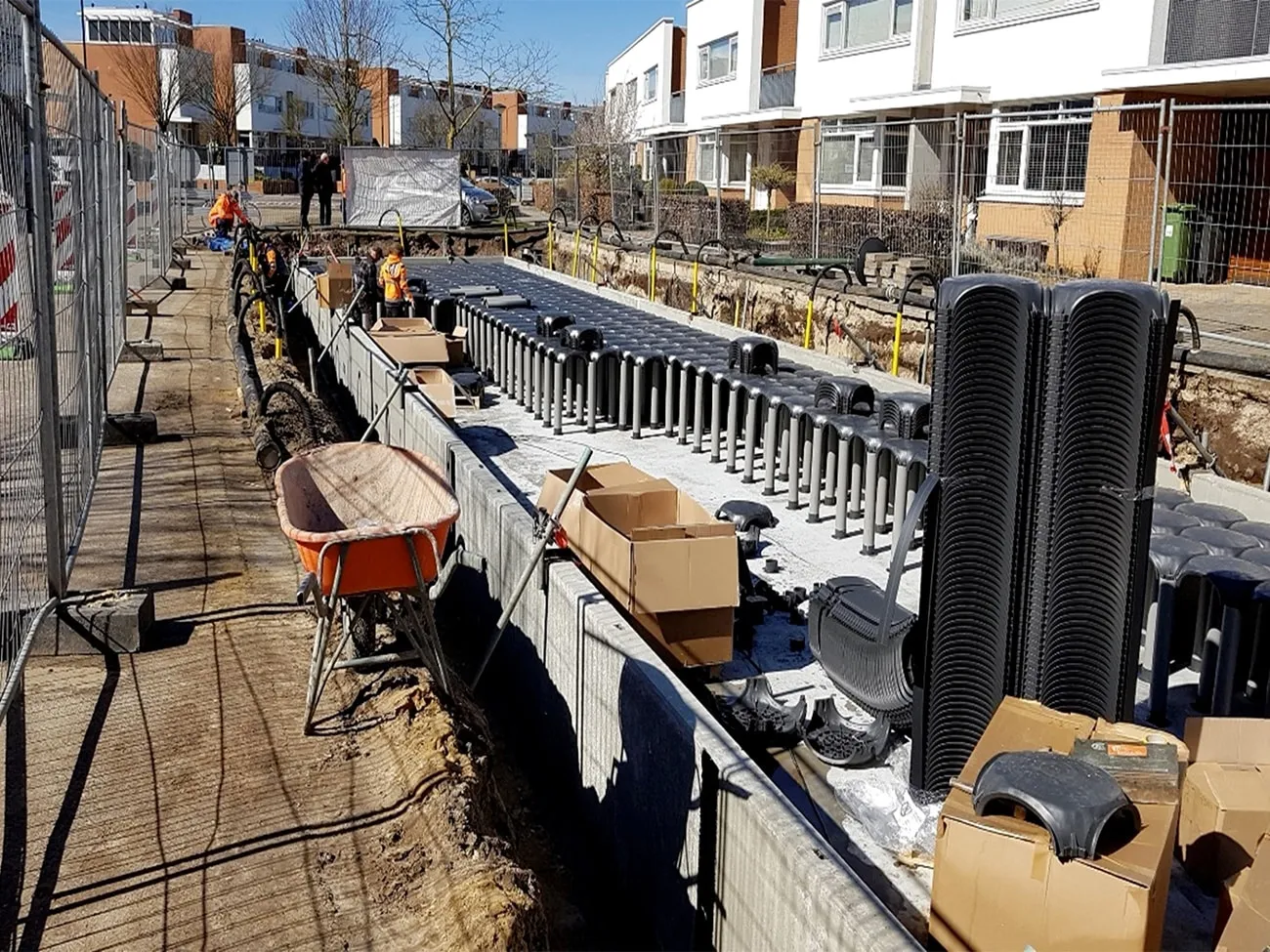
All the input and location analyses resulted in 84 measures. Some are straightforward measures at ground level, such as lowering kerbs, installing speed humps or removing them. Other measures, including installing air-release covers and non-return valves, clearing watercourses, reducing the size of culverts and creating emergency outlets, will also help the sewer system function better and reduce surface water flooding. The more substantial measures include building several storage basements and creating open-water storage areas (wadi’s).
Iv-Infra developed these measures using an integrated approach, from the initial design through to supervising the works. Some measures have already been implemented or are in preparation, including a large storage basement. Most of the measures are expected to be completed by mid-2022.
Long term: providing structure
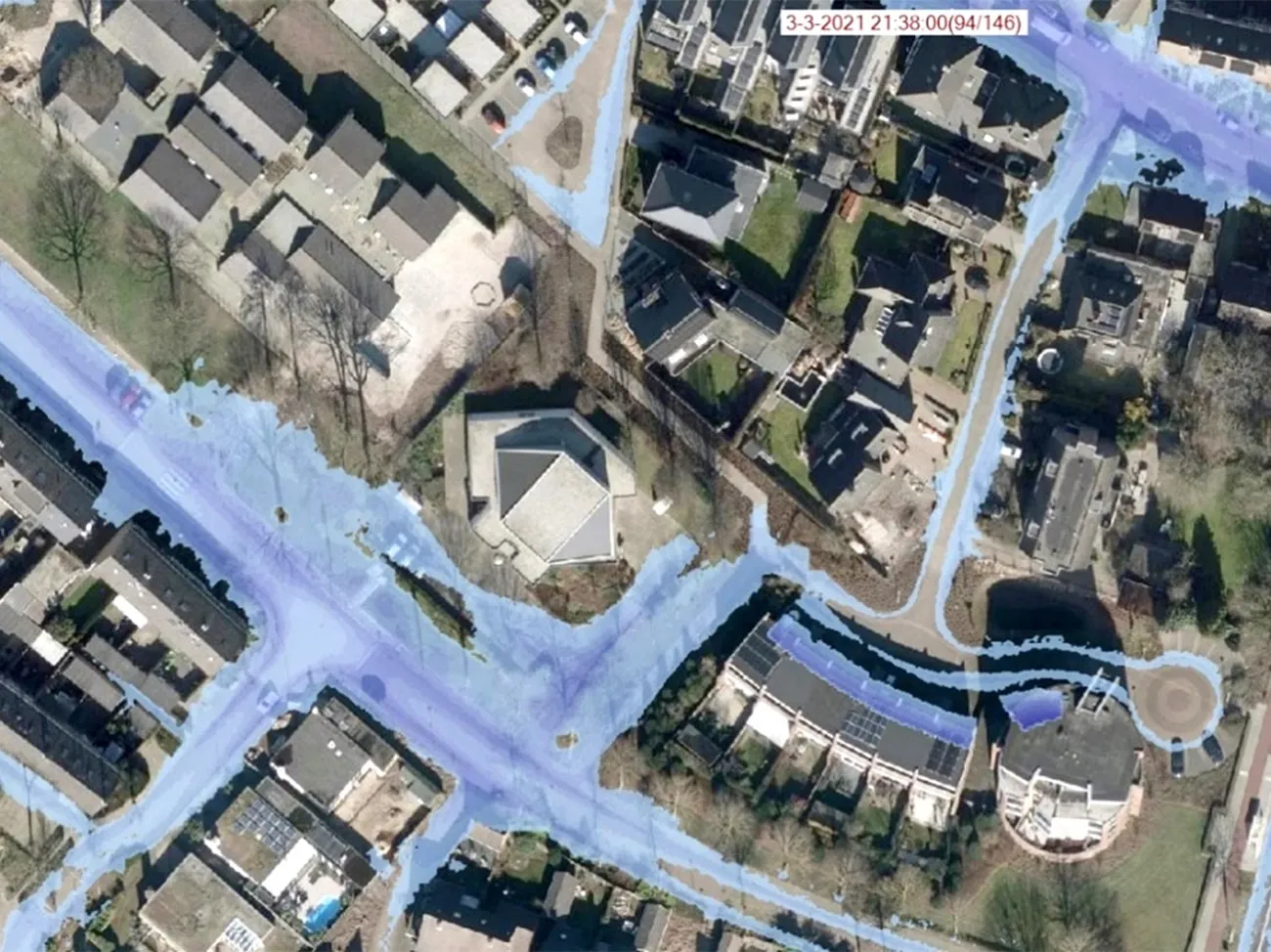
In parallel with developing the measures, Iv-Infra built a computational model. A 2D analysis was used to examine the sewer systems and surface runoff in greater detail. This analysis identified various local improvements to the system, as well as areas to prioritise for future disconnection of rainwater from the sewer. The model results were checked against practical experience and broadly corresponded with it. There were some differences, often explained by factors such as homes being on higher ground, which meant there was no flooding or damage.
To provide direction and structure for future measures, an extensive analysis of area characteristics was carried out. Data on elevation, groundwater levels, soil conditions, paved surfaces, green space and surface water were collected and mapped. Combining this data identified promising areas for water storage or infiltration. Based on the analysis, a proposal was made for a blue artery network to ensure the optimal distribution and collection of water across the municipality in the medium and long term.
Question about this story? Ask your question
Keep following this
Get an email when a new story is published. No account needed.
- ThemeFlood protection and climate-resilient water management
- SubjectWater infrastructure







