









Sustainable waterworks specialist creates carbon-negative nature island in Westeinderplassen
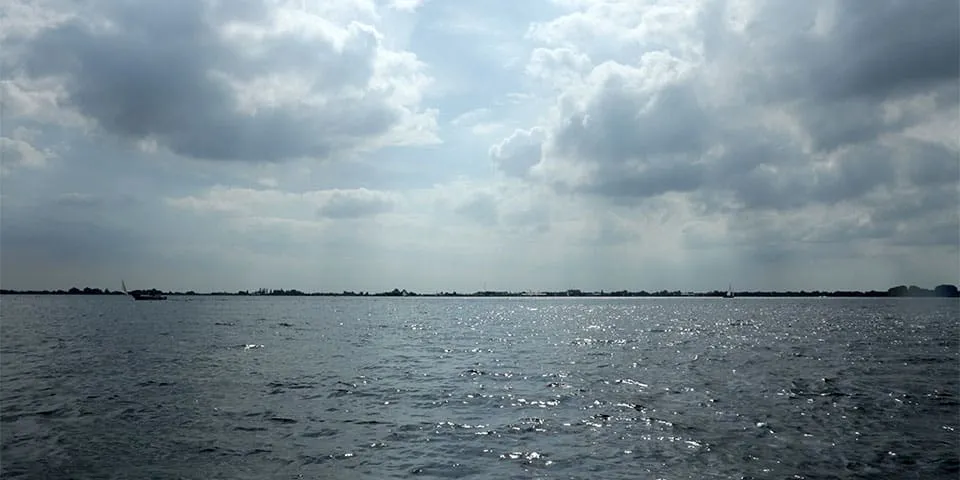
Specialising in bank and bed protection, dredging and sod cutting, family business Van Aalsburg uses its innovative methods and machinery to build bank protection structures, fascine mattresses, reed islands and shelters. It does so in a socially responsible way, to the great satisfaction of many clients. The work is based on willow branches, grown under strict supervision on around 150 hectares of land, supplemented by supplies from the Betuwe and the Biesbosch.
Sustainable island construction
As part of its sustainable island construction work, Van Aalsburg has already built Papeneiland in the Langeraarse Zuidplas. The island, created thanks to local initiatives and primarily intended for recreation, also gave nature a significant boost. This did not go unnoticed by the Rijnland water authority. Under the European Water Framework Directive, which aims to improve water quality and ecology, Rijnland has joined forces with Van Aalsburg to build a peninsula and nature zone in the Westeinderplassen as part of a design and build team.
Biodiversity
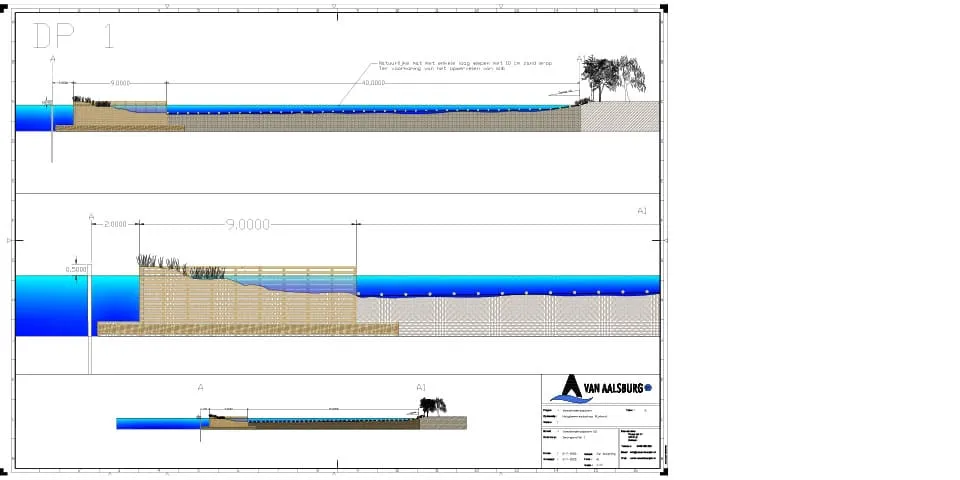
Dick van Aalsburg explains: “Creating a gentle transition between land and water forms a sheltered, shallow zone. This gives aquatic and bank-side plants the chance to establish themselves, while improving macrofauna and fish populations.” Paul Hollander, project manager at Rijnland, adds: “The reed island structure built by Van Aalsburg is an excellent way to strengthen the ecological value of the Westeinderplassen and improve water quality naturally.”
Innovative construction
“Van Aalsburg is the only company with extensive expertise in building fascine structures in and on open water, so we worked with them to develop a good plan.” Dick says: “Building large structures on water requires a great deal of knowledge and expertise. We have addressed all the challenges sustainably with our creative approach using a fascine structure. At the same time, it is important to consider ecology: how can you ensure that reeds, sedges and other plants establish themselves as quickly as possible? This approach allows us to create habitats using entirely natural materials and solve the problem of excess dredged material.”
CO2-negative
The 340-metre land section will be built entirely from fascines grown in the Netherlands. “Because the fascines are used underwater, the stored CO2 will be sequestered in the island structure for a very long time. In addition, we will use equipment running on blue diesel throughout the project to further reduce CO2 emissions,” says Dick. Paul adds: “For Rijnland, this is the first project in which we will sequester more CO2 than we emit. So this is a CO2-negative project, which is obviously a very positive thing! By using locally grown, sustainable materials, processing them sustainably and drawing on Van Aalsburg’s extensive knowledge and expertise, we are helping nature in the Westeinderplassen with the construction of this island. And, of course, preserving the natural character and appearance befitting this beautiful nature area.”
A business enquiry for Van Aalsburg BV? Get in touch
Companies in this story
Keep following this
Get an email when a new story is published. No account needed.
- ThemeFlood protection and climate-resilient water management
- SubjectWater infrastructure
- CompanyVan Aalsburg BV







