









Sustainable flood defence reinforcement projects
Text Roel Bijlard Image ArcelorMittal
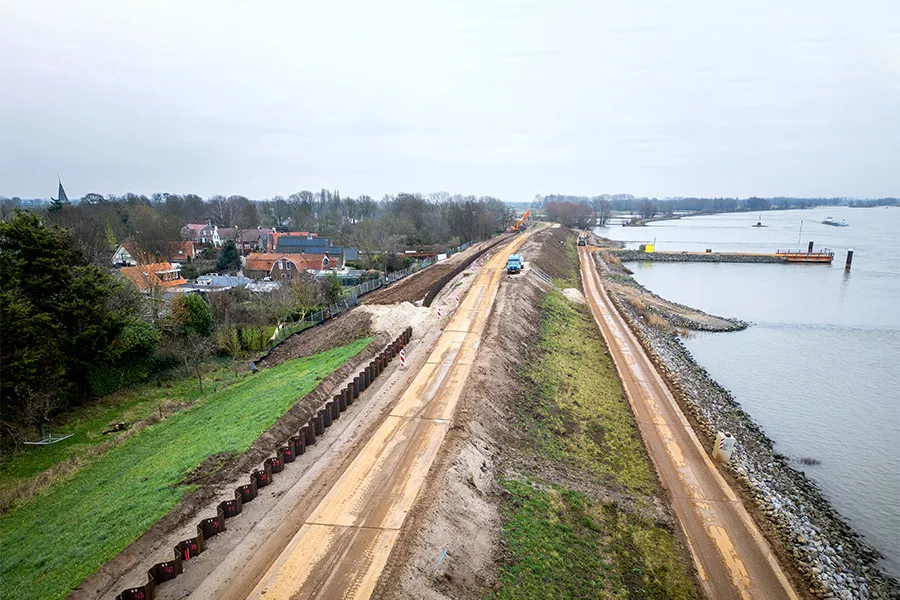
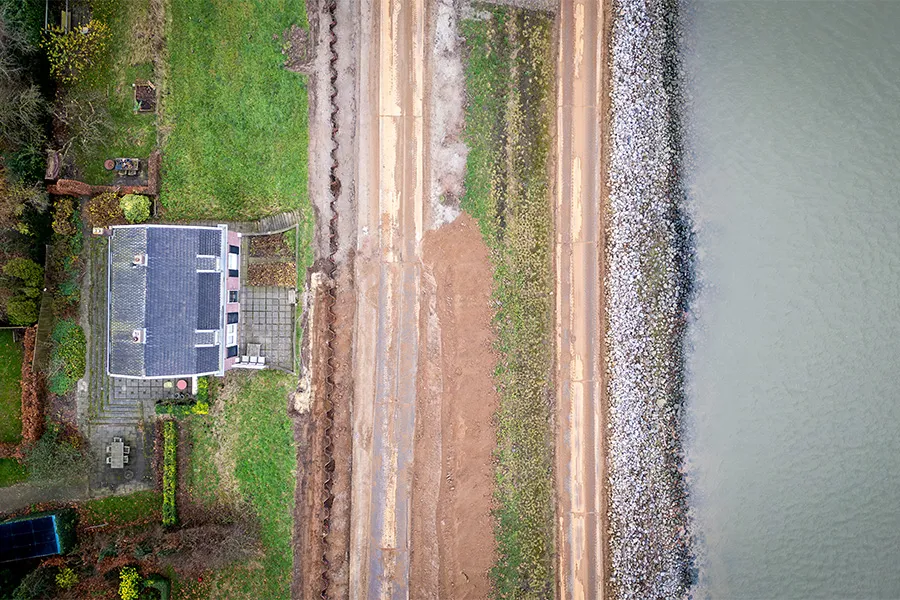
Steel sheet piles are widely used in flood defence reinforcement projects to protect the flood defence against the failure mechanisms of global stability and piping. The sheet piles support the earth embankment under design loads. Sheet piles are the ideal solution for strengthening flood defences, particularly where space is limited. Locations where both stability and piping govern are especially interesting. In these cases, a single sheet pile structure can address both reinforcement requirements.
The quantity of steel sheet piles required for a project affects its sustainability. ArcelorMittal reduces the environmental impact of the steel sheet piles it supplies by focusing on three areas: Recycle, Reduce & Reuse.
Recycle
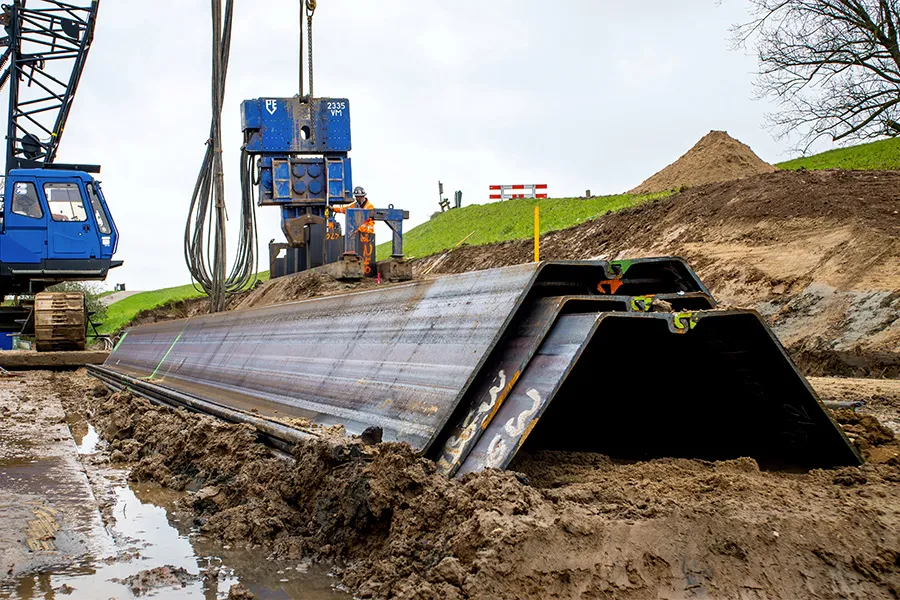
The steel for the sheet piles, which are manufactured in Luxembourg, comes from an electric arc furnace that can run on 100% green electricity. An electric arc furnace uses around 100% scrap steel, eliminating the need for iron ore. This means no primary raw materials are extracted from nature and less waste is generated compared with the blast furnace process, which has carbon dioxide emissions around 5 to 6 times higher. The electric arc furnace production process emits 360 kg of CO2 per tonne of steel sheet pile. These emissions are documented in the Environment Product Declaration (EPD) EcoSheetPiles™ Plus, developed specifically for the Dutch market. This gives ArcelorMittal a unique position among steel sheet pile producers, thanks to the short distance to the factory and the sustainable production process.
Flood defence reinforcement projects often have a design life of 100 years. As corrosion of sheet piles within an embankment is minimal, the sheet piles can still be removed from the embankment after 100 years. The recovered sheet piles may be partly reused in other projects. Anything that cannot be reused is fully recycled and returned to the electric arc furnace as a raw material. The cycle from scrap to steel sheet pile and back to scrap is now complete, ready to begin again in the next project.
Reduce
The other major emissions saving, and a way to improve sustainability, comes from reducing the amount of material required. The conclusions of the 2018 reports on the sheet pile failure test in Eemdijk show that sheet piles can be designed shorter and lighter for flood defence reinforcement projects. Further opportunities for optimisation include using higher steel grades (up to S460 GP), alternating sheet pile lengths, using sheet pile panels (with openings of up to 1 metre) and carrying out a tailored deformation assessment that allows greater local displacements.
Reuse
Steel sheet piles are highly suitable for reuse in temporary applications, such as temporary construction pits. Used sheet piles are not yet widely used in permanent structures, such as flood defence reinforcement projects. There is now demand for the use of used sheet piles at locations where piping is a failure mechanism. To protect the flood defence against piping, the seepage path must be lengthened or interrupted. As the sheet pile is not subject to strength loads, a used sheet pile can perform this function just as well as a newly manufactured one. The key difference is that the full emissions from the production phase do not need to be attributed to the used pile, as some of these emissions have already been accounted for in its previous temporary applications.
Steel sheet piles therefore offer many possible combinations for creating the most sustainable solution for a project.
Een zakelijke vraag aan ArcelorMittal Projects Europe B.V.? Get in touch
Companies in this story

Keep following this
Get an email when a new story is published. No account needed.
- ThemeFlood protection and climate-resilient water management
- SubjectWater infrastructure
- CompanyArcelorMittal Projects Europe B.V.







