









Sustainable area development after clay extraction
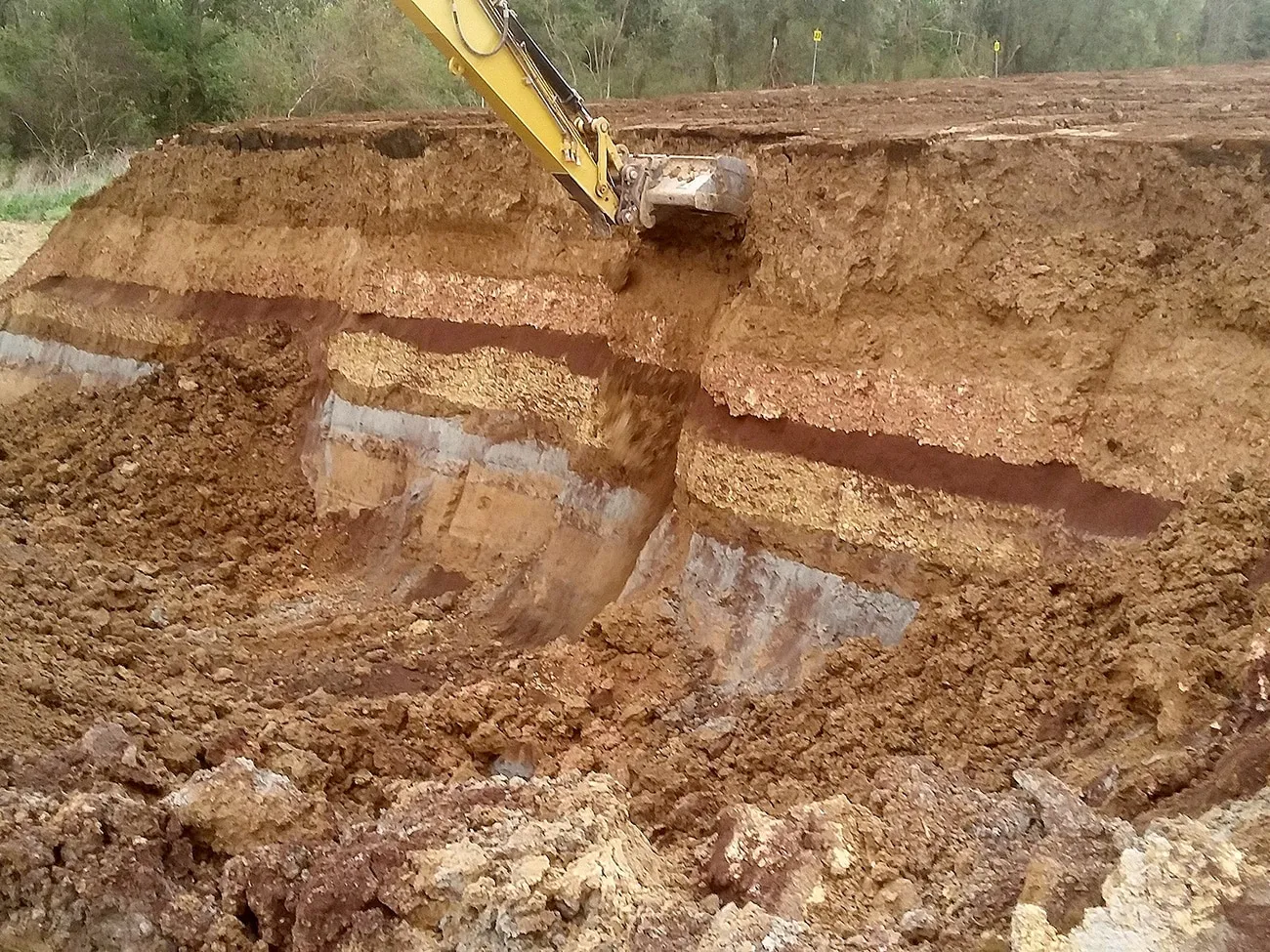
To bring the Waaldijk back into compliance with flood protection standards, it is being strengthened at various locations between Wolferen and Sprok. This requires, among other things, clay for dike construction. Delgromij is responsible for supplying the clay and ensures that both sides benefit: the sites where the clay is extracted are given a sustainable area development with added social value.
A total of 10,000 m3 of clay for dike construction was supplied to strengthen the Waaldijk. “The clay comes from the Kievitsheuvel stockpile on the A15, which was created at the time of the construction of the Betuweroute,” says Bas Dröge of Delgromij. “Although it is owned by Staatsbosbeheer, we market the clay and develop nature in return. At a later date, Staatsbosbeheer will plant the stockpile site as a climate forest.”
Around 40 extraction sites
Delgromij is part of the family-owned K3 group and is the market leader in the supply of clay for ceramics in the Netherlands. “We also have extensive knowledge and experience of using clay for dike reinforcement. We have 40 extraction sites across the country, enabling us to supply our customers with the clay they need. We always have direct access to stocks of clay,” says Dröge. “And that’s just as well, because if you look, for example, at all the projects planned under the Flood Protection Programme, a huge volume of clay for dike construction will still be needed up to 2028. We are therefore in constant discussions with project developers, major infrastructure contractors and public and semi-public authorities. If a project generates more clay than can be used, we are usually brought in to market it. It is also an effective way to reduce project costs.”
A single point of contact
There is plenty of clay for dike construction, but extracting and marketing it involves an enormous amount of ‘paperwork’. This includes environmental legislation requirements, permits for extraction sites, consultation with stakeholders, and initiatives to leave extraction areas in a sustainable condition. According to Dröge, K3’s great strength lies in its five divisions, which complement one another in every respect. “As well as extracting clay, we also extract sand and gravel, process soil and dredged material, carry out sampling, provide environmental expertise through our ecologists and hydrologists, drill boreholes and operate our own ship-broking office. What makes us unique among mineral extractors is our area development division, with in-house landscape architects and staff who know everything about permitting processes for giving former extraction sites a sustainable purpose with added social value. This means that we can usually deliver a project from A to Z in-house, with just one point of contact for both the client and the competent authority. That is appreciated.”
Question about this story? Ask your question
Wie aan Waaldijk tussen Wolferen en Sprok werkte
Keep following this
Get an email when a new story is published. No account needed.
- ProjectWaaldijk between Wolferen and Sprok
- SubjectWater infrastructure







