









Steel sheet piles that generate unlimited free energy
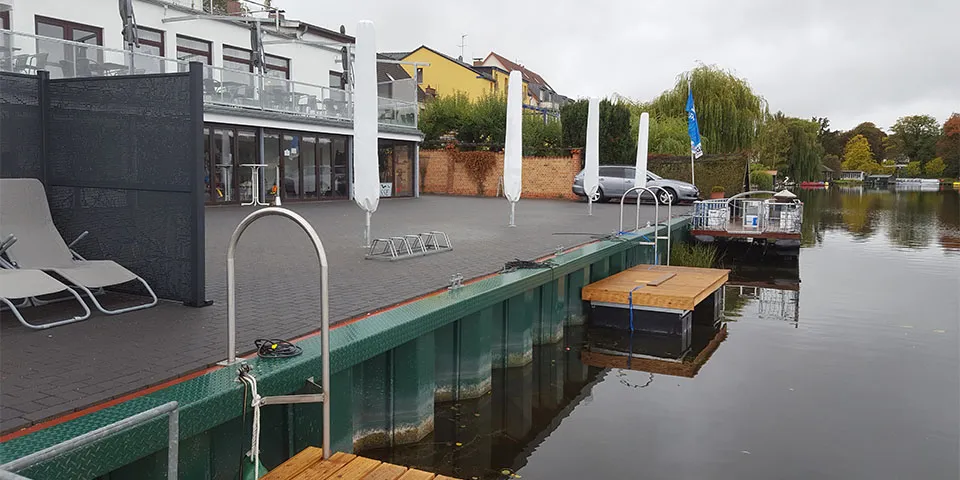
There is no other country where steel sheet piling plays such a major role in the delivery of construction and infrastructure projects as the Netherlands. Today, the same sheet piles can also serve as an energy source, harnessing energy stored in the ground or water to heat or cool homes and other buildings. Energy sheet piles make this possible.
“This SPS-type sheet pile was developed and patented in Germany. In the Benelux, it is marketed by Gooimeer of Almere, which holds the licence. In view of the climate agreement and the aim of no longer connecting new-build properties to the gas network, energy sheet piles can make a significant contribution to a sustainable solution to the energy challenge,” says Patrick Stoelhorst, director of Gooimeer.
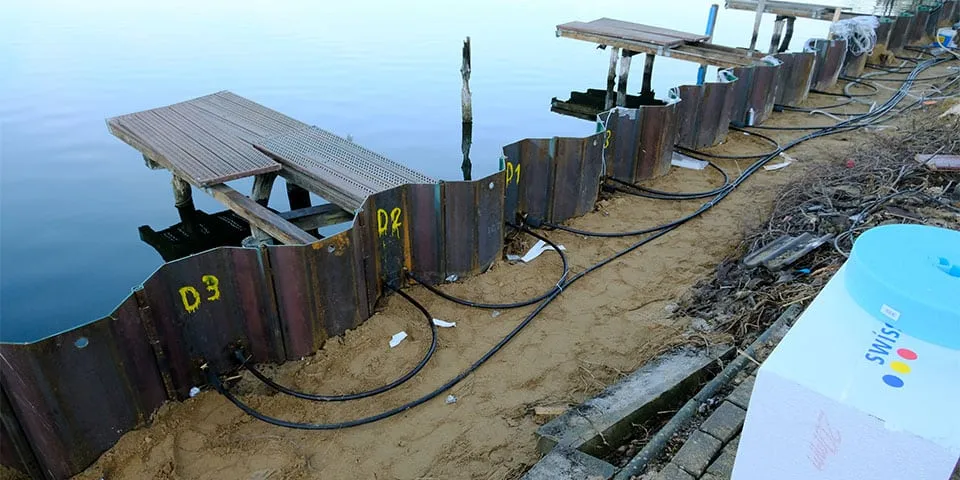
The steel sheet piles are activated and act as collectors of the energy present in the (ground)water. The energy collected is fed to a heat pump, which in turn converts it into heat in winter or cooling in summer. During the summer months, the system can provide cooling, with the sheet piles acting as a heat-dissipation system. Efficiency is exceptionally high, reaching up to 500 W/m, with a potential COP of 6.
Energy available all year round in unlimited quantities
Two properties play a key role, says Stoelhorst. “Sheet piles are often used for soil and water-retaining structures. Water has a high capacity to store heat. That energy is available all year round in unlimited quantities. Unlike solar collectors or wind turbines, the system operates 24/7, 365 days a year. Steel also has high thermal conductivity.”
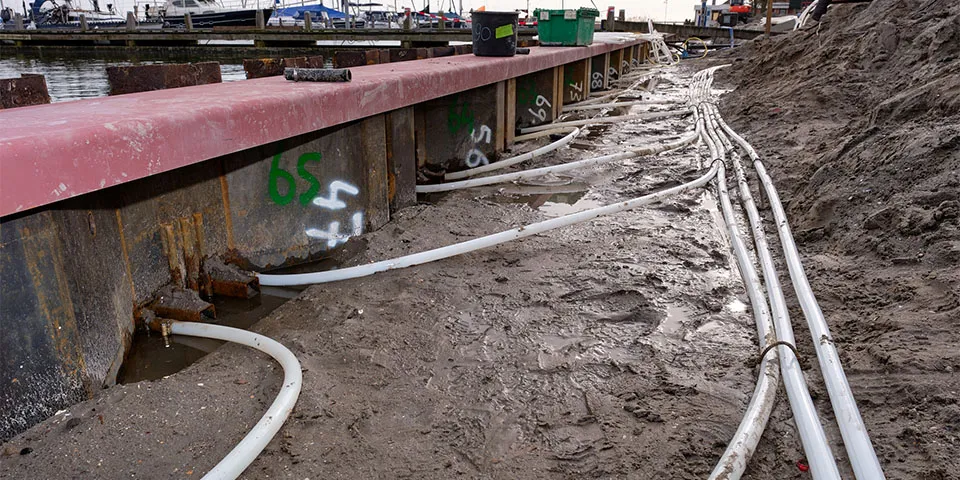
Energy sheet piles can simply be installed using existing vibration or pressing techniques.
According to Stoelhorst, the system offers many advantages: “You need the sheet piles anyway, so you save on installation costs. You simply give them an additional function as an inexhaustible energy source. A sheet pile wall often has a large surface area, which means that in theory it can generate a great deal of energy. Installation to a depth of 25 metres is possible, and the system can also be installed at a later date over a shorter height. Energy sheet piles can simply be installed using existing vibration or pressing techniques.”
In the Netherlands, the system is being used for the first time in the renovation and construction of a marina in Enkhuizen. “When you consider how many kilometres of quay wall need replacing in the Netherlands alone, it is easy to see how readily this system could be used. If the heat pump is also powered by solar collectors, you have a 100 % CO2-neutral system that ultimately delivers far more than it costs. The energy is literally free, right on your doorstep!” Stoelhorst concludes.
Question about this story? Ask your question
Keep following this
Get an email when a new story is published. No account needed.
- ThemeUnderground construction
- SubjectWater infrastructure







