









Resilient levees: an innovative solution to rising flood protection costs
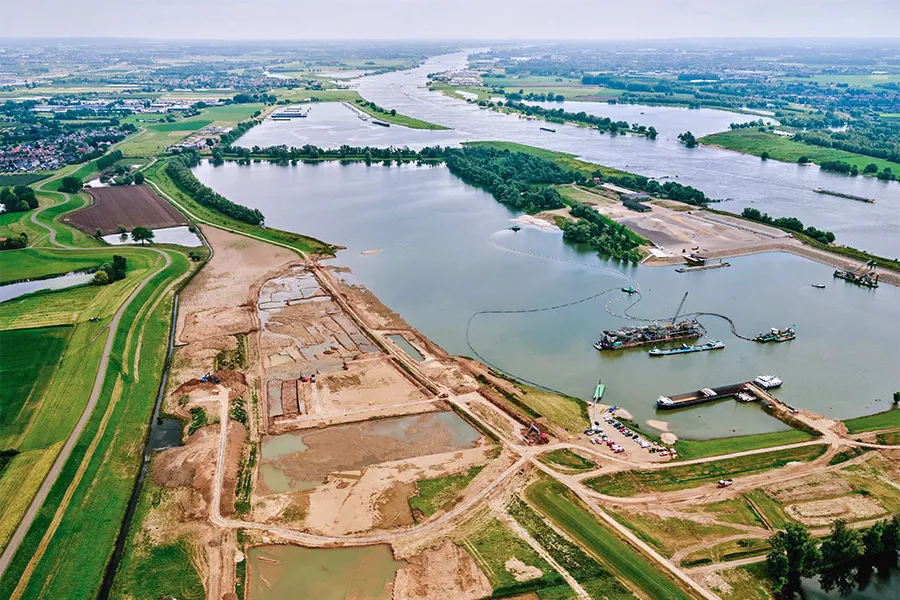
Flood protection is an essential part of the Netherlands’ infrastructure. However, the rising costs of strengthening levees call for innovative and sustainable solutions. Fortunately, the latest development in this field, the so-called ‘resilient levee’, offers a promising answer.
Around €1 billion is currently spent on flood protection in the Netherlands each year. Although this may seem like a considerable sum, it is relatively modest in relation to our gross national product. The challenge, however, is to keep these costs under control so that we can continue to live and work safely behind our levees as the climate changes and sea levels rise. In addition, levees need to be strengthened approximately every 50 years, and climate change could mean this is necessary much sooner. This is where resilient levees come in: an innovative approach that can not only reduce costs, but also significantly improve long-term safety and delay the next reinforcement project.
Traditional levees are designed to hold back water to a high safety standard. If serious damage occurs to a levee during high water levels, a breach will form, potentially causing catastrophic flooding. Resilient levees, by contrast, are designed to fail in a controlled manner, allowing more time for evacuation and damage limitation. The concept uses erosion-resistant materials such as clay and/or strategically positioned sheet piles to ensure that the levee is breached only gradually.
The benefits of resilient levees are clear in the designs developed by Fugro: they may require a somewhat higher initial investment, but they last longer because overall safety is improved, and they reduce maintenance costs in the long term. They can also better accommodate unforeseen changes in water levels and climate, making them a future-proof solution. By making levees more resilient, we can extend the life of this critical infrastructure and reduce the frequency of costly reinforcement projects.
Delivering resilient levees requires close cooperation between water engineers and policymakers. The government plays a crucial role by investing in research and innovation and by creating regulations that encourage innovative levee designs. An integrated approach is also needed, combining levees with nature areas. This not only benefits flood protection, but also supports biodiversity and enriches the landscape. Resilient levees can therefore also create ecological opportunities.
A business enquiry for Fugro? Get in touch
Companies in this story

Keep following this
Get an email when a new story is published. No account needed.
- ThemeFlood protection and climate-resilient water management
- SubjectWater infrastructure
- CompanyFugro







