









Replacement of the Veender- en Lijkerpolder pumping station
Text Roel van Gils Images Schouls
Above all, a logistical puzzle
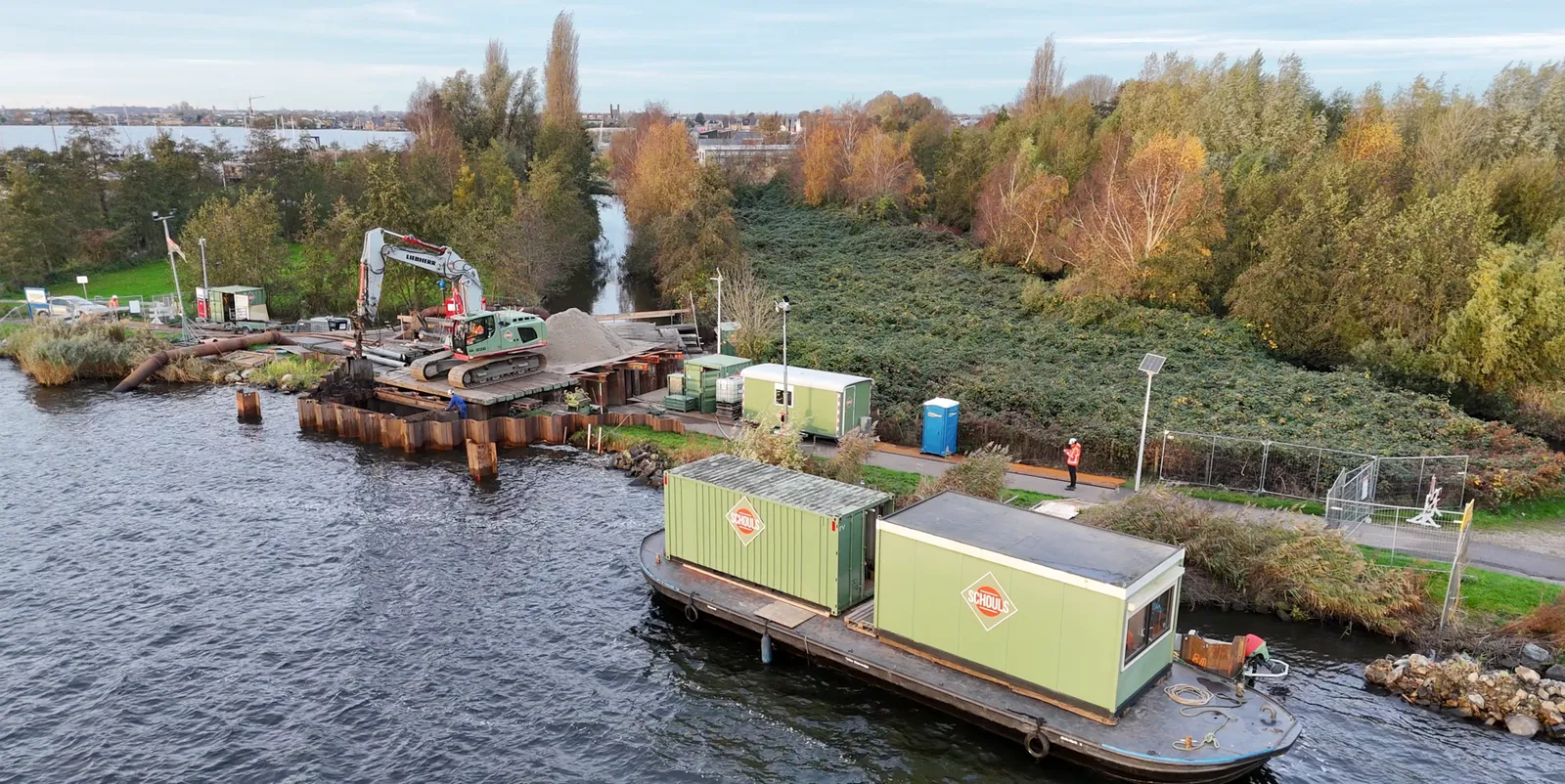
How do you build a new pumping station in a location that heavy transport can barely reach? This logistical puzzle was perhaps the biggest challenge facing Schouls when replacing the Veender- en Lijkerpolder pumping station on the Braassemermeer in Roelofarendsveen. Narrow quays and strict weight limits made transport by land virtually impossible. The solution was found on the water.
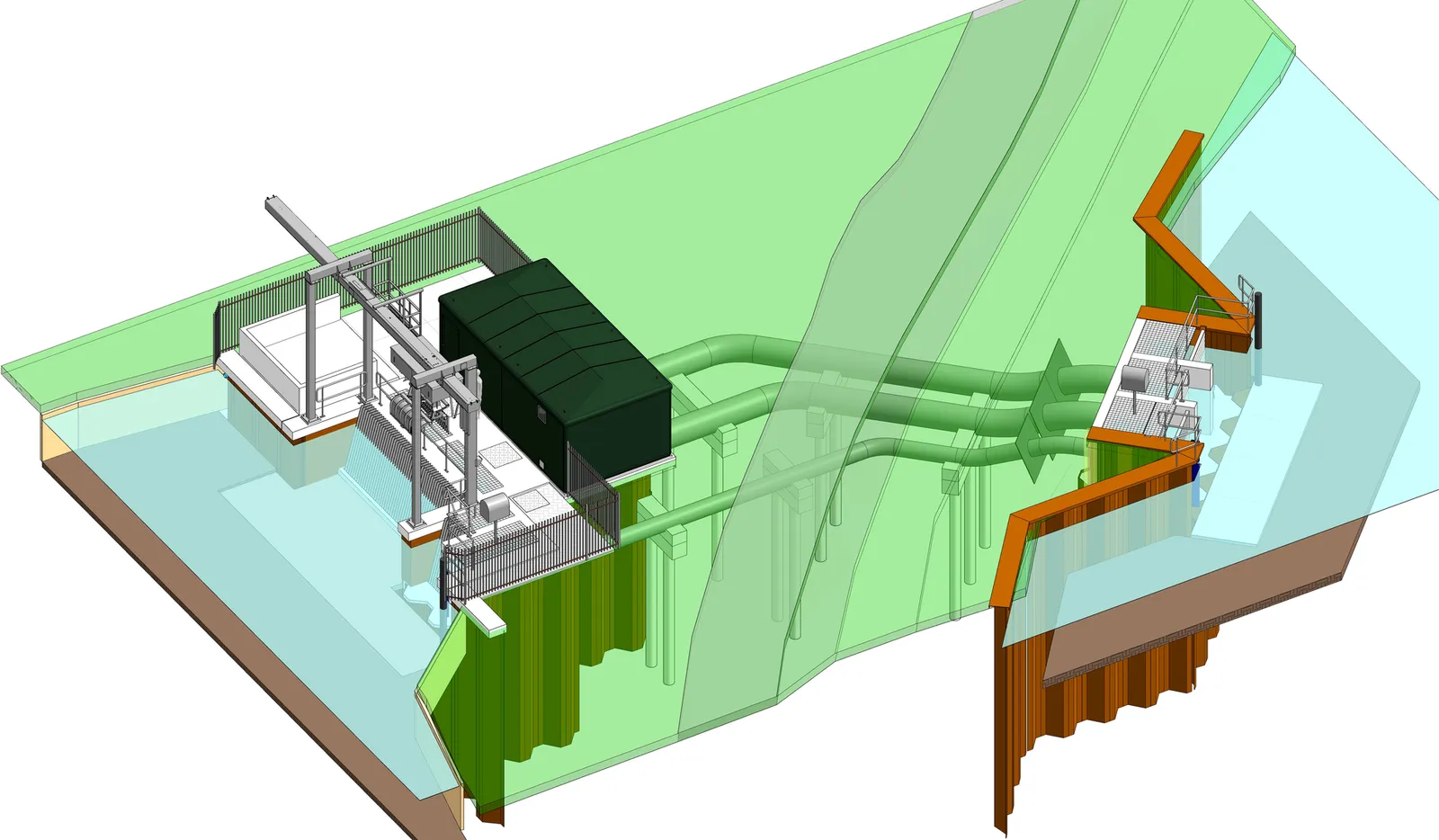
The existing pumping station had reached the end of its service life, says Leen van Belen, project manager at Schouls. “New developments and further growth in the area around the Braassemermeer mean that more water will also need to be discharged in future. This called for a pumping station with greater capacity and higher operational reliability. The new station has therefore been substantially upsized: it is twice as wide and twice as deep as the old one. Whereas previously a single pump was sufficient, the new station has two large pumps, each with a capacity of 37 m³ per minute. This makes the system not only more powerful, but also more reliable: if one pump fails, or more water needs to be pumped, the other can take over.”
Difficult-to-reach location
The pumping station’s location on the Galgekade made the project even more complex. “The quay is narrow and heavily used by cyclists and local traffic,” says Van Belen. “There is also a 5-tonne axle-load limit, which ruled out heavy construction traffic.” Transport by land was considered initially, but it soon proved unfeasible, not only because of the road’s limited load-bearing capacity, but also because of the impact on the surroundings and the safety of local residents and recreational users. The solution? Transport by water. “We brought the materials in via a quayside unloading point on the Oude Wetering, then transported them 2 kilometres further by boat to the construction site. This required careful logistical planning: boats had to be available on time and carry as much material as possible on each trip.”
Smart construction
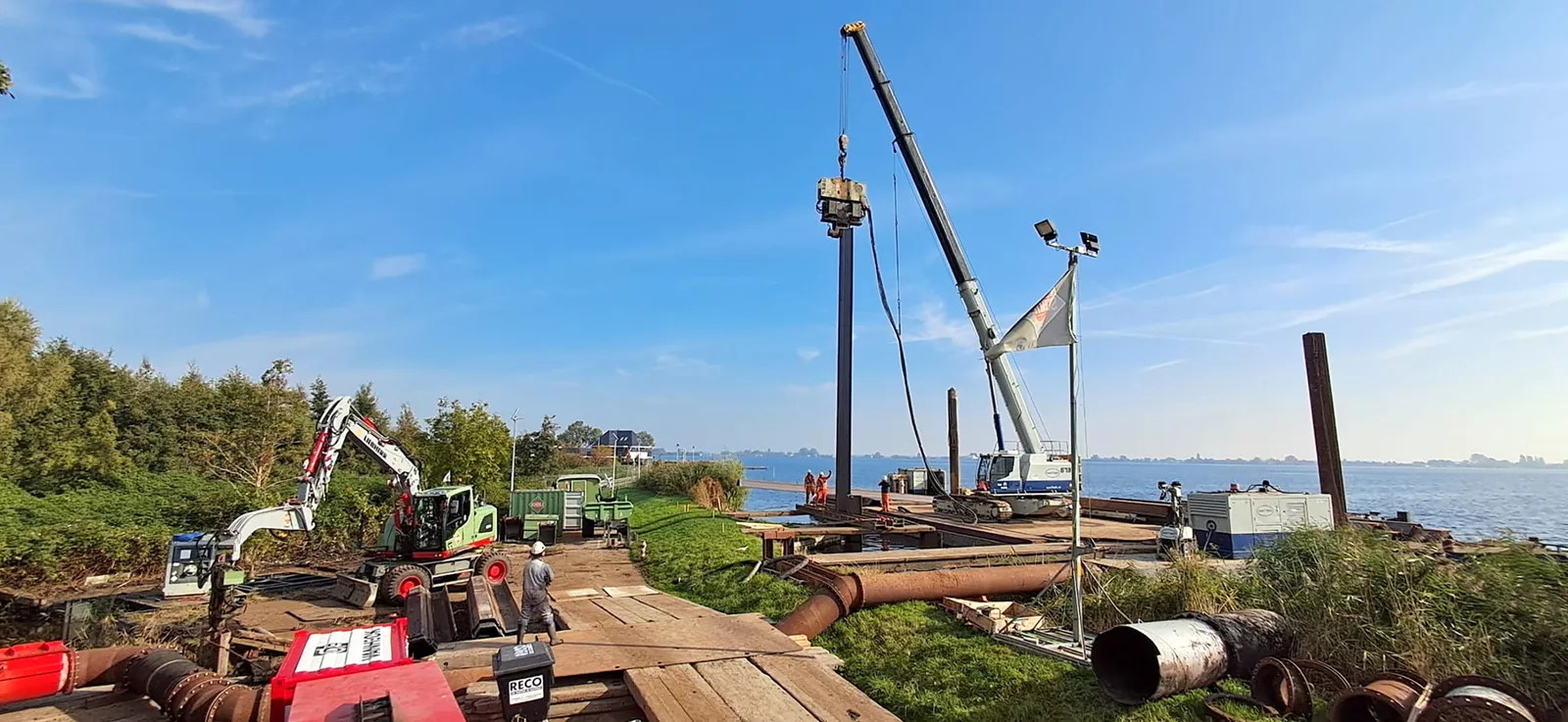
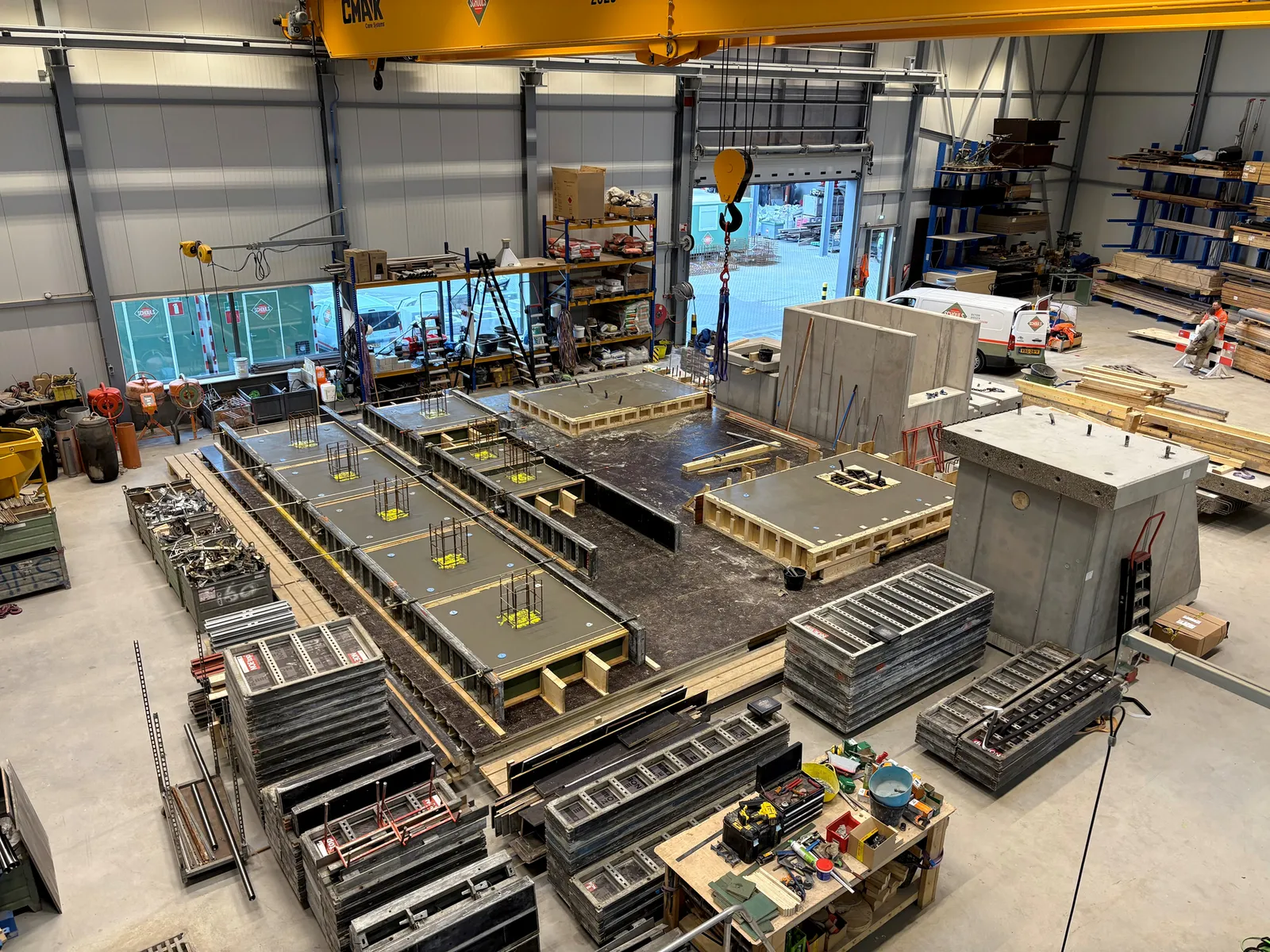
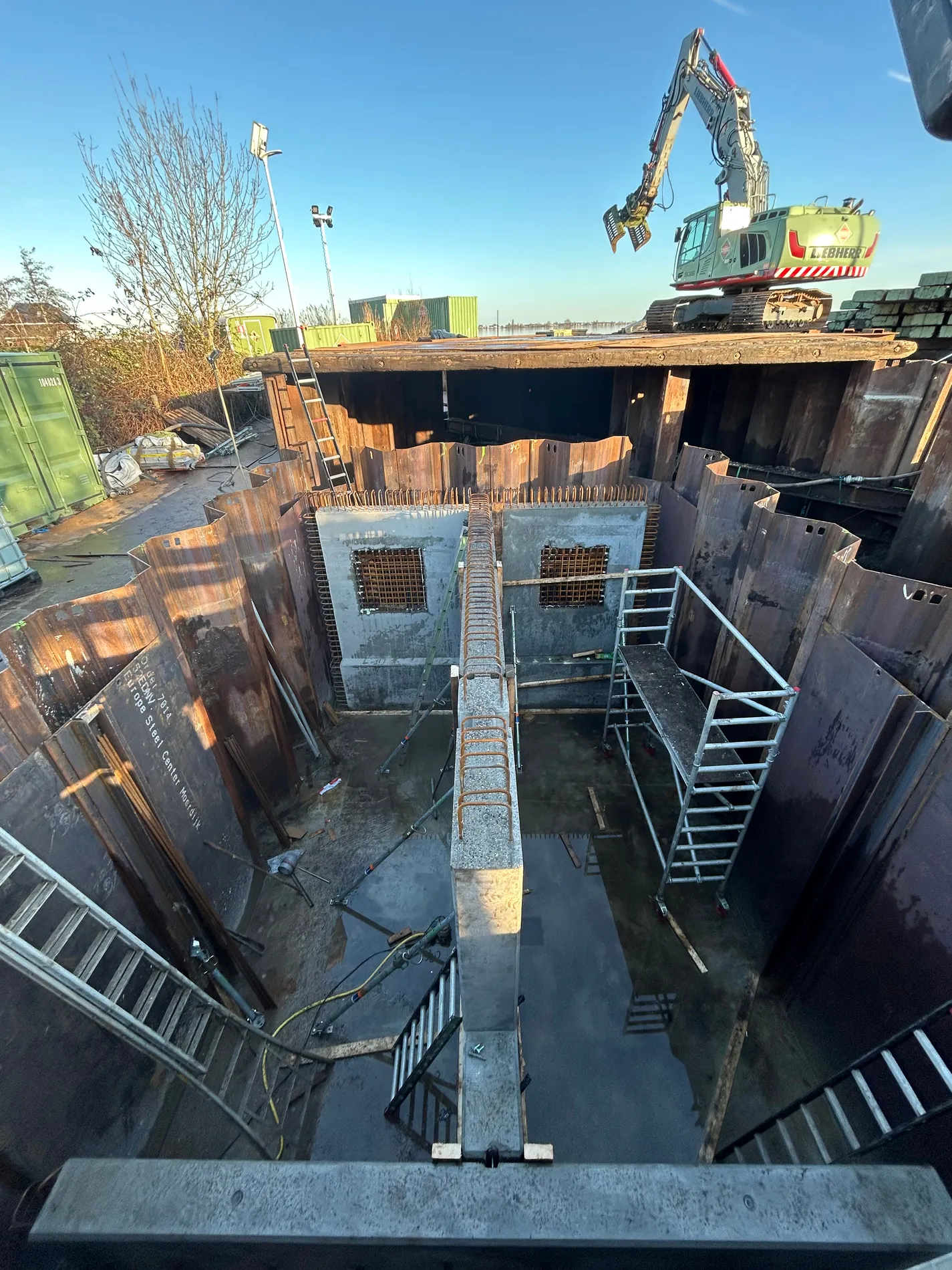
The first major construction step was installing 17-metre-long steel sheet piles to create a cofferdam. “A heavy 70-tonne crawler crane was used for this. It was partly positioned on a pontoon and later moved onto the sheet piles themselves,” explains Van Belen. “This protected the quay and allowed us to work safely and efficiently.” The new pumping station was built entirely within the cofferdam. “We made smart use of precast concrete elements. Since conventional concrete mixers could not reach the site, many components were produced in advance in our workshop and transported to the site in smaller sections. Our own crawler crane then lifted them into position.”
The pumping station floor, however, was cast on site. “Special mini-mixers were used for this, each delivering small quantities of concrete, around 1 m³ per trip. They shuttled continuously between the public road and the construction site.”
Safety first
One of the most visible consequences of the work was the closure of the footpath and cycle path along the Galgekade. “The path is popular with people who cycle around the Braassemermeer for recreation,” says Van Belen. “However, closure was unavoidable: there simply wasn’t enough space to guide cyclists safely past the works. The path was therefore completely closed from the start of work in September 2025 until completion in May this year. Cyclists and pedestrians were diverted via clearly signposted routes.” The schedule was tight. “The work had to be completed before the start of the cycling season. We managed it, despite a relatively harsh winter, which delayed the concrete work, among other things.”
Framework agreement
According to Van Belen, teamwork from the outset was an important factor in this success. “Rather than setting everything out in a contract in advance, we jointly considered the best solution, not only technically, but also in terms of logistics and the surrounding area. This approach has proved highly effective. By pooling knowledge and experience, decisions can be made more quickly and risks managed more effectively.” The pumping station in the Veender- en Lijkerpolder is not an isolated project. It is part of a wider programme to renew several pumping stations under the framework agreement for polder pumping stations with the Hoogheemraadschap van Rijnland. “This way of working, with established teams and long-term contracts, offers clear benefits. It ensures continuity and better coordination between all the parties involved.”
With the completion of the new Veender- en Lijkerpolder pumping station, the water authority is taking an important step towards future-proof water management, with reliability and ecology in mind. “Measures have been put in place to remove debris automatically, simplifying maintenance and optimising operation, and a fish passage has been constructed.” According to Van Belen, the project is once again an example for the sector. “We may be able to work faster, but by working together we can achieve more.”
Question about this story? Ask your question
Keep following this
Get an email when a new story is published. No account needed.
- ProjectVeender- en Lijkerpolder
- ThemeFlood protection and climate-resilient water management
- SubjectWater infrastructure







