









Replacement of the Baarlo–Blerick rising main
Text Roel van Gils Images GW Leidingtechniek
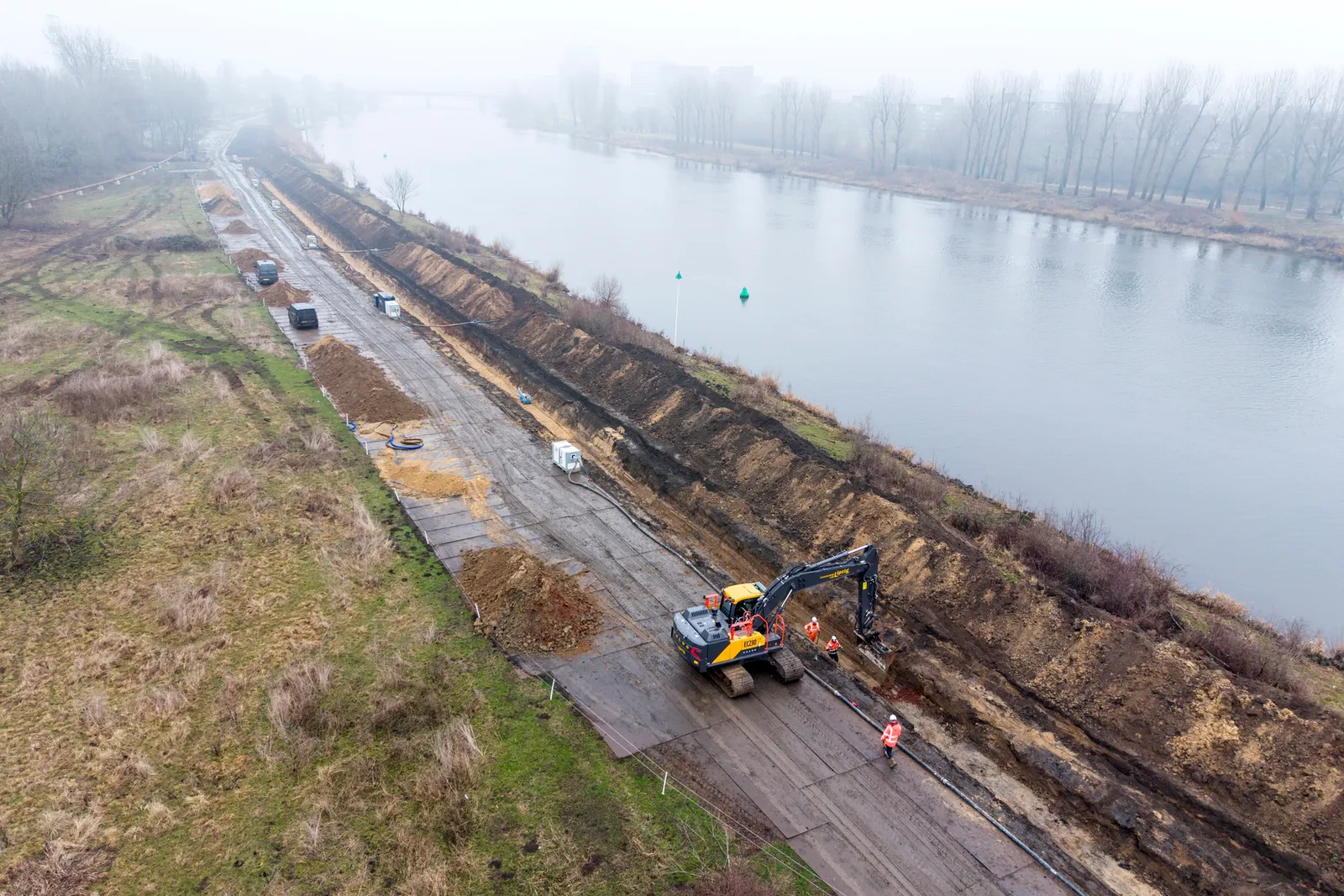
A complex challenge in a sensitive environment
Commissioned by Waterschap Limburg, GW Leidingtechniek is replacing the 6-kilometre sewer rising main between the pumping station in Baarlo and an overflow chamber in Blerick. An inspection found that the existing 500 mm diameter asbestos cement pipeline was in very poor condition. The brief was clear: secure and replace the pipeline as quickly as possible, with minimal risk to the surrounding area and without compromising the pumping station’s operational reliability. The route runs straight through a valuable natural and recreational area along the Maas.
“To ensure the system could continue operating, we first installed a temporary above-ground steel rising main along the entire route,” says Dirk Habraken, project coordinator at GW Leidingtechniek. “The pipeline was tested, pressure-tested, confirmed leak-free and then brought into service. This meant the old asbestos cement pipeline could be taken out of service immediately, and we are now replacing it in stages. Work began in August 2025, and the temporary pipeline has been operating as intended ever since.”
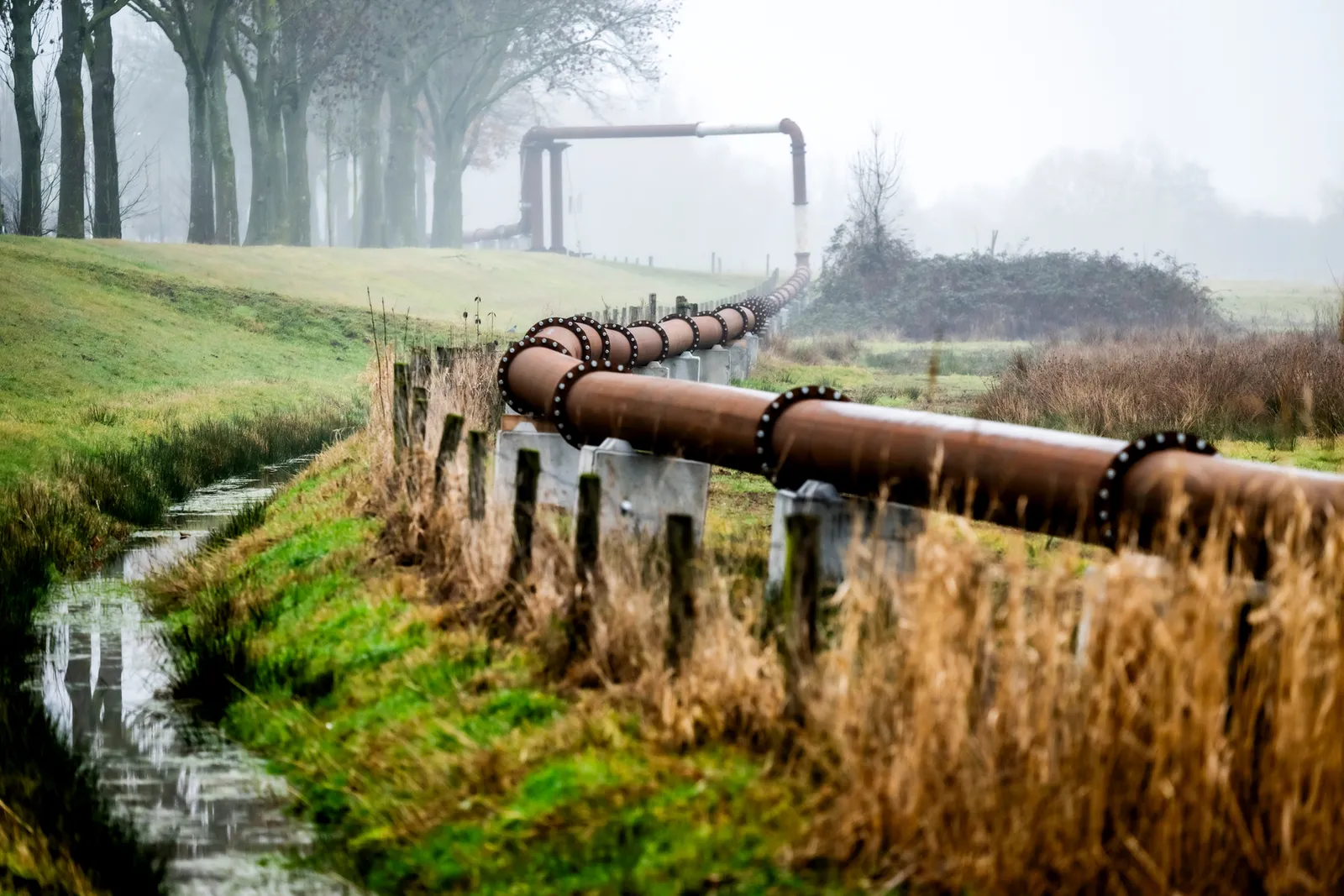
Seven stages
The project is divided into seven stages. “At each stage, a section of the old pipeline is carefully excavated and removed in accordance with the applicable procedures, including the use of protective equipment and the disposal of material in sealed containers,” Habraken explains.
“Once the old pipeline has been removed, the trench is brought to the required level, and the new HDPE pipeline, with an outside diameter of 560 mm (SDR17), is assembled alongside it. The pipe sections are welded together on site into long strings, which are then pulled into the cleared trench. The first section of the new pipeline has now been installed.”
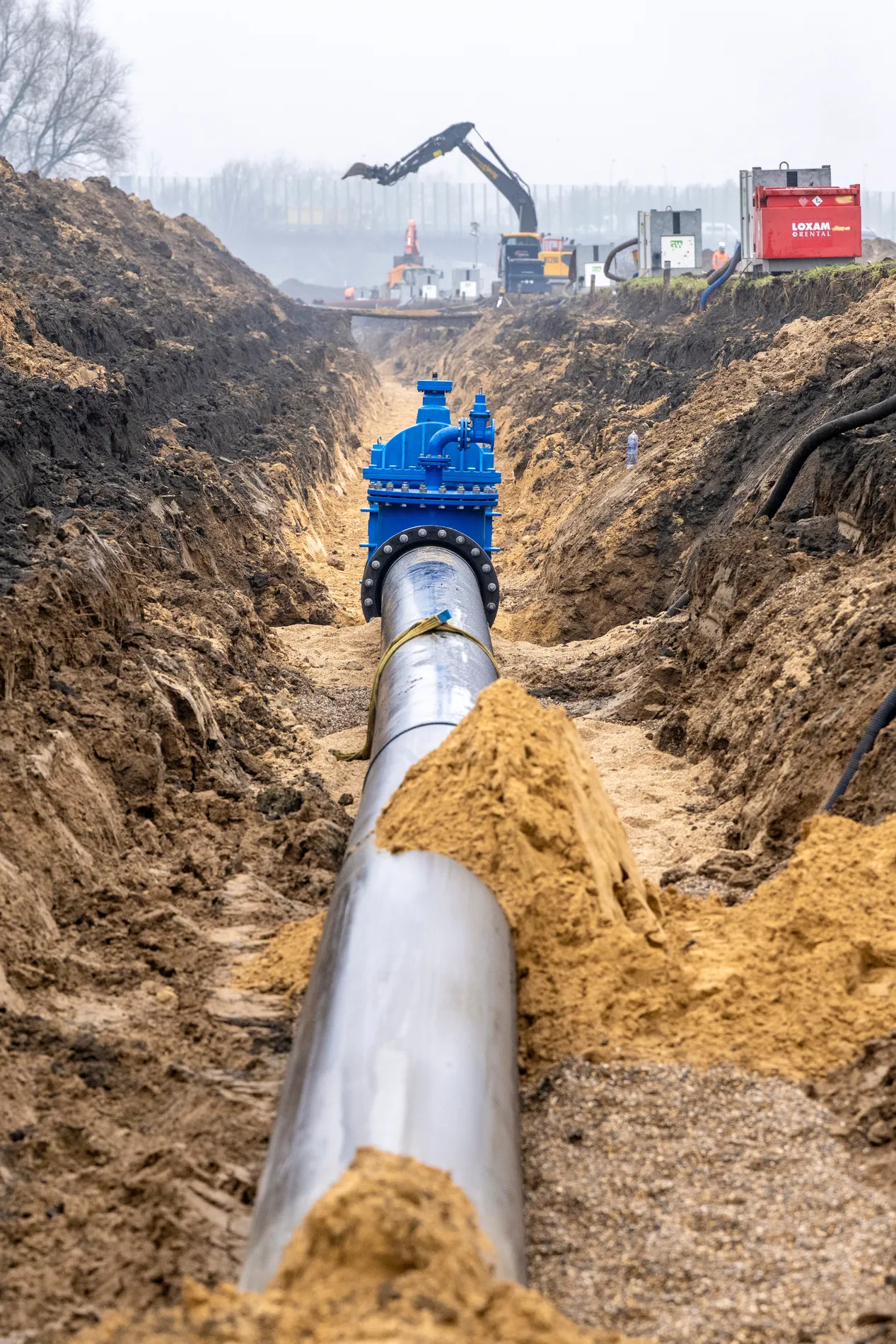
Switching over
According to Habraken, a key advantage of the chosen approach is that sewage can be transferred at each stage. “The switch from the temporary to the permanent pipeline is carried out in a controlled and carefully planned way. The temporary pipeline has T-pieces that allow a connection to the new pipeline to be made at each stage. This means the new pipeline can be prepared stage by stage without taking the system out of service. When it is time to switch over, valves are operated and the wastewater flows straight through the new pipeline. This keeps interruptions to the pumping station to a minimum and allows us to remove more of the temporary pipeline as work progresses.”
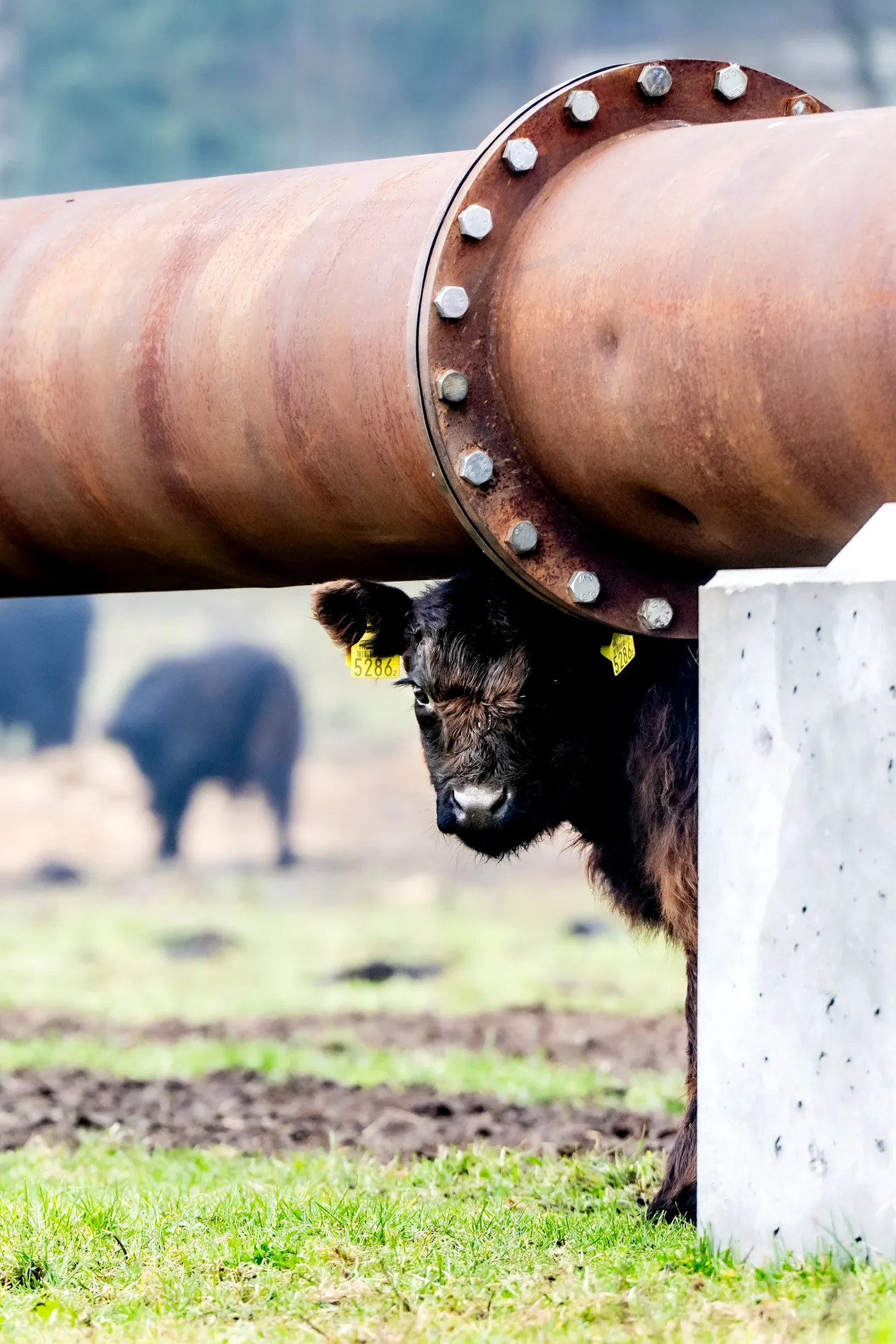
Running parallel to the Maas
For most of its route, the pipeline runs parallel to the Maas, in some places just a few metres away. Habraken says: “The project area is a valuable natural and recreational area with many stakeholders: Rijkswaterstaat, the municipalities of Venlo and Peel en Maas, Stichting Limburgs Landschap and several private landowners. We are also working in the habitats of beavers and Galloway cattle, as well as on dikes, where appropriate measures have been taken to ensure that nature and construction work can coexist safely. On the dike sections, the temporary pipeline rests on concrete blocks to prevent damage, while the risk of high water has been taken into account outside the dikes. The concrete blocks mean the steel pipeline does not form a barrier.”
Habraken says the project stands out for its practical and flexible approach. “Our experience with a similar project in 2019 on the other side of the Maas means we can work efficiently at each stage and gradually phase out the temporary setup. With a small but effective team and fleet, and a focus on sustainability, including the use of electric dewatering pumps, we are steadily working towards successful completion. Stages 1 to 6 will continue until the end of 2026. Stage 7, near the pumping station, is a separate project because it coincides with the stream restoration and dike reinforcement works (HWBP). It is scheduled to start in early 2027, with completion by mid-March.”
Een zakelijke vraag aan GW Leidingtechniek BV? Get in touch
Companies in this story
Keep following this
Get an email when a new story is published. No account needed.
- ProjectBaarlo – Blerick sewage rising main
- ThemeFlood protection and climate-resilient water management
- SubjectWater infrastructure
- CompanyGW Leidingtechniek BV







