









Pipeline renovation with plastic products
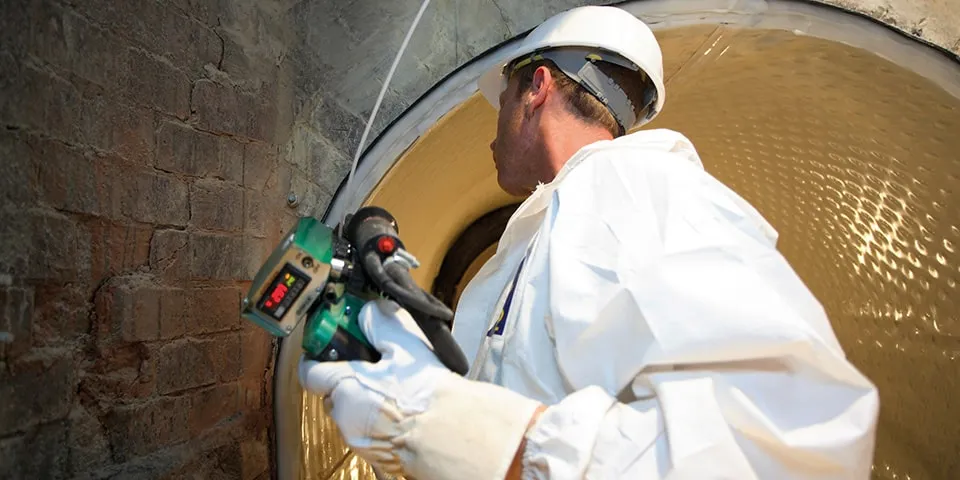
When it comes to repairing steel or concrete pipes, water tanks or concrete basins, polyethylene products play an important role. In many renovation projects, engineering plastics offer the best solution, thanks to their ease of processing, excellent chemical resistance and attractive prices.
Leaking steel or concrete pipes can be renovated in various ways. Relining with plastic pipes or concrete protection sheets prevents corrosion in sewers and concrete pipes. This technique preserves the old pipe as a protective layer and also makes it resistant to aggressive liquids or gases. It is important to distinguish between renovations carried out with or without an annular gap.
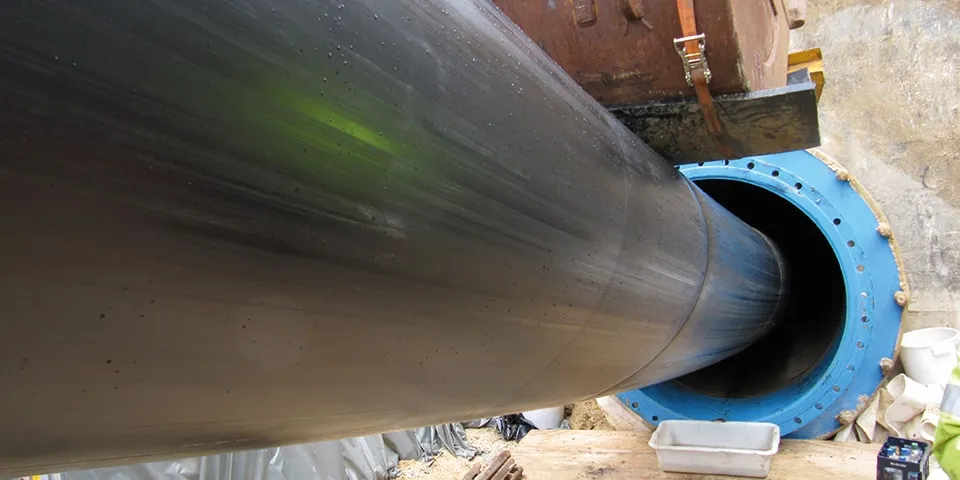
In renovations with an annular gap, the pipe diameter is reduced. The lower flow capacity is partly offset by the smooth surface of the new HDPE AGRULINE pipes.
Renovating without an annular gap
The advantage of renovating without an annular gap is that the old internal diameter remains virtually unchanged, preserving both the flow rate and the transport capacity. AGRU Kunststofftechnik has been offering effective solutions for this purpose for decades. A folded, and therefore compact, HDPE pipe, known as an AGRU SureFIT pipe, is pulled into the old pipe. Once the AGRU SureFIT pipe has been inserted into the existing pipe, both ends are sealed and the pipe is pressurised with water vapour. Heat and pressure activate the memory effect of the plastic pipe. The AGRU SureFIT lining returns to its original circular shape and fits inside the old pipe like a second skin. Large-diameter pipes are lined with a thermoplastic coating made from AGRUSAFE concrete protection sheets. The result is a permanently sealed composite pipe that is resistant to corrosion, wear and chemical liquids and gases.
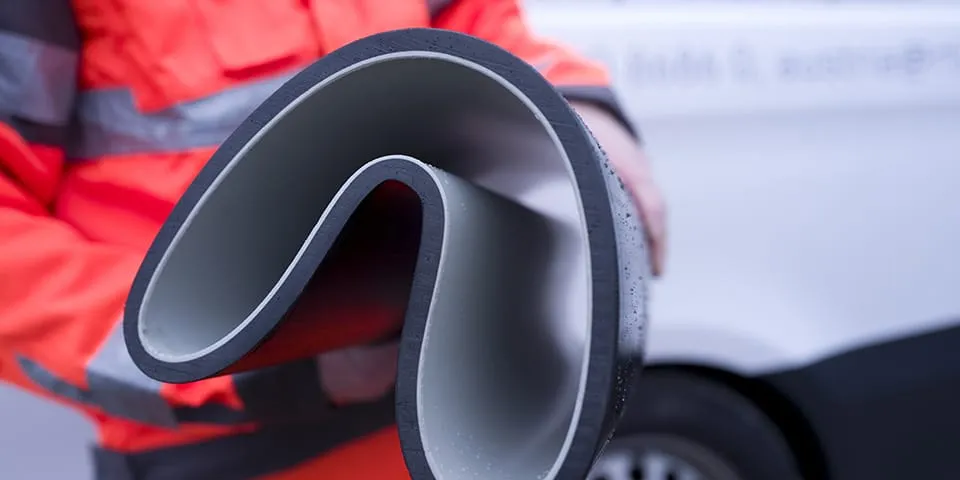
For relining without an annular gap, a folded HDPE pipe, known as an AGRU SureFIT pipe, is pulled into the old pipe.
Renovating with an annular gap
When the renovation leaves an annular gap between the old and new pipes, the internal diameter is reduced because the new HDPE pipes are installed inside the existing pipe. This inevitably creates an annular gap between the new and old pipes. The lower transport capacity is partly offset by the smooth surface of the new HDPE pipe. Renovation is carried out using coiled HDPE AGRULINE pipes in standard lengths of 100 m and with an outside diameter of up to 90 mm. For larger diameters, individual HDPE AGRULINE pipes can be welded together step by step and pushed into the old pipe. The full range of available HDPE AGRULINE pipe dimensions, from OD 20 mm to OD 3500 mm, can be used for relining.
Question about this story? Ask your question
Keep following this
Get an email when a new story is published. No account needed.
- ThemeFlood protection and climate-resilient water management
- SubjectWater infrastructure







