









Ooijen-Wanssum dike improvements sustainable and effective
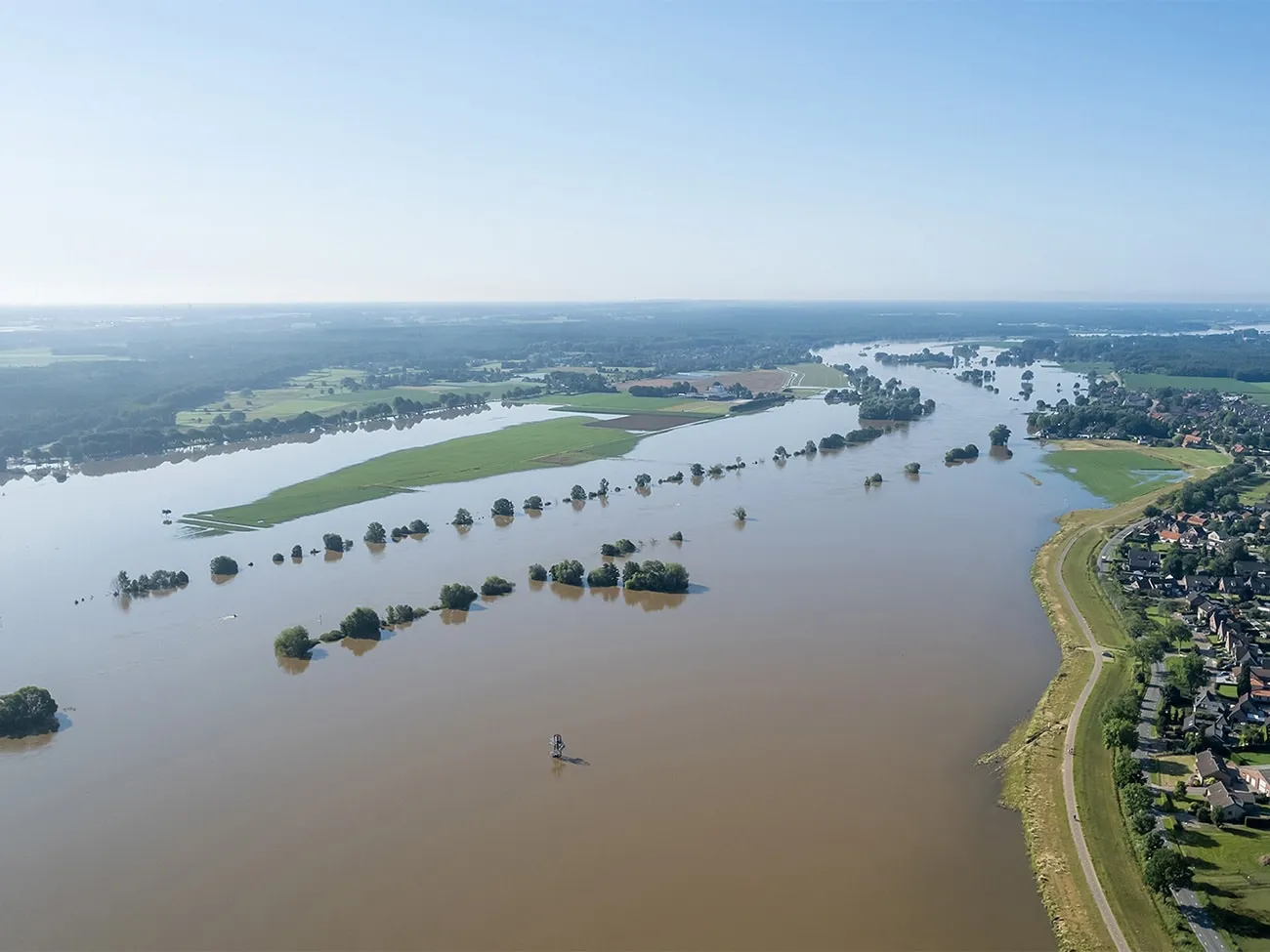
The major floods in Limburg in 1993 and 1995, which shocked the whole country, made people acutely aware that living and working alongside water carries risks. We were recently reminded of this by the extremely high water levels in the River Meuse in July this year. Waterschap Limburg is working with Rijkswaterstaat, the High Water Protection Programme (HWBP), Gebiedsontwikkeling Ooijen-Wanssum and Consortium Grensmaas, among others, to strengthen and build dikes along the Meuse.
Fugro moves with the water in a changing role
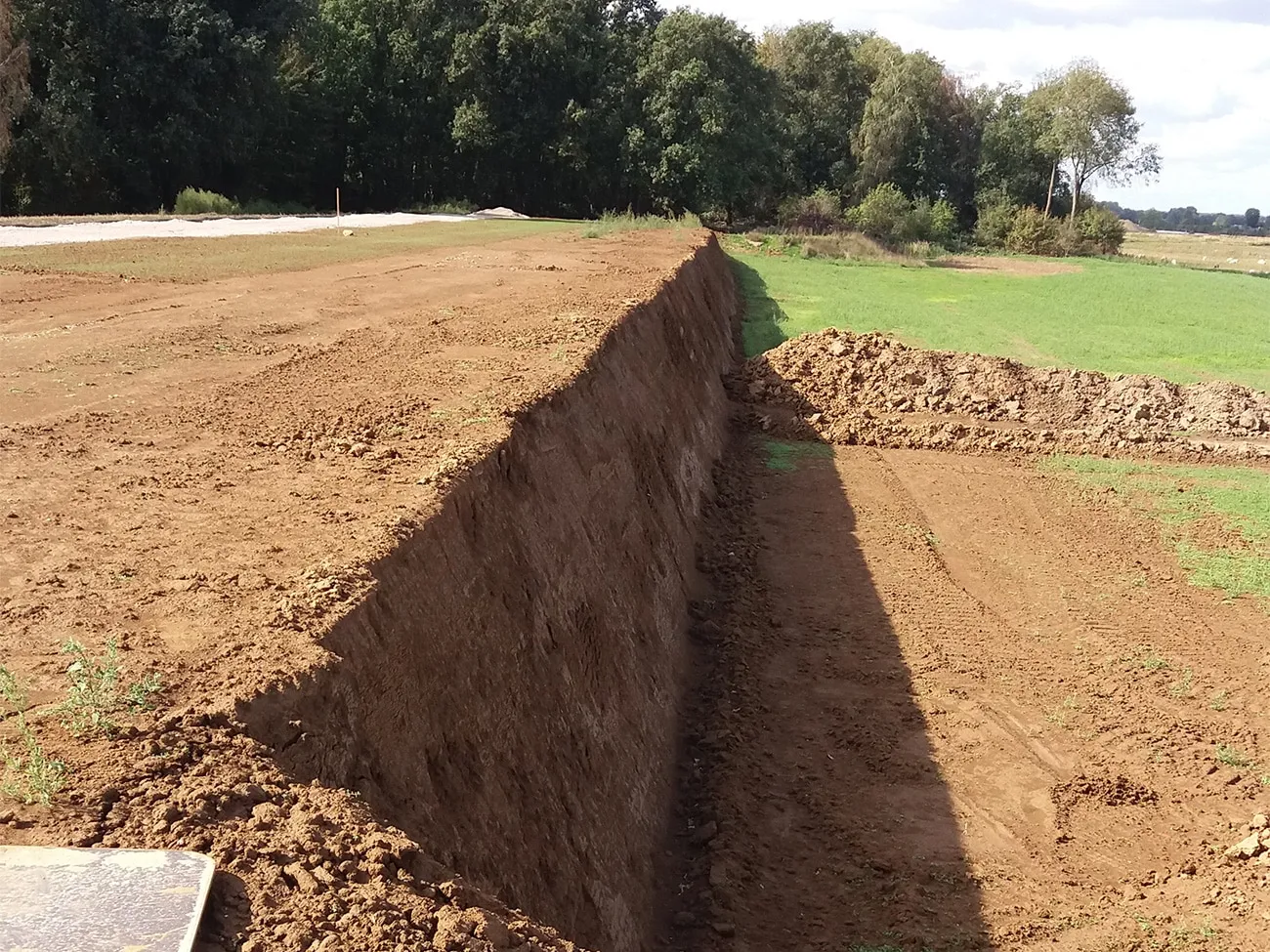
Gebiedsontwikkeling Ooijen-Wanssum was completed in December 2020. The project was delivered by Mooder Maas, a joint venture between contractors Dura Vermeer and Ploegam. This area development provides a lasting solution to the flood risk in the area. The project team sought flood defences that would fit into the landscape of North Limburg, which was originally without dikes. This was achieved by creating two new types of dike: the Steilranddijk and the Hoge Gronddijk. Mooder Maas built the new dikes using locally sourced material, also meeting the project’s sustainability targets. The landscape design for this approach was drawn up by H+N+S Landschapsarchitecten, and Fugro produced the technical design. GWW magazine spoke to Leo Zwang, project director at Fugro Nederland.
The objectives of Gebiedsontwikkeling Ooijen-Wanssum
Flood protection against water levels that occur once every 250 years
Lowering water levels by 35 cm (during high water)
Developing nature and the landscape
Improving the quality of life in Wanssum
Creating space for new economic development
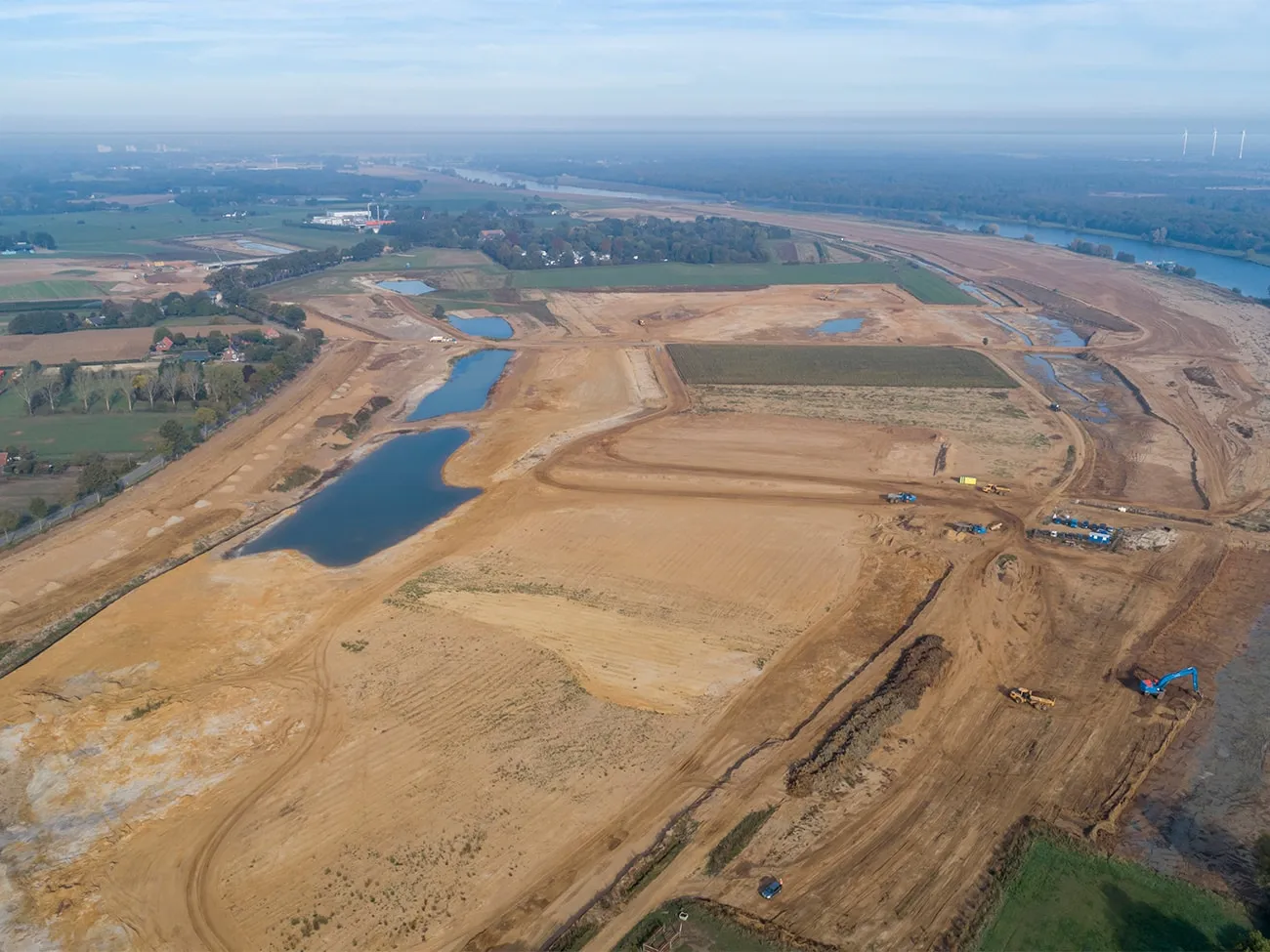
With the area development complete, the area between Broekhuizen and Geijsteren is protected from high water levels in the Meuse. New opportunities have been created for businesses to grow, and the centre of Wanssum has become a more pleasant place to live thanks to the new bypass. A stunning natural area of more than 500 hectares has also been created: Maaspark Ooijen-Wanssum. In addition, high water levels are lowered by 35 cm, an effect that can be felt as far away as Roermond.
Gebiedsontwikkeling Ooijen-Wanssum is an initiative by five public authorities:
Ministry of Infrastructure and Water Management/Rijkswaterstaat
Province of Limburg, Gemeente Venray, Gemeente Horst aan de Maas
Waterschap Limburg (Source: waterschaplimburg.nl)
As much as 20,000 tonnes less CO2 emissions
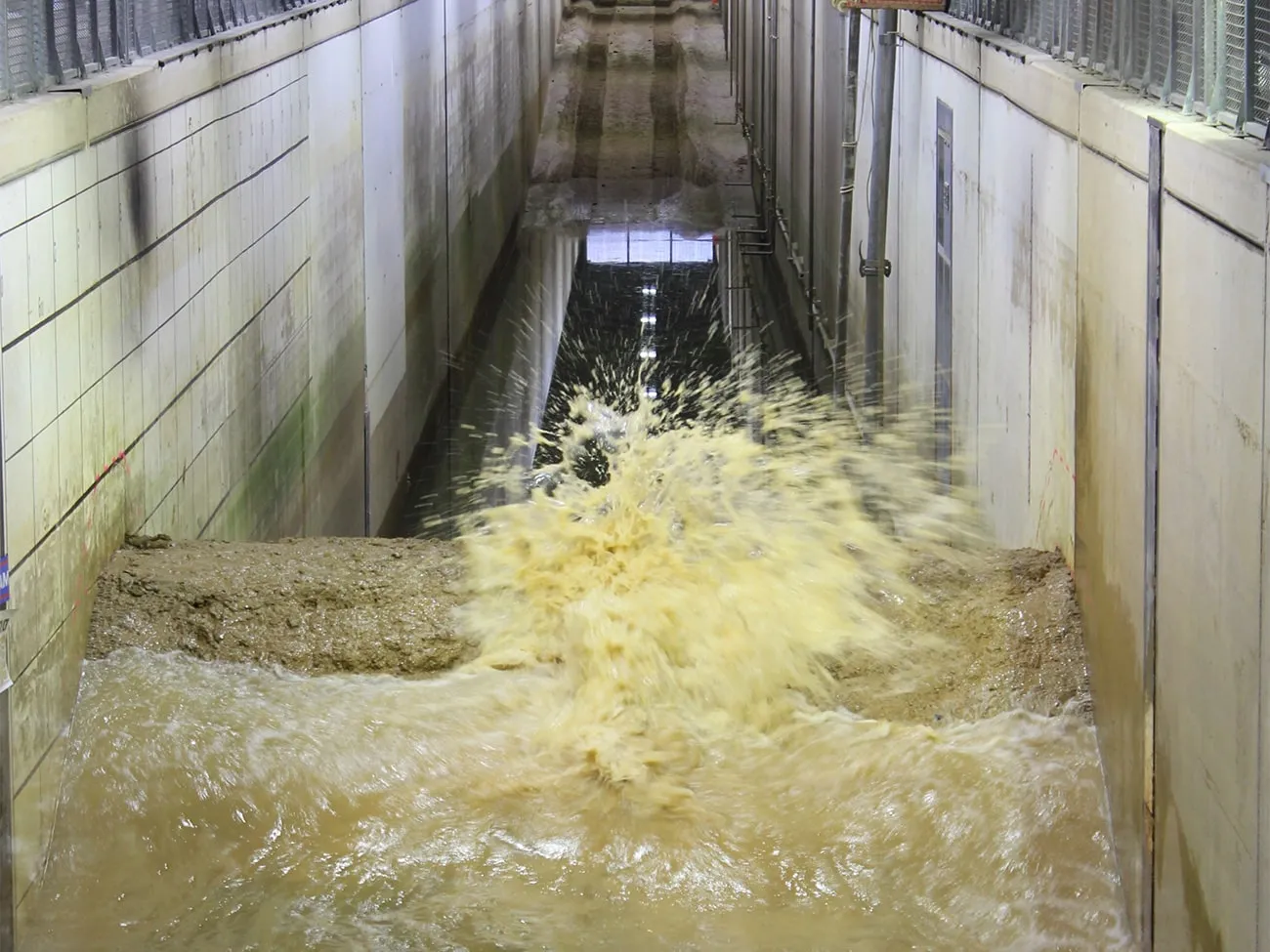
Leo begins: “The sustainability criteria for water engineering are still unclear. It is really a catch-all term. Of course, water safety is sustainable in essence, but building dikes is not always good for the environment. The original plan involved excavating and removing 4 million cubic metres of soil. As a geo-data specialist, we worked with H+N+S Landschapsarchitecten to design sustainable dikes (see box on page 13) that, although considerably wider, fit much better into their surroundings. The width of the dike created far more opportunities for shared use. By using locally available material, we were able to cut CO2 emissions by 50%. Instead of being removed, the soil was assessed by Fugro for strength through extensive laboratory testing. We recreated the dike in a 300-metre-long wave flume and tested soil from Ooijen. The results proved that the material could safely be used for these dikes. The real test came last July, when high water hit Limburg: the dikes at Ooijen-Wanssum passed with flying colours.”
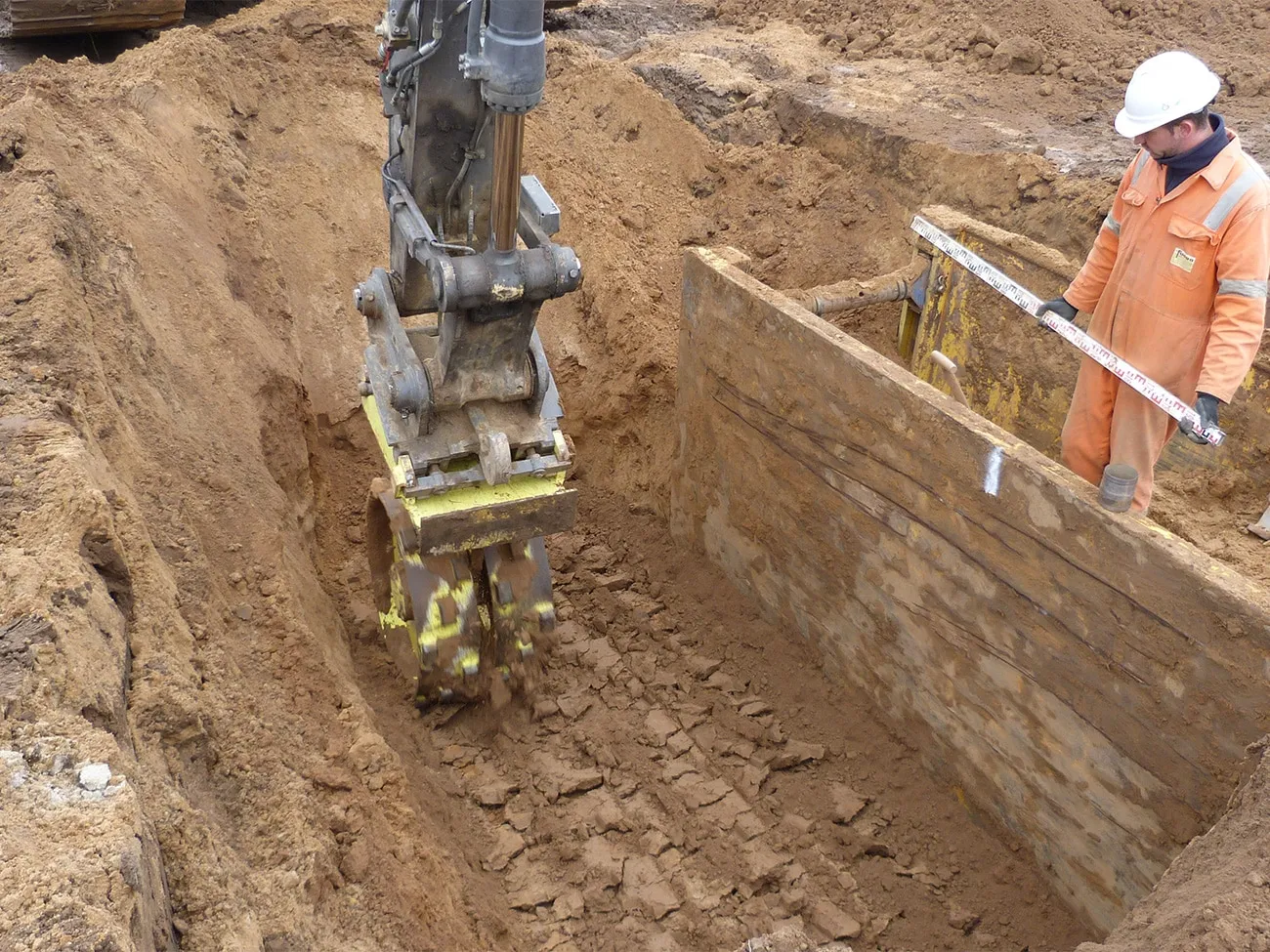
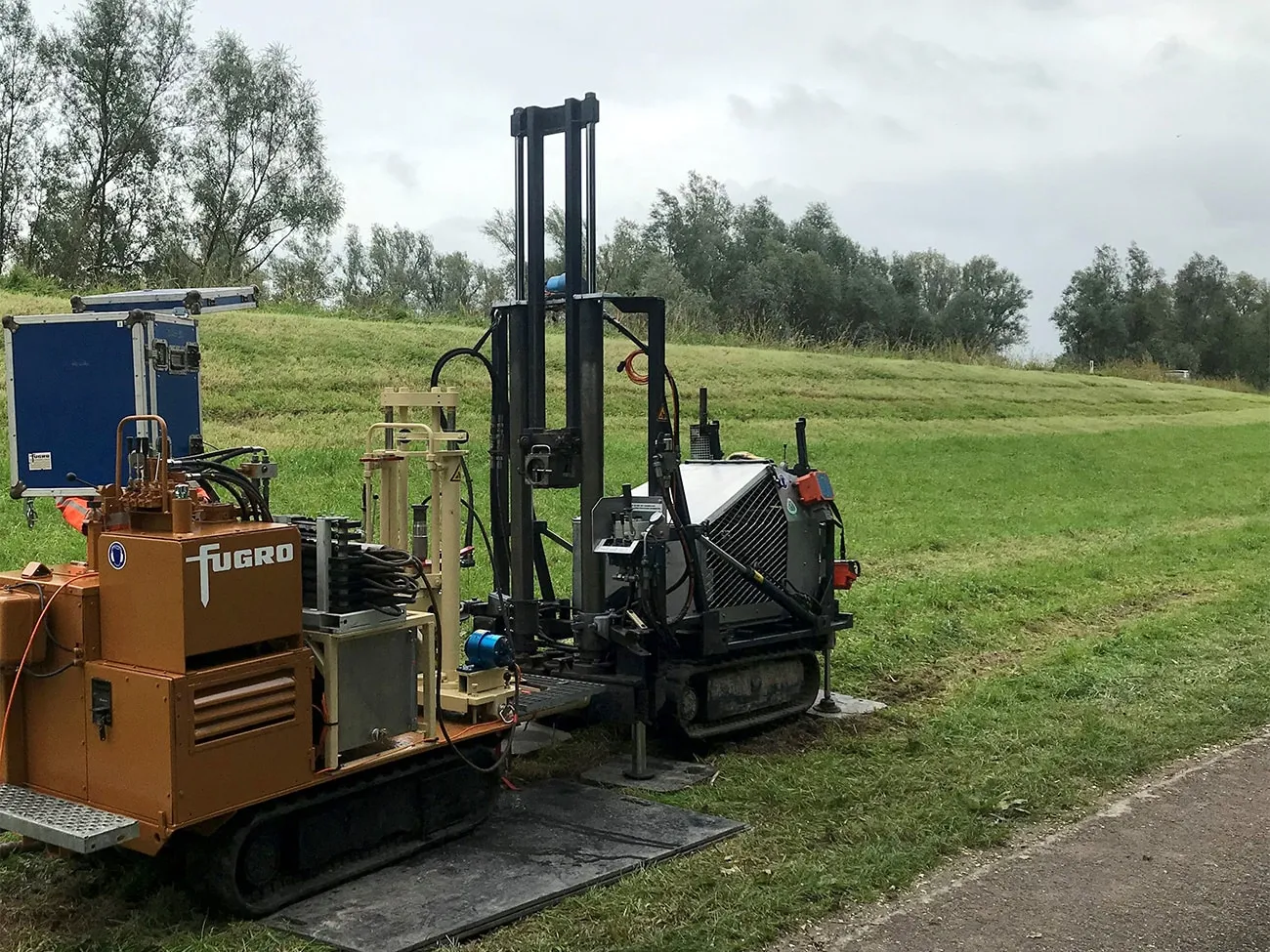
The tests included conventional geotechnical tests, wave flume tests, current flume tests and pinhole tests. These tests proved the design was safe. The seepage barriers in this project were made of clay rather than steel. HPT-(A)MPT © soundings showed that the seepage barriers could be short, making clay a viable option for their construction. This also delivered sustainability benefits: lower emissions, the use of local material and a design built to last, with a solution that fits beautifully into its surroundings.
Fugro’s added value
Leo describes the major change in Fugro’s approach, brought about by new contract models: “We are invited to join discussions earlier and contribute our ideas. When I started at Fugro, the project stages up to construction were fixed, and the contractor carried out the work in accordance with the specification. Fugro provided measurement and consultancy services to water authorities. It was excellent work, but new contract models showed that more was possible. Under the new models, contractors also have a seat at the design table. Fugro adds significant value to this process: by bringing us on board, all the technical options can be explored and put to use. We often identify these opportunities during the tender stage. Beyond all the data, Fugro’s people have an enormous depth of knowledge. For example, we knew at an early stage that the designs for Ooijen-Wanssum were feasible. By working innovatively, we can establish the buildability of any project very early in the process. In terms of capacity and experience, Fugro really stands out: combining measurement, consultancy and design gives us a strong position. We bring all our knowledge and experience to future projects.”
“Being able to put forward innovations in the very first project stage is new,” Leo continues. “We are involved from design through to delivery. By collecting data and treating every project as a learning opportunity, we can apply our data and knowledge to other projects. This also helps build a clear picture of the properties of particular soil types in different areas. It has led us to consider how the structure of the subsoil develops. What effect does the climate have on clay? This is an important question for climate adaptation, and we are finding more and more answers.”
The importance of digitalisation
“In projects over the past few years, we have also seen digitalisation advance. This applies not only to data acquisition, but also to consultancy and modelling. With every project, we show that we are taking another step forward. We also work with our partners to improve how our digital processes connect with one another. Our aim is to make the design process not only more efficient, but above all faster, while also increasing the level of detail. Optimising material use also delivers immediate environmental benefits.”
Leaving the landscape better than we found it
Leo agrees that the landscape at Ooijen-Wanssum has been left in better condition than it was found. “That is how Fugro views sustainability in the long term: what we do must be lasting and improve quality of life. At Ooijen-Wanssum, the project was not just about strengthening the dikes, but developing the whole area. We incorporated nature and the surrounding landscape into a design that improves quality of life. Using different materials from those normally used has even enhanced the ecology, as can be seen, for example, in the sand martin nests in the steep slopes. Another principle in the dike design has created new natural value. We are proud of the teamwork that made this possible and won us the Water Innovation Prize in 2019. The new role we have taken on suits us. As a company, we move with the water.”
To conclude, Leo says: “The plan brought people along with it. Local residents had plenty of opportunity to have their say, and everyone could see its natural benefits. As a result, stakeholder management also went smoothly. The bottom line is that sustainability does not necessarily have to cost more. It does not get much greener than Ooijen-Wanssum.”
Steilranddijk and Hoge Gronddijk
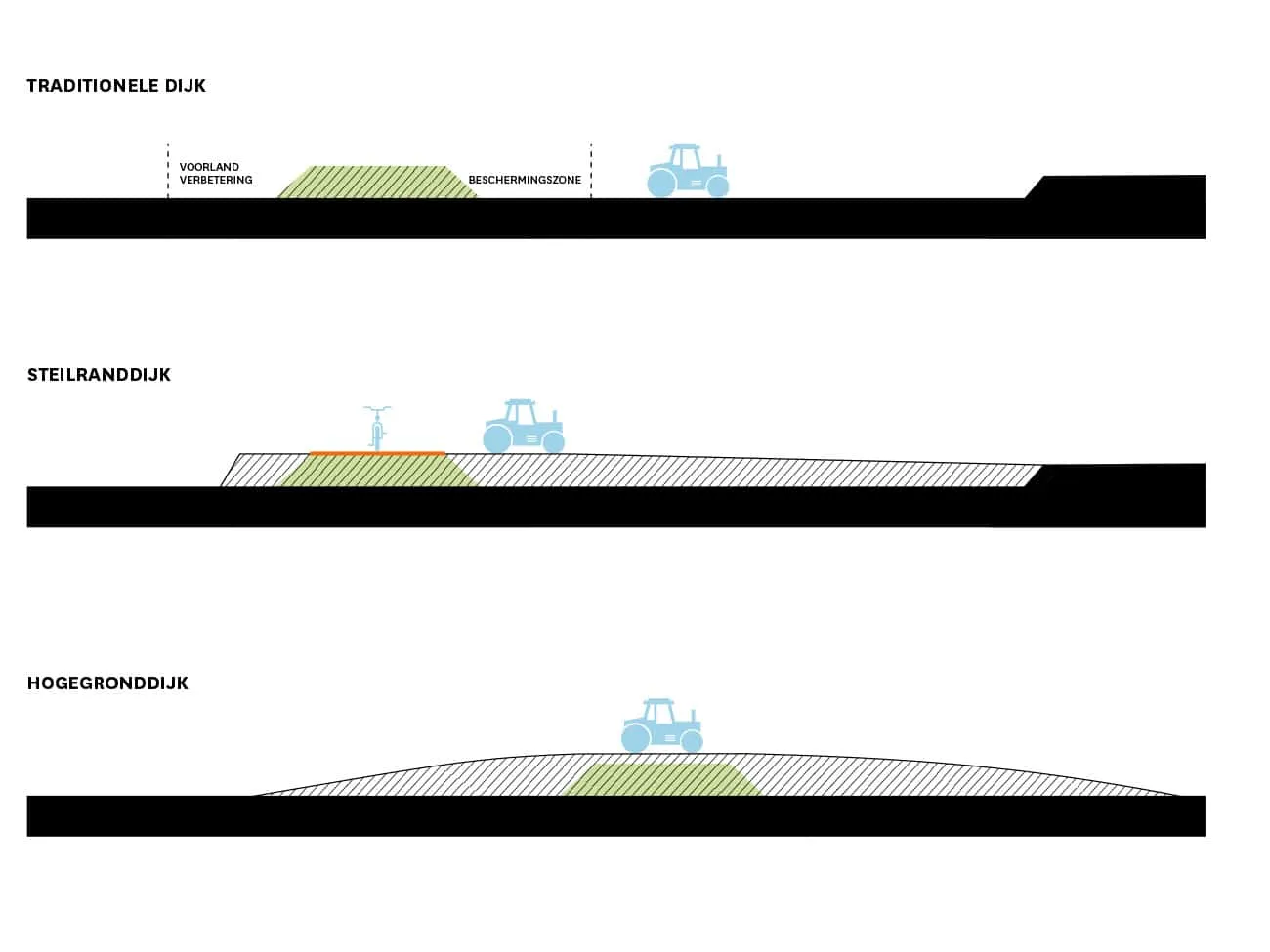
For Gebiedsontwikkeling Ooijen-Wanssum, the team sought flood defences that would fit into the landscape of North Limburg, which was originally without dikes. The Steilranddijk enhances the distinctive terraced landscape along the Meuse with a nature buffer featuring a steep slope at the front. The buffer is free to develop dynamically, with natural erosion processes and vegetation shaping its form. The actual flood defence lies behind this nature buffer. Concealed from view, it protects the area behind it from high water levels in the Meuse. The classic design of a river dike with clay facing and a grass cover has been replaced here by a concealed embankment with a robust clay erosion buffer. On the landward side of the dike, extra soil is placed on the slope to blend the flood defence into the rolling landscape and allow the dike to be used for other purposes. The Hoge Gronddijk also has a robust, future-proof design, with the flood defence ‘wrapped’ in extra height above the dike and gentle slopes. (Source: Fugro)
Prize-winning project!
The Ooijen-Wanssum project under the High Water Protection Programme recently won the 2020 Golden Pyramid award from the Ministry of the Interior and Kingdom Relations.
National award
The Golden Pyramid is the national award for inspiring commissioning in architecture and area development. In addition to the trophy, the project receives 75,000 euros. Outgoing Minister of the Interior and Kingdom Relations Kajsa Ollongren presented the award. This is the third award for Ooijen-Wanssum. Previous awards include the 2018 Spatial Quality Award and the 2019 Water Innovation Prize.
A business enquiry for Fugro? Get in touch
Wie aan Gebiedsontwikkeling Ooijen-Wanssum werkte
- engineering consultancyRoosMentioned in Successful coordination is vital to the Ooijen-Wanssum Area Development
- geo-data specialist
 FugroMentioned in Fugro’s unique, sustainable dike design provides a solution for Limburg
- landscape architectH+N+SMentioned in Fugro’s unique, sustainable dike design provides a solution for Limburg
- contractors' joint ventureMooder MaasMentioned in Fugro’s unique, sustainable dike design provides a solution for Limburg
- contractorsDura VermeerIn this story
- contractorsPloegamIn this story
- Landscape designH+N+S LandschapsarchitectenIn this story
Keep following this
Get an email when a new story is published. No account needed.
- ProjectOoijen-Wanssum area development
- ThemeFlood protection and climate-resilient water management
- SubjectWater infrastructure
- CompanyDura Vermeer
- CompanyPloegam
- CompanyH+N+S Landschapsarchitecten
- CompanyFugro







