









Neder-Betuwe: a crucial link in a safe Northern Waal dike
Text Roel van Gils Beeld Dijkalliantie Neder-Betuwe
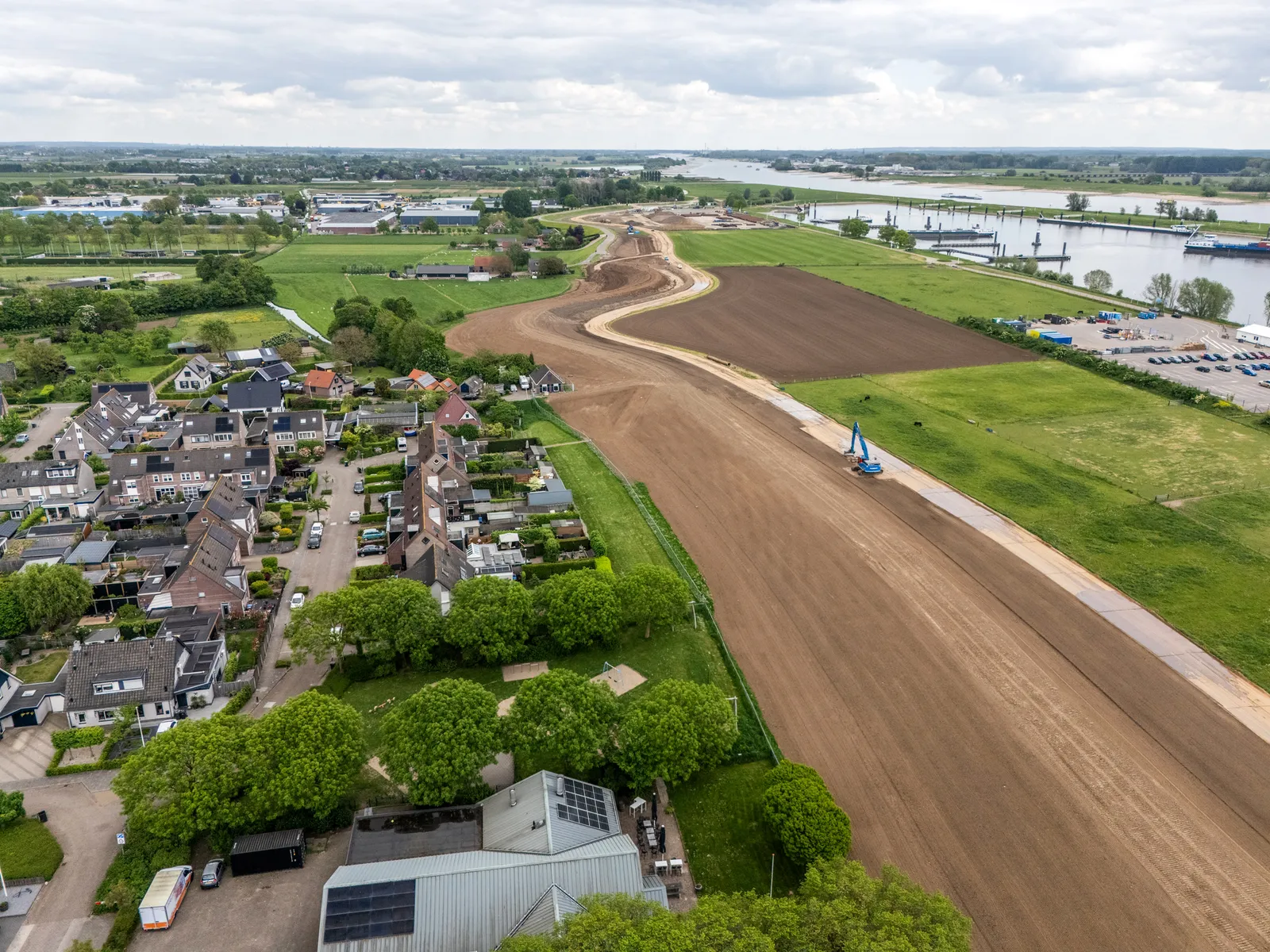
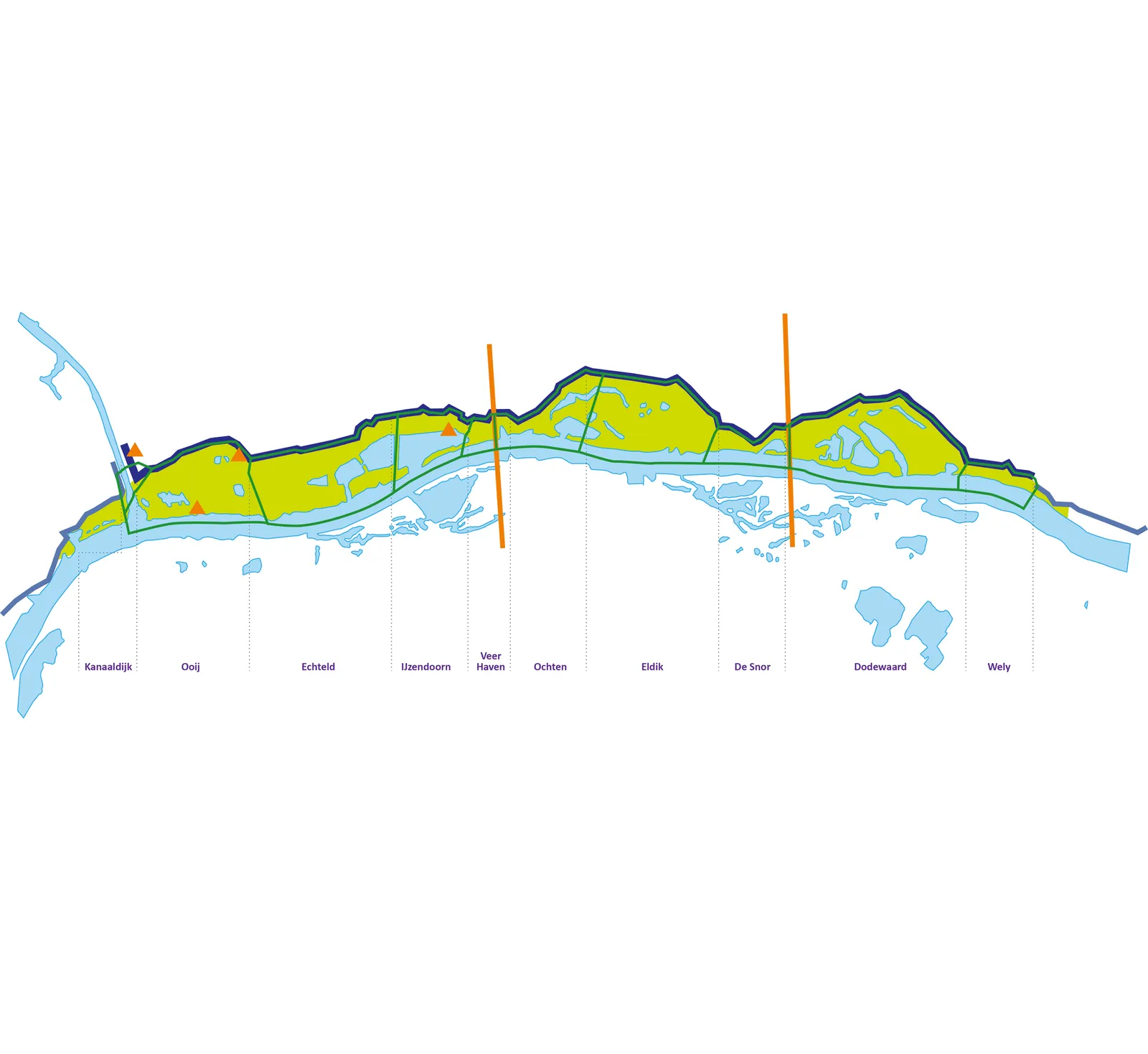
For the Neder-Betuwe dike reinforcement project, Waterschap Rivierenland is working with Dijkalliantie Neder-Betuwe (a partnership between Dura Vermeer, GMB and Ploegam) on one of the region’s largest flood safety projects. The 20.2-kilometre stretch of the Waal dike between Tiel and Wely is being reinforced to provide protection against high water in the future. The project combines innovative dike reinforcement with zero-emission construction, smart logistics and area development around Veerhaven Ochten, and forms the penultimate link in a safe Northern Waal dike.
The project was prompted by several failure mechanisms that threatened the dike’s safety under the standards set by the Water Act, as previous inspections and assessments showed. “In several locations, the dike needs to be raised to meet current safety standards,” says David van Hasselt, project manager at Waterschap Rivierenland. “Piping is also a significant concern: this is when water flows beneath the dike, carrying sand with it and potentially weakening the structure from within.”
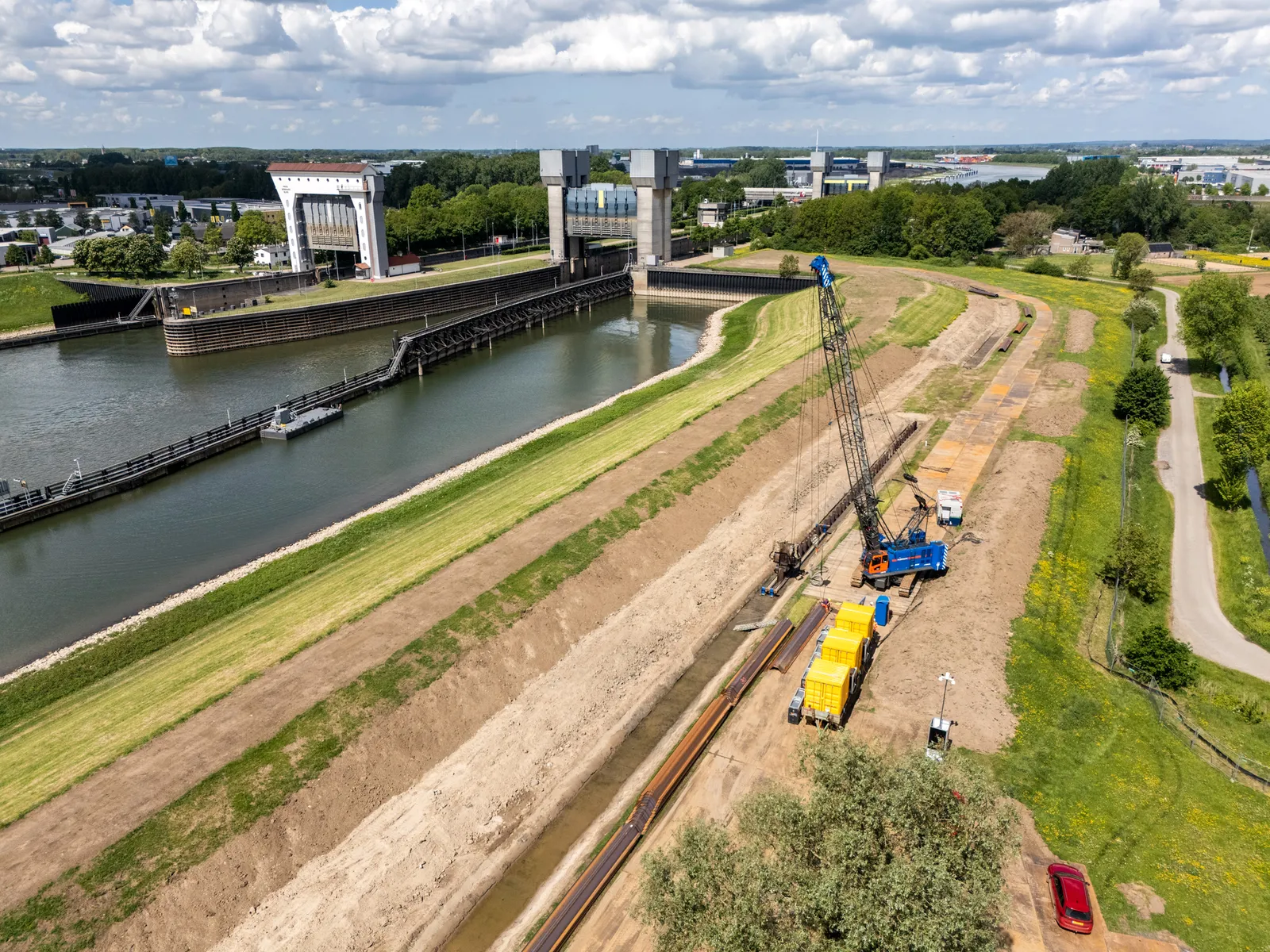
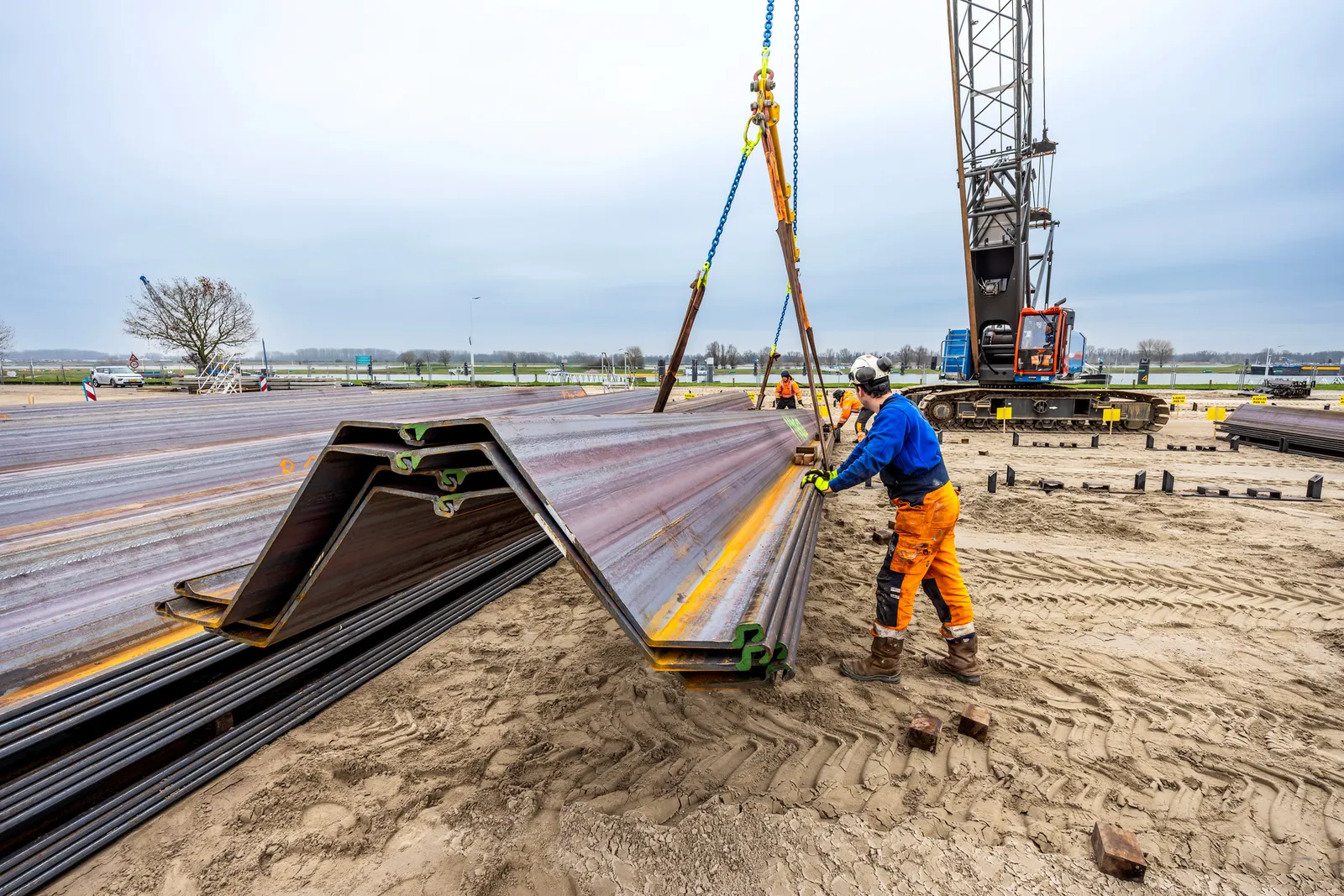
The stability of the dike also requires attention. During prolonged periods of high water, the river exerts considerable forces on the dike body. The reinforcement must prevent the dike from failing under this load. Sheet pile walls are therefore necessary as a structural measure in some locations.
Purpose and necessity
Nowhere is the widely felt need for this dike reinforcement clearer than around Ochten. “Memories of the high-water situation in 1995 are still fresh in the collective memory here,” says David. “At the time, around 250,000 people were evacuated and almost a million animals had to be moved because cracks had appeared in the dikes. Those events remain a tangible reminder of the importance of strong flood defences. While many projects require time to build support, the case for this project is hardly questioned here.”
Green solutions wherever possible
The guiding principle for the dike reinforcement is to use green dikes wherever possible. This is sustainable and makes future modifications easier. However, conditions in Neder-Betuwe call for a tailored approach. “Of the 20.2 kilometres of dike, around 11 kilometres will be reinforced using structural solutions such as sheet piles and screens,” says Bart van Lieshout, delivery manager at Dijkalliantie Neder-Betuwe. “This is due to existing buildings, limited space and specific technical challenges. Other sections will use traditional earthworks, with the dike adjusted in several raising layers to ensure stability.”
A robust flood defence
The combination of techniques makes the project distinctive. Various measures will be applied along the entire length to address the different failure mechanisms. This will create a robust flood defence, ready for future river flows and climate change. “One of the distinctive features of Neder-Betuwe is its link with area development,” David adds. “Around Veerhaven Ochten, the dike reinforcement is being combined with the construction of a channel in connection with the Water Framework Directive and the development of a new area for recreation and leisure. The project will therefore not only improve safety, but also enhance the quality of the area.”
Two-phase approach
The chosen contract form is also noteworthy. In March 2023, the client and contractor consortium began working together under a two-phase approach. Rather than developing a complete design first and selecting a contractor afterwards, the delivery partner was involved in the design at an early stage.
“This allowed us to consider buildability, planning, logistics, ecology and costs as an integrated whole from the outset,” Bart explains. “In October 2025, this resulted in a final agreement for the delivery phase. The lengthy preparation period made it possible to address risks early. Cables and pipelines were relocated, surveys were carried out and, at some locations, preparatory sheet pile structures were even installed. This will make construction more efficient and help prevent surprises during the works.”
Three sections
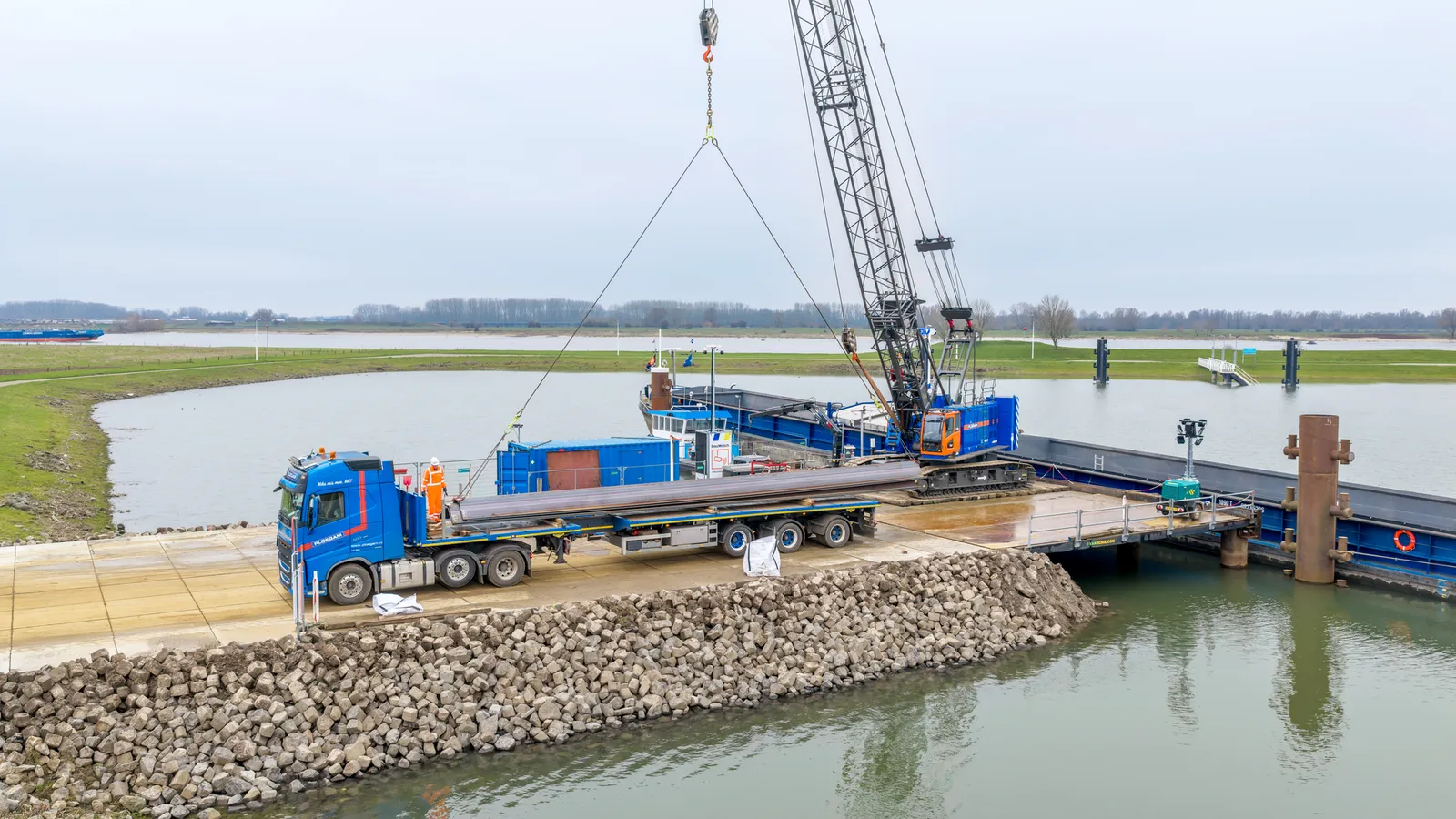
The scale of the project is impressive. “Around 30 kilometres of temporary construction roads are being used for construction logistics alone,” says Bart, adding that the works are divided into three sections. “By carrying out the work in stages, we can gain experience and apply lessons directly to the next sections of the project. At the same time, the phases deliberately overlap to reduce the overall programme. Without this approach, the project would take many more years. The first section, where construction began this year, runs from Tiel to the centre of Ochten. Large quantities of clay and sheet piles are being brought in by ship via specially constructed unloading points.”
Innovative energy system
The sustainability ambitions are at least as impressive. The alliance is targeting a 72% reduction in CO2 emissions, largely through the use of zero-emission plant. “Electric crawler cranes, mobile cranes, wheel loaders, lorries and tractors are now part of the everyday scene on site,” says Bart. “Even sheet piling by vibration is carried out entirely using electric power, without generators.” The charging hub at Lingemeer is central to this effort. “Large battery packs are charged here using electricity from sources including a nearby solar park. Electric lorries continuously transport the battery boxes between the charging hub and the construction sites. With this innovative energy system, we are showing that large-scale infrastructure projects can also be carried out without fossil fuels.”
Innovation in practice
Innovation is also being applied at process level, alongside technical advances. “The partners have agreed to jointly develop improvements in around ten areas and share the benefits fairly,” David continues. “This keeps all parties looking for better, smarter and more efficient solutions. One good example is the research into bats in relation to sheet pile installation. Together with ecologists, nature organisations and the province, we are investigating the extent to which bats are actually disturbed by sheet pile driving. The findings could be valuable not only for Neder-Betuwe, but also for future dike reinforcement projects across the Netherlands.”
For Waterschap Rivierenland, the Neder-Betuwe dike reinforcement project is one of the largest in the organisation’s 750-year history. For the alliance, it is an opportunity to show how collaboration, innovation and sustainability can go hand in hand with flood safety. “As an alliance, we always work with a consistent group of partners. We know each other’s ways of working inside out, and that is once again paying dividends on this project,” Bart concludes.
A business enquiry for GMB? Get in touch
Companies in this story
Keep following this
Get an email when a new story is published. No account needed.
- ThemeFlood protection and climate-resilient water management
- SubjectWater infrastructure
- CompanyGMB







