









Multi-year maintenance of South Holland waterways awarded to Van den Herik-Sliedrecht
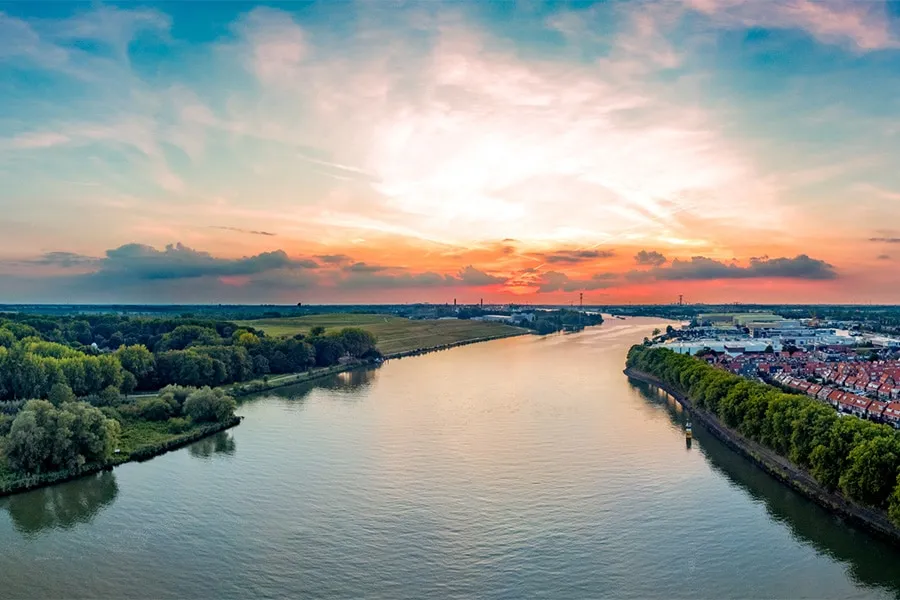
Rijkswaterstaat has awarded Van den Herik-Sliedrecht a 5-year contract to maintain and monitor the beds of waterways in South Holland. Dredging is a key activity under the contract. Van den Herik’s approach to reducing CO2 emissions was decisive in the award.
Start of works
The area includes a number of important international shipping routes for seagoing vessels. Some waterways are heavily trafficked, with vessels travelling at high speeds. Van den Herik will begin maintaining the depth of these sea channels on 1 July 2024. The contract also includes maintenance of 7 locks in South Holland.
Scope
This performance-based contract includes, among other things, maintaining the depth of the sea channels in the Oude Maas (upstream from the Spijkenisserbrug), the Dordtse Kil and the Hollands Diep, including the Moerdijk crossing. It also covers maintaining the depth of the main transport routes Nieuwe Maas, Boven-Beneden- en Nieuwe Merwede and the Noord, as well as the main waterways Bergsche Maas, Lek, Amer and Hollandse IJssel, and the other waterways Zuiddiepje and Wantij and the Brabantse- en Zuid-Hollandse Biesbosch nature reserve in West-Nederland Zuid (South Holland). Finally, seven locks, including the Volkeraksluizen and the Algerasluis, are also to be maintained.
‘’It is vital for smooth and safe shipping that our waterways remain deep enough and our locks function properly. That is why we are pleased to have a professional partner like Van den Herik carry out this important work for us.”
Maarten Janknegt, project manager, Rijkswaterstaat
A home fixture for a company from the ‘dredging village’
For the all-round water engineering contractor, originally from Sliedrecht, this work is a home fixture. Founded in 1946, the family business specialises in, among other things, dredging, as you might expect. Van den Herik has had its head office and own harbour on the banks of the Beneden Merwede since 1986.
“We are pleased to take on the task of bringing our ‘own back garden’, which our fleet uses extensively, up to and maintaining it in top condition.”
Jan Huijbers, director, Van den Herik-Sliedrecht
Environmental Cost Indicator (MKI)
Rijkswaterstaat wants to minimise its CO2 emissions and their impact. Its aim is to work in a climate-neutral way by 2030. The MKI is an important tool in this effort. It has also proved decisive in this maintenance contract. Using the Environmental Cost Indicator, RWS calculates the environmental impacts of infrastructure works. The lower the score, the lower the environmental impact and the greater the contribution to reducing CO2 emissions.
Van den Herik carefully assessed each dredging section and soil type to determine which piece of equipment could carry out the work with the lowest emissions, resulting in a distinctive mix of equipment. This project brings together seagoing vessels (hoppers) and inland vessels (crane vessels) to complete this important work.
Question about this story? Ask your question
Keep following this
Get an email when a new story is published. No account needed.
- ThemeFlood protection and climate-resilient water management
- SubjectWater infrastructure







