









Making steel more sustainable over the course of the project
Text Tony VosImage ArcelorMittal
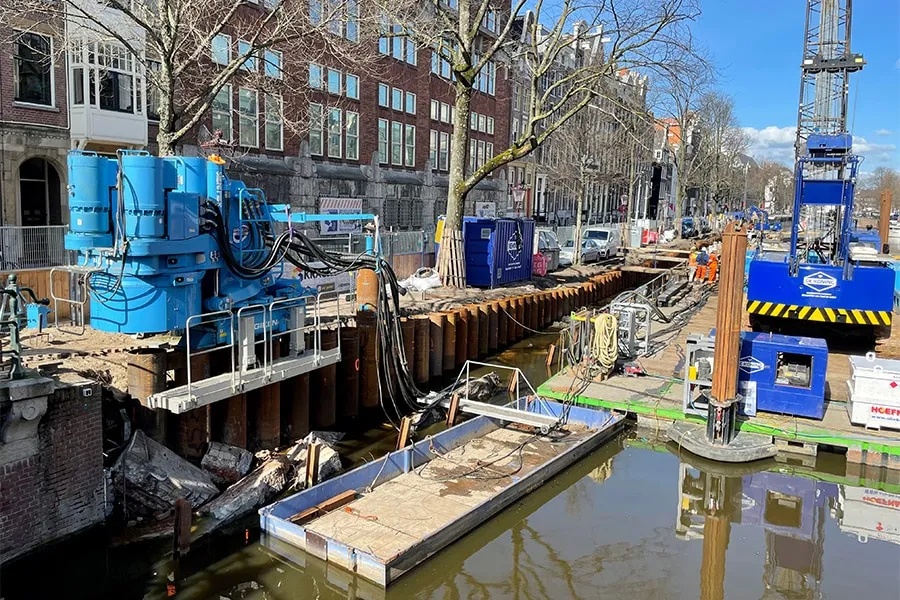
For the G-Kracht consortium’s pilot project at Het Singel, steel producer ArcelorMittal supplied 635 tonnes of steel tubular piles. Technical Sales Engineer Roel Bijlard explains that sustainability improvements will be introduced as the project progresses.
ArcelorMittal is supplying tubes with a diameter of 508 mm and a wall thickness of 9 mm, in lengths ranging from 14 to 23 metres. They are delivered to the hub in Amsterdam-Noord, where the consortium will fit them with the ring bit. The choice of long and short piles was made to optimise weight, cost and emissions. The short piles extend to the first sand layer, and the long ones to the second.
Roel: “The great thing about the system used is that the tubes are installed in the ground without vibration, through the existing structure. This means that the space needed to replace the quay wall is limited, reducing disruption for local residents. Installation normally causes vibrations, but in built-up urban areas you quickly run up against limits on nuisance and the risk of settlement in the surrounding area. This is therefore an ideal solution for urban quay walls, such as those in Amsterdam’s canal belt. Vibration-free installation of sheet piles is already widely used for retaining walls, but it is less common for tubes.”
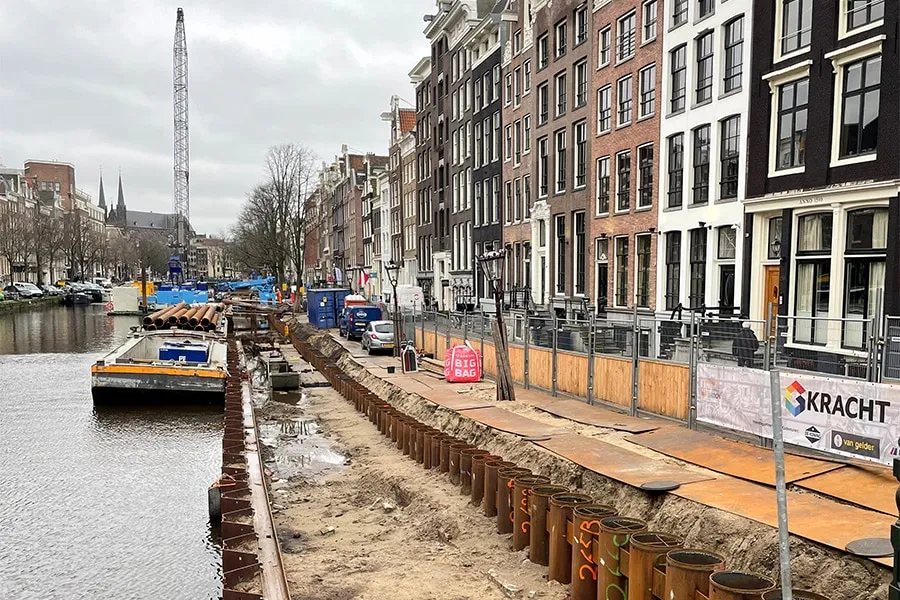
Tube diameters
ArcelorMittal can supply foundation tubes in any diameter and thickness, with no restrictions in that respect. “We are best known as a supplier of steel sheet piles and larger-diameter tubes, from 1 metre upwards. But this smaller size is also part of our product range,” says Roel.
The Innovation Partnership Quay Walls Amsterdam will provide G-Kracht with four to eight years of work. The contractor consortium will continue to develop the design over time. Roel: “As a supplier, we can contribute ideas on the use of steel, but above all, we can innovate ourselves to make the steel production process more sustainable. Given the project’s long duration, that progress will continue, and these improvements will be applied more and more widely.”
Roel is referring to ArcelorMittal’s ambition to produce carbon-neutral steel by 2050, in line with the Paris Agreement. The biggest step will be replacing the blast furnace process with the DRI process (Direct Reduced Iron). “We produce steel coils within the ArcelorMittal group and process them into tubes in the Netherlands. Blast furnace steel has relatively high CO2 emissions because coal is used in the production process to bind the oxygen atoms in the iron ore. The current blast furnace process cannot switch entirely to gas or hydrogen. That would require a different type of plant and equipment.”
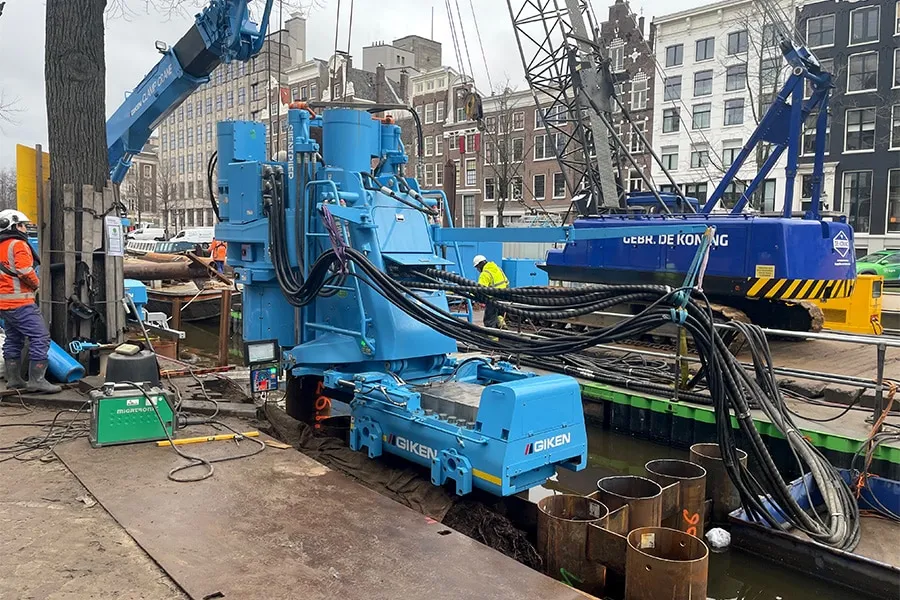
The DRI process can initially run on natural gas (CH4), which already halves CO2 emissions. This is a necessary interim step because green hydrogen is not yet available in sufficient quantities. The final step will be to use green hydrogen to produce carbon-neutral steel. A DRI plant running on natural gas can be converted to hydrogen with a minor modification.”
Converting steelworks
“ArcelorMittal has set itself a target in Europe of reducing CO2 emissions by 35% by 2030 compared with 2018,” says Roel. “Over the next seven years, we will convert a number of steelworks to DRI plants, so this will take place within the term of the G-Kracht project contract. Since there will not be nearly enough green hydrogen available in the near future, we will switch to natural gas first. By 2030, we will therefore be able to use steel for the quay walls that produces half as much CO2 during manufacture as it does today.”
Een zakelijke vraag aan ArcelorMittal Projects Europe B.V.? Get in touch
Companies in this story
Keep following this
Get an email when a new story is published. No account needed.
- ThemeLower emissions and more reuse
- SubjectWater infrastructure
- CompanyArcelorMittal Projects Europe B.V.







