









Innovative ‘pipe sheet pile wall’ for KIJK dike reinforcement project
Text Roel van Gils Image ArcelorMittal Projects
The dike along the Hollandsche IJssel protects the Krimpenerwaard from flooding.
To ensure it continues to do so in the future, the dike is being strengthened and raised as part of the Krachtige IJsseldijken Krimpenerwaard (KIJK) project. A special foundation technique is being used in the Netherlands for the first time: a continuous sheet pile wall combined with stabilising pipes, both installed with minimal vibration. The sheet piles are pressed statically into the ground using a Silent Piler. The steel tubular piles are screwed into the ground using a Gyro Piler. Between 2025 and 2029, ArcelorMittal Projects will supply more than 19,000 tonnes of tubular piles and 9,000 tonnes of sheet piles for a total dike length of 10.5 kilometres.
Many other dike reinforcement projects use sheet piles alone, but KIJK has deliberately opted for a combination of sheet piles and tubular piles to improve the dike’s global stability and prevent the embankment from sliding during high water, explains Patrick Mulders of ArcelorMittal Projects. “The technique is new to the Netherlands, but has been used successfully in Japan for decades. The Gyro Piler was developed by the Japanese company Giken. Rather than driving or vibrating the tubular piles into the ground, the machine screws them into the soil. The piles already installed provide the reaction force needed to install the next one. As a result, there is virtually no vibration or noise impact. The method also requires little working space, as the machine moves over its own work. This makes it particularly suitable for use along dikes, where space is very limited and the surrounding area is sensitive to vibration.”
Unique in scale
In the Netherlands, the Gyro Piler has previously been used in Amsterdam and The Hague to renew inner-city quay walls. “Gebroeders De Koning gained extensive experience with it there, including at the Singel in Amsterdam,” says Mulders. “What makes the KIJK dike reinforcement project special, however, is the scale of the work and the diameter of the pipes. Whereas pipes of around 500 mm were used previously, the pipes here have a diameter of 1,016 mm. Pipes of this size have never before been installed in the Netherlands using a Gyro Piler.” ArcelorMittal Projects supplies the tubular piles and sheet piles directly to main contractor KIGO, a consortium of Boskalis and Van Hattum en Blankevoort. VSF, a subsidiary of Van Hattum en Blankevoort, presses in the sheet piles using its own Silent Piler. Gebroeders De Koning is responsible for installing the tubular piles with the Gyro Piler. “Over the five-year contract period, from 2025 to 2029, we will manufacture and supply around 2,500 tubular piles and 4,500 sheet piles for the route.”
Special components for tubular piles
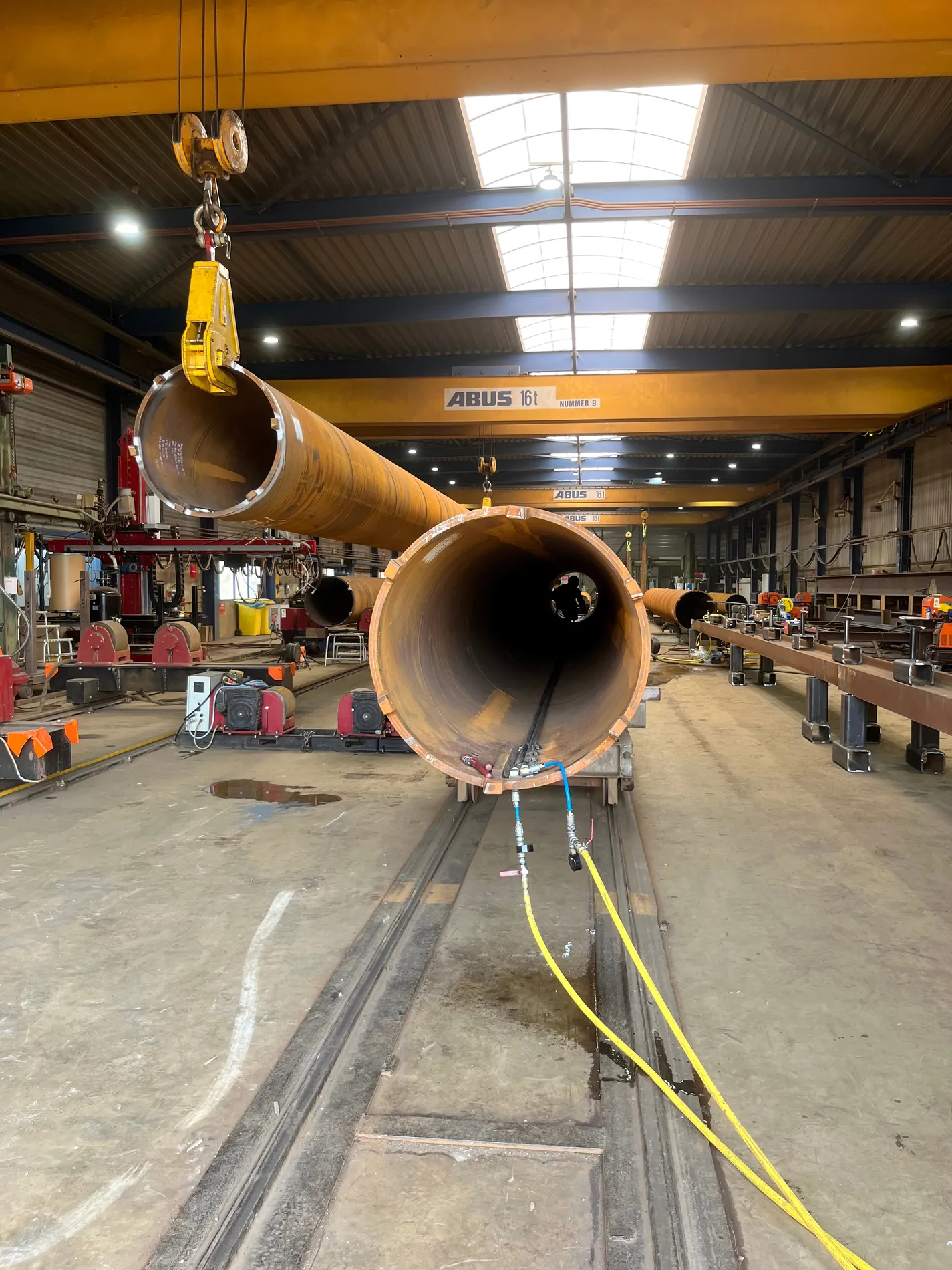
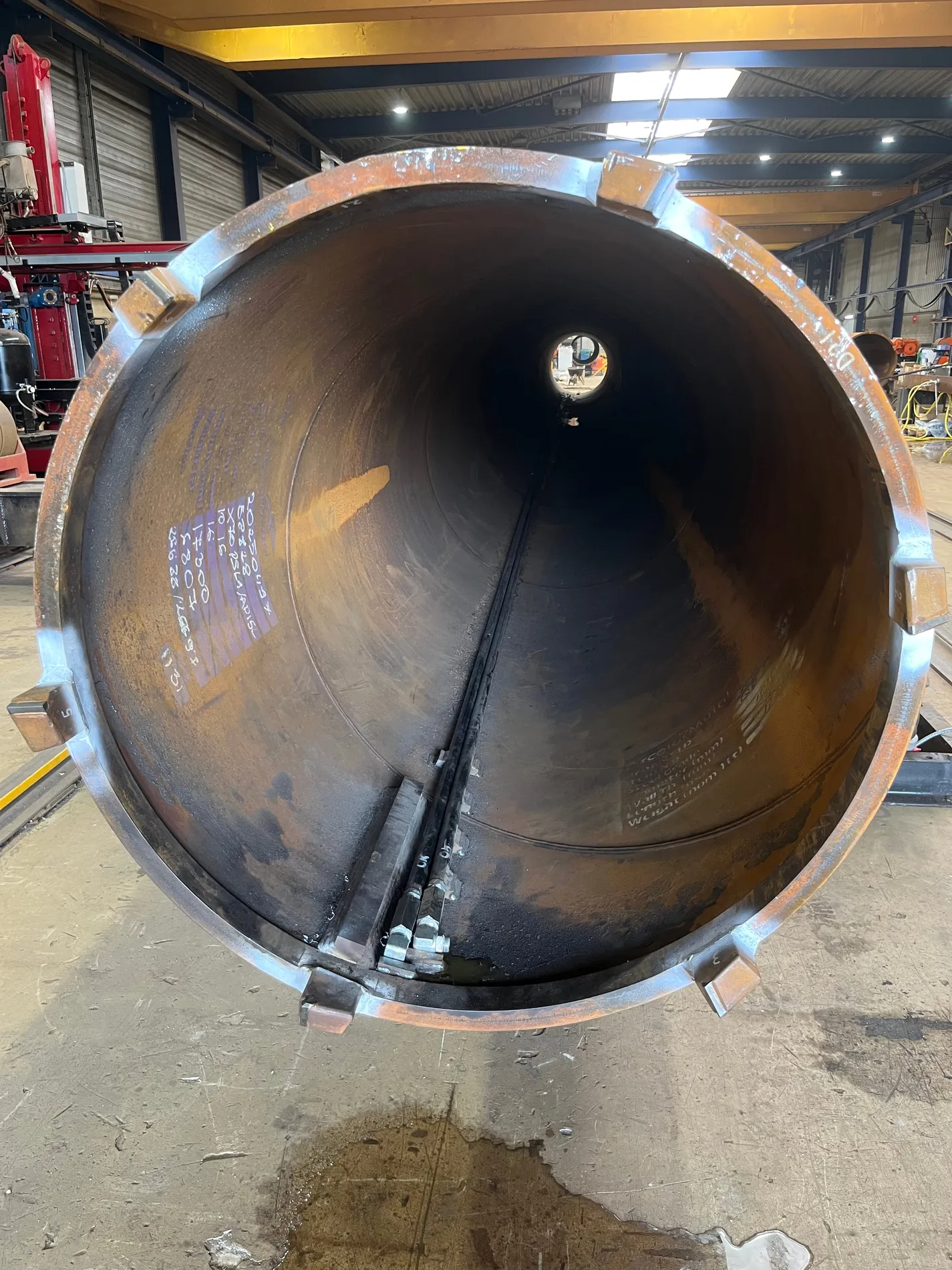
The tubular piles are not installed continuously, but at specific intervals. “That is enough to prevent the failure mechanism of global instability, which involves large-scale sliding of the dike embankment,” says Mulders. “At locations where extra protection against high water is needed, a conventional sheet pile wall is installed in front of the pipe wall to act as a water-retaining barrier.” Each tubular pile is fitted at ArcelorMittal Projects’ factory in Moerdijk with special components required for the Gyro Piler technique. “We weld a ring bit with cutting teeth to the bottom of each pile, enabling the pipe to cut through soil, rubble and even concrete debris. We also install water pipes with spray nozzles inside the pile, so water can be injected as it is screwed into the ground. This temporarily weakens the soil, making installation more accurate and efficient. All pipes are pressure-tested at high pressure beforehand to ensure there are no leaks during installation.”
Because space is limited at the construction site, ArcelorMittal Projects works with a six-month planning cycle. Mulders says: “We manufacture the pipes in Heijningen and Moerdijk, then transport them to the dike route just in time. The tubular pile specifications are broadly fixed for the entire project. For example, the diameter of 1,016 millimetres will not change, but thicknesses and lengths can be optimised each year as the detailed design progresses. That flexibility makes this project technically and logistically distinctive.”
Een zakelijke vraag aan ArcelorMittal Projects Europe B.V.? Get in touch
Who worked on it
Krachtige IJsseldijken Krimpenerwaard (KIJK)
- tubular piles and sheet piling
 ArcelorMittal
- main contractorKIGO
- installation of the tubular pilesGebroeders De Koning
Keep following this
Get an email when a new story is published. No account needed.
- ProjectKrachtige IJsseldijken Krimpenerwaard (KIJK)
- ThemeFlood protection and climate-resilient water management
- SubjectWater infrastructure
- CompanyArcelorMittal Projects Europe B.V.
- CompanyKIGO
- CompanyGebroeders De Koning







