









Flexpumps and temporary pumping installations: smart solutions for water management and infrastructure
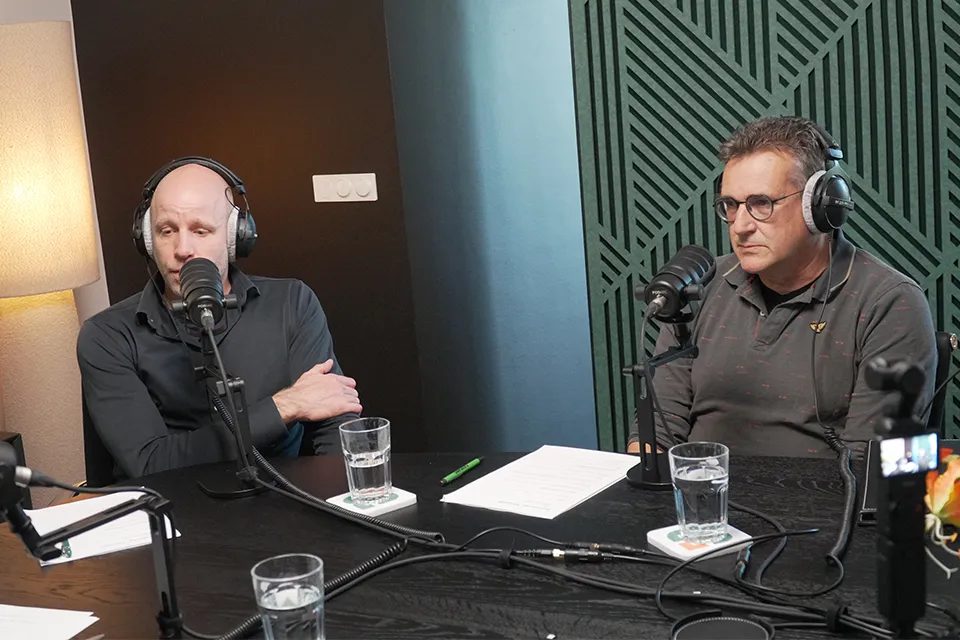
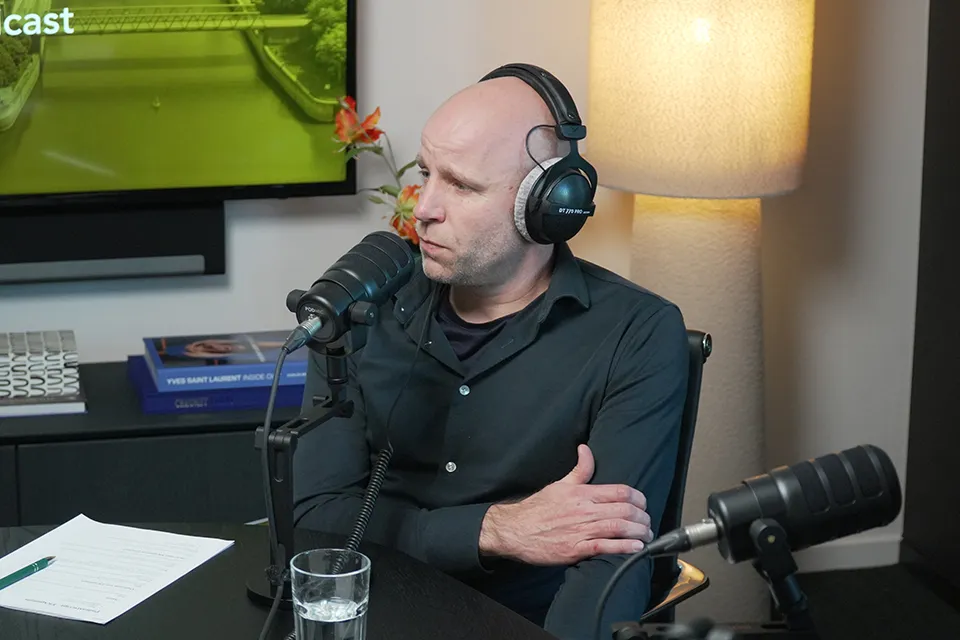
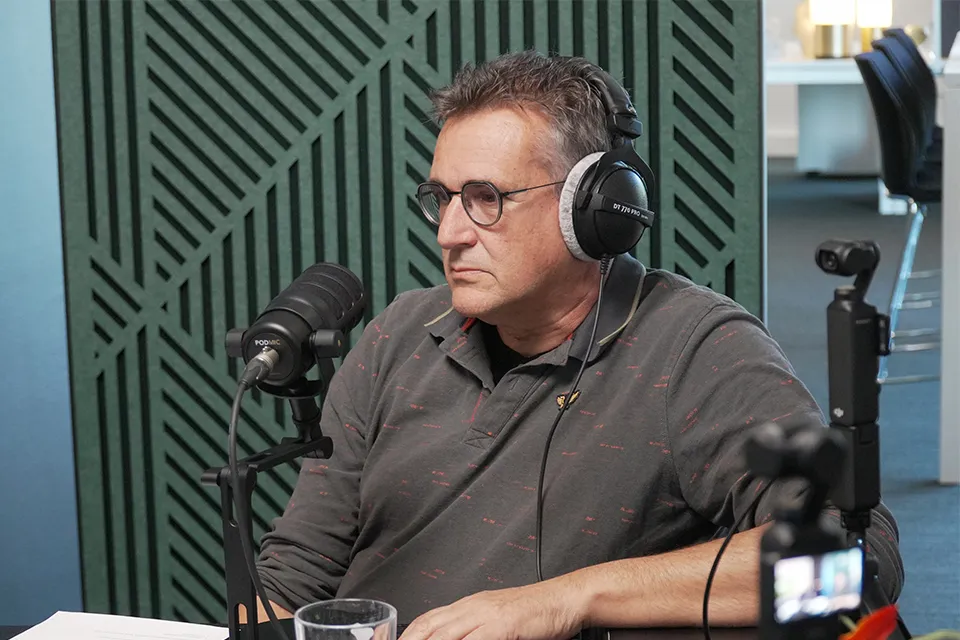
In this episode of the GWW Bouwmat podcast, Roel van Gils talks to Marc Lautenbach and Michiel de Vet of Flexpumps about temporary pumping installations, water management and innovative techniques such as siphon systems. From sewer diversions to industrial applications and challenges such as grid congestion and water congestion, find out how smart, energy-efficient solutions help deliver future-proof infrastructure.
Conversation with Marc Lautenbach & Michiel de Vet (Flexpumps)
Host: Roel van Gils
Have a business enquiry for Flexpumps B.V.? Get in touch
Full transcript
All chapters (27)
- Introduction and episode topic
- Marc Lautenbach introduces himself
- Introducing Michiel de Vet
- How Flexpumps was founded
- Growth and first projects
- Ter Apel base and area of operation
- What Flexpumps does
- Work for power stations
- Types of project and minimum duration
- Complete installation and telemetry
- Design and energy efficiency
- Technical considerations for installations
- Acquisition of Flexbuis and expansion of activities
- Stock and specialist applications
- Staff and growth
- Market and clients
- What sets you apart
- Technology and innovation at Flexpumps
- How siphon systems work
- Requirements for siphon systems
- Examples of siphon installations in practice
- Water scarcity and future challenges
- Drought, water management and additional applications
- Energy consumption and grid congestion
- Vision for the future and sustainability
- Growth potential and collaboration
- Closing remarks and core values
Introduction and episode topic
Roel van Gils Welcome to another episode of the GWW Bouwmat podcast. Today, we’re taking a look at the world of temporary pumping installations, water management and smart solutions for increasingly complex infrastructure. Water has to keep flowing. But what happens when it doesn’t flow as it should? What then? To discuss that, I’m joined today by two experts from Flexpumps. It’s a relatively young company that has built a strong position in the Netherlands, Belgium and Germany in a short time. Gentlemen, welcome. Please introduce yourselves.
Marc Lautenbach introduces himself
Marc Lautenbach Thank you. I’m Marc Lautenbach, and I’ve been managing director of Flexpumps since 2021. I’m responsible for the day-to-day running of the business. We work to get the right people onto the right jobs and build strong relationships with our customers. We’re getting better at that all the time. We started with four of us, and now there are 11 people here. We’re also actively looking for more new staff.
Introducing Michiel de Vet
Roel van Gils We might come back to that later. And next to me is Michiel.
Michiel de Vet Yes, Michiel de Vet. I’m one of the founders of Flexpumps. As a dewatering contractor, we realised we didn’t have enough expertise. We had the equipment, though, because dewatering contractors often get pumping work included in the specifications as well. Being entrepreneurial, we decided to take it on and carry out the work. But eventually you’re left with equipment that you need to find a new purpose for. Together with a fellow dewatering contractor in the Netherlands, we looked for a use for both the work and the equipment. That’s how I got back in touch with Marc, and we eventually set up Flexpumps.
Read the full transcriptCollapse transcript24 more chapters
How Flexpumps was founded
Roel van Gils So, can you take us back to the beginning, five years ago, in 2021, as Marc mentioned? How did it all start?
Michiel de Vet Marc and I were in close contact because we did business with his former employer. We had intensive, close and very pleasant contact. His former employer decided to put the business up for sale.
Marc Lautenbach At one point it was sold to a party and I thought, does that suit me? Well, I decided not to continue under a new owner. Then I got talking to Michiel. What was I going to do? I couldn’t really do anything other than hire out pumps, and I’m very good at that. So we put our heads together and brought in another party, Henk van Tongeren Water en Techniek. We pooled our equipment and got started.
Growth and first projects
Roel van Gils So, five years have gone by. And I understand you’ve grown considerably.
Michiel de Vet Those five years have flown by, that’s how we’d describe it. Yes, as I explained, we were able to put together a reasonable fleet and equipment fairly quickly, certainly with Henk van Tongeren Water en Techniek. Combined with Marc’s expertise and that of our other colleagues, we were able to turn that into some great projects in the market very quickly. That gave us a strong start.
Ter Apel base and area of operation
Roel van Gils I see. And all of this is based in Ter Apel, I understand?
Marc Lautenbach We’re based in Ter Apel, a place that’s often in the news. But for us, it’s an ideal base. We can cover the whole of the northern Netherlands from here. And by road, we can reach the entire Ruhr area within 4.5 hours. That means our response time can sometimes be a little better than that of other companies.
Michiel de Vet Yes, 4.5 hours might sound like a long time, but when Flexpumps installs equipment that stays in place for weeks, or even months, and requires a certain level of commitment to ensure it is installed properly, efficiently and, above all, reliably, 4.5 hours is negligible. That means we can easily cover a large part of our area of operation and provide our customers with our installations and expertise.
What Flexpumps does
Roel van Gils You’ve already mentioned a few examples, but could you be more specific? You hire out temporary pumping installations?
Marc Lautenbach We hire out temporary pumping installations for pumping sewage or surface water. We have several industrial customers who call on us when they have cooling water problems or other issues that require pumping. We can pump all kinds of water, and we’re keen to find a solution for any of them.
Roel van Gils So, anything from sewage to industrial water and everything in between. But always water.
Marc Lautenbach Always water.
Work for power stations
Roel van Gils And I understand you even work for power stations?
Marc Lautenbach Yes, we have several customers in Eemshaven who regularly call us in. They may have another cooling water problem, or be carrying out temporary shutdowns during which part of the installation is taken offline. We’ve been serving them for years. In fact, they were already in our portfolio when we started in 2021.
Types of project and minimum duration
Roel van Gils Do you focus on particular sectors?
Marc Lautenbach The work I like best is what I call the jobs close to home. These are sewer bypasses at pumping stations that are temporarily being refurbished. It’s a short job, often three or four weeks, and then you’re done.
Roel van Gils Is there a minimum hire period?
Marc Lautenbach We don’t want customers asking if they can hire a pumping installation for two hours. I have a rule of thumb: the work is complex enough that we need time to prepare it properly. A week is the minimum I’d like to allow.
Michiel de Vet But that’s what customers want as well. Our installations, apart from straightforward hire of a wastewater pump or a surface water pump, are often complex systems that can be controlled, monitored and adjusted remotely. That takes a certain level of commitment in terms of installation and maintenance. So these are rarely installations that are only used for a week or a day.
Complete installation and telemetry
Roel van Gils You clearly talk about installations, then, so it’s not just the pumps.
Marc Lautenbach We provide the complete package. We set up the pumps and install all the pipework needed to cover the distance. We control everything using a telemetry system, which lets us monitor and adjust it all remotely. If the level needs to come down by a few centimetres, we can do that remotely. We can deal with faults remotely too.
Michiel de Vet We can use a wet setup, with submerged pumps, or install pumps dry and equip them with a vacuum system. So yes, anything is possible. There’s a lot we can do, in the broadest sense.
Design and energy efficiency
Roel van Gils But does the customer design the setup or installation?
Michiel de Vet Partly.
Marc Lautenbach The customer comes to us with a requirement, and we translate that into an installation. We think carefully about exactly what they need and how best to solve it technically. We’re very focused on equipping the installation so that it uses as little energy as possible. That’s particularly important now, given diesel prices and other costs. So we try to configure the system to use an existing power connection, select pumps that will work with it and adapt the pipework accordingly.
Technical considerations for installations
Michiel de Vet Ultimately, the requirement is to move a certain flow rate from A to B, and that’s where the real work begins. What power supply is available? Can we use the conventional grid to move the required volumes, or will additional measures be needed? Is it a wet or dry setup? How much pipework is involved? Does the pipework need to run at height? There are many factors that determine the smartest and most efficient way to get the job done.
Acquisition of Flexbuis and expansion of activities
Roel van Gils Speaking of pipework, that’s a good segue. I understand you also acquired Flexbuis fairly early on.
Marc Lautenbach Yes, the opportunity came our way. The former owner wanted to retire, and we were the preferred buyer. The name fitted well too.
Roel van Gils Yes, it does seem like the two belong together. A match made in heaven.
Marc Lautenbach Yes, Flexbuis had been around for decades. It had always had its own customer base, but it was a great fit for us. We’d done business with the company too.
Roel van Gils You also sourced the pipe systems for your installations from them?
Michiel de Vet Yes, we did, and I think half the dewatering contractors in the Netherlands did too. They had equipment that a dewatering contractor wouldn’t buy for themselves.
Roel van Gils For one-off or occasional use.
Michiel de Vet Exactly, because it isn’t necessarily standard equipment. As I said, the owner wanted to stop. We saw an opportunity and knew what we could do with it. We could use the pipework directly on our own projects, but we still hire it out to many of his former customers.
Roel van Gils Oh, you took those customers on as well?
Michiel de Vet Yes, because essentially very little has changed. It’s still the same equipment. The difference is that we can now also offer to install it, which rarely happened before. We can install the pipework too.
Stock and specialist applications
Roel van Gils Does that apply to all projects? Do you offer that additional service across the board?
Marc Lautenbach Yes, that option is always available. The acquisition also gave us a very large stock of pipework. Absolutely. It means we’re unlikely to find ourselves short of equipment. We can build our own installations using our own materials, without needing to hire in equipment externally, while continuing to serve Flexbuis’s existing customers.
Roel van Gils And you mentioned that they also have a few specialist items. Can you give us some examples?
Michiel de Vet Yes, and there are a few different names for them in the Dutch market: water barriers, drive-over structures. The basic idea is that we need to cross roads, cycle paths and the like with pipework, whether for dewatering or for pumping water over. This means lifting the pipework into the air, but it would be more efficient to keep it at ground level because of resistance and pressure. That is why the drive-over structure was developed. The pipe is routed through something like a speed bump and then out the other side of the road.
Marc Lautenbach Yes, they are built so robustly that I always say a Leopard tank could drive over one and nothing would happen. They are designed for heavy traffic weighing up to 50 tonnes.
Roel van Gils Okay, that’s substantial.
Marc Lautenbach Yes, and the approach ramps are relatively long, so traffic isn’t affected too much.
Staff and growth
Roel van Gils Okay, you started in 2021 with four people. You’re now up to 11. Are you still looking for more people?
Marc Lautenbach Yes, we’re still looking for people.
Roel van Gils What sort of people are you looking for?
Marc Lautenbach People who know how to get things done, who can look at a situation clearly and say, ‘What does the customer need? I’ll sort it out for you.’ We install the pumps and the electricians connect them, but we need people who can lay the pipework.
Roel van Gils So you’re mainly looking for people to work on site?
Marc Lautenbach Yes, mainly people to work on site, but also good diesel mechanics, who are hard to find. We try to make as much use of electric pumps as possible, but we still have a number of diesel-driven pumps. They need maintenance too. There just aren’t many skilled technical people around at the moment.
Roel van Gils Yes, I think that’s a familiar problem in engineering.
Marc Lautenbach Yes, we’re not alone in that.
Roel van Gils And what do you offer?
Marc Lautenbach A very pleasant working atmosphere, I think. I’m happy to say that. We’re a great, close-knit team and we do a lot for each other. As for salary, that’s always… well, it’s negotiable, but I don’t think we send the wrong message on pay.
Michiel de Vet We offer market rates, but above all, we’re a very flat organisation. That means short lines of communication and a lot of mutual understanding. We understand that people sometimes have to work long days, but also that they can take it easy when things allow. That’s how we create a very pleasant atmosphere at work.
Market and clients
Roel van Gils You’re looking to grow further. Is there room for that?
Marc Lautenbach Yes, I think the number of people available is currently limiting our growth.
Roel van Gils Taking a step back, what exactly does your market look like?
Marc Lautenbach Who are our clients? Contractors renovating sewage pumping stations or laying sewer pipes underground. Yes, it’s a small market where everyone knows everyone. We have emergency contracts with a number of water boards. When an emergency occurs, we have to be able to respond within 24 hours and get everything sorted. That’s a big part of our work. We also work for the major dredging companies, and Boskalis is one of our big clients. Then there are industrial clients.
Roel van Gils So there aren’t many companies with the same capacity or range of equipment?
Marc Lautenbach There are seven players in this market in the Netherlands that really count.
What sets you apart
Roel van Gils So what sets you apart?
Marc Lautenbach We always say it’s because we’re such pleasant people. We try to come up with a good solution that works and is affordable. We monitor our installations ourselves, and we can give clients access to our monitoring system so they can check in from home. That certainly sets us apart from the competition. And our short lines of communication and flat organisation mean we can respond quickly, which is very valuable to clients when they need us to act straight away.
Michiel de Vet Ultimately, we provide a complete solution. We take the worry off the client’s hands. They come to us with a problem, sometimes with an idea of how they would like us to tackle it. But in the end, we can develop a concept that takes care of everything for the client, from A to Z. And we can do it in a very short time. Our installations can be deployed quickly, which is sometimes essential in emergencies or in response to climate-related challenges. We also price tenders for contractors, government bodies and water boards. Our client base is very broad.
Technology and innovation at Flexpumps
Roel van Gils Where does your technical strength lie? Thinking about technology, innovation and smart pumping, which you mentioned earlier, are there other areas too?
Marc Lautenbach Our control systems are fairly unique. We can adapt them to specific client requirements very quickly. We programme our own PLCs. We have programmers on staff who are very knowledgeable about pumps and can also quickly translate customer requirements into changes to our software. That allows us to switch in response to what the customer wants, and to connect signals to existing installations so they can monitor what we’re doing on their own platform.
Roel van Gils So, essentially, an intelligent, self-thinking installation?
Michiel de Vet Yes, but we’re also not afraid to think outside the box. We always talk about pumps, and when people think of pumps, they immediately think of a water pump moving water or volumes from A to B. A vacuum pump is a pump too. A siphon system, which uses communicating vessels and basic physical principles, is very energy-efficient. It can move enormous volumes using very little energy, as long as the pipework is large enough.
How siphon systems work
Roel van Gils Siphoning, then. Can you explain what that involves?
Marc Lautenbach If there’s only a small difference in level between the flow you need to pump, or would normally pump, you can use a vacuum system to siphon it over that small difference in level. It’s the same thing we used to do with a moped and a hose to suck the fuel out of the tank, only on a much larger scale.
Roel van Gils So, that same principle on a large scale.
Marc Lautenbach And you can do it using very little energy while moving enormous volumes. It’s a very interesting option at the moment.
Roel van Gils So it’s more sustainable too, in that sense.
Michiel de Vet Yes, absolutely. Especially in wastewater systems, where more and more wet wipes and other contaminants are ending up in the already dirty sewage water. It’s an open pipe system with no moving parts. It’s simply an open pipe from A to B that moves water from the inlet to the outlet through a difference in level, as long as the pipe is under vacuum.
Roel van Gils So you mean there’s less chance of a breakdown?
Marc Lautenbach Yes, virtually no breakdowns. In fact, none at all.
Roel van Gils Is it used widely, or do people think of it?
Marc Lautenbach Clients often don’t think of it. We have to put the idea to them. We always look at the water levels to see whether it’s possible, and then we try to offer that added value.
Michiel de Vet A number of factors determine whether it’s suitable. But if the signals are green, we see it as our job to include it as an option: could this be a solution for you?
Requirements for siphon systems
Roel van Gils And what are those factors?
Michiel de Vet As I said, the inlet and outlet levels, and space. When you’re talking about large volumes, siphoning often means large pipework and large diameters, so there has to be room for it. That’s really it. To be quite honest, you need an inlet system, and that takes up some space. You have to build something in the bed of a ditch, river or watercourse. You need to do the same at the outlet. So a siphon installation with these specifications is often not a short-term solution. It needs to run for a longer period. But if the conditions are right, it’s definitely a system worth considering.
Roel van Gils Can you monitor that system remotely too? Or is there less scope to adjust it?
Marc Lautenbach No, we can measure the inlet and outlet levels too. We measure the flow rates we’re siphoning. We fit flow meters throughout the system. Essentially, anything we can do with a pump, we can also do with a siphon installation.
Michiel de Vet You can even regulate the flow rate with a valve, so you can control how much water flows from A to B.
Roel van Gils Okay, yes.
Michiel de Vet Yes, it’s a great system, and a great addition to pumping.
Examples of siphon installations in practice
Roel van Gils Can you give some concrete examples of a system that’s currently operating somewhere in the country?
Marc Lautenbach A few years ago, we installed a very large one in the Achterhoek. We siphoned 7,200 cubic metres per hour there. In the past, I also worked with De Vet on a very large installation in Duren.
Michiel de Vet There’s a current example that I think is a good one: a complex of weirs in Duisburg is being renovated. We have two siphons on each of the two dams. In the event of an emergency that could make the dams unstable, they fill the cofferdam at a rate of 15,000 cubic metres per hour. In 20 minutes, we can raise the water level to match that of the Rhine, equalising the pressure on the inside and outside of the sheet piles so they don’t become unstable. The system is fully equipped with an alarm system, so we can monitor everything online. We can see the levels in the Rhine, the Ruhr and the cofferdams all day. Everything is monitored, and alarms are triggered when set thresholds are reached. If heavy snowfall or heavy snowmelt runoff causes the Rhine to start rising, we have set limits. We can see when the Rhine is expected to reach its maximum level in the next few hours. Then we open the sluices remotely. We check that the cofferdam is clear of equipment and people, and then we fill it.
Roel van Gils So it’s not just for emergencies, it’s also a precautionary measure?
Michiel de Vet Yes. If the Rhine reaches a certain water level while the cofferdam in the middle is empty, the cofferdam is no longer considered stable and we have to fill it.
Roel van Gils Has that happened yet?
Michiel de Vet Seven times. Seven times already. It’s been filled seven times since 2023.
Unidentified speaker: Yes, and it’ll be there for a while yet. We’re only at weir section 1.
Roel van Gils And how many more are there?
Michiel de Vet Three more, if all goes well. They’re due to be done all at once next year.
Roel van Gils Well, that’s good.
Michiel de Vet We hope to be involved again.
Water scarcity and future challenges
Roel van Gils Okay, let’s make the link here. We were just talking about energy challenges. We hear a lot about grid congestion. But I understand you’ve also brought the term ‘water congestion’ into the conversation. What do you mean by that?
Marc Lautenbach New legislation is coming in from this year. Do you mean the Water Framework Directive? Yes, and it’s going to have quite a few consequences. It means that some dewatering contractors who currently discharge into a watercourse may no longer be allowed to do so, and may have to return the water to an aquifer instead. It will definitely have consequences, so I see some major challenges ahead.
Michiel de Vet Yes, the market will feel the impact of a lot of this, but it also creates opportunities for us to respond. That certainly applies to Flexbuis too. Pumped water will have to be returned to the ground somewhere, most likely. That may involve longer distances, which gives us opportunities to hire out pipework with the associated fittings and possibly special components. But the Netherlands’ water management system as a whole is under pressure. Sewer systems need replacing. There is a great deal of focus on that, and plenty of work is being done. So there are significant opportunities for us there.
Drought, water management and additional applications
Roel van Gils And in dry conditions too, of course.
Marc Lautenbach Yes. We also work with a number of water authorities on this. During periods of extreme drought, we have to pump water uphill. That means bringing water in from the IJsselmeer. Large pumping stations pump it towards the Groningen region, and we install additional pumps at many weirs where there is no capacity or not enough capacity. That way, we make sure the industries along those waterways have enough water.
Roel van Gils You mean cooling water?
Marc Lautenbach Cooling water or process water, but also water for farmers who need to irrigate. That’s an interesting line of work too.
Michiel de Vet The water authorities are, of course, doing everything they can to combat both desiccation and waterlogging. So yes, there is a balance to be struck there too.
Energy consumption and grid congestion
Roel van Gils Yes, absolutely. And in terms of energy consumption, are there any developments, or is it fairly…
Marc Lautenbach Yes, we try to use as little energy as possible by selecting the right pumps, pipework and so on. That makes it all quite interesting. But we are increasingly seeing problems arise on the electricity grid, with insufficient capacity available. Fortunately, we have a partner in Apeldoorn who provides generators for a reasonable fee. So we try to manage in that way. We aim to use the limited supply that is always available as effectively as possible. We are always talking about dry-weather flows and rainwater discharge, so we handle the dry-weather flows using the energy solutions available. If more is needed, we switch on a generator.
Roel van Gils So you’re actually using the generator as little as possible.
Marc Lautenbach Yes, that makes a big difference to emissions and diesel consumption. We simply try to switch as intelligently as possible using the capacity available to us.
Michiel de Vet It’s also an intelligent system that detects when the water level starts to rise gradually. It calculates, ‘Okay, if this continues, in x amount of time I’ll reach a level that my normal power supply can no longer handle.’ Those warning signals are sent to the energy management system. It starts getting the generators ready. They’re up to speed by the time the pumps need to start running. Then the systems communicate with each other.
Vision for the future and sustainability
Roel van Gils And do you develop that software yourselves, or is it all done in collaboration?
Marc Lautenbach In collaboration.
Roel van Gils Okay, that all sounds like promising progress. Looking to the future, where do you want to go? What are your ambitions?
Marc Lautenbach I already think of myself as the greenest hire company in the Netherlands. I think that has something to do with it. Yes, we chose Kawasaki green as our corporate colour. It’s a pretty vivid shade. It stands out in the landscape. But of course, I’m joking. We simply want to be a green hire company that works with our customers to find solutions. As energy-efficiently as possible, and offering the right installation.
Michiel de Vet But you have to work sustainably. If you don’t, you’re not ready for the future. You won’t be able to keep up. So sustainability is definitely a focus.
Growth potential and collaboration
Roel van Gils Looking at the trends and developments you’re seeing, where might there still be opportunities for businesses?
Michiel de Vet I think our growth potential lies mainly in expanding our equipment fleet, so we can handle a wider range of work. But we need the right people for that. There are volumes we simply can’t handle yet. Five years is a great milestone, and we’re extremely proud of what we’ve achieved in that time. But there is definitely more potential for growth, including in the volumes we could be pumping. That’s an area where we can still develop.
Marc Lautenbach We do work in partnership with a number of competitors.
Roel van Gils Yes, that makes it unusual too.
Marc Lautenbach Yes, they’re competitors, but also colleagues. Sometimes they get enquiries that they consider too small, and they pass them on to us. When we have a big job on our hands, we approach them in turn. We also had an emergency at a water authority in the north of the Netherlands last autumn. They needed 15,000 cubic metres per hour installed at very short notice. That’s when I bring in my friends, as I always call them. They acted very quickly. The first lorries were loaded within six hours. We started setting up the next morning, and the system was running by the end of the day. Those were volumes we simply didn’t have available ourselves at the time.
Michiel de Vet No, sometimes you simply don’t have all your equipment available, which means you can’t immediately respond to a potential customer’s request. So it’s better to work together than against each other. We have a number of companies we work alongside and can collaborate with, and they’re keen to work with us too. Thanks to the participating companies, we also have a pretty good network across the Netherlands, including for installing systems within a specific timeframe. That enables us to respond very quickly.
Closing remarks and core values
Roel van Gils Yes, because emergencies sometimes mean things really have to happen quickly. And, to wrap up, what is it that really sets you apart? Shall we sum it up in a few words?
Marc Lautenbach We think things through and solve problems. We provide the complete solution. We don’t just say, ‘You need these pumps, come and collect them.’ You have a problem, and we can solve it for you, from start to finish.
Michiel de Vet I’d also say our colleagues take ownership. They’re so committed that they want to solve the customer’s problem. There’s no nine-to-five mentality. They don’t just down tools at five past five and head home. No, we’ll get this sorted now, we’ll solve it. Ultimately, that results in a high level of commitment and quality. We’re focused on achieving the best result.
Roel van Gils Okay, thank you. Thank you for your insights and for coming along, and all the best for the future.
Michiel de Vet Thank you.
Roel van Gils And to our listeners, thank you for listening to GWW Bouwmat, the podcast.
Companies in this story
Keep following this
Get an email when a new story is published. No account needed.
- ThemeFlood protection and climate-resilient water management
- SubjectWater infrastructure
- CompanyFlexpumps B.V.







