









Exceptionally long tubular piles for Nieuwe Sluis Terneuzen
Text Suzanne van Gaale Beeld Gooimeer BV
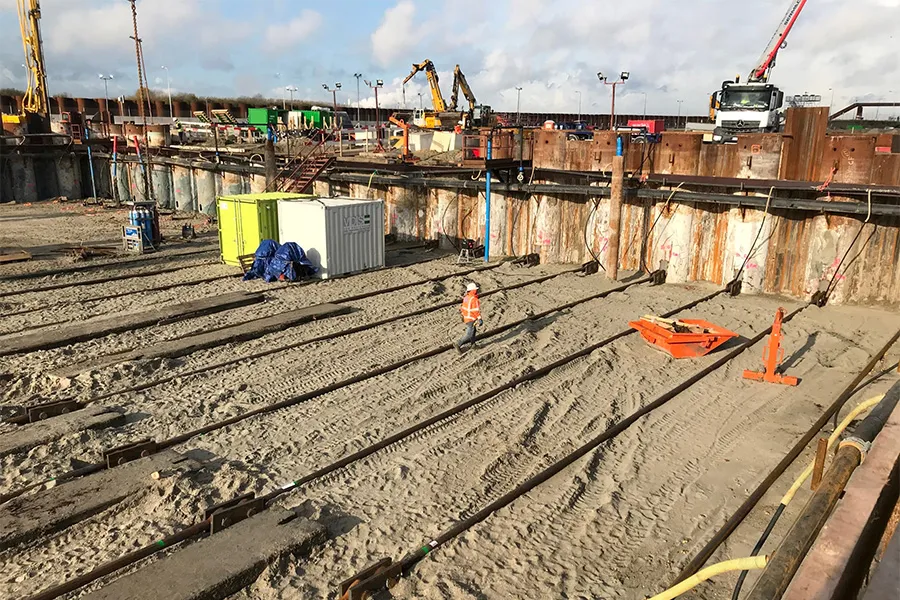
For Patrick Stoelhorst, co-owner of Gooimeer, Nieuwe Sluis Terneuzen is not so much complex and challenging as it is a varied and unusual project. His company supplied anchor bars up to 60 metres long and tubular piles weighing around 90 tonnes each.
Gooimeer is best known as a supplier of steel sheet piles. It has been in the business for almost 50 years. The company initially operated from Naarden on the Gooimeer, and has been based in Almere, on the other side of the Gooimeer, for the past 30 years. It is therefore no stranger to the civil engineering and infrastructure sector. Its steel sheet piles and other products are used to reinforce quays, roads and temporary construction pits, among other things, in the Netherlands and other Western European countries, from Norway to Portugal. Its projects include supplying steel sheet piles and tubular piles for the A9 near Amstelveen, sheet piles for the quay refurbishment in Amsterdam, and tubular piles for the Blankenburgtunnel. It is also involved in the Oosterweelverbinding in the Antwerp region.
Anything but standard dimensions
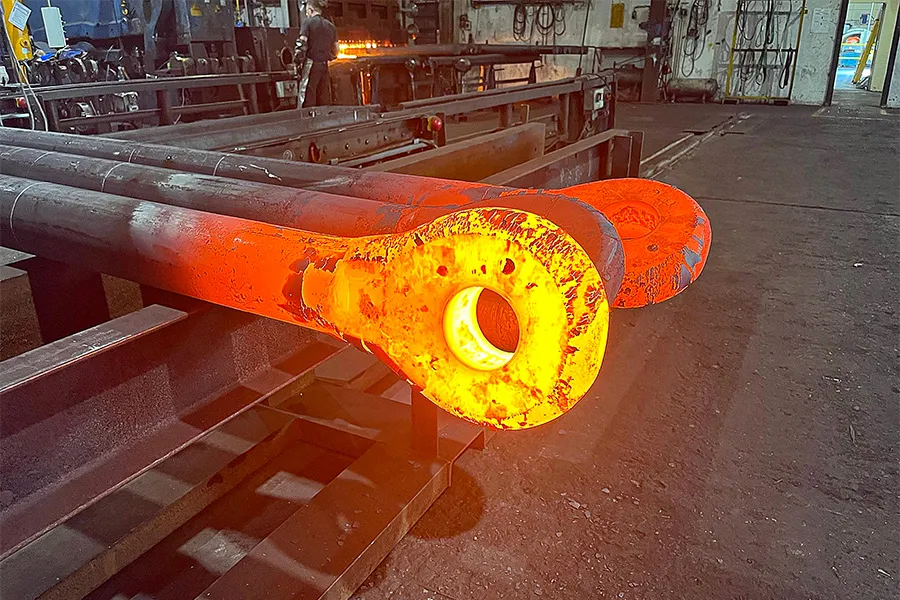
“We initially supplied anchor bars for Nieuwe Sluis Terneuzen in 2019,” says Patrick. “These were very large solid steel bars, up to 60 metres long and with a diameter of up to 175 mm, joined together using connectors.” Supplying these anchor bars sounds simpler on paper than it was in practice. “Given the wide variety of lengths, dimensions and connection solutions, which we also had to provide in 3D drawings, I can say that it was a rewarding and varied project for us. It also involved a fair amount of calculations. All in all, getting everything approved and manufactured on time was quite a task. That always creates a certain amount of pressure. But thanks in part to the good, constructive collaboration and coordination within the Nieuwe Sluis Terneuzen construction team, everything went well.” The two final orders followed in 2023 and April this year: the supply of large steel tubular piles. One source of considerable, healthy tension was the fact that the material had to come from China. “The first question was: ‘Does the material from China meet the required quality standards, and can it be delivered on time?’ We have had good experiences with our supplier in China. At the request of the Sassevaart construction consortium, an independent inspector was sent specifically to check the quality and working conditions, and gave them the green light.” What made supplying the tubular piles unusual was that it was anything but standard work. “To give you an idea: the largest diameter was 2,200 mm and the steel was up to 60 millimetres thick, so very substantial. The longest tubular piles were 45 metres long and weighed around 90 tonnes.”
Steel sheet piles as an energy source
As for steel sheet piles in general, Gooimeer has developed a particularly interesting additional application for them: an inexhaustible energy source. In other words, steel sheet piles used as energy sheet piles. The company won the Waterinnovatieprijs for this in 2021, among other awards. The website energie-damwanden.nl explains how it works. The ground acts as the energy source, with surface water and groundwater harnessed through thermally activated steel sheet piles to extract energy. This can then be used to heat or cool buildings with heat pumps. “The Netherlands is the ideal country for steel sheet piles. The energy is literally right on our doorstep. If we can also harness it as an additional energy source in the form of energy sheet piles, the possibilities are enormous!”
Question about this story? Ask your question
Keep following this
Get an email when a new story is published. No account needed.
- ThemeUnderground construction
- SubjectWater infrastructure







