









Equipment tailored for Gloucester’s largest-ever winter dredging project
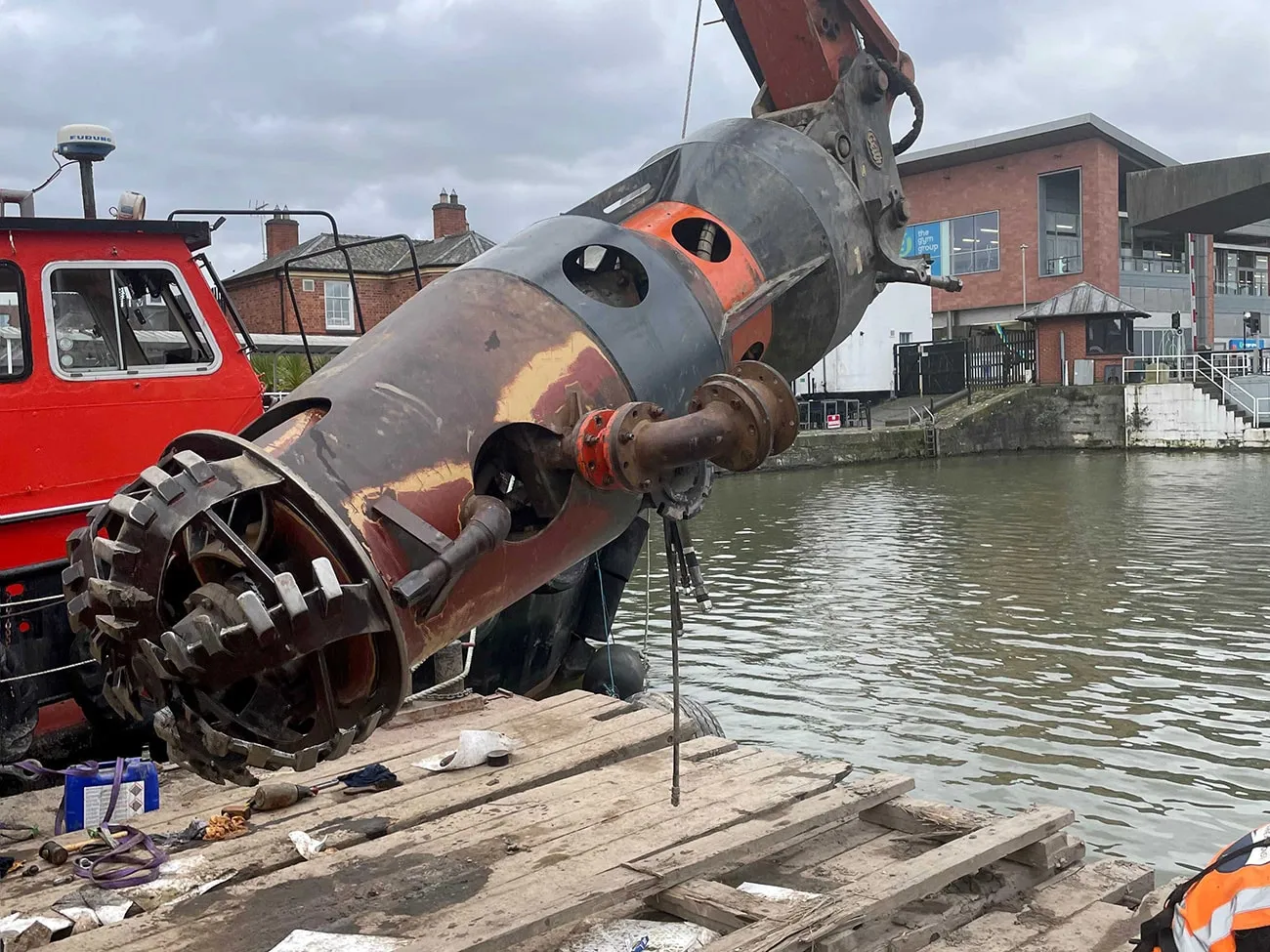
With an extensive range of equipment, Bell Dredging Pumps can provide the right kit for every dredging job. This is once again demonstrated by the project currently under way in Gloucester, England. The company, based in Winkel in North Holland, is making a substantial contribution to the job, which is the largest winter dredging project ever undertaken in the city, with two installations.
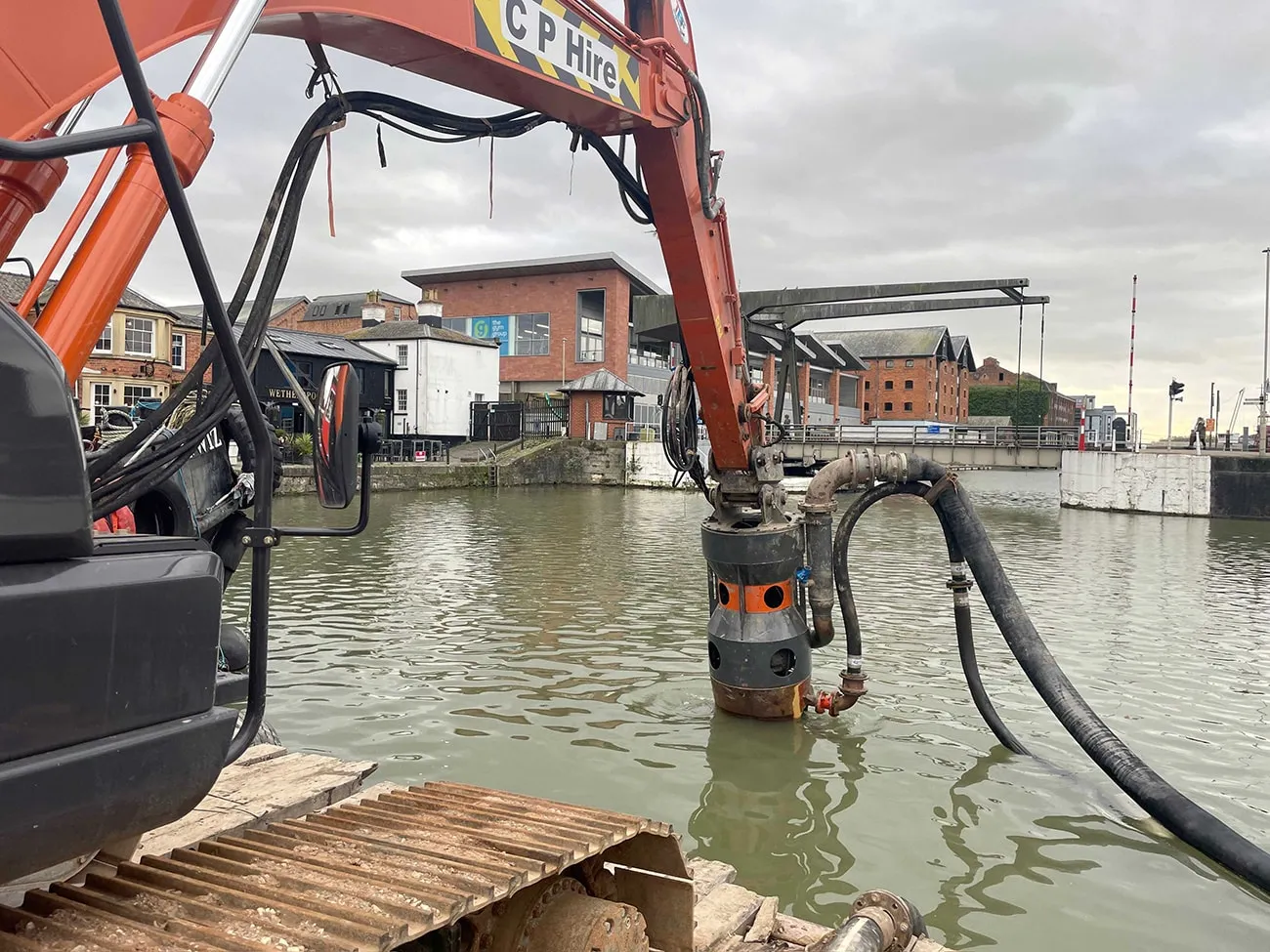
As an international specialist in the rental and sale of dredging equipment for the onshore and offshore industries, Bell Dredging has all the right equipment. Its product range is both broad and deep, including amphibious excavators, cutter suction dredgers and heavy-duty dredging pumps. This was one of the reasons the client chose to draw on the expertise and services of the globally active company for the city’s largest-ever winter dredging project. “The project involves a four-month dredging programme at Gloucester Docks, removing a layer of silt, sand and sediment from the harbour,” explains Bell sales engineer Thijs van den Outenaar. “This layer ended up here as a result of the dry summer and the surrounding cities’ demand for drinking water. Consequently, the water depth in some places has fallen from around 3.5 metres to 1 metre or even less. This is an undesirable situation, particularly because it hinders vessels navigating and mooring at Gloucester Docks.”
Solution
Bell Dredging Pumps is providing a solution to the problem by supplying components for two dredging installations at two different locations. “The original specification called for dredging a particular area of the harbour,” says Van den Outenaar. “For this, we supplied a Bell 200 dredging pump with a cutterhead, a power pack (generator, ed.) and a floating discharge pipeline. To get the various sediment layers moving properly throughout the area and dredge even more effectively, a high-pressure water pump is also being used. It feeds the nozzles we installed in and on either side of the cutterhead.” For additional dredging work that, on closer inspection, needs to be carried out elsewhere in the harbour, the client has opted to hire an identical set from Bell Dredging, with one exception. “For the initial dredging work, we are using a single cutterhead, or cutter, while this part of the project requires a double cutter,” says Van den Outenaar. “This is because of how our customer uses the equipment. In the first set, the Bell pump is rigidly attached to the arm of an excavator, whereas in the second set it is used suspended freely. As the two cutterheads on the double cutter rotate in opposite directions, the pump remains steady, allowing it to be lowered into the water on a wire without any problems.”
Question about this story? Ask your question
Keep following this
Get an email when a new story is published. No account needed.
- ThemeFlood protection and climate-resilient water management
- SubjectWater infrastructure







