









Emission-free dredging: implications for operations and logistics
Text Roel van Gils Image Verboon Maasland
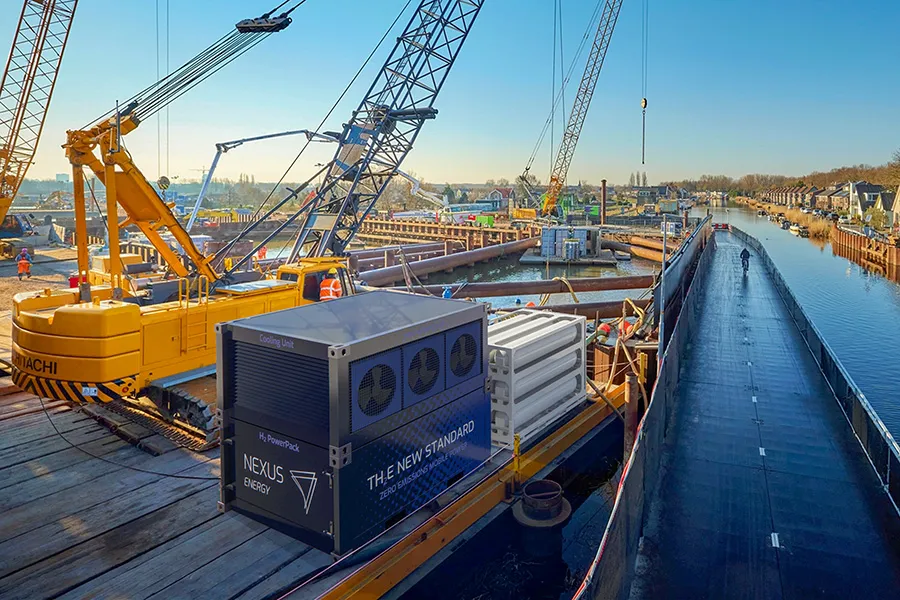
In recent years, Verboon Maasland has invested heavily in electric equipment, including to enable emission-free dredging. However, the equipment and the entire process around it require a different approach to managing and carrying out projects, says operations director Arjan Krijnen. “What we encounter on site is that emission-free equipment is good, but not developed enough. That has implications for operations and logistics.”
We are seeing a trend among clients towards requesting more and more emission-free projects, also because this is being mandated by the government, says Arjan. “We naturally support this transition, but there is more to it than simply buying an electric dredging boat or excavator. The equipment also has to be used, which calls for innovation and understanding, including on the part of clients. Processes need to be organised differently. Electrically powered equipment runs on batteries that often have limited range. In addition, recharging electric equipment usually takes longer than refuelling with fossil fuels. This means that work needs to be planned more carefully. Batteries are good, but they do not always deliver the operating hours promised by the manufacturer. Ideally, there would be a power connection everywhere. That means driving battery containers back and forth to be recharged elsewhere using renewable electricity. So there is also a logistics process involved just to power the dredging equipment. And that is before we even consider transporting the dredged material without emissions. This too requires careful logistics, as it must not affect productivity.”
Finding a way forward
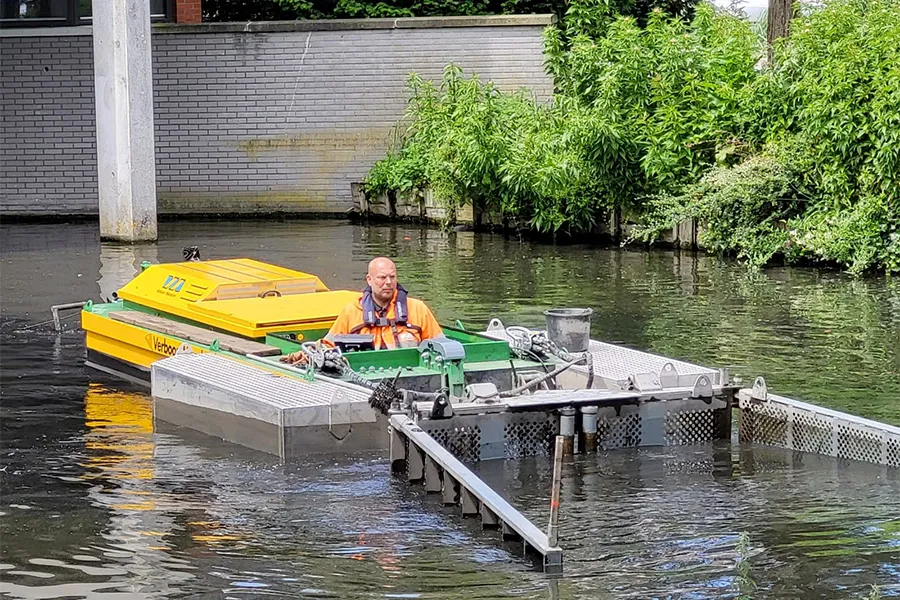
Verboon Maasland recently started a major emission-free dredging project in a rural area, using, among other equipment, a newly purchased electric push boat and an electric HGM. “It is going well so far, but not as efficiently as we would like,” Arjan admits. “Here too, we have to transport battery containers back and forth to charge the equipment. Sometimes they even need to be recharged during the day because the batteries do not last a full shift. Both the battery containers and the dredged material are still transported by diesel, unfortunately, although the fuel is HVO100, and this is not ideal. In this case, it is an interim solution as we look for the most efficient way to carry out a project like this. It also calls for a different approach to our work preparation and planning.” Verboon Maasland is investigating whether a hydrogen generator is a viable option for refuelling on site. Separately from this ongoing project, in the autumn the company will start a pilot for the Hoogheemraadschap van Rijnland, in which it will carry out dredging entirely emission-free within a project, using hydrogen as an energy source. The pilot will be conducted with full transparency and an open mind, in collaboration with an engineering consultancy.
According to Arjan, the final step in the process of ‘sustainable dredging’ is to find a circular new use for the dredged material. “Water authorities own the dredged material, but not the land. It would be great to find a way to create a synergy here, so that dredged material is seen not as waste but as a resource. There are all kinds of initiatives under way in this area too.”
Question about this story? Ask your question
Keep following this
Get an email when a new story is published. No account needed.
- ThemeFlood protection and climate-resilient water management
- SubjectWater infrastructure







