









Earthmoving and dredging expertise deployed at Nieuwe Sluis Terneuzen
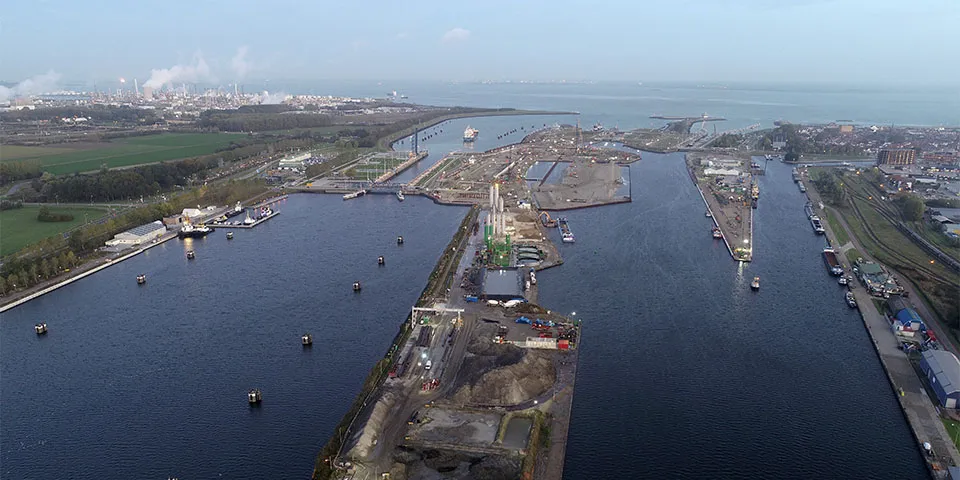
Earthmoving and dredging play a central role in the work involved in building Nieuwe Sluis in Terneuzen. DEME Group has all the expertise and resources needed to create and remove land. The work on the lock complex is being carried out by JV Sassevaart. DEME is a key partner in the joint venture.
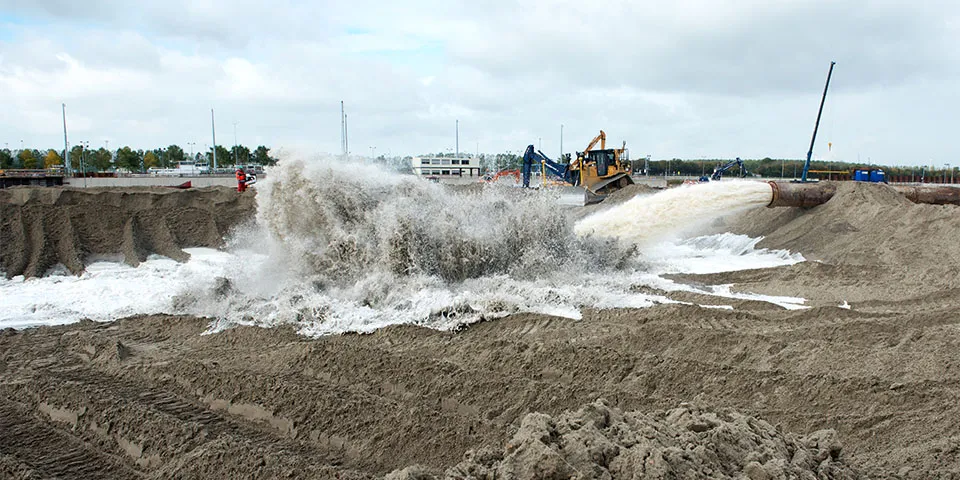
It is fair to say this is a complex project involving many disciplines. (Image: ©janevanraaphorst)
We speak to Alex Vandemeulebroecke, Integrated Delivery Manager at DEME. He tells us about the work on Nieuwe Sluis already completed and what is still to come.
Complex project
“When we look at all aspects of Nieuwe Sluis in Terneuzen, it is fair to say that this is a complex project involving many disciplines. That also applies to the dredging and earthmoving work,” Vandenmeulebroecke begins. “Work on the new service harbour recently got under way. Building the new service harbour involves both removing and adding land, for example to create new moorings.”
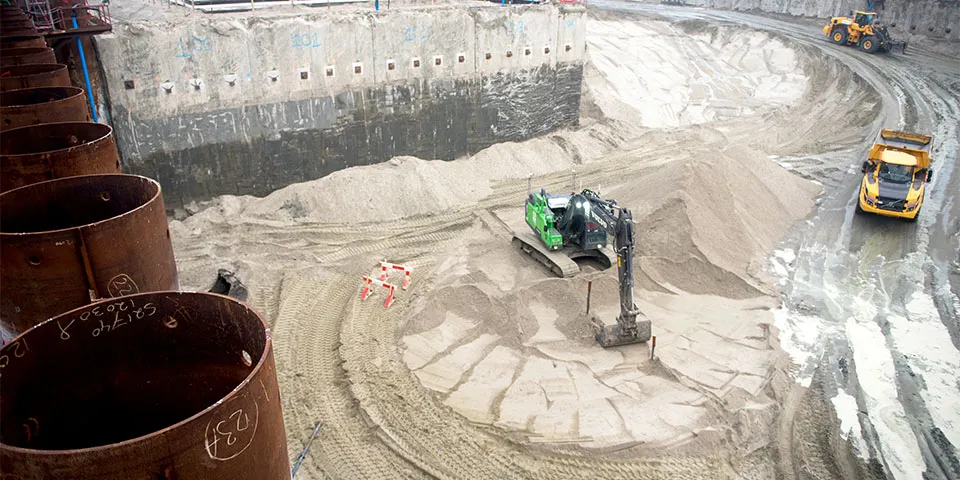
Work on the outer lock head.
(Image: ©janevanraaphorst)
In total, around 13 million m3 of material will be moved through earthworks, silt dredging, maintenance work and the removal of spits. Vandenmeulebroecke: “The mix consists of silt and soil. With 3 million m3 of soil from Terneuzen, we will be able to carry out a beach nourishment at Knokke.”
Excavation to 22 metres below NAP
“Since work began, shortly after the contracts were signed in 2017, we have carried out dredging for maintenance, removed silt and raised the lock island by reclamation. We are currently carrying out earthworks. The construction pit for the outer lock head has now been excavated to 11 metres below NAP. This was done in the dry. The outer lock head is now full of water, and we will start wet excavation down to 22 metres below NAP. Excavation for the inner lock head will begin shortly. Our excavators are busy!”
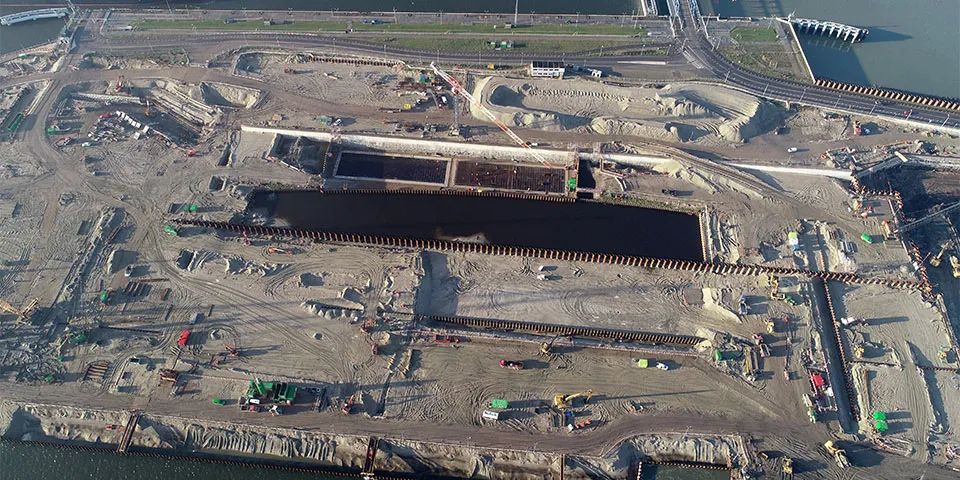
Building the new service harbour involves both removing and adding land.
(Image: Droneteam Rijkswaterstaat, Mario Vermeirssen)
Once excavation at the lock heads is complete, the complex concrete work will begin. “We will be working on that for about a year,” Vandenmeulebroecke continues. “A few months after the concrete work on the outer lock head starts, we will begin the concrete work on the inner lock head. We are already producing the concrete floor grilles for the lock chamber, which will be lowered into place on site. Ships will be raised and lowered in Nieuwe Sluis by drawing water from, and discharging it to, the bottom of the lock chamber through these floor grilles and into the levelling channel alongside the lock. We are currently prefabricating the grilles. We will then excavate the lock chamber and install them.”
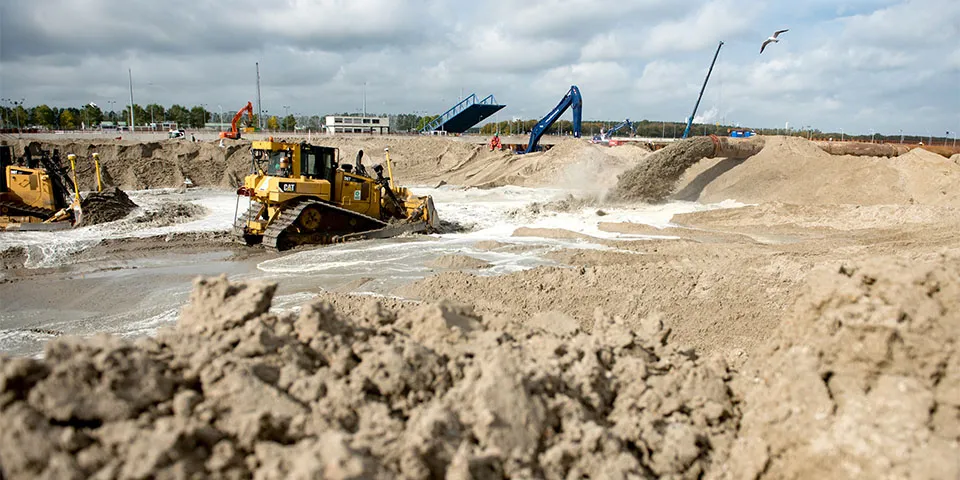
In total, around 13 million m3 of material will be moved. (Image: ©janevanraaphorst)
Combi wall at the service harbour
DEME is also responsible for the combi wall at the service harbour. “It is being built using tubular piles and sheet piles. Work is in full swing. Looking further ahead, from spring we will be working on Buitenhaven West. This will include moorings and bank protection. Ships will be able to moor there while waiting their turn to pass through a lock.”
Vandenmeulebroecke concludes: “It is wonderful work, and it is great to see how the progress being made is gradually bringing the new lock complex to life. The finishing touch will come in 2021, when the lock gates and bridges manufactured in China are shipped to Terneuzen.”
Question about this story? Ask your question
Keep following this
Get an email when a new story is published. No account needed.
- ThemeFlood protection and climate-resilient water management
- SubjectWater infrastructure







