









Drought in Panama: how to minimise water loss to the ocean
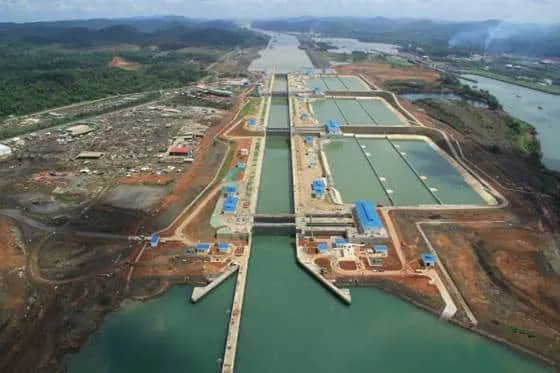
Hundreds of ships are waiting to pass through the Panama Canal locks. Drought has lowered the water level in the central Gatún Lake so much that the authorities have decided to allow fewer ships through each day. That is because each time a ship passes through the locks, around 200 million litres of water flow into the ocean. Engineering firm Iv designed the lock gates for this remarkable complex, taking the lake’s role as a freshwater supply into account as far as possible within the specified requirements.
Water loss minimised
The Panama Canal plays a crucial role in international shipping. Without a functioning lock complex between North and South America, ships would have to sail all the way around South America. The upgraded lock complex, which opened in 2016, was designed to limit freshwater loss as much as possible. Special water-saving basins that allow freshwater to be reused, together with the ingenious design of the lock gates, significantly reduce water loss.
To minimise freshwater loss, ships pass through the locks using water-saving basins. These basins, three alongside each lock chamber, reduce water loss by 60%. By routing some of the water through the basins during lockage, it can be reused. As well as serving as an important shipping route, the freshwater in Gatún Lake is the main source of drinking water. The lake supplies clean drinking water to around half of Panama’s population.
However, the prolonged drought is causing water levels in Gatún Lake to fall. Normally, water lost when ships pass through the locks, 200 million litres per lockage, is replenished by rainfall and inflow from the Chagres River. This allows around 36 ships to pass through the locks each day. But with no rain and less water flowing in from the Chagres, Panama has reduced the number of ships allowed through. This has led to queues, with hundreds of ships now waiting to travel from the Pacific Ocean to the Atlantic Ocean.
A patented solution
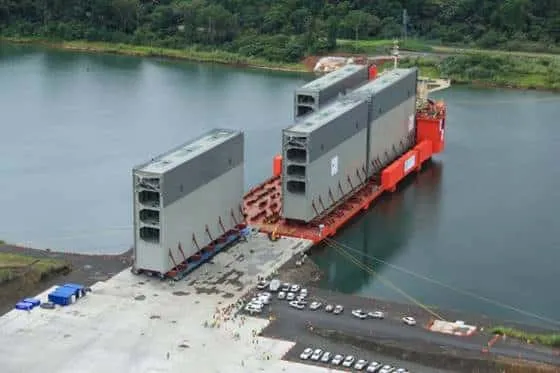
A strict requirement for the design of the lock gates for the upgraded Panama Canal was that they should allow very little freshwater to leak into the oceans. Average leakage of five litres per metre per minute is permitted, with a maximum of ten litres per metre at any point on the gate. The seal that prevents leakage must last for fifteen years, during which time the gate will be opened and closed 135,000 times. Throughout this period, the seals must continue to meet all the strict requirements and must not wear excessively. To achieve this, Iv designed a special pressure-differential-activated sealing and guiding system that provides smooth horizontal guidance and allows for straightforward, correct installation, while meeting the stringent sealing requirements. Iv has obtained a patent for this new system, which had never been designed before.
More on NOS
The NOS Journaal covered the drought in Panama and its impact on shipping. Wouter van der Wiel explains how the Panama Canal locks work on behalf of Iv. The lock gate design is also featured on the NOS website.
Question about this story? Ask your question
Companies in this story

Keep following this
Get an email when a new story is published. No account needed.
- ThemeExtending the life of roads and civil engineering structures
- SubjectWater infrastructure
- CompanyVan der Wiel







