









Careful management of the ground
Text Roel van Gils Image Haskoning
The added value of geotechnical advice
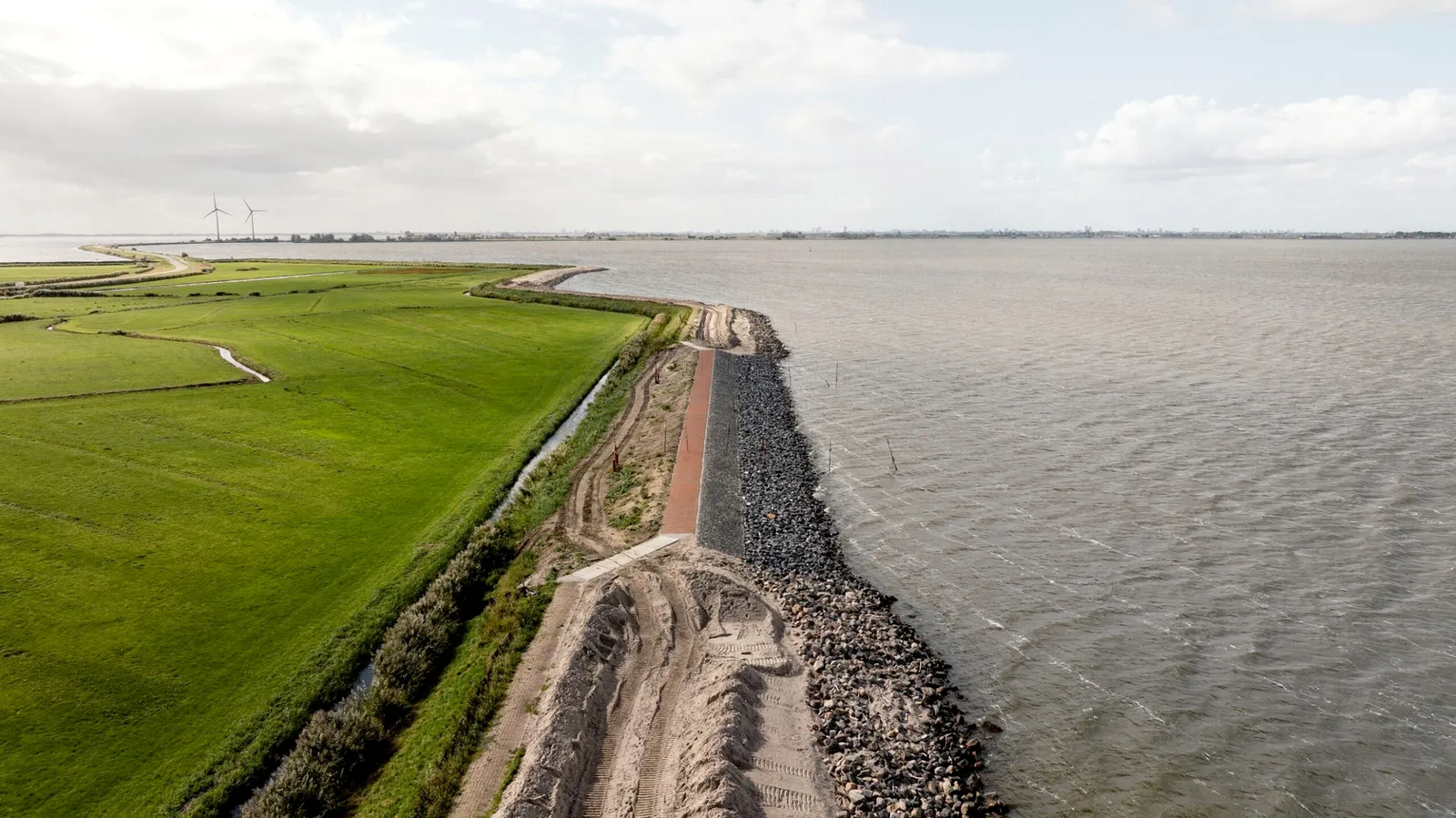
Water safety is central to the dike reinforcement on Marken. Haskoning’s engineering team was brought into the project during the tender phase and remains closely involved during construction. By taking an in-depth look at the ground conditions and buildability, the team developed a smarter design. It requires less raising and significantly smaller volumes of sand, while maintaining the same level of water safety. The early involvement of geotechnical expertise proved crucial to the project’s success.
During the tender phase, Haskoning’s specialists assessed the buildability of the reference design. “It soon became clear that the original plans called for large quantities of sand,” says Clara Spoorenberg, geotechnical specialist at Haskoning. “That would not only be costly, but would also carry risks. The dike lies on the bed of the Markermeer, where there are thick layers of soft peat. This ground is particularly susceptible to settlement and instability. Raising it too heavily or too quickly can cause slope failures.”
Alternative design
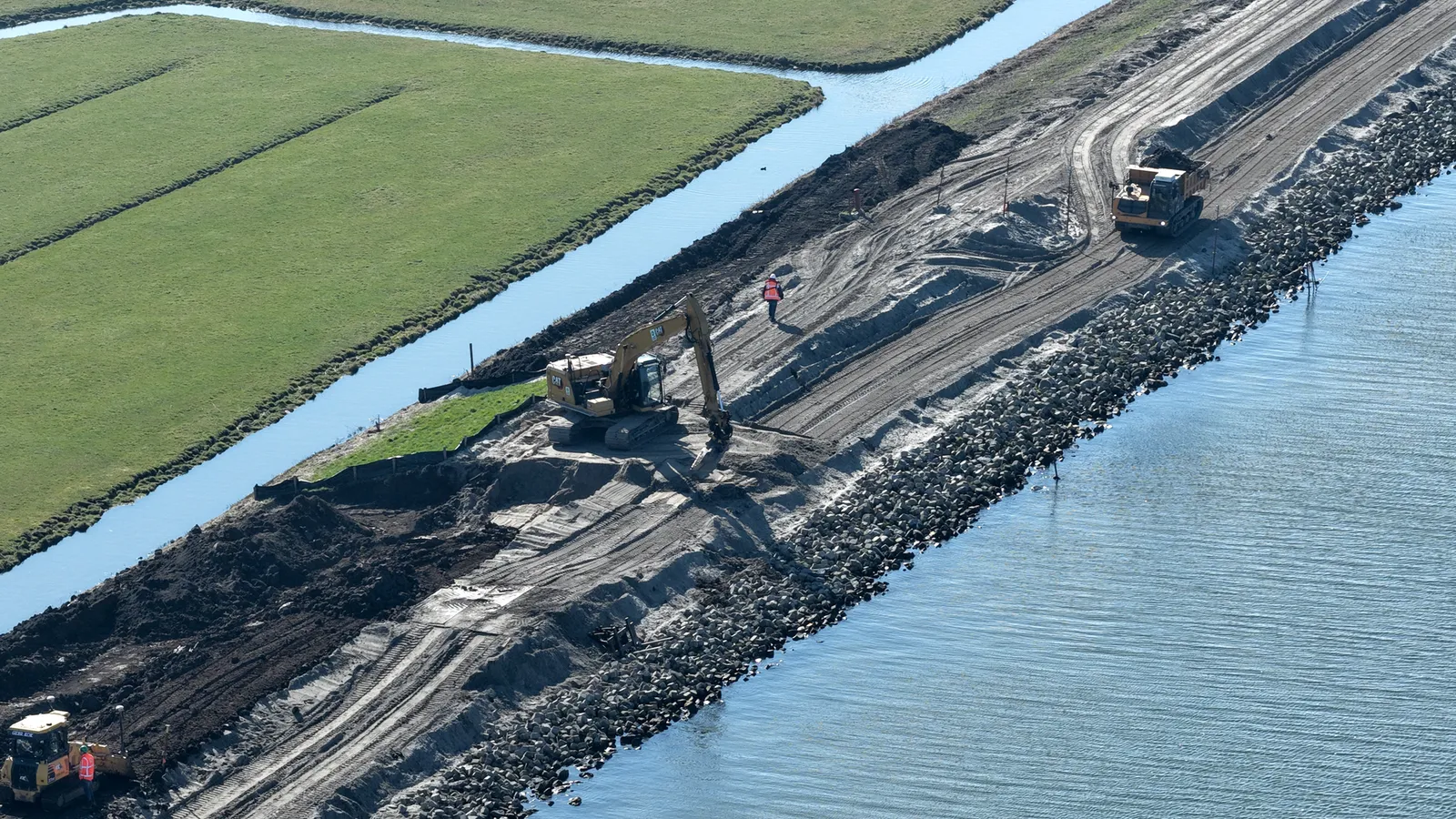
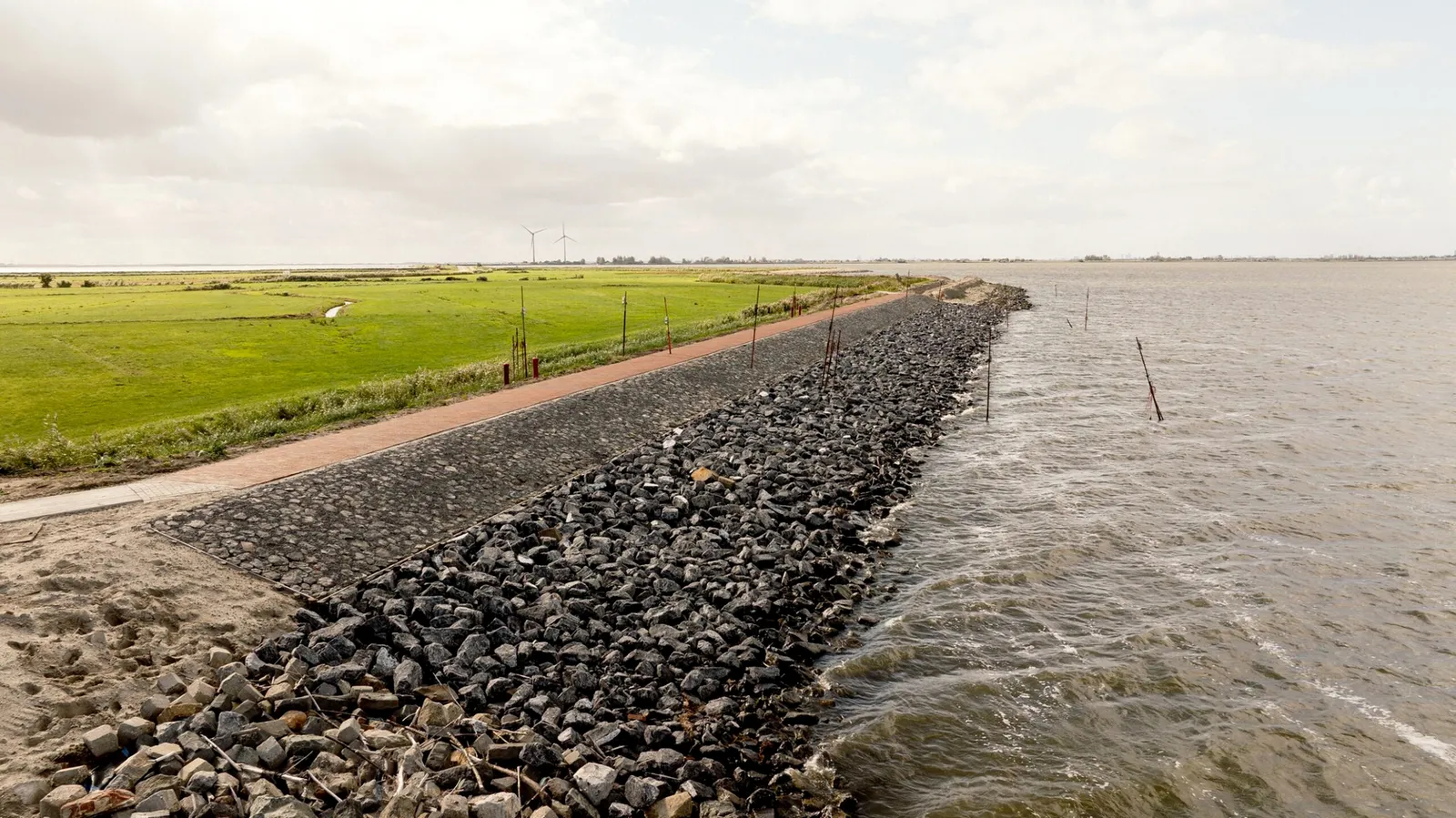
On the basis of these geotechnical insights, an alternative design was developed. “Instead of a high, relatively steep dike, we opted for a lower profile with gentler slopes,” Spoorenberg explains. “The gentler slope greatly reduces wave run-up, so the dike does not need to be as high to meet the safety requirements. The result: less sand, less settlement and a design that is easier and safer to build. This approach brought not only technical benefits, but also a lower environmental impact and a better Environmental Cost Indicator (MKI) score. It ultimately even helped win the tender.”
Trial sections
To test this in practice, two 100-metre trial sections were built. “These trial sections literally served as a test bed where the contractor consortium could try out different construction methods and materials,” says Jan Cirkel, project manager at Haskoning. “This included variations in stone types and aggregates, as well as methods of placing and securing them. The trial sections also provided valuable insights into how the ground behaves. Extensive monitoring was carried out to establish how reliable the measurement data were and how accurately settlement behaviour could be predicted. This knowledge formed the basis for the final construction strategy and phasing.”
Different construction sequence
The design of the new dike makes as much use as possible of the existing dike. “It has been there for hundreds of years and has already undergone a great deal of settlement,” Spoorenberg explains. “So settlement in that zone is limited, and we make good use of that. A second important difference is the construction sequence. The usual approach for this type of dike reinforcement is to raise the ground first and then install vertical drains. Here, the sequence was reversed. First, a thin layer of sand was placed, into which vertical drains were installed. Only then were a further eight layers of fill added in stages, each 50 centimetres thick. This approach gave us better control of the ground and made it possible to build faster and with greater certainty.”
Water safety
Safety remains the priority throughout construction. “The contract stipulates that water safety must never fall below the level of the original situation,” says Cirkel. “This places stringent demands on the preparation and justification of every construction step, as set out in a Water Safety Plan. For every operation, such as removing the existing revetment or placing layers of sand, it must be demonstrated that stability will be maintained. This requires intensive monitoring, analysis and coordination between the design and construction teams.”
The most critical phase, raising the ground, has now been completed, providing a robust foundation for the future. According to both engineers, the project’s strength lies in the early involvement of geotechnical advisers and in carrying that expertise through to support during construction. “By making clear decisions as early as the tender phase, we developed a design that is not only safer and more sustainable, but also easier to build. Less sand, less risk and more control: exactly what is needed when building on sensitive ground.”
A business enquiry for Haskoning? Get in touch
Companies in this story
Keep following this
Get an email when a new story is published. No account needed.
- ThemeFlood protection and climate-resilient water management
- SubjectWater infrastructure
- CompanyHaskoning







