









Capturing and using rainwater for urban greenery is the future
Text and images ACO
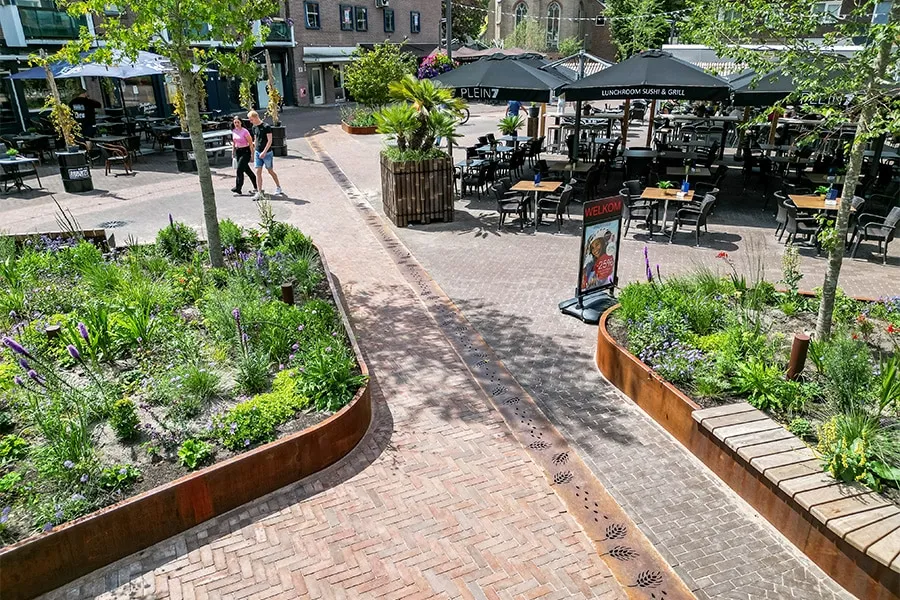
Alongside flooding, we have increasingly had to contend with heat stress in recent years. Greening city centres, particularly by planting trees, is a proven solution. But how do you keep everything green? This is one of the major challenges in future-proof water management.
“For decades, we have disconnected rainwater from the sewer system using swales or underground infiltration facilities. The downside is that new greenery does not benefit much from this. The water is often far too deep for young roots to reach. We are convinced that it is important to first consider whether rainwater can be used to sustain urban greenery, before infiltrating or discharging it.” Rieks Hulst, Marketing and Product Management Manager at ACO BV, explains.
Cool city centres with greenery, easily and flexibly
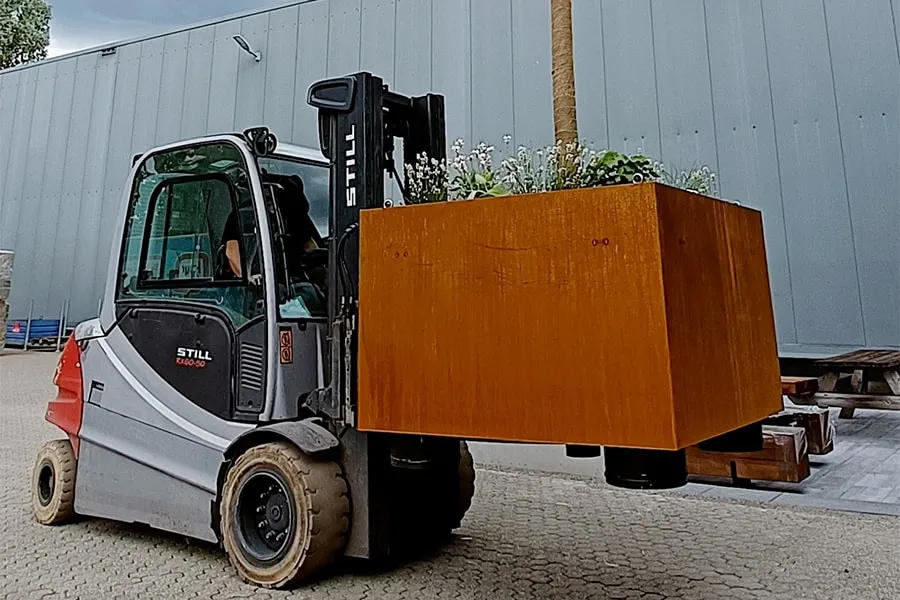
“At ACO Nederland, we started developing standalone planters more than three years ago. Thanks to patented technology, they can get by for an entire season on a single watering, instead of the 25 waterings traditionally required. This saves a huge amount of water and labour, and prevents unnecessary trips by water tankers through the city centre. This delivers a significant reduction in CO2 emissions.”
“After three years of testing, we are convinced that this principle works well,” says Rieks. “Building on this, we are now developing tree planters. By combining these planters with IoT (Internet of Things) technology, we can ensure that young trees receive exactly the amount of water they need, preventing waste of water and energy. A major advantage of above-ground planters and tree planters is that they let you green city centres quickly, easily and flexibly, without having to take underground infrastructure into account. But although they enhance the city centre and help cool it, they do not directly help prevent flooding. We have solutions for that too!”
Using rainwater for urban greenery
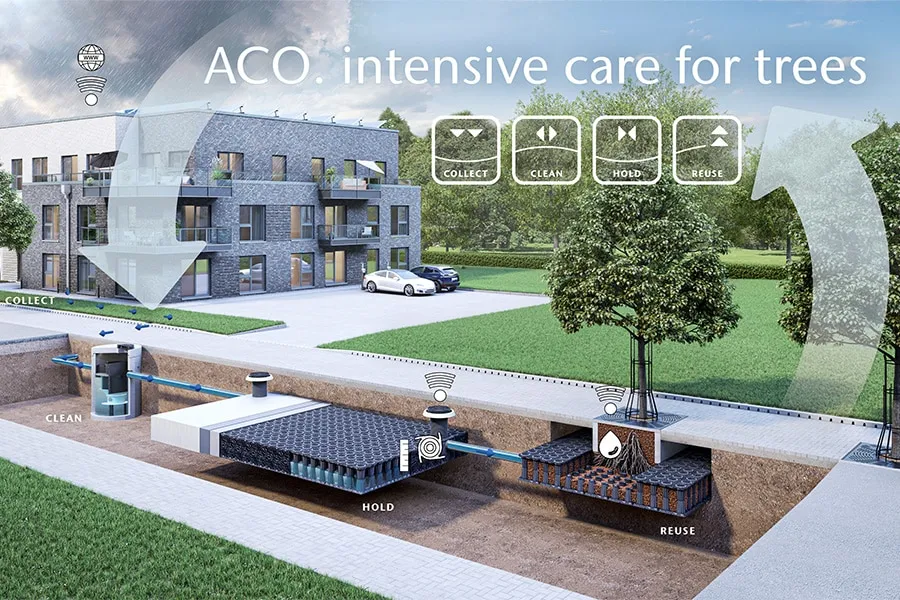
Climate change means that heavy downpours cause flooding far more often than they used to. Rainwater is something we can put to excellent use for urban greenery during dry periods. ACO does this by collecting and treating rainwater, then transporting it directly to partially sunken planted areas. It is stored there and dispensed as needed to irrigate the planting.
Over the past two years, several sustainable urban drainage systems (ID-Sas) have been installed at various locations. Experience shows that these ID-Sas systems work well without additional maintenance. They can be readily combined with ACO drainage products such as channel drainage, treatment and storage systems, and pumps.
Save money through automation
“Finally, we connect our urban drainage systems to IoT technology,” Rieks continues. “We recently did this in the municipality of Raalte. Twelve planted areas containing trees and plants now receive water ‘on demand’. Sensors determine where water is needed, and only those locations receive a metered supply. Soon, customers will be able to see how things are going via a dashboard and make adjustments themselves if necessary.”
A well-functioning system in balance
As well as being a manufacturer, ACO is a specialist drainage systems consultant. “Many different parties consult us during the design phase, including consultants, designers and local authorities. Our project office prepares calculations to create a balanced system in which all the necessary stages work together seamlessly. This is crucial to ensuring the system works well! Interested? Visit us at the VOR, stand number: 3.1.03, or take a look at our website.”
Question about this story? Ask your question
Keep following this
Get an email when a new story is published. No account needed.
- ThemeFlood protection and climate-resilient water management
- SubjectWater infrastructure







