









Building on ‘pudding’
Text Roel van Gils Image Frank Janssens – Rijkswaterstaat
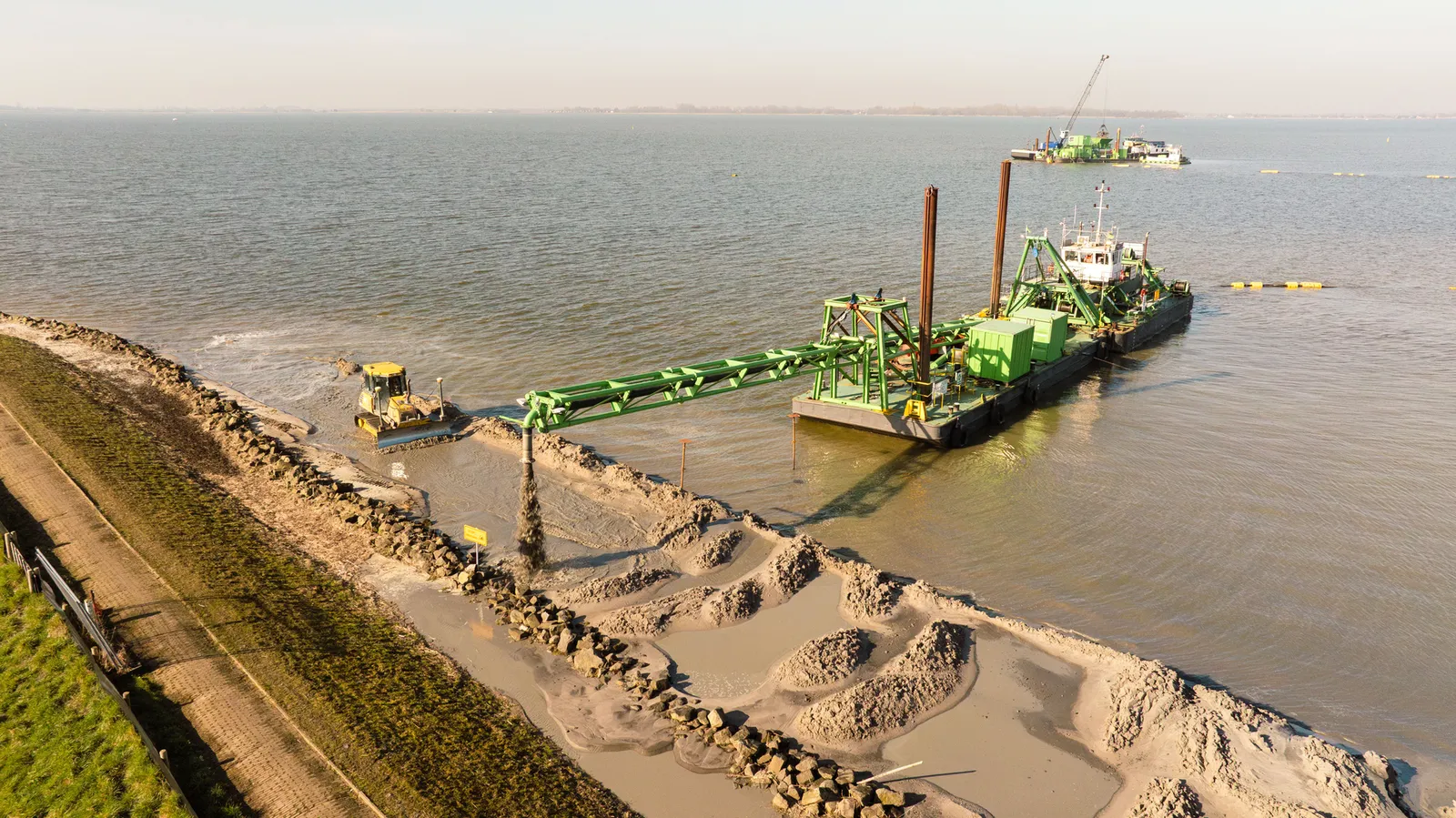
Anyone walking around Marken today will see plenty of activity on the dike. Sections are still exposed, as the Hof op Marken consortium is busy completing the work. This is undoubtedly a feat in itself, but perhaps the project’s greatest achievement lies beneath the surface: an ingenious approach that makes the dike future-proof on peat soil.
The dike reinforcement on Marken is part of the Flood Protection Programme (HWBP) and is being carried out under the direction of Rijkswaterstaat. “The dike no longer met the standards in several respects: its protection, stability and height were inadequate,” says Roger Boogert, project director for the Hof op Marken consortium, a partnership between DEME Environmental NL and JLD Contracting. “That is why an integrated approach was chosen, with a focus on a safe and robust design, sustainability and consideration for the surrounding area.”
Soft ground
The project’s biggest challenge? “Building on peat,” stresses Fred Hemstra, technical manager at the Hof op Marken consortium. “The subsoil is like a kind of pudding, with no strength to it. The entire dike reinforcement design was therefore governed by geotechnical considerations, and each layer of fill was placed with the utmost care. The new dike was deliberately built as close as possible to the existing one. This meant much of the settlement had already taken place, resulting in less material being used and a more compact design.”
Building a safe dike, layer by layer
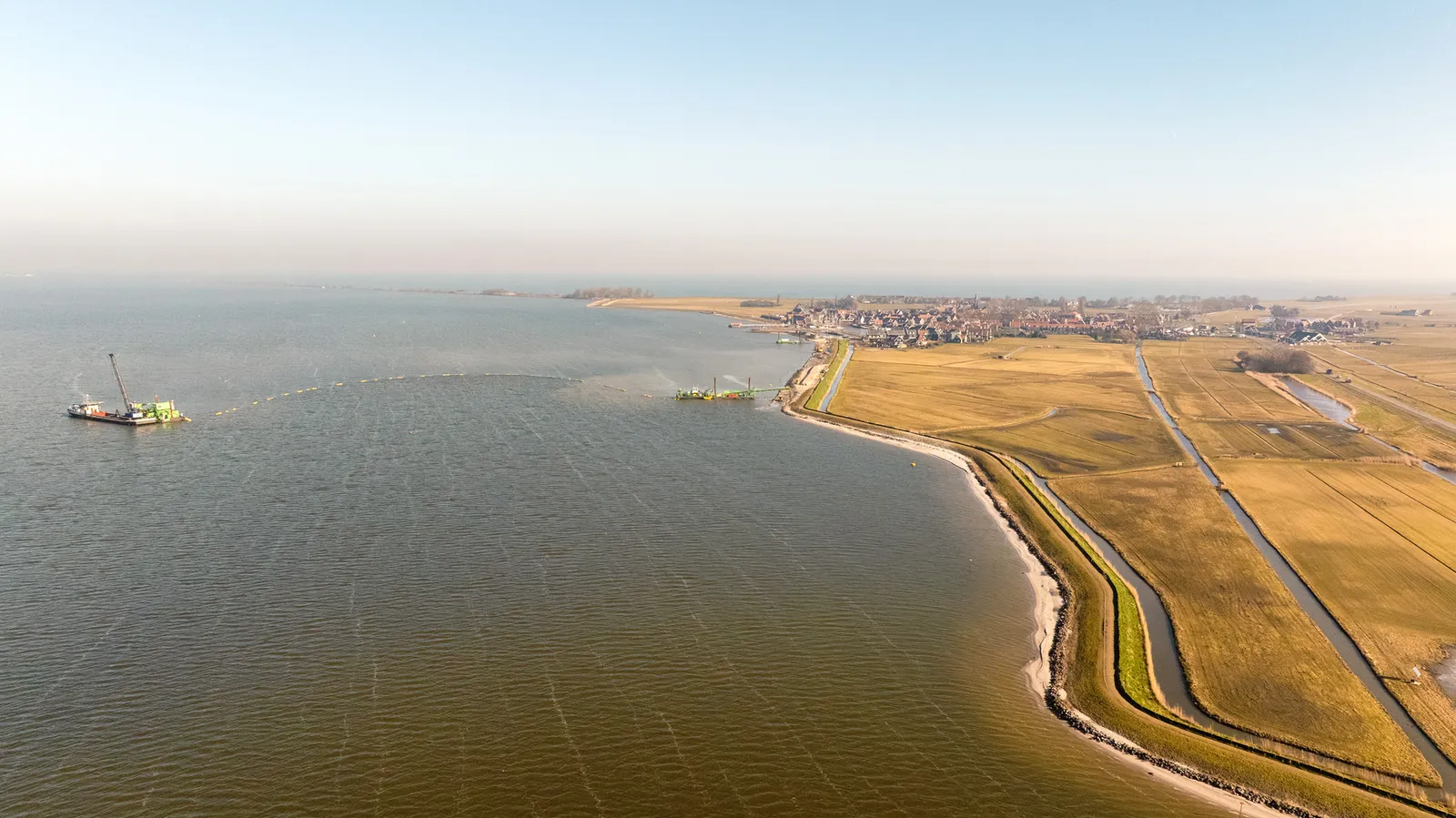
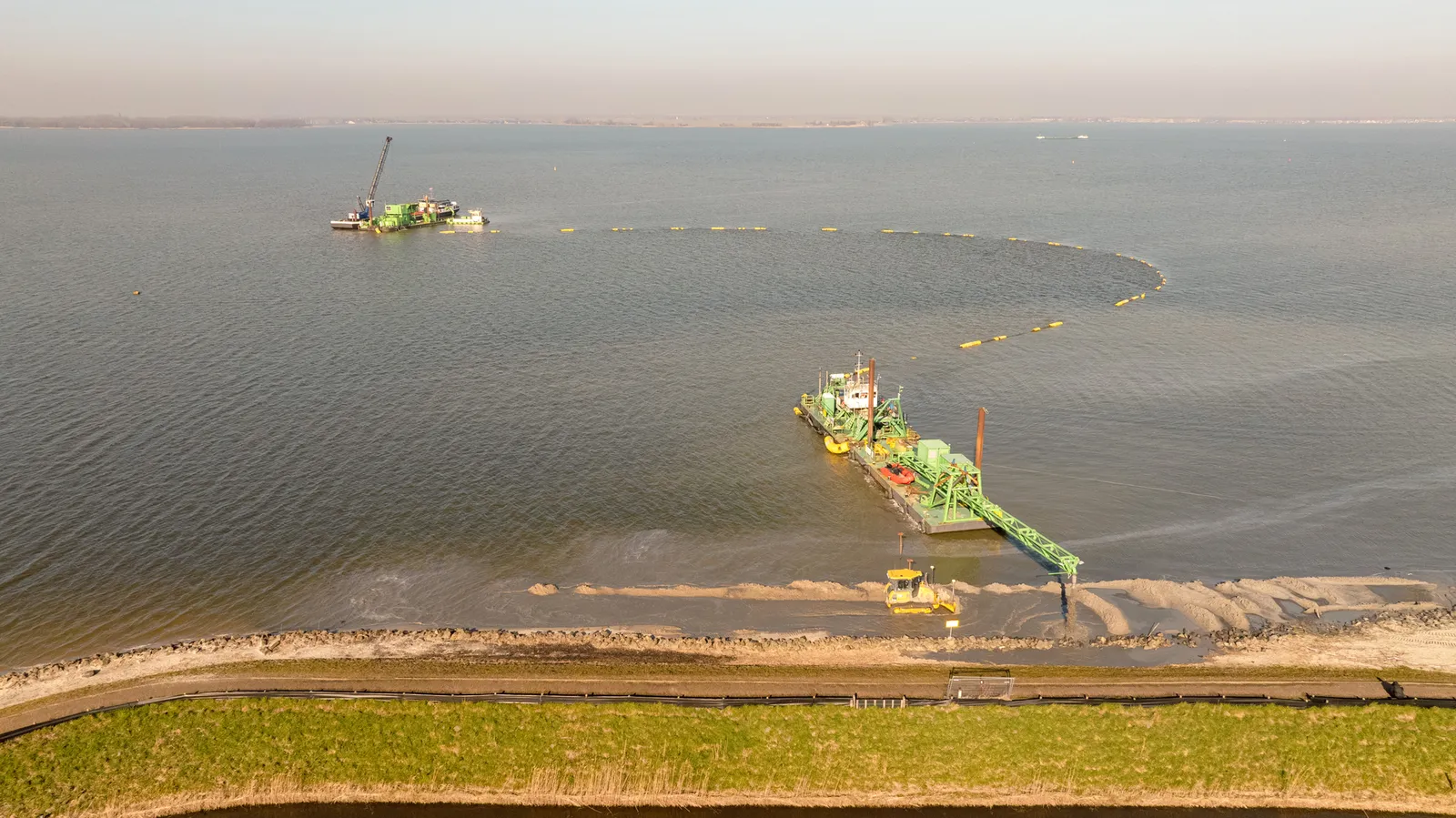
The dike was raised in nine lifts of around 50 centimetres each, Hemstra explains. “The sand was brought in by water and transferred to a hopper pontoon. From there, a pipe ran to a spray pontoon, which pumped the sand into place.” A crucial part of the process was the degree of preloading and the phasing, allowing the subsoil to settle and stabilise. “Vertical drains accelerated the consolidation process and discharged excess pore water pressure. This approach, which has remained largely invisible, is one of the project’s key achievements.”
Sustainable and circular
The tender placed considerable emphasis on the Environmental Cost Indicator (MKI), Boogert says. “Existing materials, such as paving blocks and basalt revetment, are being reused in the new dike protection. This not only lowers the MKI, but also results in a more efficient design that uses fewer new raw materials. The core of our bid was therefore to build a dike that meets current standards using as little material as possible. Our bid also included building two 100-metre test sections. These are intended not only to validate the technical solution, but also to give residents a concrete picture of the finished result.”
Opportunities to combine work
The contractor consortium is already reaping the benefits of the reinforced dike. “Under the previous conditions, the dike could bear a maximum load of just 1 tonne because its stability was deteriorating. Now that we are carrying out the finishing work, we have 20-tonne machines on the dike.” The Hof op Marken consortium is also taking advantage of opportunities to combine works. Recreational facilities are being added, including beaches, walking routes and refurbished jetties in the harbour. The project also considers ecology: the design incorporates 21 refuges for grass snakes into the dike protection, a unique example of nature-inclusive construction.
At just over 5 kilometres of dike reinforcement along the west and south quays, the project is relatively small but exceptionally intensive, says community liaison manager Roy de Haan. “Limited access, a complex environment and a large influx of tourists make the work quite challenging.” Nevertheless, the project is on track: work on the dike is scheduled for completion in 2027, with handover in 2028.
Question about this story? Ask your question
Keep following this
Get an email when a new story is published. No account needed.
- SubjectWater infrastructure







