









Bespoke flood protection at the De Entree project
Previous editions of this magazine have covered the De Entree project in Amsterdam, delivered by Max Bögl & Partners. One article discussed the wall in the tunnel between the bicycle parking facility and the metro concourse. The wall contained a temporary door, pending the full removal of the wall. This could only happen once the permanent flood barrier was ready. The barrier must prevent water from the bicycle parking facility from entering the metro concourse in an emergency. Aggéres, a flood protection specialist, was commissioned to design and build it. We speak to Oliver and Anthony Femont, owners of Belgium-based Aggéres.
Four-sided flood barrier keeps metro concourse dry in an emergency
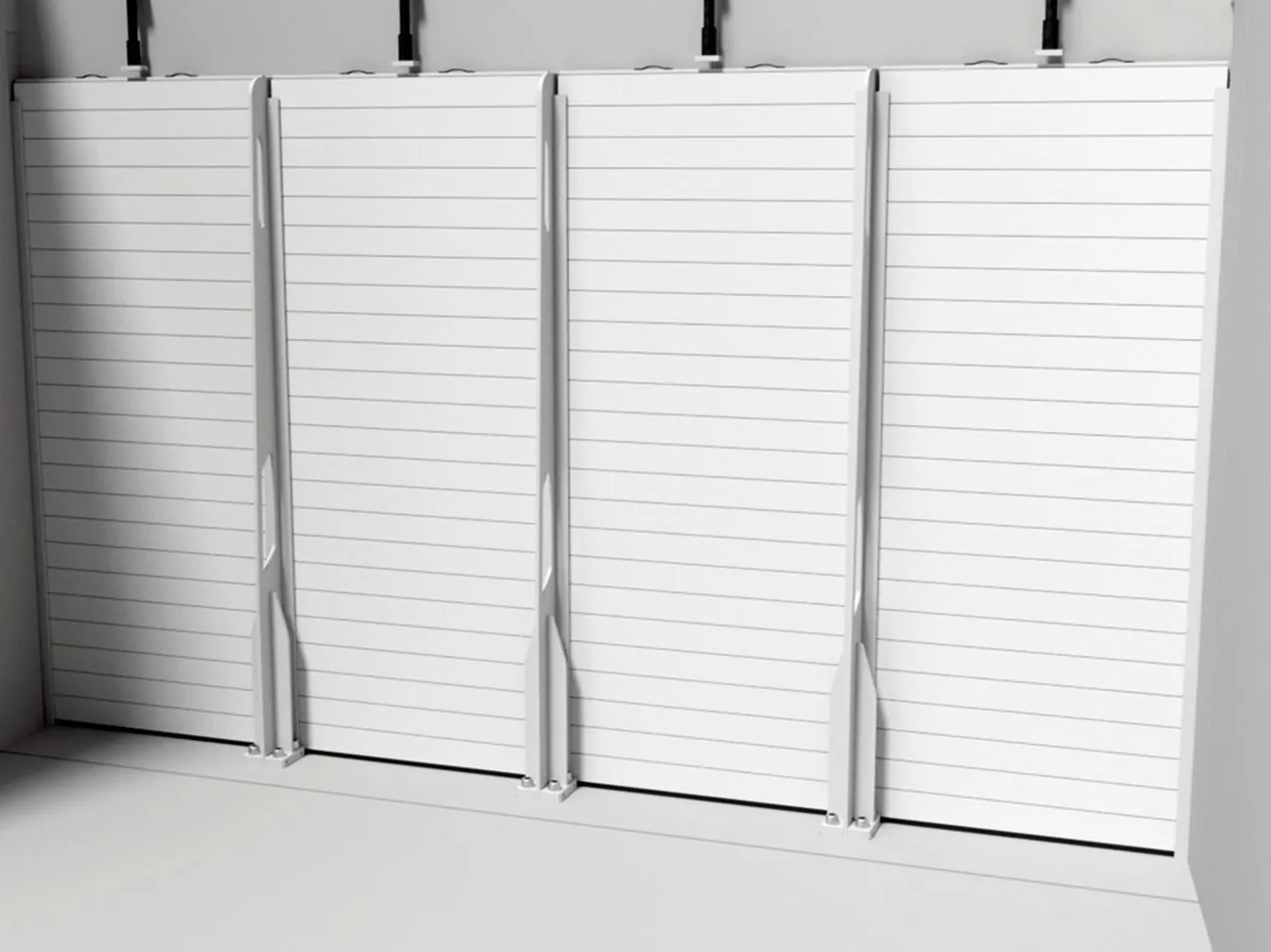
Stop-log system
Aggéres is no stranger to the Netherlands and has made the headlines several times with high-profile flood protection solutions in our low-lying country. “It may seem ironic that a Belgian company should be providing flood protection in the Netherlands of all places, but our expertise and drive to innovate make us a company to be reckoned with,” says Oliver. “Max Bögl approached us to help develop a flood barrier for the metro link tunnel at De Entree. The challenge was to create a barrier that sealed all four sides. That is fairly unusual and provides a more watertight seal than people are used to with flood barriers.” Anthony explains: “It makes sense that the barrier has to seal on the left, right, bottom and top, because the bicycle parking facility, tunnel and metro concourse are all well below the flood level in an emergency.”
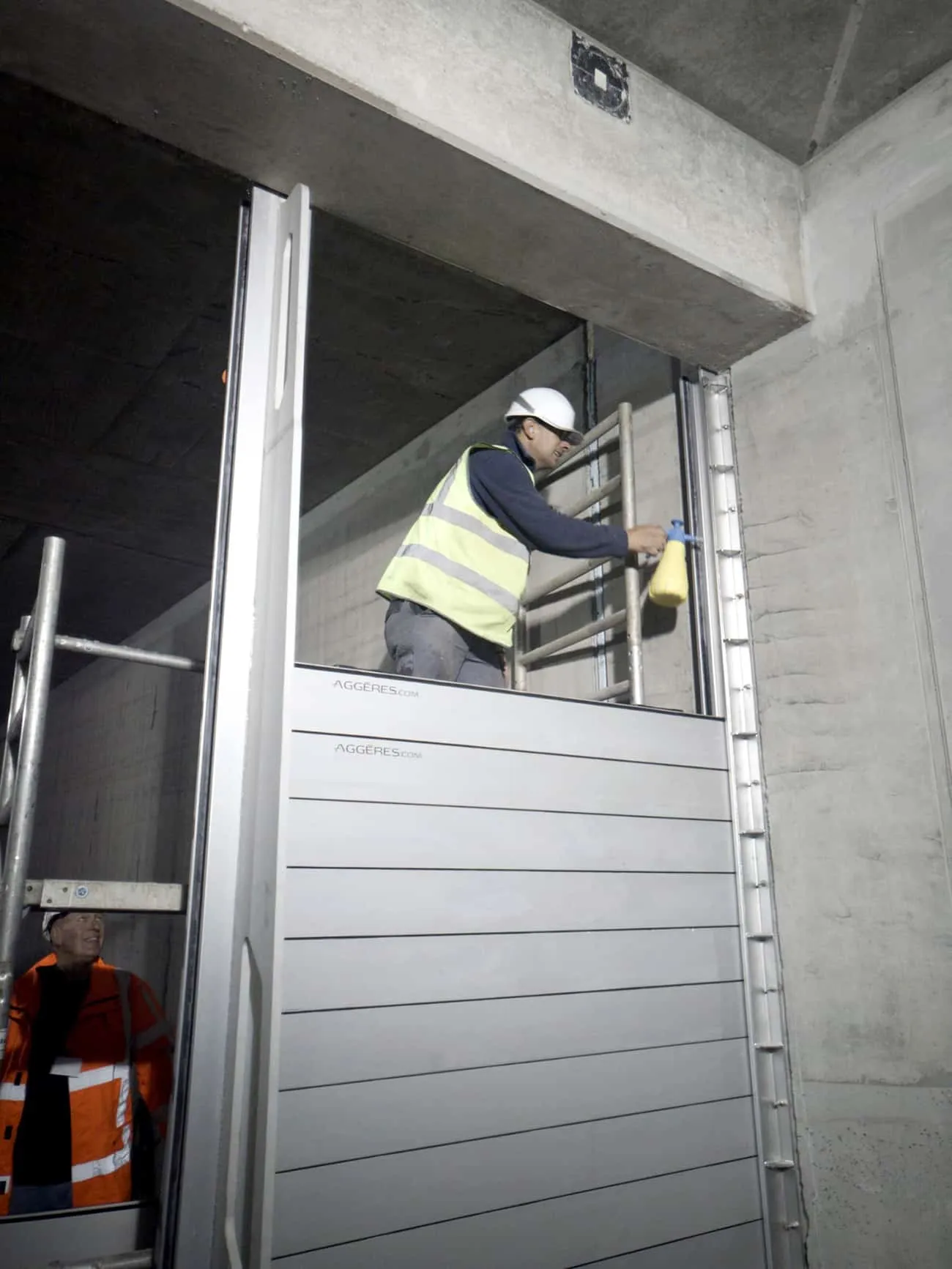
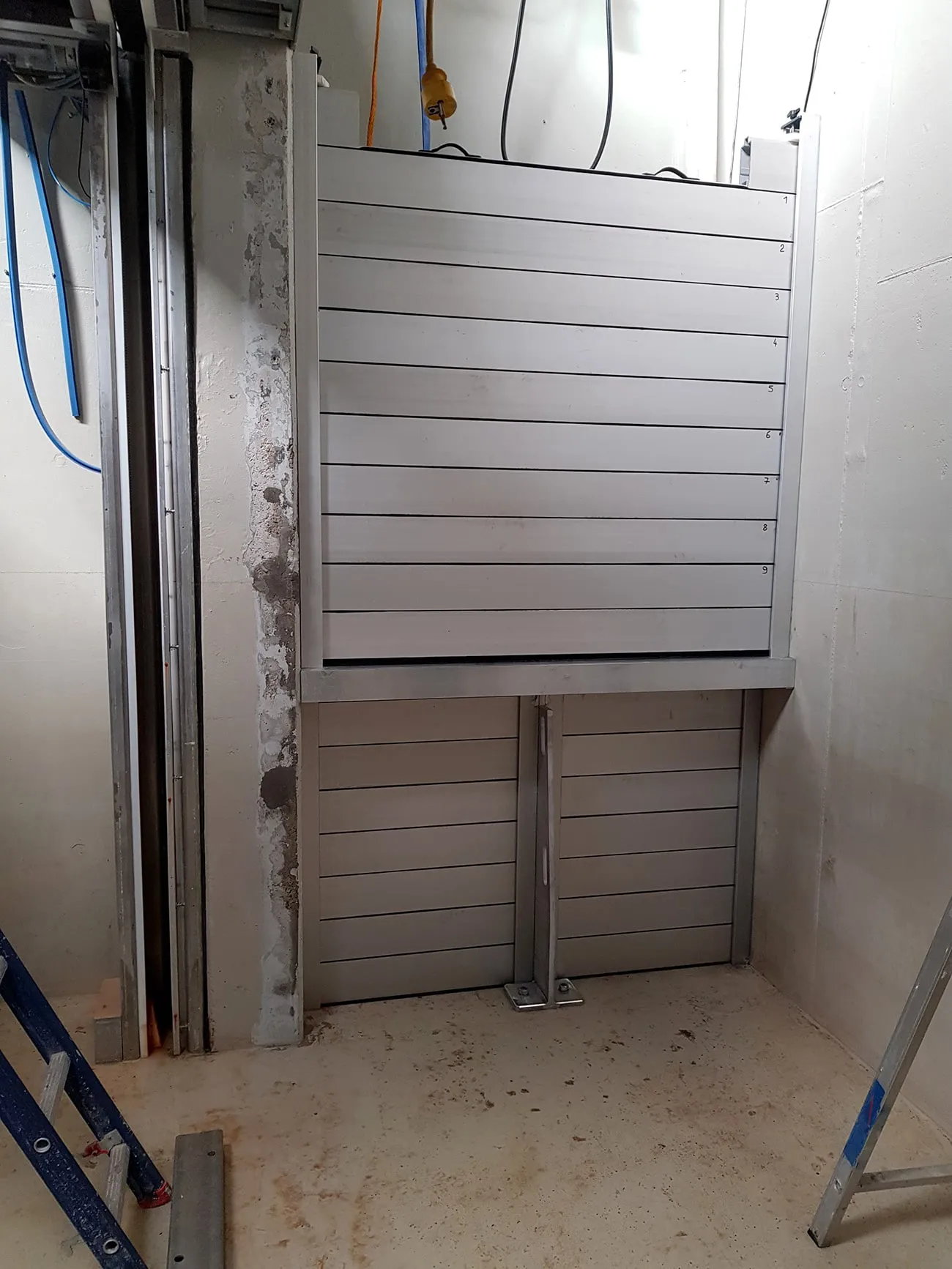
Aggéres chose its aluminium stop-log system. “The barrier had a total area of 6 metres wide by 4 metres high. We worked with Max Bögl and several engineering firms to calculate the structure and ultimately arrive at an approved design. The stop logs are made from extruded, profiled aluminium. We are currently one of the few companies capable of delivering work to this execution class,” says Oliver. The main challenge was welding the components. “That in itself is highly specialised work,” Anthony explains. “We work very closely with the client, engineering firms and research organisations. We also apply Dutch regulations in Belgium, given the extensive failure probability calculations and risk analyses involved.”
How it works
The aluminium flood barrier panels will be kept on transport trolleys in a technical room in the metro concourse. The staff responsible for the technical services department at the Municipality of Amsterdam are authorised to install the panels in the event of an emergency or imminent threat. “At the top of the tunnel there is a concrete rebate,” Oliver explains. “The top panel is placed watertight against it. This creates a watertight seal all the way round.” Anthony adds: “The people who will operate the system will, of course, be trained once everything is ready.”
Work on the wall is still under way, but only the finishing touches remain. The flood barrier is already fully operational. Oliver says: “As mentioned, the barrier had to be ready on time because the concrete wall with the emergency door was due to be removed, and everything needed to be safe afterwards.”
In-house testing facilities
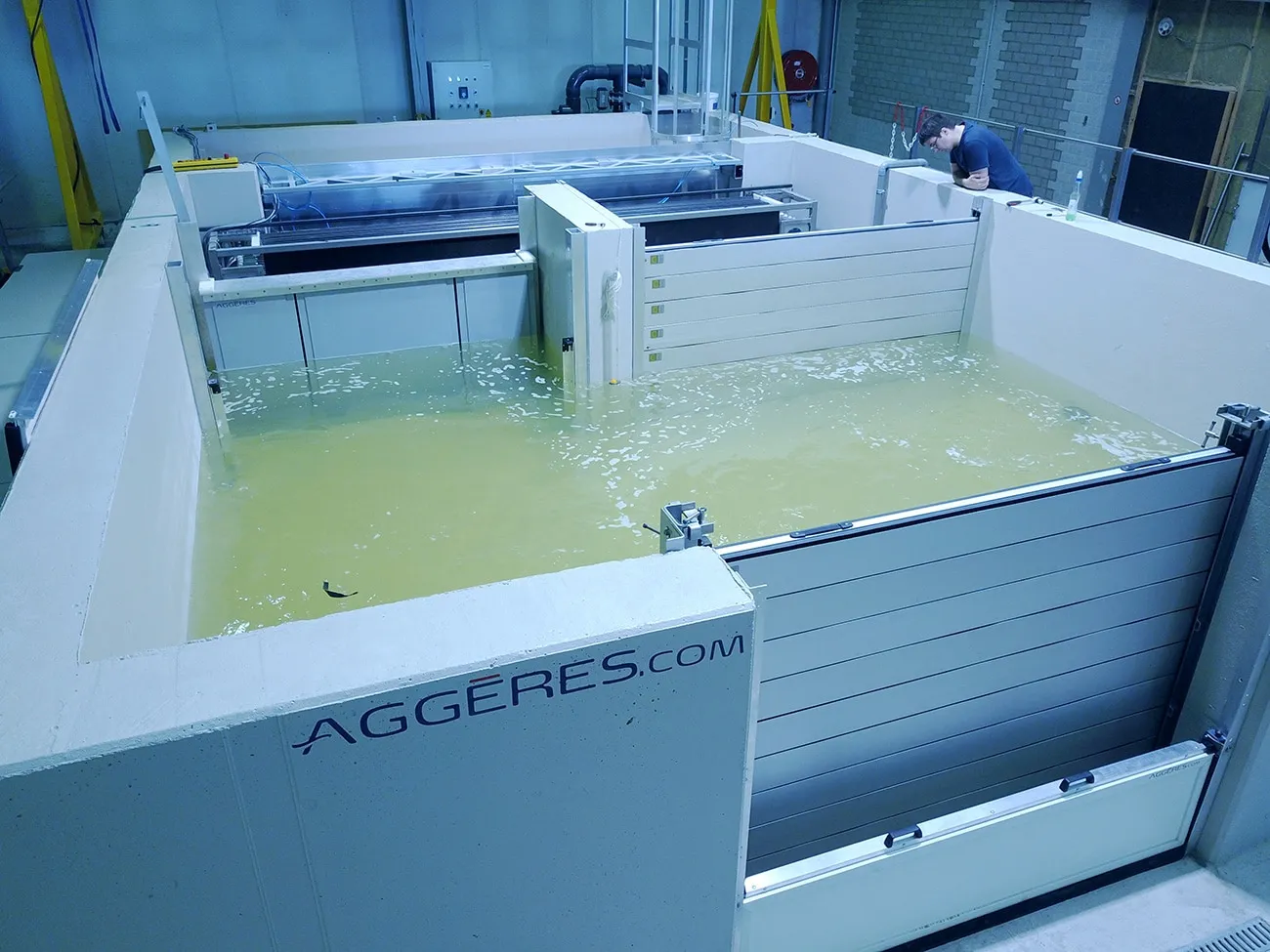
Stop logs are proven technology for Aggéres. The only new aspect of this project is the dimensions. That was reason enough for Aggéres to carry out thorough testing, which it can do entirely in-house. “We have our own test lab, with a tank 4 metres deep and measuring 5 x 12 metres around the perimeter,” says Oliver. “Nothing beats a live test. You’d be surprised how often computer calculations say something is safe, only for the practical test to show otherwise. People’s lives depend on our solutions, so you can be sure we leave nothing to chance.”
Anthony concludes: “The test tank allows us to improve our designs, giving our innovation capabilities a boost. We solve problems with non-standard solutions.”
Question about this story? Ask your question
Keep following this
Get an email when a new story is published. No account needed.
- ThemeFlood protection and climate-resilient water management
- SubjectWater infrastructure







