









Alkmaar | Emmakwartier
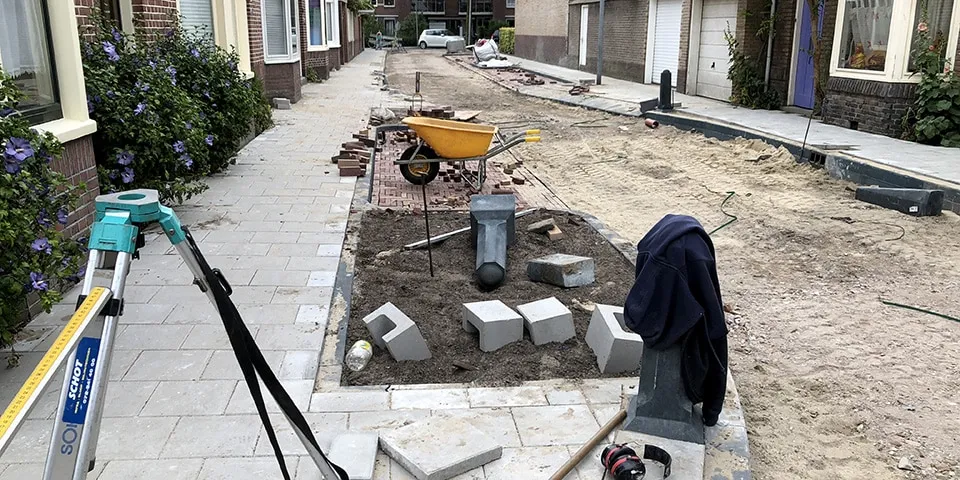
Well-designed, constructed and managed public spaces make a major contribution to the liveability and economic development of urban areas.
Creating public space together
The Municipality of Alkmaar aims to become the complete, dynamic capital of North Holland North through a sustainable, socially responsible approach, shaping liveability, safety, accessibility and employment in partnership with residents and businesses.
Alkmaar Open Covenant
With this ambition in mind, the Municipality of Alkmaar and Stadswerk sought to work with regional partners. The Alkmaar knowledge group (GP Groot Infra, Van de Bult Grond- Weg- en Waterbouw, Schot Infra), the Municipality of Alkmaar and Stadswerk 072 believe that construction needs a boost in innovation on routine projects. This innovation should lead to breakthrough improvements for both clients and contractors, and reduce waste, often referred to as the cost of rework. All this is on the condition that the quality of the service provided is at least maintained and that disruption to residents and businesses caused by construction work is reduced.
The parties have therefore expressed their desire to work together intensively and openly to improve coordination, develop knowledge and share it.
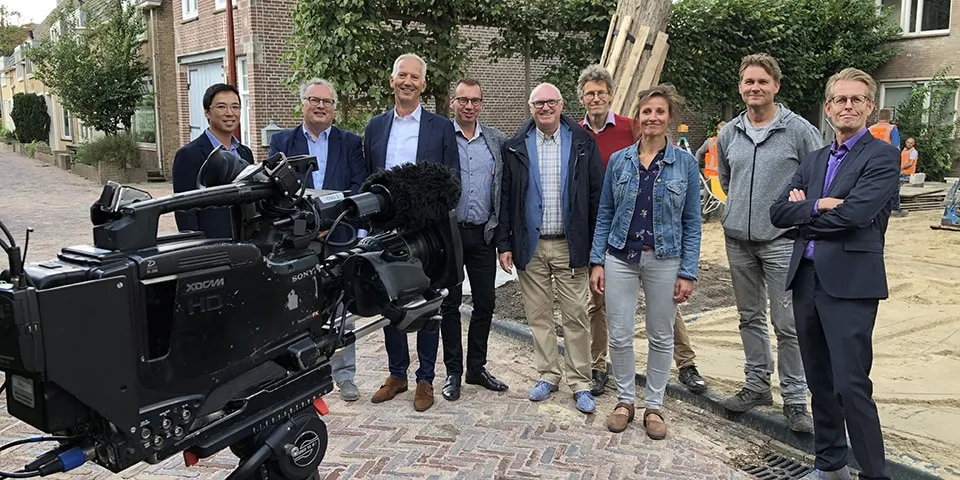
The covenant team and residents are working together on the Emmakwartier project.
Sustainable GWW Approach
Projects are becoming increasingly complicated. The environments in which we deliver them are also becoming more complex. Their multidisciplinary nature and scale present an ever greater challenge for both civil engineers and clients.
This is why clients are increasingly focusing on professional commissioning. In complex infrastructure projects, market parties can contribute professionally and creatively from an early stage. Clients also have a social responsibility when delivering the work.
The Sustainable GWW Approach is a process-based approach that integrates circularity and sustainability into the processes of analysis, assessment, design and specification, preferably as early as possible. The focus is on achieving sustainability gains by making the most of the opportunities in each project. Through collaboration under the Open Covenant, contractors can contribute their knowledge and experience at a very early stage, helping to maximise sustainability gains.
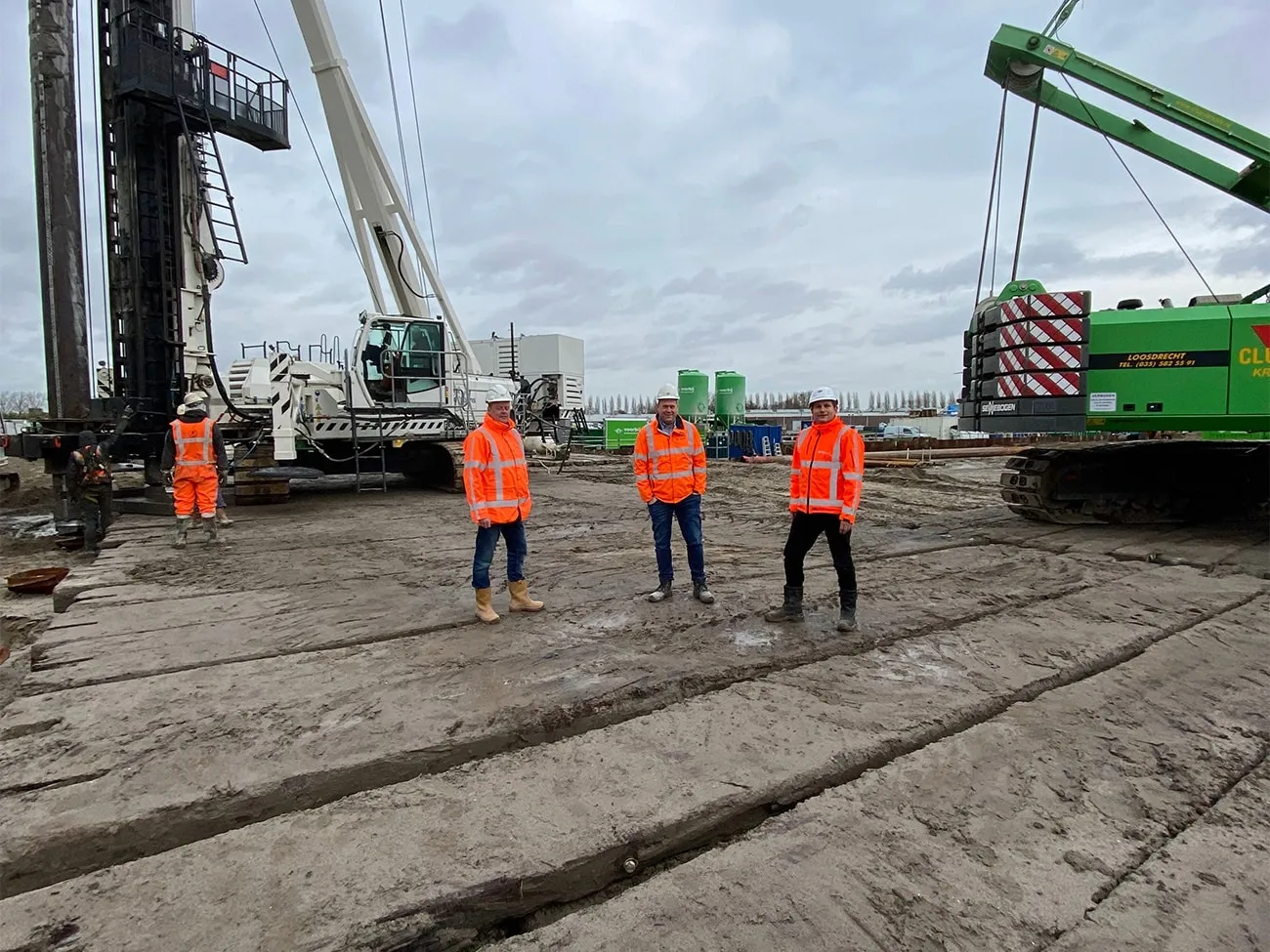
Soaking the street as a preparatory measure for compaction.
Emmakwartier, Alkmaar
The redevelopment is necessary because the sewer system is in poor condition. Replacing it also gives Stadswerk072 the opportunity to make the neighbourhood climate-resilient. Climate change is causing increasingly heavy downpours. The existing sewer system was not designed to cope with this and cannot drain the water quickly enough, potentially causing flooding. At present, much of the rainwater is sent to a wastewater treatment plant. The new sewer system will put an end to this: rainwater will be discharged into the Nieuwlandersingel instead of being sent to the treatment plant. As well as planting more trees in the neighbourhood, the project will also create frontage gardens.
Preparation and tendering
Stadswerk072 identified the following sustainability aspects and priorities in advance, which had to be taken into account:
- Access during the works for residents, suppliers and the municipal cleaning service
- Trees and green spaces in the neighbourhood
- Minimising water on the streets
- Damp crawl spaces in residents’ homes
- Resident participation in discussions about the different starting points
- Listed buildings
- Politically sensitive project in connection with the Emmakwartier infill development
- Limited space due to dense development
- Storage space for materials and equipment
- Shortening the delivery time and getting it right first time
- Cables and pipes (opening the street only once)
- Coordination of the work
- Tendering procedure
- Respect and enjoyment, integrated costs
Managing risks using the Risman methodology has greatly improved coordination on technical and substantive issues, as well as engagement with the surrounding area, including residents and businesses within the project scope.
Working in urban areas and engaging with residents and businesses is becoming increasingly challenging, as many interests converge in a limited space, including political interests. This complexity calls for a clear approach and consistent communication. Together with the residents’ association, a resident was asked to act as a link and speak on their behalf. She was ideally suited to the role: a respected neighbour, a strong communicator, knowledgeable about the neighbourhood and public space, and above all, committed. She therefore played an important part in the risk workshops, discussions with residents and resident information evenings.
Risk management focused on realistic scheduling, work phasing, availability and accessibility, budgeting, storage of materials and equipment, and layout (surfacing and greenery). Developing a single plan of approach together, covering preliminary, detailed and construction designs, prevents rework and waste. It also avoids much of the hassle and debate around variations during construction between the client and contractor. Variations are reduced to a minimum, bringing project budgets and estimates back into alignment.
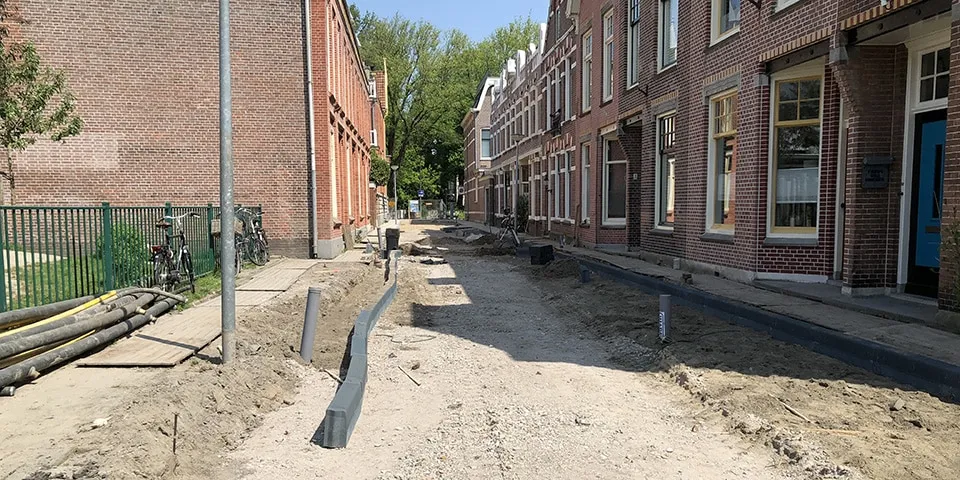
The redevelopment is necessary because the sewer system is in poor condition.
The shared focus on the agreed quality of the work, and the trust to work together with enjoyment in everyone’s interests to deliver a successful project that earns a positive assessment from the surrounding community, make working in the GWW sector enjoyable and something to be proud of.
Four important lessons learned:
- Respect and enjoyment. The work carried out in the city centre shows that enjoyment and craftsmanship go hand in hand, and that being able to speak up is considered perfectly normal.
- Be transparent and assume everyone will contribute. Identify shared risks and opportunities. Establish clear arrangements for control and ownership. Avoid surprises through regular discussions.
- Ensure the roles are clearly allocated in relation to the local community. During the planning and design phases, the client is responsible for providing information to residents as part of its stakeholder management. During the delivery phase, the contractor handles communication about technical matters, scheduling and location. The client and contractor remain involved in communication during both phases.
- Agree on achievable responsibilities for cables and pipes in advance. The client clearly sets out the requirements for cables and pipes in the tender documents. The client is responsible for the preliminary work, including identifying issues and sending notifications.
- Build your foundation of knowledge together and strive to innovate. Create opportunities to develop knowledge and apply it in practice.
Question about this story? Ask your question
Companies in this story
Keep following this
Get an email when a new story is published. No account needed.
- ThemeFlood protection and climate-resilient water management
- SubjectWater infrastructure
- CompanySCHOT Infra bv







