









A solid foundation made from residual materials
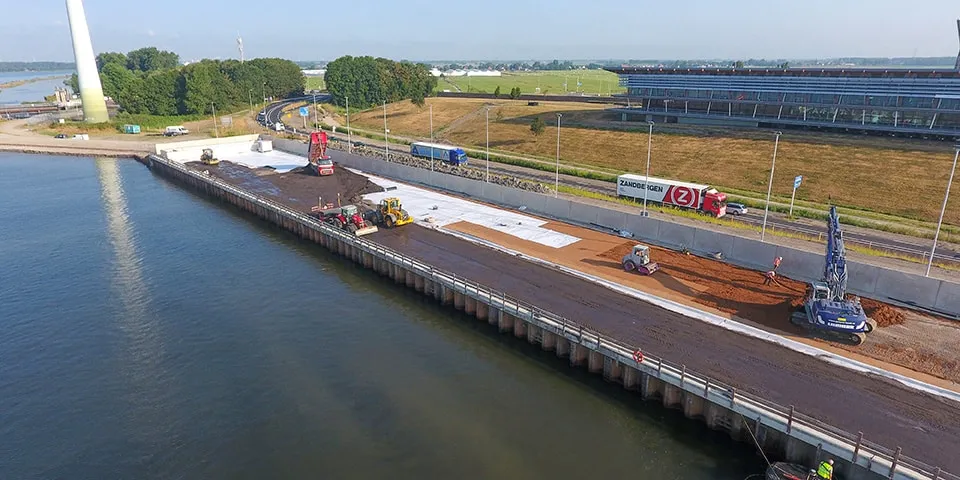
The success of any construction project depends on a sound foundation. Today, cement-bound foundations for infrastructure and construction can be made from residual materials. Strong, sustainable and cost-effective. B-CIS BV, based in Zaltbommel, specialises in producing cement-bound foundation layers from residual materials. This makes the company unique and, at the same time, the market leader in the Netherlands.
B-CIS produces, supplies and places this cement-bound construction material as foundation layers for infrastructure and construction projects. The company has developed mixes called Powerbase 5, Powerbase 10 and Powerbase R for this purpose. Since the company started in 2010, more than 2.2 million tonnes have been produced and placed.
Cost savings on several fronts
Powerbase creates a stable, bound foundation. In addition to the savings generated by the material itself, it can also significantly reduce costs in the upper layers of a structure. For example, the surface can be finished with just one or two thin asphalt layers. Managing director and co-owner John Beekmans: “A Powerbase foundation layer distributes (traffic) loads effectively into the subsoil. As our mixes also achieve higher compressive strengths, they can even be used in piled, settlement-free pavements.”
Powerbase 5 and 10 are made primarily from contaminated soil and mineral residual materials. Powerbase R consists mainly of bottom ash from waste-to-energy plants and other mineral residual materials. These include screening sand, the final non-reusable residue produced when construction and demolition waste is sorted. Using Powerbase in cement-bound foundations reduces the need for scarce, expensive primary raw materials such as clean sand, gravel and high-quality aggregates. Another benefit is that problematic materials that are difficult or impossible to recycle can be put to good use. Powerbase is stronger, tougher and more flexible than conventional rubble or concrete aggregate. This enables it to accommodate relatively large differences in settlement without damaging the pavement’s upper layers. Powerbase is supplied under an NL-BSB product certificate and can be widely used without restrictions.
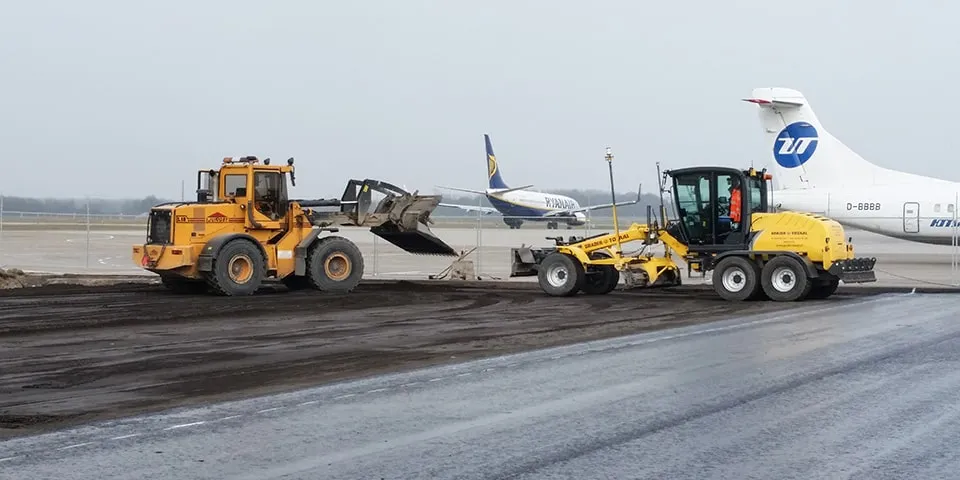
Construction of aircraft parking stands at Eindhoven Airport.
Wide range of applications
Powerbase is often used in infrastructure projects such as roads, business parks, liquid-tight pavements, car parks, container terminals, airports, cycle paths, quays and storage areas. B-CIS also offers unique, sustainable solutions to prevent subsidence caused by soft soils. Beekmans: “Depending on the project’s purpose, we design a bespoke structure guaranteed to be settlement-free.”
Powerbase is also now widely used in construction projects. Examples include distribution centres with raised loading docks and piled internal floors, where working platforms are needed for piling rigs.
“A fine example is the triple win-win situation at Twence Afval en Energie. The company wants to process bottom ash sustainably into a construction material that can be used without restrictions. It also wants to seal an old landfill and operate a solar farm on top of it. We developed Powerbase R for this purpose. We sustainably process bottom ash into a useful construction material that both covers the landfill and provides access for the construction of the solar farm,” says Beekmans.
Question about this story? Ask your question
Keep following this
Get an email when a new story is published. No account needed.
- ThemeUnderground construction
- SubjectWater infrastructure







