









A bypass for the River IJssel: Room for the River
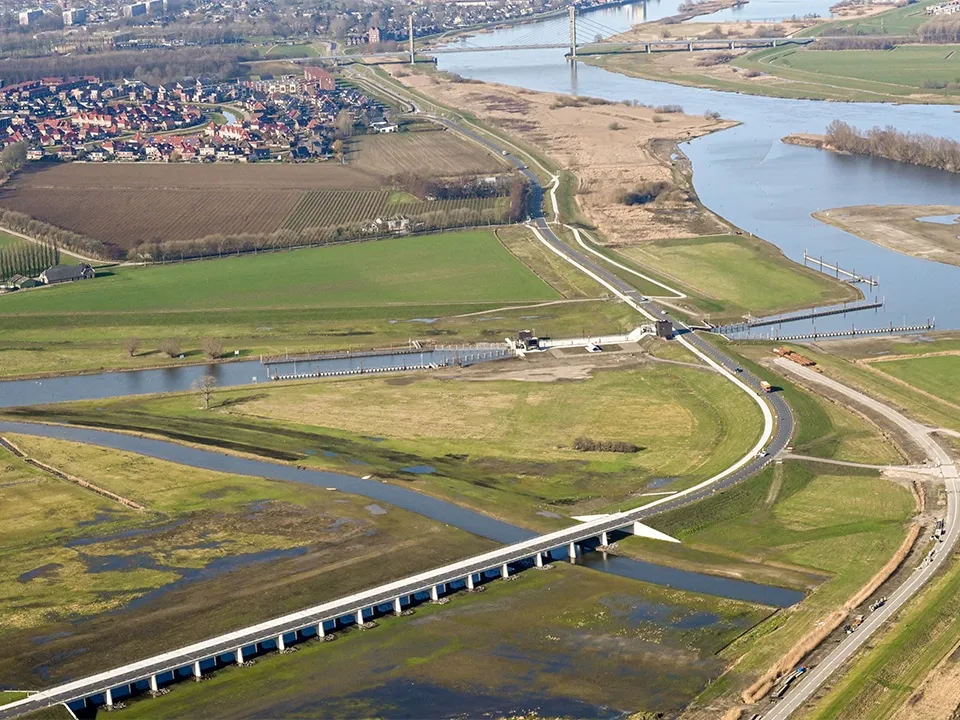
The major rivers in the Netherlands are having to carry increasingly large volumes of water, raising the risk of flooding. To protect towns and cities, the dykes along the rivers are being strengthened.
At the same time, more space is being created for the rivers by deepening riverbeds and even constructing bypasses. Rijkswaterstaat is also improving the landscape quality and promoting nature development in these areas. The Room for the River programme comprises 36 sub-projects, with the construction of the Reevediep, a bypass in the IJsseldelta near Kampen, as the final one.
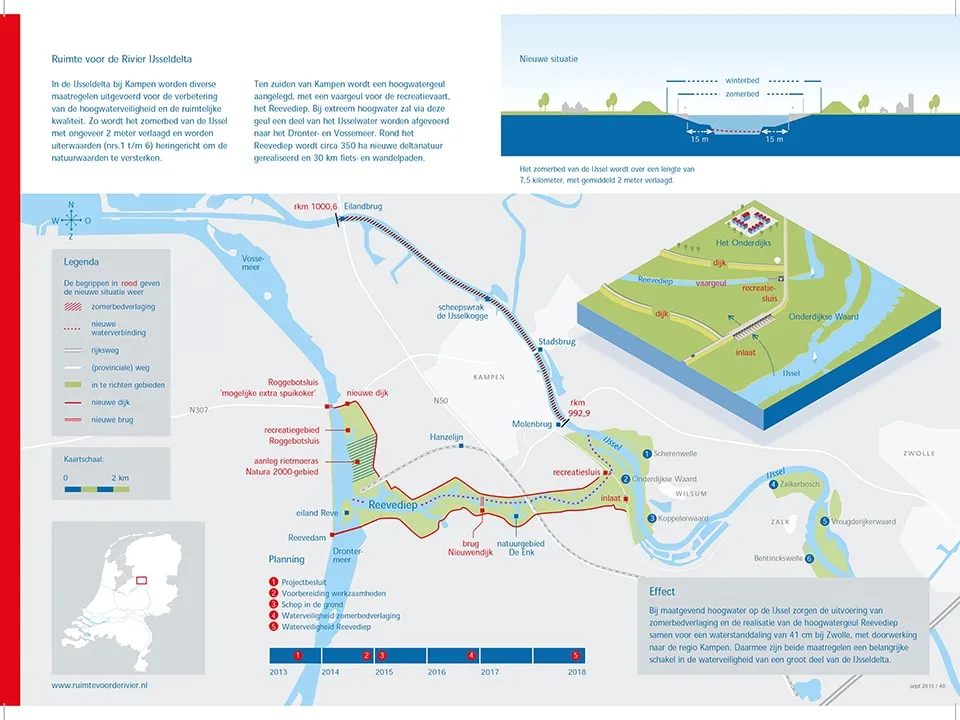
Two major measures are being taken in the IJsseldelta to manage high water levels in the IJssel. A new water connection between the IJssel and the Drontermeer, the Reevediep, will allow the water to flow through a so-called ‘bypass’ alongside the existing riverbed. In addition, the capacity of the IJssel is being increased by deepening its summer bed. Work is already at an advanced stage.
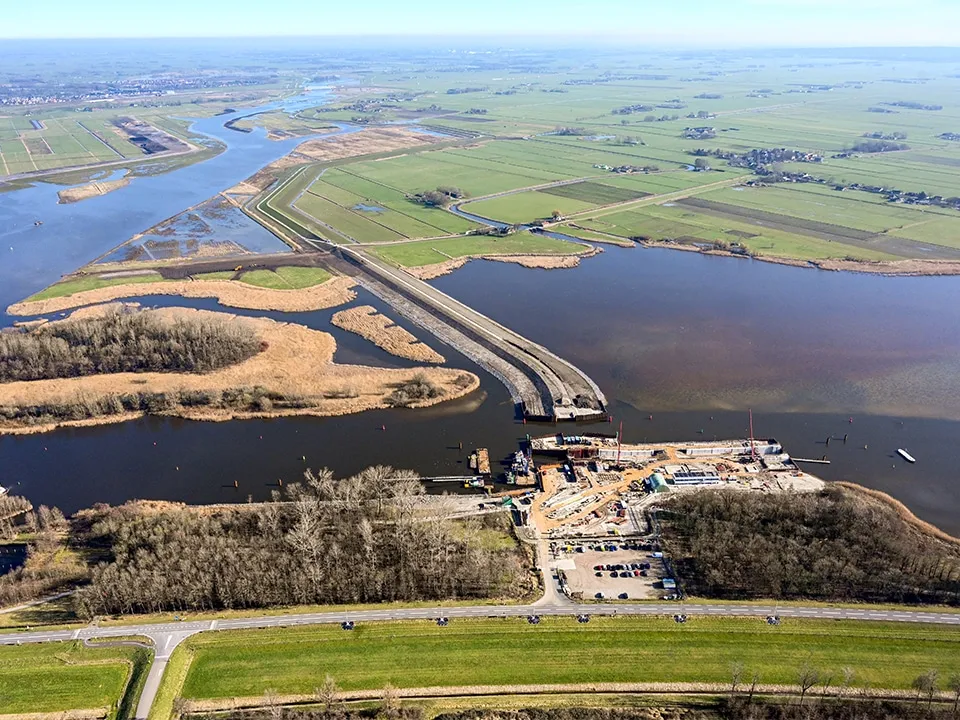
Once the Reevesluis complex is complete and the dykes have been raised, the Roggebotsluis and the IJsseldijk will be removed, allowing the IJssel to follow its new course when water levels are high.
Earthworks and structures
The work is being carried out by Isala Delta, a consortium of Boskalis and Van Hattum en Blankevoort. Boskalis is responsible for the earthworks, roadworks, hydraulic engineering works and nature development, while Van Hattum en Blankevoort is responsible for the structures, including the inlet system, bridges, locks and pumping stations. Together, they are responsible for this large-scale project.
The project as a whole
The IJssel riverbed has been deepened along a stretch of more than seven kilometres between the Molenbrug and the Eilandbrug, with vessel impact protection installed around the city bridge piers. The floodplains at Scherenwelle and Zalkerbosch have been redesigned to promote flora and fauna. The Scheeresluis has been built in the Onderdijkse Waard for recreational boating on the Reevediep. Near Wilsum, the IJssel’s new eight-kilometre bypass, the Reevediep, begins. It is protected by dykes on both sides and includes a navigation channel for recreational boats. In the middle, the Nieuwendijk bridge provides a crossing over the new Reevediep. Finally, landscape quality has been improved throughout the delta. New walking, hiking and cycling paths, along with facilities for recreational boating, are appearing everywhere.
Natura 2000 site
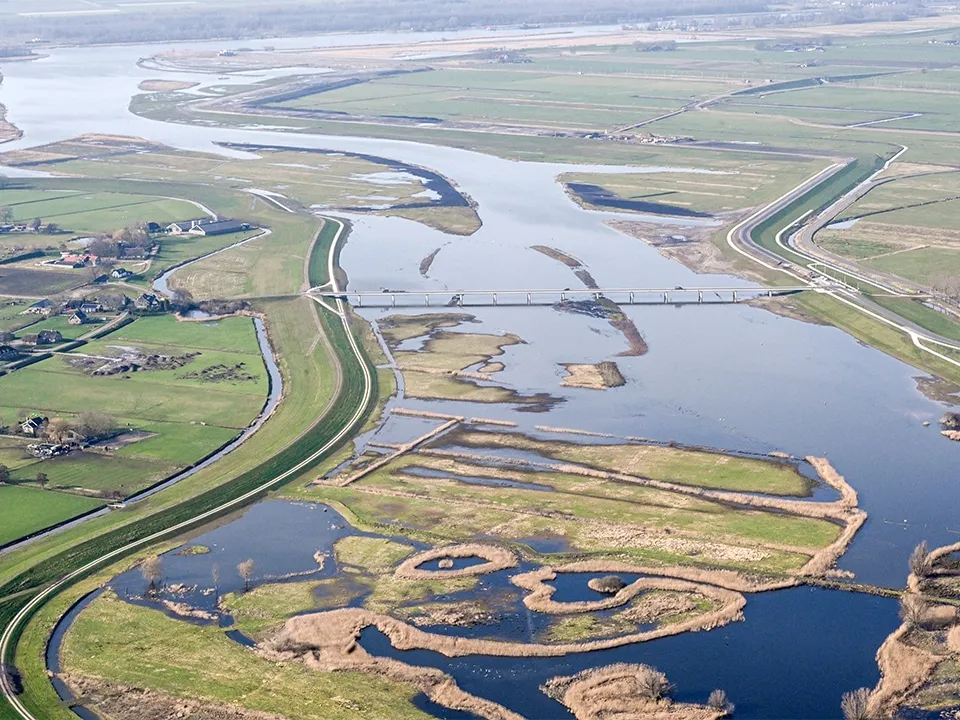
Although construction relies on modern development programmes and powerful machinery, the idea is not new. In 1821, King Willem I put almost exactly the same plan on paper. “There is now more attention for the flora and fauna in the area,” says Robert Bosma, project leader at Isala Delta. “Part of the area has been designated a ‘Natura 2000’ site to safeguard biodiversity. For example, the breeding season of the great reed warbler and the bittern was taken into account, and where reeds were removed, they were replaced elsewhere.”
Awarded under a D&C contract
Isala Delta won the contract under a D&C arrangement, with the project awarded primarily on the basis of the ‘planning’ and ‘landscape quality’ criteria in the Most Economically Advantageous Tender (MEAT). Isala Delta designed and delivered the solutions in collaboration with its client.
Have a business enquiry for Boskalis Nederland? Get in touch
Who worked on Reevediep
- civil engineering structuresVan Hattum en BlankevoortIn this story
- concrete cycle paths
 BKB InfraMentioned in Extra-thick concrete cycle paths: riding through the Reevediep
Keep following this
Get an email when a new story is published. No account needed.
- ProjectReevediep
- SubjectWater infrastructure
- CompanyBoskalis Nederland
- CompanyVan Hattum en Blankevoort







