









The structural engineer goes digital!
A world in which the structural engineer writes all their calculations on notepads and hunches over the drawing board with the draughtsperson seems to be gradually receding into the past. Lievense, too, is embracing digitalisation. It is not just the younger generation: highly experienced experts are also curious about the new opportunities and challenges digitalisation brings, and are enthusiastically getting to grips with them.
Wichard Bron, structural engineer at Lievense: “One development playing an important role here is parametric design. This involves generating a design based on relationships between data. The design process is greatly accelerated, and much more flexibility becomes possible. More importantly, we can provide our clients with even better support on complex (structural) engineering challenges. This raises the question: could structural engineers eventually become redundant? Can design processes be automated to such an extent that structural engineers are no longer needed? At Lievense, we don’t think so.”
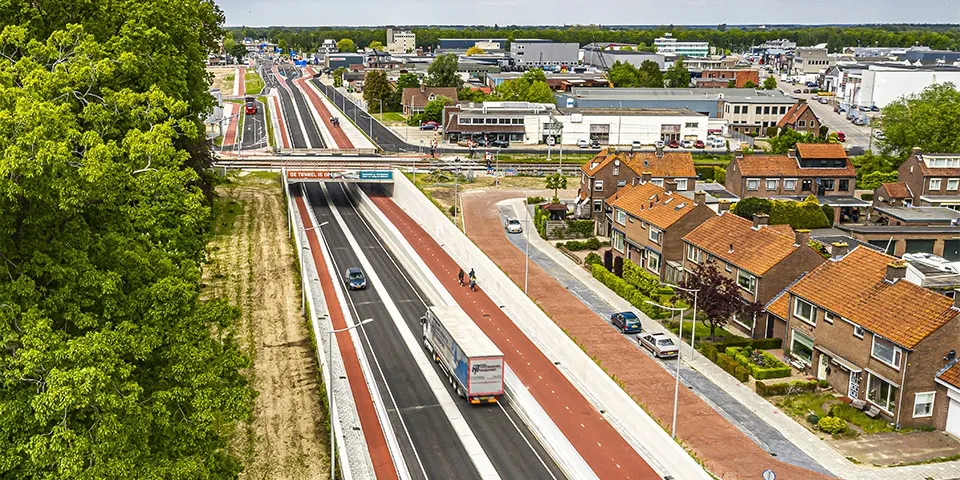
The Harselaartunnel has an optimised structural design.
Assessing whether the solution is correct
“We believe parametric design is a natural extension of the structural engineer’s role, since their expertise is indispensable when assessing whether a solution is correct. As several variants can be considered in less time, it is even easier to deliver the best solution to the client’s problem. It also gives us a much better understanding of how the structure behaves. We can investigate which parameters have an influence, helping us to assess risks earlier,” says Bron.
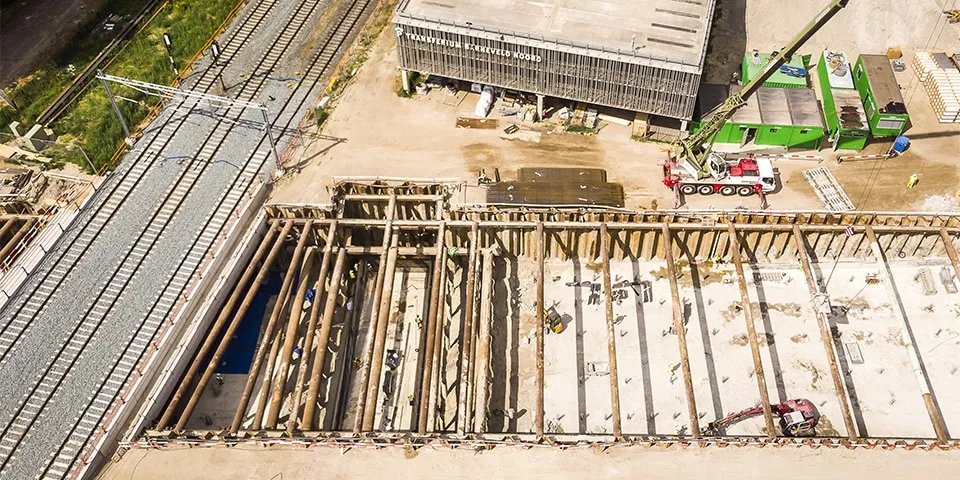
A good example is an application developed by Lievense for designing the approach ramps to underpasses. The model allows a U-shaped retaining structure to be assessed, with structural and geotechnical analyses carried out as an integrated whole. By subsequently feeding the results back into a cost model, an optimal direction for further investigation can be established at an early stage, for example by comparing different piling systems. This is particularly useful in the preliminary phase. In a short time, it is possible to assess what is feasible and cost-effective. Lievense has developed applications not only for underpasses, but for bridges as well.
An expert structural engineer combined with a good parametric model results in an optimal structural design, and a satisfied client!
Question about this story? Ask your question
Keep following this
Get an email when a new story is published. No account needed.
- ThemeDigitalisation from design to construction
- SubjectSpecials







