River modelling calculates the impact of Arcen’s dike reinforcement on water levels
Text Suzanne van Gaale Beeld Agtersloot Hydraulisch Advies
From footpath to flood storage area
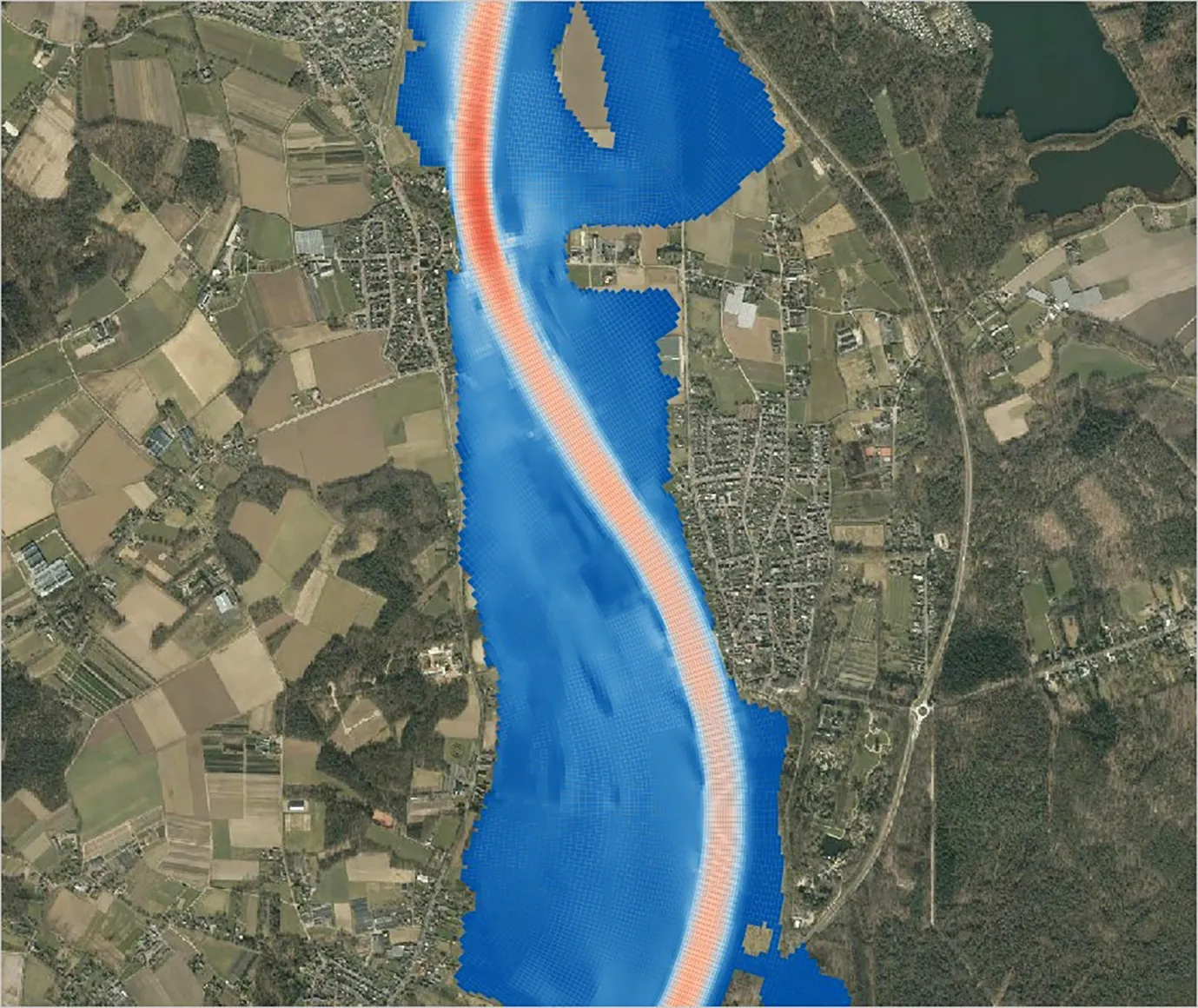
The Arcen dike reinforcement project is shaped by the wishes of Dijkzone Alliantie Arcen and the interests of Waterschap Limburg and Rijkswaterstaat. This is where river engineer Ron Agtersloot comes in. Using 2D and 3D flow models, he investigates how design choices affect water levels and river flow, and translates the findings into practical solutions.
“I always call them ‘little calculations’,” says Ron. Behind this modest description lies a field in which precise calculations provide insight into how design choices affect water levels, flow, shipping and the space available to the river.
The impact of small interventions
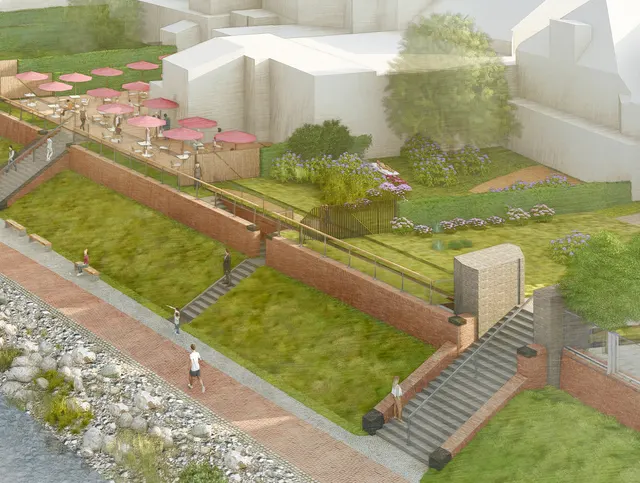
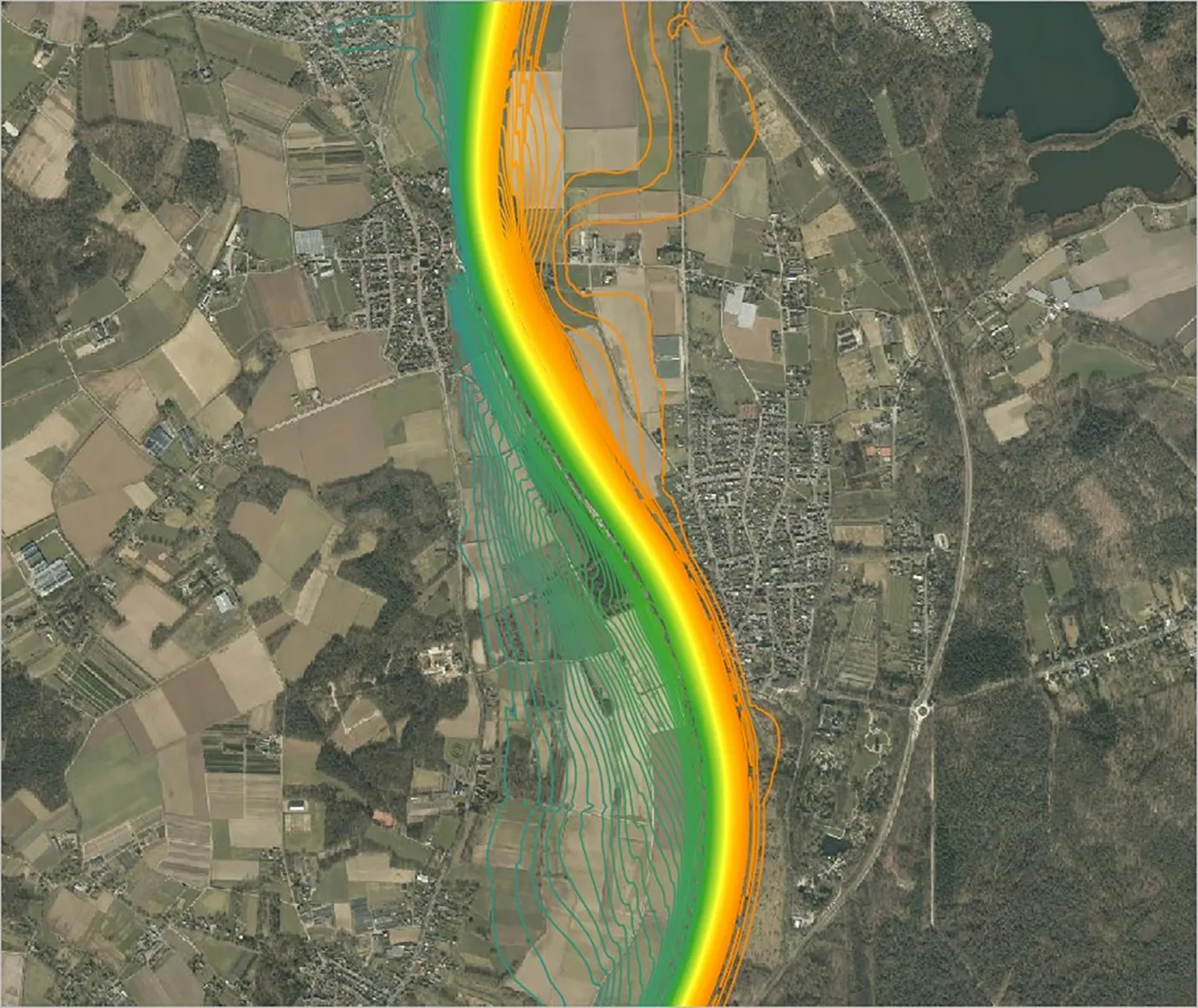
Ron was brought in for the Arcen dike reinforcement project whenever additional requirements could affect the basic design. “A footpath at the toe of the dike, a different mooring point for the ferry or a viewing point may seem like small interventions, but they can reduce the space available to the river. River models let me assess whether such changes are possible within Rijkswaterstaat’s constraints or whether the design needs to be amended.”
Small interventions, big impact
This was the case, for example, at the watermill in Arcen, where the plan was to finish a sheet pile wall with stacked stones. Although the change seemed minor, it would reduce the river’s storage volume. His expertise also played an important role at the Lommerbroek storage area. A solution had to be found to ensure that the area would take in water at the right time during high water, without using a temporary flood barrier and with as little impact on the river as possible. By calculating various design options, a solution was found with minimal changes that was acceptable to Dijkzone Alliantie Arcen, Waterschap Limburg and Rijkswaterstaat alike.
“The best thing about this work is that calculations can show the effect of a design change,” Ron concludes. “That allows you to make an evidence-based decision about what is and isn’t possible.”
Question about this story? Ask your question
Who worked on Dijkversterking Arcen
- geotechnical specialist
 FugroMentioned in The added value of geotechnical investigations in the Arcen dike reinforcement project
- engineering
 TAUWMentioned in Where engineering and construction come together in the Arcen dike reinforcement project
- regular contractor
 GW LeidingtechniekMentioned in Future-proof pressure main route in a new dike structure
- foundation specialistHakkers FunderingstechniekMentioned in Grouted anchors provide stability on the banks of the Meuse
- three vertical pumps
 PentairMentioned in Compactly designed pumps for low and high water levels at Arcen
Keep following this
Get an email when a new story is published. No account needed.
- ProjectDijkversterking Arcen
- ThemeFlood protection and climate-resilient water management
- SubjectDijkversterking Arcen