









The 5 most persistent reasons not to go digital in construction

Crisis after crisis, unpredictable policies, minimal profit margins and a severe shortage of good staff: it is understandable that digitalisation is not at the top of your priority list as the owner of an SME construction company.
Understandable, but unwise. In this article, we set out and debunk the 5 most common reasons for not going digital.
Ad van Gils trains business owners and construction professionals every day in the use of digital surveying equipment. Rob Homan owns and works as a setting-out engineer at SME construction company Stamsnijder-Homan. He invested in two total stations, which he now uses to survey and set out every construction site and project digitally. Below, you can read about the doubts Ad hears most often about digitalisation, why Rob set them aside and how he did it.
5. We’ve been doing it this way for 40 years and it works fine
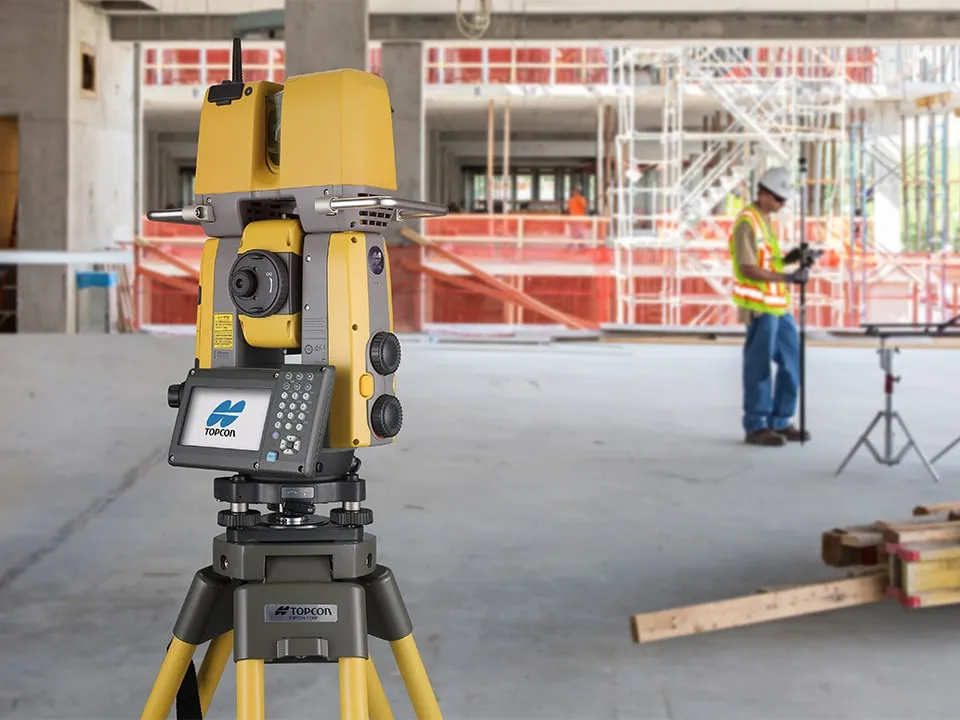
Tight profit margins and the growth of prefab construction leave no room for even the smallest errors. That makes digitalisation a necessity, not a luxury. Rob: “Whether you need to set out points over five metres, fifty metres or ten kilometres, the accuracy is the same. The same goes for sloping or curved lines, which are increasingly common in housebuilding. You can’t do that with profiles, but it’s easy with a total station. What’s more, we now build much faster and more accurately, which is essential if we’re to compete.”
4. I outsource setting out
The setting-out company works digitally, which is fast and accurate. Then your people on site continue the project in the traditional way. Who is responsible when things don’t fit? Van Gils: “I train carpenters and setting-out engineers to introduce regular checks and record every step. That way, you can demonstrate exactly what you’ve done. What’s more, the equipment lets you quickly verify the drawings first. If the site and the drawings don’t match, the architect has to go back to the drawing board. And you’ve avoided costly rework,” says Van Gils.
3. The company has more pressing challenges
Shortages are felt across the board: experienced staff, profit margins and time to completion. Digitalisation is a solution to all these challenges. Digital surveying and setting out cut rework and labour hours while increasing construction speed, all dramatically. Homan puts it plainly: “Setting out the earthworks the traditional way, using profiles, took two of us a whole day. Now I take the Robotic with me and drive away an hour later. The earthworks are all set out.”
2. My people are older and can’t change
It’s not easy to learn to use a computer to do what you’ve always done with your hands and eyes. Ad van Gils: “That’s why we always come out to train users and owners on the new equipment. Half a day, and most people get the hang of it.” Homan agrees: “On the first job with the total station, an older carpenter still wanted to put profiles around it. But at the Friday afternoon drinks, he came over to me and said: ‘You must never sell that total sation. It’s bloody handy.’”
1. The investment doesn’t pay off for my small construction company
Homan and Van Gils have a short answer to this: nonsense. Topcon equipment is very affordable for SME construction companies. Homan says of his total stations: “They make us money. It takes one or two years to recoup the investment, but this equipment is well worth it. The convenience and speed are unmatched.”
Want to know more, or find out how to take the first step towards digitalising your construction company? Download the white paper from the dedicated Topcon topic page:
Een zakelijke vraag aan Topcon Positioning Netherlands? Get in touch
Companies in this story

Keep following this
Get an email when a new story is published. No account needed.
- ThemeDigitalisation from design to construction
- SubjectSpecials
- CompanyTopcon Positioning Netherlands







