









Making tomorrow possible with what was promised yesterday
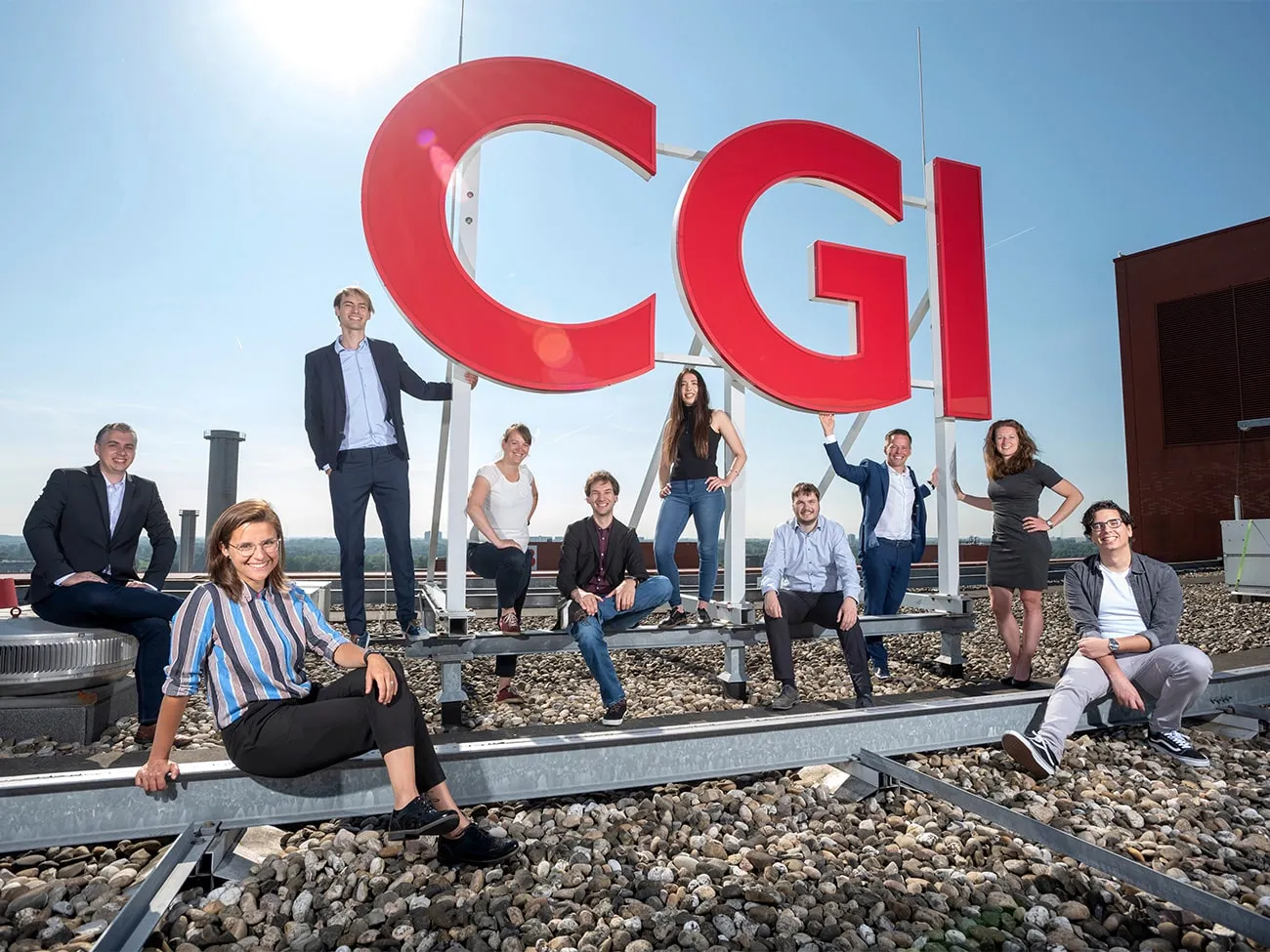
When he starts talking about everything he and his team do, he cannot hide his enthusiasm. Henk van Haaster has worked at CGI for exactly 20 years and is responsible for iAMLAB. “The acronym stands for Infrastructure and Asset Management Lab,” Henk explains. “It came about because we see how digitalisation can make a difference.”
Henk has been working in the data domain for CGI since 2001, bringing data together, visualising it and presenting it. “With iAMLAB, we use new technologies to drive digitalisation forward. We all want a safer, more accessible and more liveable Netherlands. To make that happen, information needs to be brought together in an accessible way.
Identify, explore and experiment
How do you create value for the end user? This is an essential question that the iAMLAB team continually asks itself. “The future can only begin if we are willing to share the information we collect, speak the same language and standardise definitions,” Henk continues. “We then need to adhere to them. My team is multidisciplinary. When addressing challenges, the process is about identifying, exploring and experimenting. Once research findings have been proven through a ‘proof of value’ for use cases, they can be put into operation. This prevents wasted investment.”
CGI’s iAMLAB experiments with clients and suppliers to build the next generation of asset management environments, including technologies such as 3D, Augmented Reality (AR), Virtual Reality (VR) and Mixed Reality, sensor data for predictive maintenance and semantic databases for enriching building information models. “We are happy to showcase these, because they are the benefits we want to highlight. Lidar technology can be added to the list too: creating point clouds for object recognition. Data can be improved using real-world information from the field.”
Integrated working in 3D using data that is already available
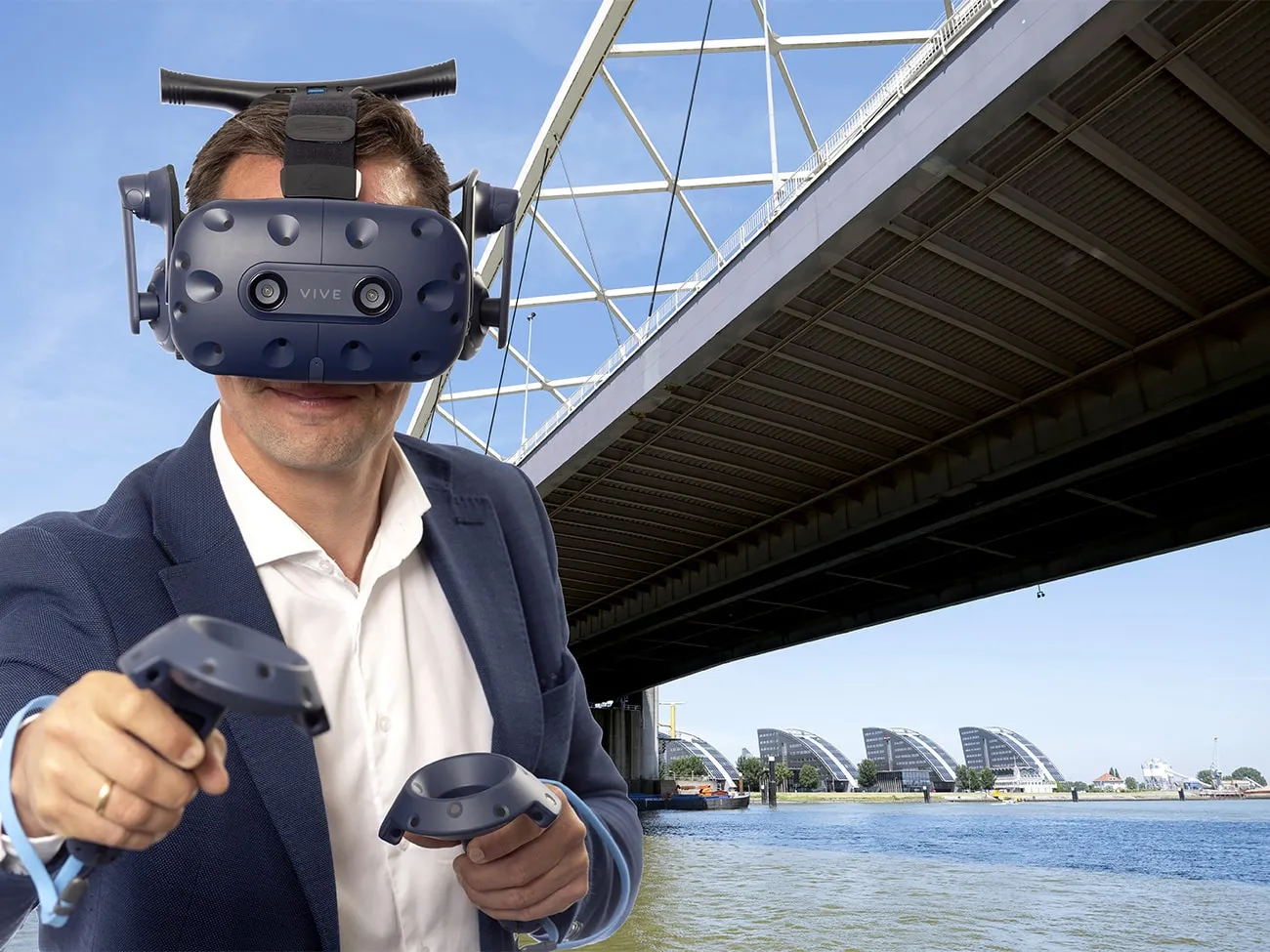
With a Digital Twin Asset Manager, you can use a VR headset or AR to combine the physical world with administrative and real-time data. “Whether you are taking measurements in a field or an urban area, or carrying out maintenance on a PLC cabinet at a railway crossing, the principle is that we make existing information about the surroundings or the asset available while you are on site. This information can provide further insight into relevant aspects straight away. We also start thinking in 3D rather than relying on flat drawings. Imagine a meeting table with flat 2D drawings of a bridge spread across it, while those present can simply use their phone, tablet or VR headset to see the bridge in 3D, view it from every angle and call up all the relevant information for each component. That may sound like science fiction, but it is what we do. We work in an integrated way in 3D, using data that is already available. We visualise data in a way that enables people to work faster, more efficiently and with fewer errors.”
Working together on a whole new level
iAMLAB is paving the way for the work of tomorrow. “Or, more accurately, the collaboration of tomorrow. Take working underground, for example. How great would it be if, when you want to dig up the ground, you could receive relevant notifications about what you are likely to find underground on a collaboration platform where you have announced your planned work? All based on combined data from different organisations. And you would keep receiving those notifications throughout the project, so you never overlook anything. This is not a utopian vision. The EU requires network operators to digitise location data for planning work. By using Computer Vision techniques, a significant proportion of the 19 million service connections can be vectorised automatically.”
There is a huge willingness to work together, Henk concludes. “That makes it possible to link everything that affects everything else. Let iAMLAB be the driving force in that process, the organisation that can think differently, turn challenges around 360 degrees and come up with solutions that really should have been invented tomorrow.”
Question about this story? Ask your question
Keep following this
Get an email when a new story is published. No account needed.
- ThemeDigitalisation from design to construction
- SubjectSpecials







