









Guide structures must prevent collisions with ships
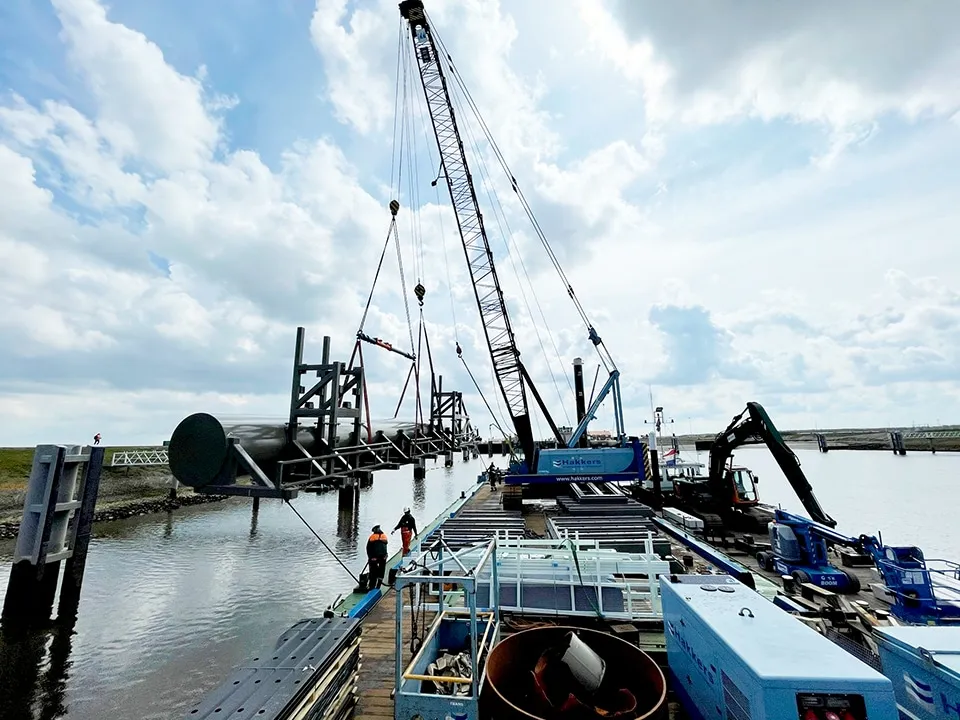
Dozens of ships pass through the lock at Den Oever every day. There is therefore a risk of a ship veering off course and hitting the lock. The 30-metre-long guide structures, each weighing 45 tonnes, are designed to prevent this. With its long track record, Hakkers BV from Werkendam designed, prefabricated and installed these guide structures.
Funnel structure to guide ships
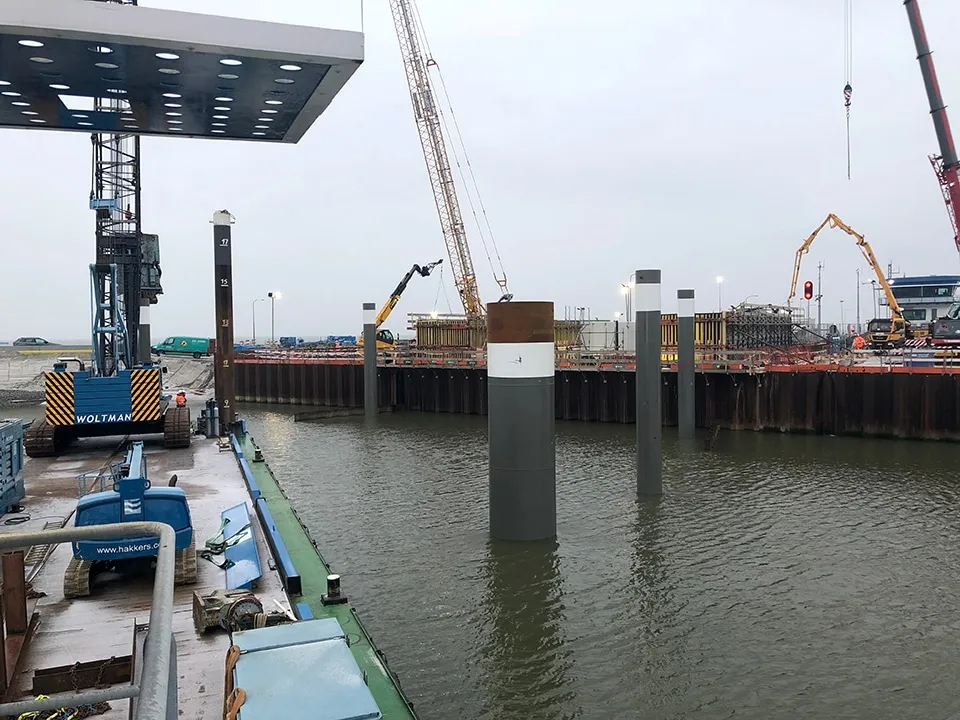
Hakkers is no stranger to the Afsluitdijk. The family business from Werkendam had previously been responsible for replacing nearly 800 linear metres of jetties and berthing and guide structures at the locks in the Afsluitdijk. It also helped strengthen the dike along the 900-metre-long Havendijk in Den Oever. For this project, Hakkers designed and installed all the sheet-pile walls and anchors, and built an entirely new flood barrier. “We feel most at home where land meets water. We therefore specialise in structural hydraulic engineering,” explains Hein van Laar, commercial director. “This includes sea quays, inland shipping jetties, ship berths and quay structures. We design them and take care of prefabrication and on-site construction.”
25 years of maintenance
For the new sector gate lock at Den Oever, Hakkers installed a funnel structure in the form of a floating guide structure, designed to guide shipping traffic, on behalf of the Levvel construction consortium. The main challenge in designing the guide structure was the 25-year maintenance period. Tim van der Aart, project coordinator at Hakkers: “We took the maintenance requirements for the next 25 years into account right from the design stage. This led to some specific choices. For example, we applied a protective coating with a 25-year lifespan, fitted protective strips by the ladders and used more wear-resistant plastic grating instead of steel grating. We also fitted skirts with wear strips that can be removed as a whole for replacement or maintenance.”
Safety above all
The guide structures were prefabricated in Werkendam and then transported by water to Den Oever. Once there, they had to be installed in just a few days. “Installing the floating sections requires great precision. There is almost no tolerance, because otherwise the guide structures will not align with the lock. The lock must also not be damaged during installation.” To ensure the safety of regular shipping traffic, which often had to continue passing through, a temporary structure made of auxiliary berthing structures was built at Kornwerderzand, for example. This also helped protect the workers on site. Van der Aart: “The experience we gained on earlier projects proved invaluable here. The Afsluitdijk is an iconic Rijkswaterstaat project. We are proud to have been able to put our expertise to full use on this project too.”
Question about this story? Ask your question
Who worked on Keersluis Den Oever
- construction consortiumLevvelIn this story

Keep following this
Get an email when a new story is published. No account needed.
- ProjectKeersluis Den Oever
- SubjectSpecials
- CompanyLevvel







