









‘They can’t ignore us’
Text Roel van GilsImage Van Werven Infra
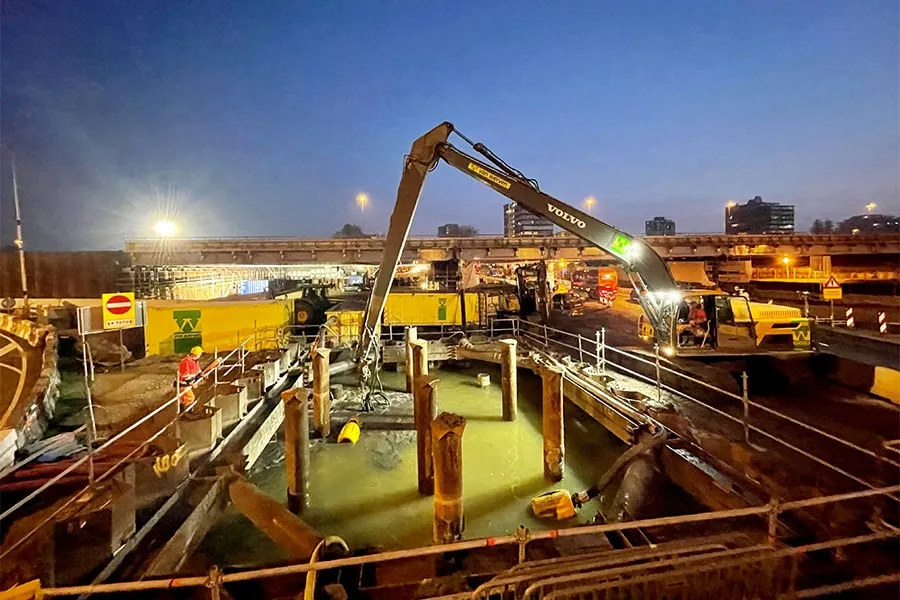
Construction consortium VeenIX is widening the A9 between the Badhoevedorp and Holendrecht interchanges on behalf of Rijkswaterstaat. With a depot right beside the A9, construction consortium VeenIX can hardly avoid Van Werven Infra. And it doesn’t. The versatile infrastructure and recycling services provider is making a significant contribution to the project. It has already excavated several pump sumps in-house and mainly supplies (a lot of) equipment to the consortium’s various subcontractors.
“Right at the start of preparations, during the tender phase, one of the other bidders asked us to price the major earthworks,” says Daan Kea, project manager at Van Werven Infra. “At the time, we prepared a price for the project’s second-placed bidder, which meant we gained quite a lot of knowledge about the project. It’s also right on our doorstep. So the consortium and its many subcontractors have plenty of reasons to call on our wide range of services.”
Fine silt
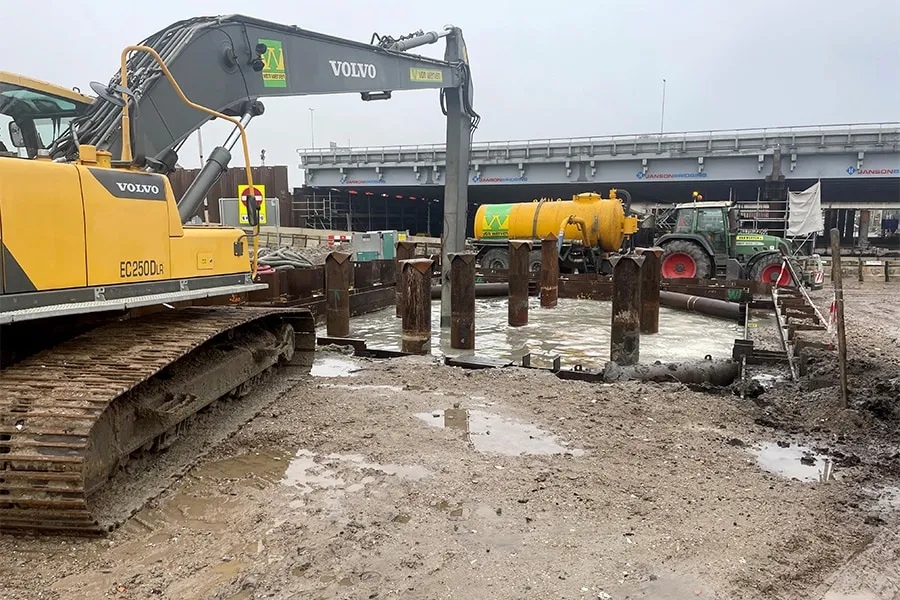
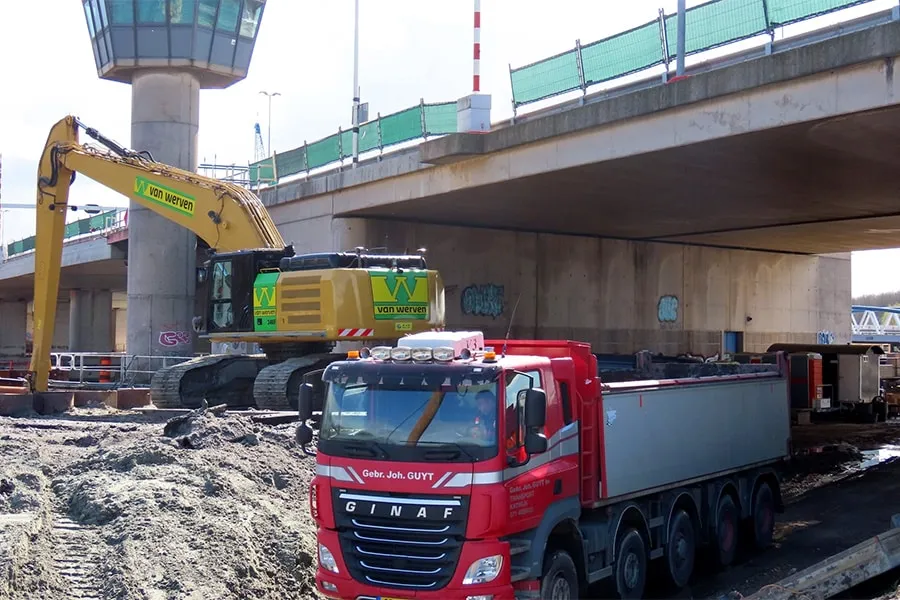
To date, Van Werven Infra has excavated two pump sumps on the project using its own teams and equipment. “They’re two sizeable sumps for collecting rainwater,” says Kea. “We excavated them underwater to a depth of around 8 metres and installed a concrete floor underwater. One challenge was removing all the fine silt from the sumps. We got that job done too by using polymers.” Van Werven Infra is now building the bascule chambers on either side of the Schipholbrug. “The excavation is partly carried out in the dry and partly underwater,” Kea explains. “This creates a construction pit measuring about 20 by 20 metres and 6 metres deep. We then level and profile it to prepare for the concrete working floor. We also hire out a lot of equipment to both VeenIX and its many subcontractors. If you drive along the A9 today, you’ll see plenty of equipment in Van Werven Infra’s colours. It’s quite a sight.”
Driving electrification
Van Werven Infra sees electrification of equipment as the solution to today’s challenges around nitrogen, CO2 reduction and more. “As a family business, we’re also trying to lead the way,” Kea stresses. “We were early to invest in converting a diesel-powered loader to an electric model. Two years ago, we put the Ahlmann Zwenklader AZ 95 into service and have continued to expand our fleet since then. We now have two electric mobile excavators, a Mecalac 11 that we converted in partnership with Ahlmann, as well as a range of electric mini excavators. We also have an electric crawler crane in the pipeline. So we’re not standing still, but we realise that charging on site is still too often a problem. We’re addressing that, in part, with our battery boxes.”
Zero-emission projects
Fully electric excavation of a construction pit is still a step too far for now, according to Kea. “We’re looking into it, but in practice it’s proving difficult. You need a lot of power to drive, for example, a DOP pump electrically, as well as to pump those large volumes of water. The necessary connections are often not yet in place for ‘wet construction pits’. We are looking for suitable solutions, for example to use pumps more efficiently while taking the available power supply into account. We are seeing demand for electric equipment rise. Clients are making it a requirement. For contractors, meeting that requirement is not always a given, especially given the limited availability of electric equipment. As a subcontractor and plant hire company, we help meet that demand, so a main contractor doesn’t have to invest in electric equipment on its own. We also advise contractors on delivering zero-emission projects. They’re in the right place with us, whether they need advice or electric equipment.”
A business enquiry for Ahlmann Nederland bv? Get in touch
Companies in this story
Keep following this
Get an email when a new story is published. No account needed.
- ThemeLower emissions and more reuse
- SubjectRoad construction
- CompanyAhlmann Nederland bv







