









Sustainable use of viaduct and bridge foundations
Text Roel van GilsImage Fugro
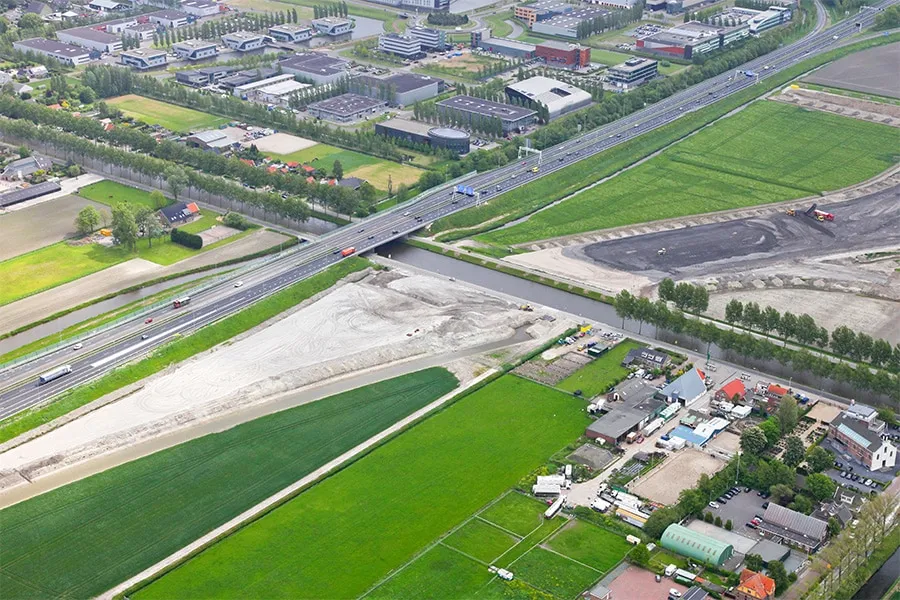
In construction, it is increasingly common to assess whether existing piled foundations can be reused, in whole or in part, during reconstruction, expansion or complete redevelopment. In infrastructure, however, this has not yet been done on a large scale. Thanks to Fugro’s expertise, that is now changing during the widening and cut-and-cover construction of the A9 between Badhoevedorp and Holendrecht (BaHo), with at least five viaducts involved.
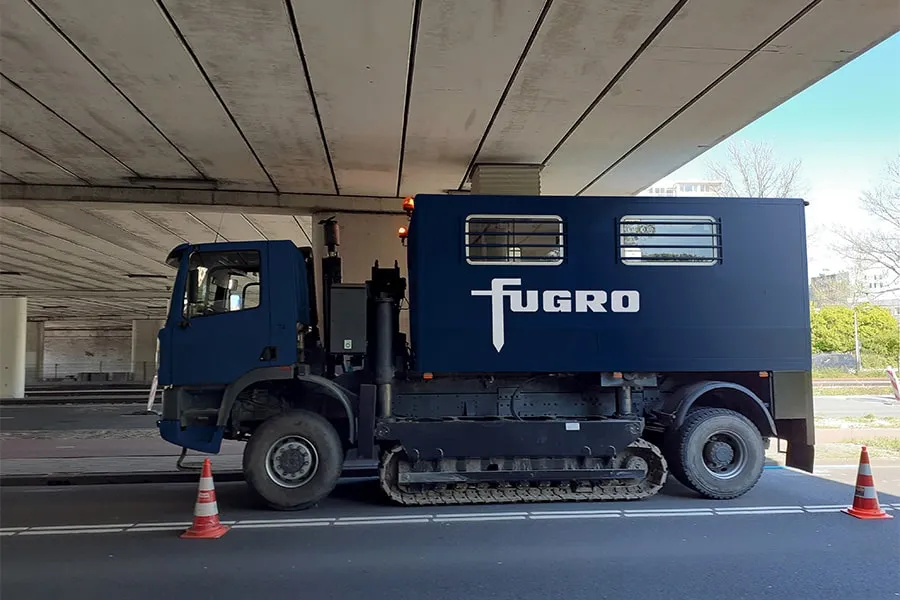
“Because of the challenging soft ground, particularly in Amstelveen, VeenIX asked us, as an established specialist, to support them with geotechnical ground investigation and advice,” says Diederick Bouwmeester, Manager Sector Infrastructuur at Fugro.
Geotechnical risks
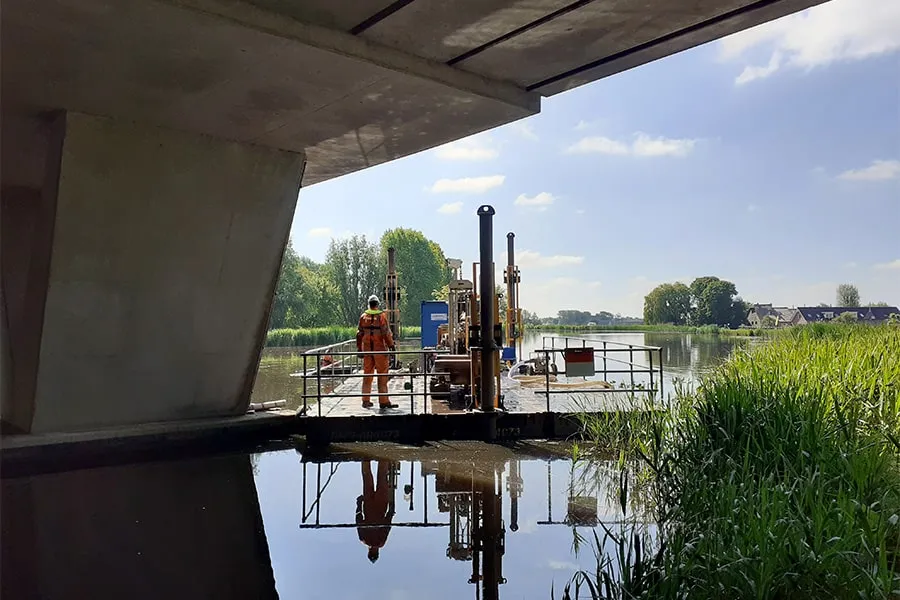
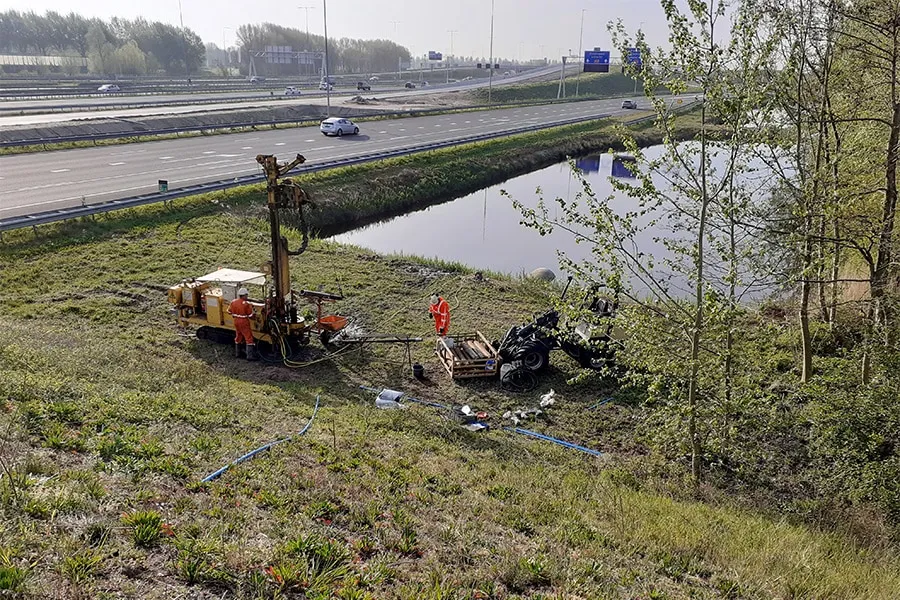
“We analysed the existing ground investigation data, as well as the data in our archives,” Bouwmeester continues. “We have carried out a great deal of investigation around Amsterdam over the years. We then reviewed the information and assessed what additional ground investigation would be needed, using cone penetration tests and boreholes, to establish the geotechnical soil parameters. We also looked at whether any additional geological investigation was needed. It is important to establish whether there are several geological deposits, which would mean that different sets of parameters need to be used.
For this project, Fugro investigated more than 2,500 locations using cone penetration tests and boreholes. “On that basis, we produced a geotechnical baseline report and a 3D subsurface model, or 3D ground information model (GIM), which everyone can use. Together with Rijkswaterstaat, we are therefore the geotechnical point of contact for VeenIX, all the design consultancies and subcontractors.”
Fugro also put forward a proposal for monitoring, so that during the earthworks any deviations can be closely monitored using settlement gauges, piezometers, inclinometers and standpipes, and immediately assessed against the design requirements.
Design rules
Eleven viaducts on the project are being demolished and rebuilt in widened form. Rijkswaterstaat required components from various viaducts to be reused. “In its tender design, VeenIX identified the foundations that could be reused and whose feasibility would need to be assessed during the project,” says Johan Schuringa, Geotechnical Consultant at Fugro. “The aim was primarily to reuse foundations from the 1960s and 1970s. However, they were designed to different standards from those that apply to current foundation design. Special design rules have been drawn up to assess the old piles. The main requirement is that the load on a pile must not increase by more than 15% (see NEN8707). Otherwise, you have to design to the latest standards, and the pile foundations will not have sufficient bearing capacity. This is particularly because the design rules were tightened in 2016 and the pile factors (for pile toe resistance) were reduced by 30%.”
Pile bearing capacity
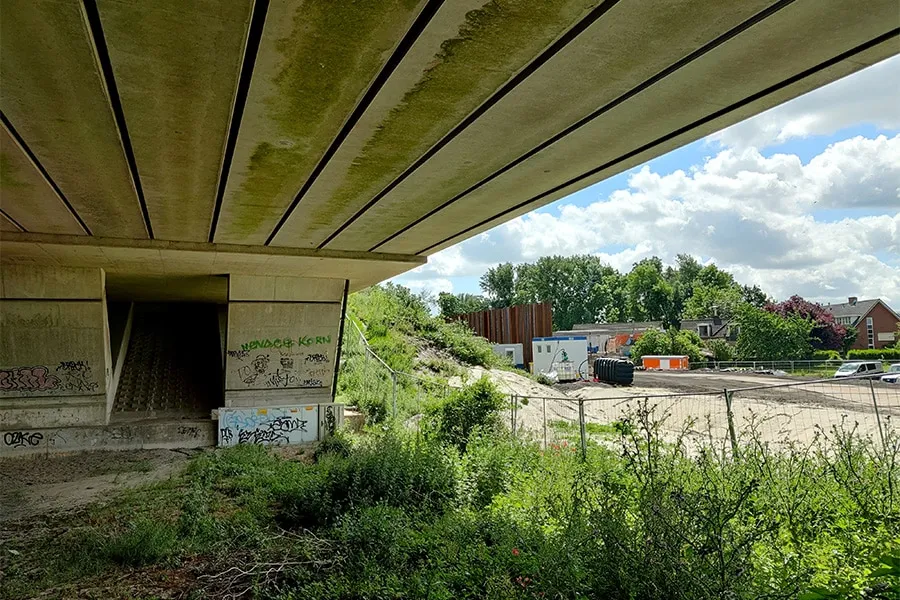
If existing foundation piles are to be reused, the first step is to check whether the pile load will increase by less than 15% in the new situation. “That is really a question for the structural engineer,” says Schuringa. It has now been concluded that the piled foundations of five viaducts can be reused in whole or in part, and Fugro has completed the full concept design calculations for structure four (KW4, a viaduct on the western side of Amstelveen, ed.). There was close collaboration between the structural engineer and Fugro’s Geotechnics department on KW4. They estimated that the total weight of KW4 would increase by 11% in the new situation, within the limits. It is worth noting that the viaduct is being widened from 27.5 to 50 metres. “So we had cleared the first hurdle, but the pile bearing capacity still came up just short in the initial design phase. Even so, we had enough options to continue, as additional mitigation measures were still available.”
Additional mitigation measures
If the required bearing capacity is not achieved, as is the case for almost all the existing viaducts on the A9 BaHo, additional cone penetration tests can be carried out, for example, to determine the homogeneity of the ground more accurately. “A cone penetration test gives information about just one point. The thinking behind this measure is that by carrying out more investigations, in other words more cone penetration tests, you can say more confidently whether the ground is homogeneous,” Bouwmeester explains. “The design rules include a certain ξ factor, a correlation factor based on the number of ground tests. This often becomes more favourable as more ground investigation is carried out, which also improves the calculated bearing capacity. This means that additional bearing capacity can be credited to the existing piled foundation. Additional ground investigation therefore pays off.”
Differences in stiffness
The old piles will ultimately work together with the new piles to form the foundation for the new, widened viaduct.
“However, old piles are much less stiff than new ones, because they used to be driven to refusal just into the Pleistocene sand,” Schuringa explains. “Under today’s design rules, new piles have to extend much deeper to achieve the required bearing capacity. This creates considerable differences in stiffness across the foundation, which can adversely affect how forces are transferred. That all has to be calculated too. In addition, measures must be taken to prevent installation damage or a temporary reduction in the bearing capacity of the old foundation when the new piles are installed. These are important points to consider during construction.”
Verification cone penetration tests
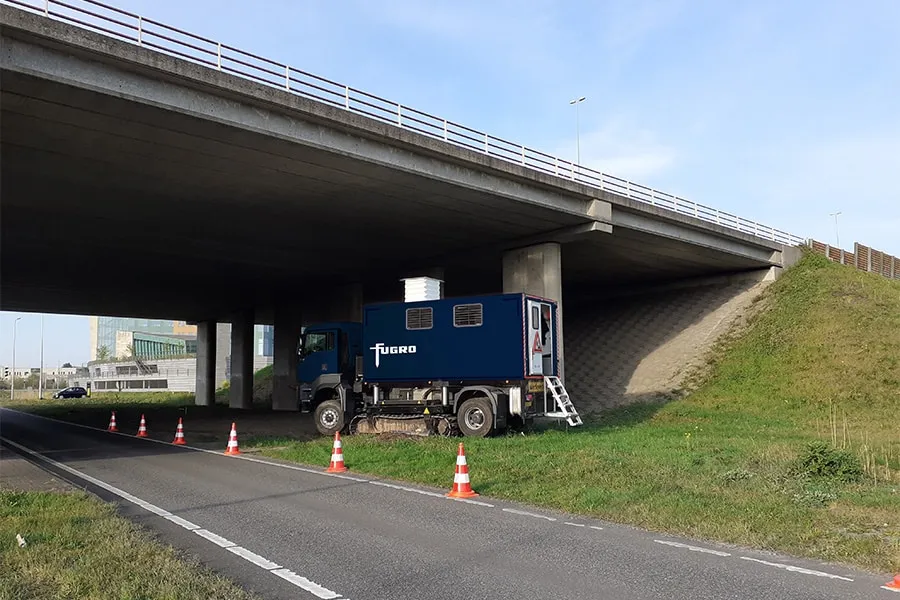
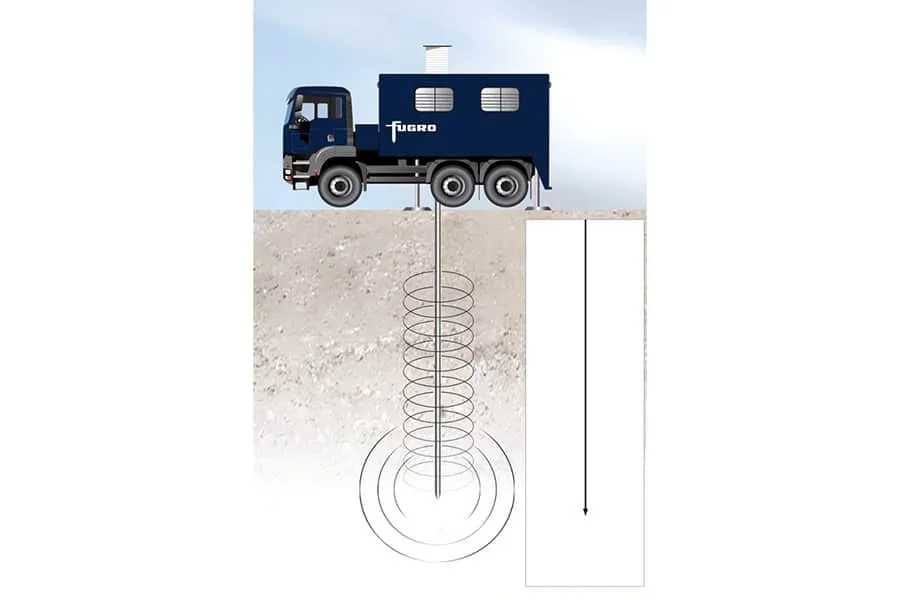
Fugro had access to old specification drawings from the 1960s and 1970s showing how the viaducts were built and where the piles were located, whether they were driven at an angle or vertically, their dimensions and their pile toe levels. “Experience shows that the drawings do not guarantee that the piles were actually installed as shown,” says Bouwmeester. “We need to be able to assess piles considered for reuse properly, to make sure they extend deep enough into the Pleistocene sand. There are several ways to do this. At KW4, it was done using cone penetration tests with a so-called magnetometer cone, a specialist cone that detects the reinforcement in the pile. The test had to be carried out within a distance of 1.5 metres from the pile. As the piles were generally driven at an angle, this also required careful planning. Wherever possible, we carried out verification cone penetration tests, which allowed us to establish the installed toe levels with reasonable certainty.”
Ultimately, all 208 old piles at KW4 were incorporated into the final design for the new foundation. According to Fugro, this also saves around 200 new piles, equivalent to 1,200 tonnes of CO2 emissions (roughly ten return flights across the Atlantic). Every pile that does not need to be installed also saves concrete, reinforcement, transport and installation, meaning savings in both time and money. “And that is just for KW4,” Schuringa stresses. “There are four other viaducts where piles will be reused, in whole or in part, including the bridge over the Bullewijk and the bridge over the Amstel.”
A business enquiry for Fugro? Get in touch
Who worked on A9 BaHo
- geotechnical site investigation and advice
 FugroMentioned in Sustainable use of foundations for viaducts and bridges
- foundation contractor consortiumDe Vries TitanMentioned in A9 BaHo: Bauer installs 12,000 anchor piles up to 45 metres deep
- foundation contractor consortiumBAUER Funderingstechniek B.V.Mentioned in A9 BaHo: Bauer installs 12,000 anchor piles up to 45 metres deep


Keep following this
Get an email when a new story is published. No account needed.
- ProjectA9 BaHo
- ThemeExtending the life of roads and civil engineering structures
- SubjectRoad construction
- CompanyFugro







