









Substructure for Theemsweg route complete
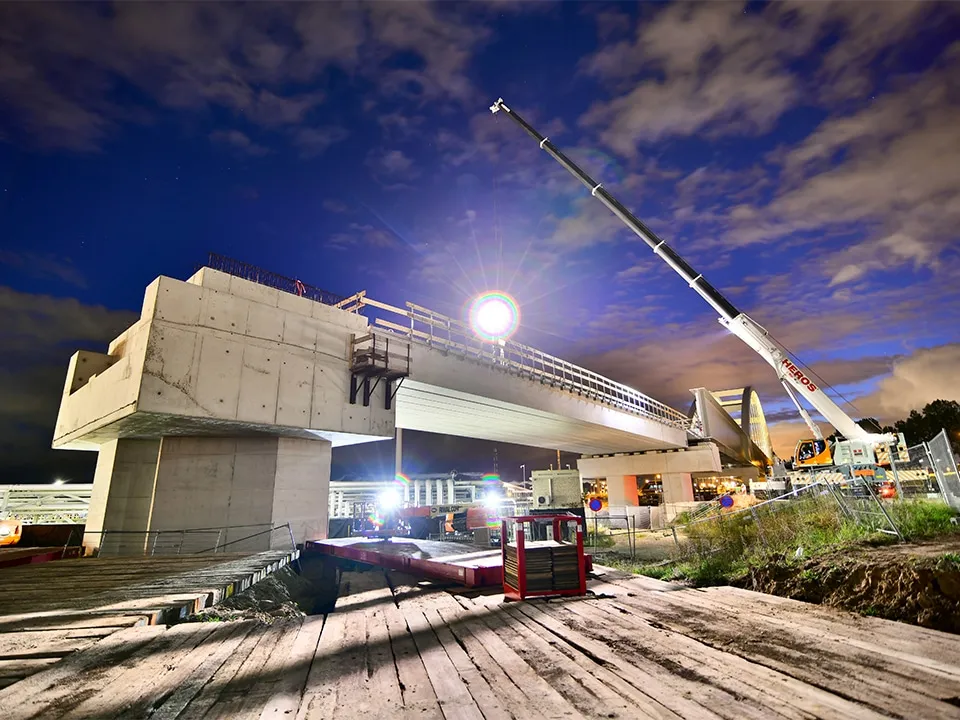
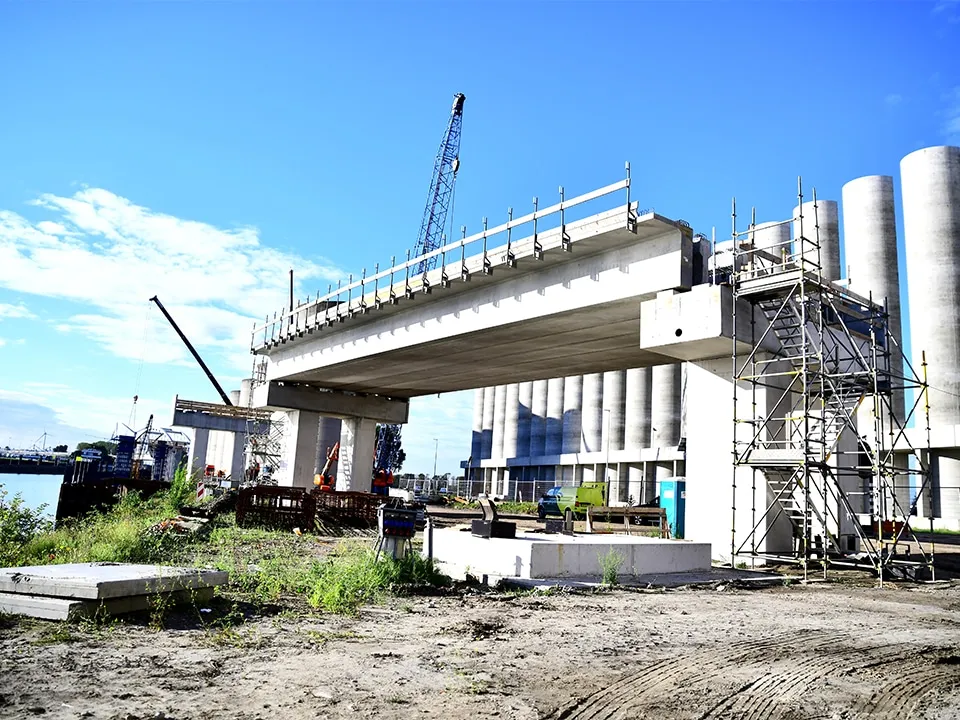
In the Port of Rotterdam, the Havenspoorlijn, the first section of the Betuweroute, is being rerouted. The new section of track, more than 4 kilometres long and known as the Theemsweg route, is due for completion at the end of 2021. It will resolve the capacity bottleneck at the Calandbrug near Rozenburg. The new route runs over an elevated railway viaduct. Two arch bridges have been built along the route, which reconnects to the existing railway near the A15. Rerouting the line means that increasing rail traffic will no longer conflict with shipping, improving traffic flow.
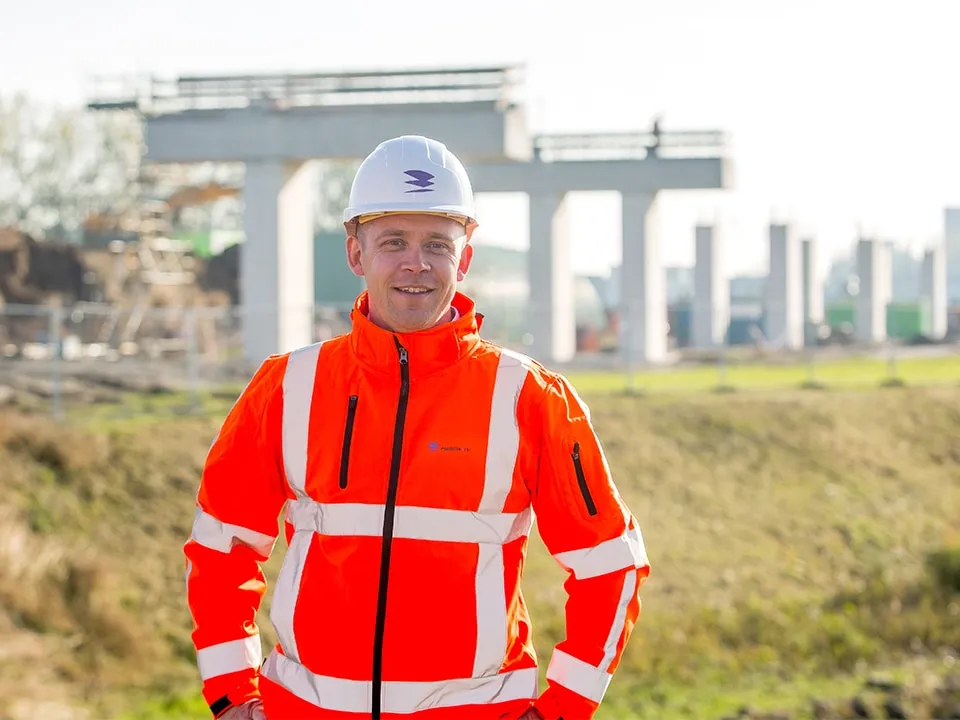
We spoke to Rik van Opdorp, project manager at Mobilis. “The substructure for the Theemsweg route, comprising the railway viaduct and modifications to the road network, was built by the SaVe contractor consortium, made up of TBI company Mobilis, Besix, Dura Vermeer, Hollandia and Iemants. As technical manager, I was responsible for overseeing the design and construction preparation, as well as day-to-day management. We were in close contact with the client, Port of Rotterdam Authority. The focus of this project was on engineering and safety.”
Numerous challenges and specialist expertise
The substructure for the Theemsweg route presented its share of challenges, Rik notes. “The project was carried out across and close to public infrastructure and sensitive elements in the surrounding area, such as the petrochemical industry and a complex network of cables and pipelines. The two trough structures we built can be classified as challenging structures. This was due to their location, the skewed rather than perpendicular crossings, the cables and pipelines in place, and the uniquely restricted space. This called for specialist expertise, including special piled foundations installed beside live transport pipelines in the Botlek area. We therefore opted for cast-in-situ, low-vibration or vibration-free piles, installed by Funderingscombinatie Voorbij-Franki. The lengths and diameters, over 20 metres long and more than 720 mm in diameter, were used at this scale for the first time on this project. The formwork for the troughs had to be balanced, as the walls and floors were cast in a single pour. The span, the slenderness of the structure and the skewed crossing all called for a lot of reinforcement. We are talking about two troughs side by side, around 150 metres long.”
Moving the steel railway bridges into place
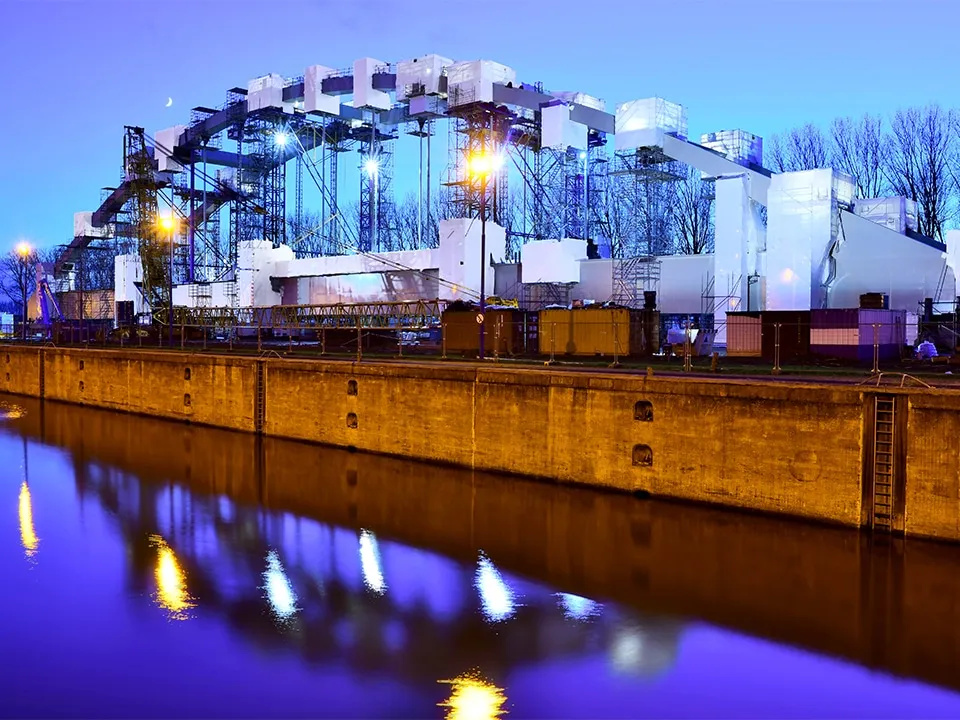
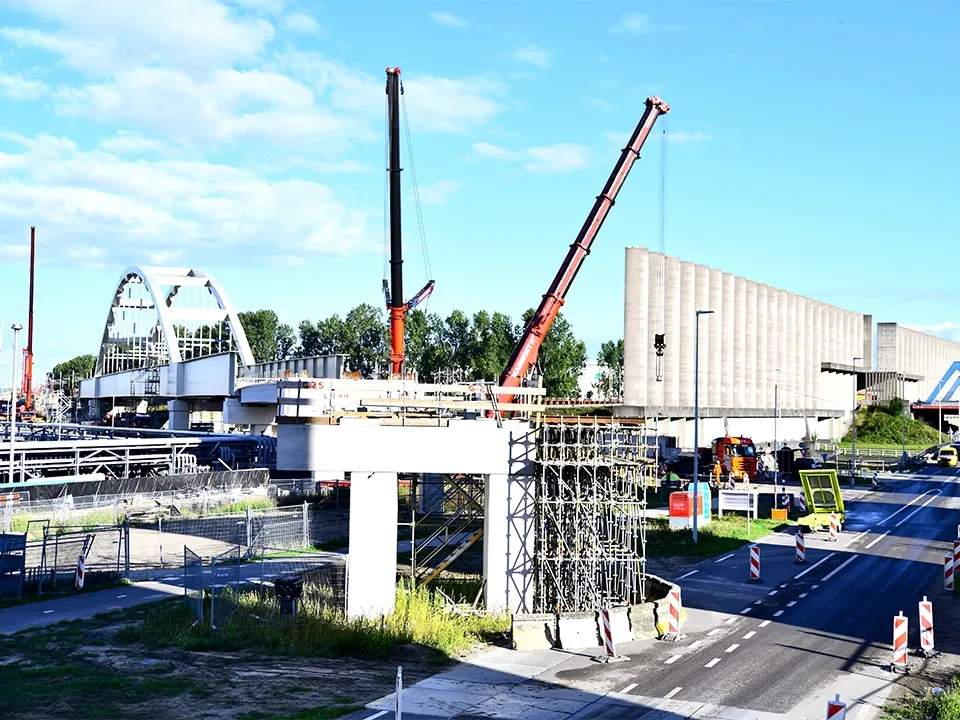
The consortium worked in a confined space in an area that is active day and night. The surrounding businesses had to remain accessible at all times. Rik continues: “The logistics involved in moving two new steel arch bridges into place brought additional challenges. Last year, they were moved to their final locations on Mammoet SPMTs (Self-Propelled Modular Transporters). One bridge was transported across the water, driven over pontoons through the lock to avoid putting strain on it. The other was moved over the Thomassentunnel, right next to the operational VOPAK site, where oil is stored. The bridges are 150 metres and 250 metres long respectively. Each weighs 4,400 tonnes. One bridge is narrow and long, the other short and wide. Getting everything safely into position was quite an undertaking!”
For Rik, the personal challenge was having to get a lot of work done in a short time. “That puts a lot of demands on collaboration. As companies, we weren’t new to one another, but as individuals, many of us were. We approached the entire project as a joint venture, with everyone pulling in the same direction. That allows you to achieve a great deal as a team.”
Have a business enquiry for Mobilis? Get in touch
Who worked on Theemswegtracé
- contract administratorSGS Roos+BijlMentioned in The Netherlands’ most complex underground infrastructure area

Keep following this
Get an email when a new story is published. No account needed.
- ProjectTheemswegtracé
- SubjectRoad construction
- CompanyMobilis







