









Eco-railing meets clients’ needs even better
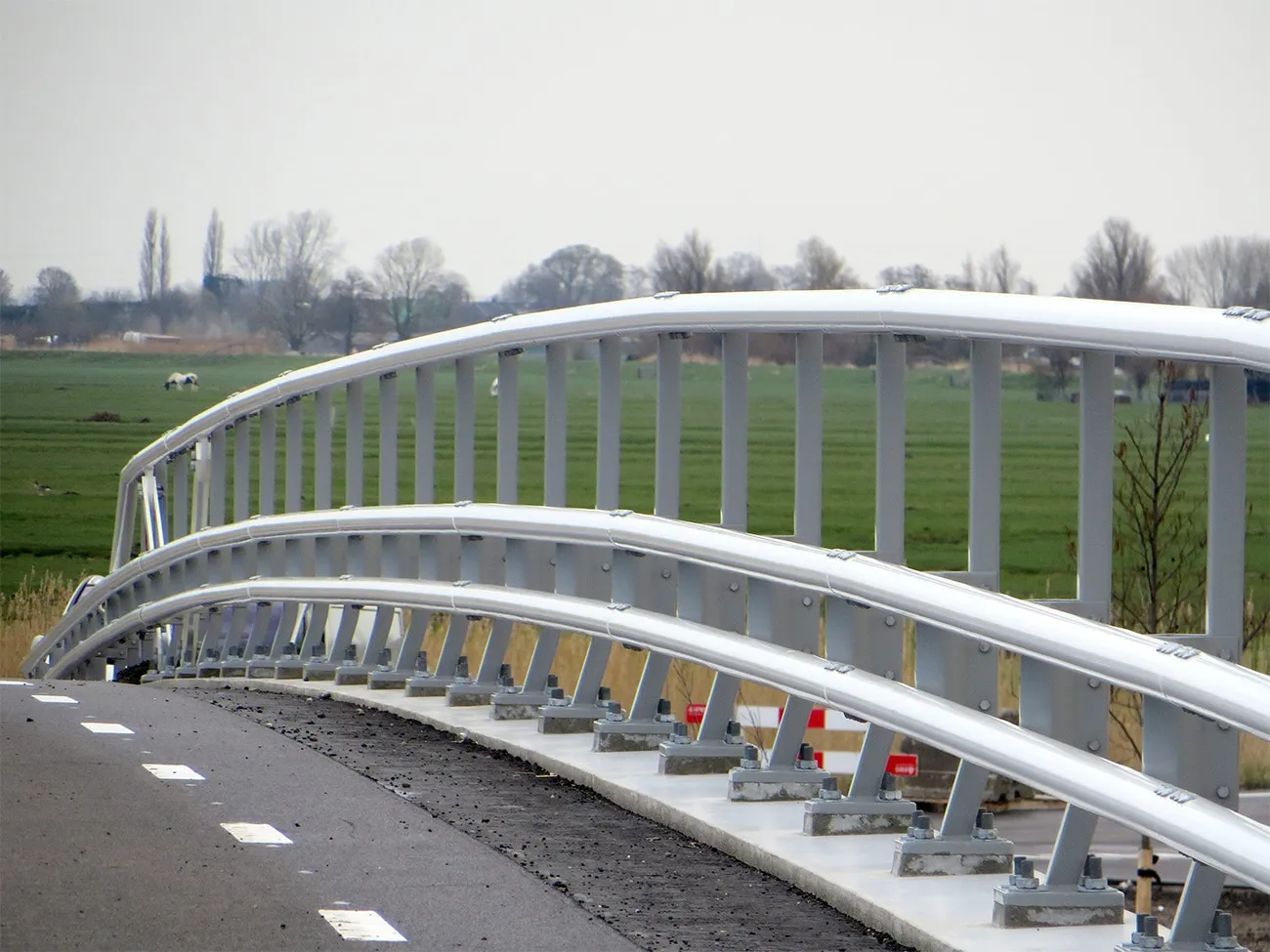
“We are always looking for solutions that are not only technical improvements, but aesthetic too.” So says Harry Klos, project manager at Saferoad Holland. Saferoad has recently further expanded its range of vehicle restraint systems with Eco-railing. “This new barrier is designed for use on structures, but can also be used along embankments.”
More choice
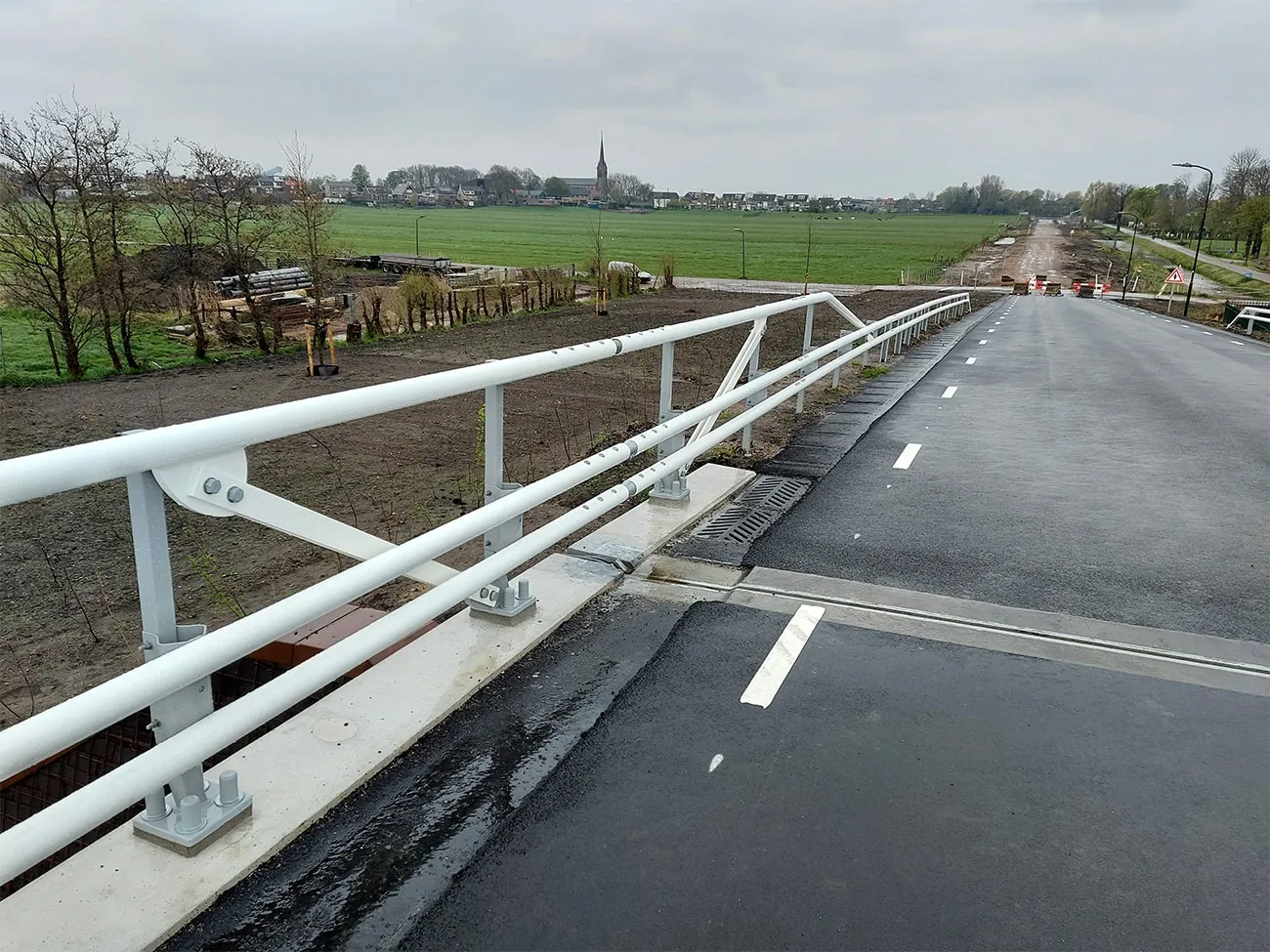
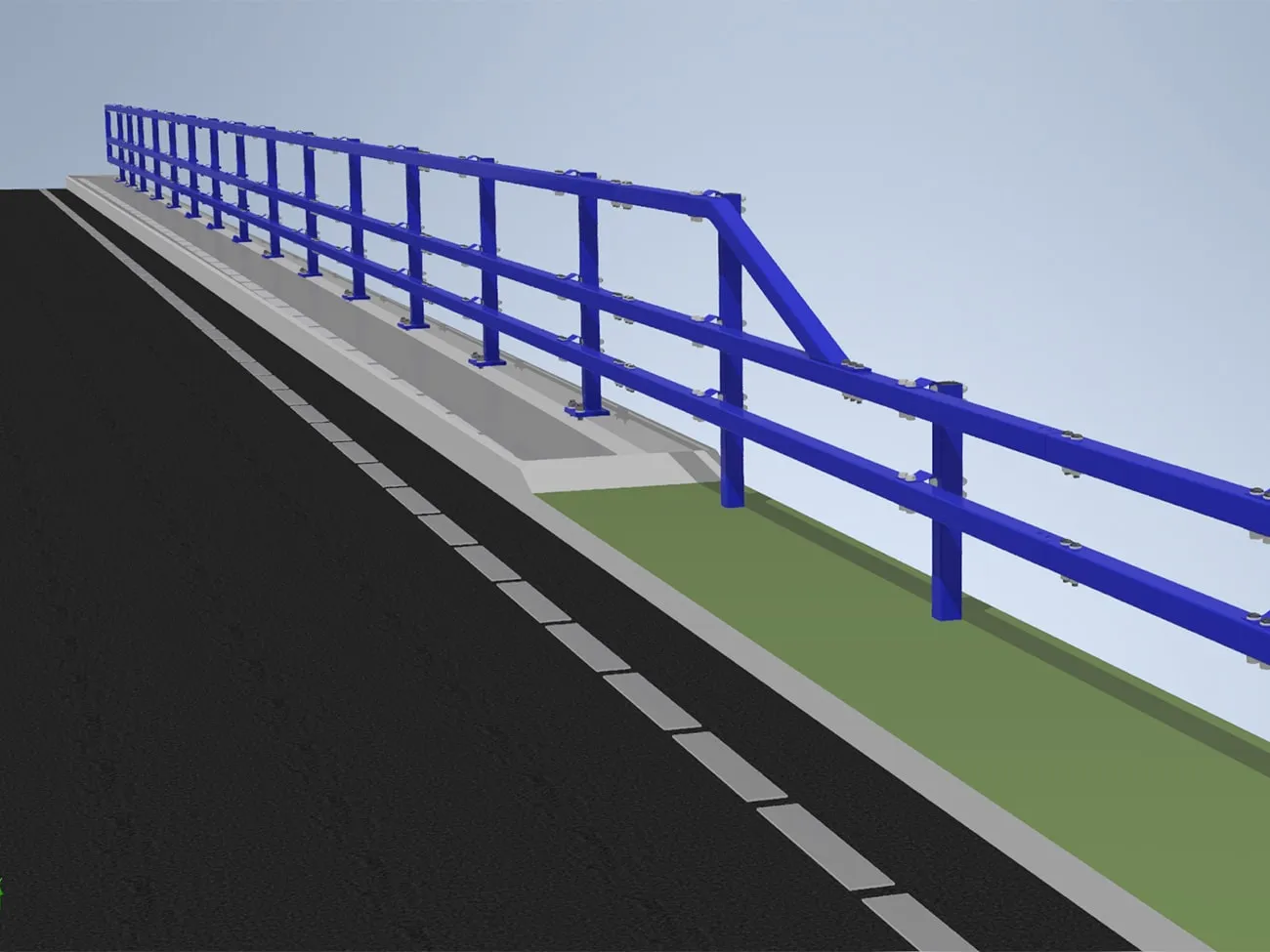
On structures, a barrier system is generally secured using posts mounted on base plates, which are anchored into the concrete. Along an embankment, posts are driven into the ground. “That is normally the difference in how the systems are installed on a structure and along an embankment,” says Harry. “A road restraint system is generally made up of beams, while a parapet has round or square rails. With Eco-railing, we want to offer more choice to suit the situation and the applicable requirements. It is an N1 system for distributor roads, for example on small structures where the maximum permitted speed is 80 km/h. Depending on the road, the requirements and the maximum permitted speed, a range of vehicle restraint classes is available, including the higher containment classes H1 and H2. Eco-railing can also be continued safely from the structure along the embankment. “That creates a clean, aesthetically pleasing appearance,” Harry explains. “Eco-railing can also be coated in any RAL colour to harmonise with its surroundings.”
A durable solution
“A major advantage of Eco-railing is that the post spacing is set at 2 metres, allowing it to be installed on the existing anchors on the structure. There is therefore no need to drill new anchor holes. That is highly desirable not only from an installation point of view, but also makes the work quicker and more sustainable,” Harry explains. “Sound reduction is also available for this barrier. In that case, brackets are added to support sound-absorbing elements. This makes the barrier ideal for integration into the landscape. This sound reduction is particularly welcome in residential areas, where viaducts generally cause more noise pollution than people realise. In nature reserves, it helps reduce disturbance to wildlife. Behind the sound-absorbing elements, noise levels can quickly be reduced by 6 to 10 dB. Eco-railing can also be fitted with a safe anti-climb system.”
Working with the architect
Eco-railing’s design is appealing in its own right, and Saferoad can work with the architect on every aspect. Harry explains: “We are happy to join the table during the design phase, work with the architect and turn their requirements into a bespoke barrier bearing CE marking in accordance with EN1317-5. We are ambitious in this area too: we want to be innovative and offer a complete solution.
Wherever possible, Eco-railing is made from recycled raw materials. In every respect, this barrier is a major upgrade on the old barriers that need replacing on structures, and an excellent choice for new structures. The fact that the tested barrier can also continue along an embankment makes it not only very safe, but visually appealing too. The design remains consistent, and the transition is seamless. Looks matter too, after all!”
No more makeshift transitions
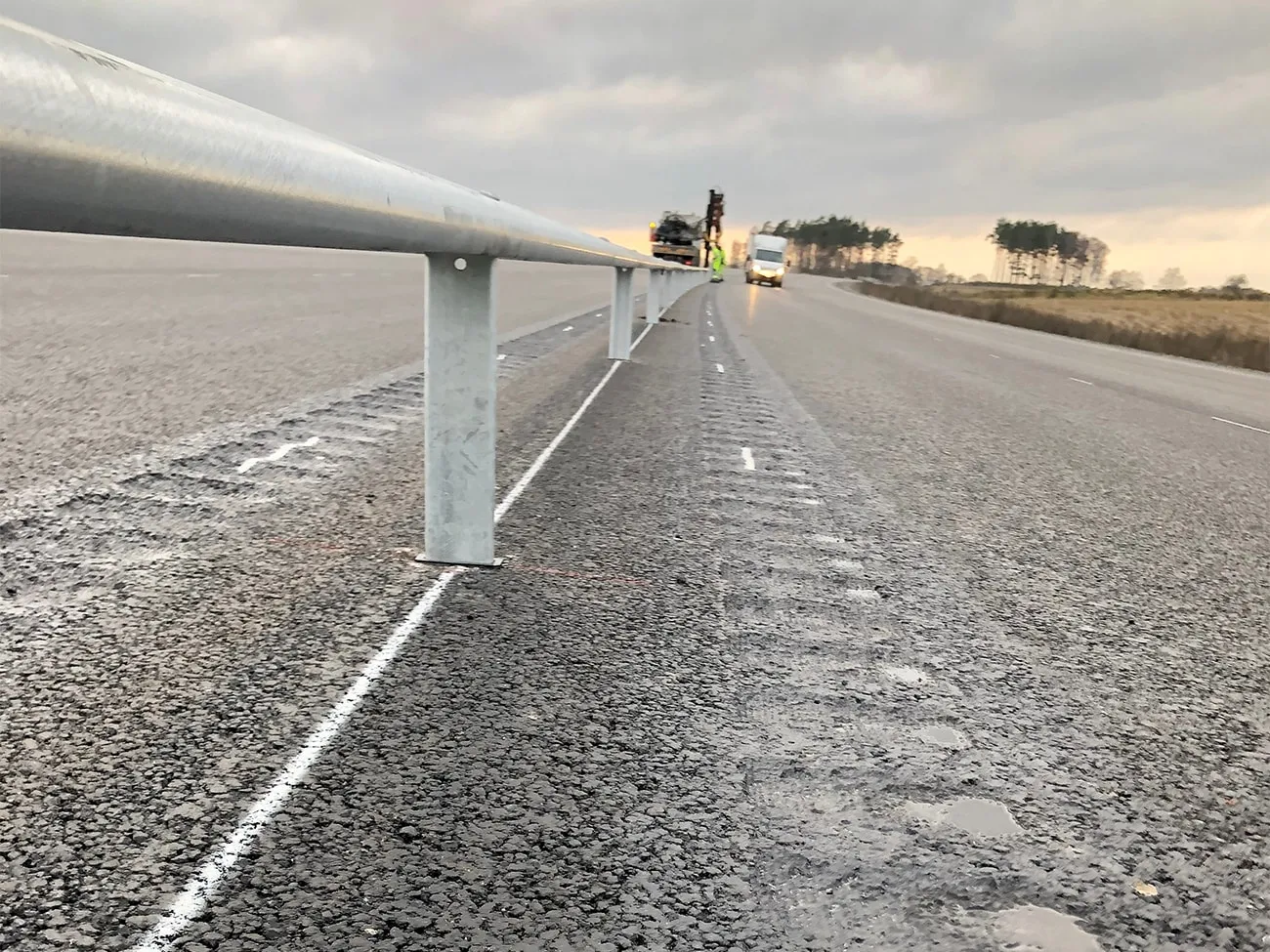
Herman Odijk, director at Saferoad Holland, joins the conversation: “Eco-railing is a very affordable barrier that is ideally suited to access roads in new residential areas and private access roads. We are seeing residential areas expand rapidly in response to the current housing shortage. This brings with it a great deal of new infrastructure, including connecting bridges with a speed limit of 80 km/h. Eco-railing gives municipalities and provinces an aesthetically pleasing solution that does not put too much strain on the budget and is also safer, because the barrier transitions seamlessly from the structure to the embankment.”
But Saferoad’s solutions do not stop there: there are also options for more demanding applications that continue from the structure along the embankment. Herman says: “Clients are increasingly looking for this kind of aesthetic solution, where a high containment level is essential. We offer these solutions through our Scandinavian BIRSTA range and SafeLine barriers. BIRSTA barriers are even available in the H4b heavy goods vehicle containment class. With such a wide range, cobbling together transitions between systems on structures and embankments is a thing of the past. As well as looking unsightly, makeshift solutions are the weak link in the overall containment system. We assume that the barriers on the structure and along the embankment have been tested and certified to the relevant standards, but the improvised transition between two completely different structures rarely has. With Eco-railing and the BIRSTA and SafeLine ranges, there is no excuse for shoddy work on transitions.”
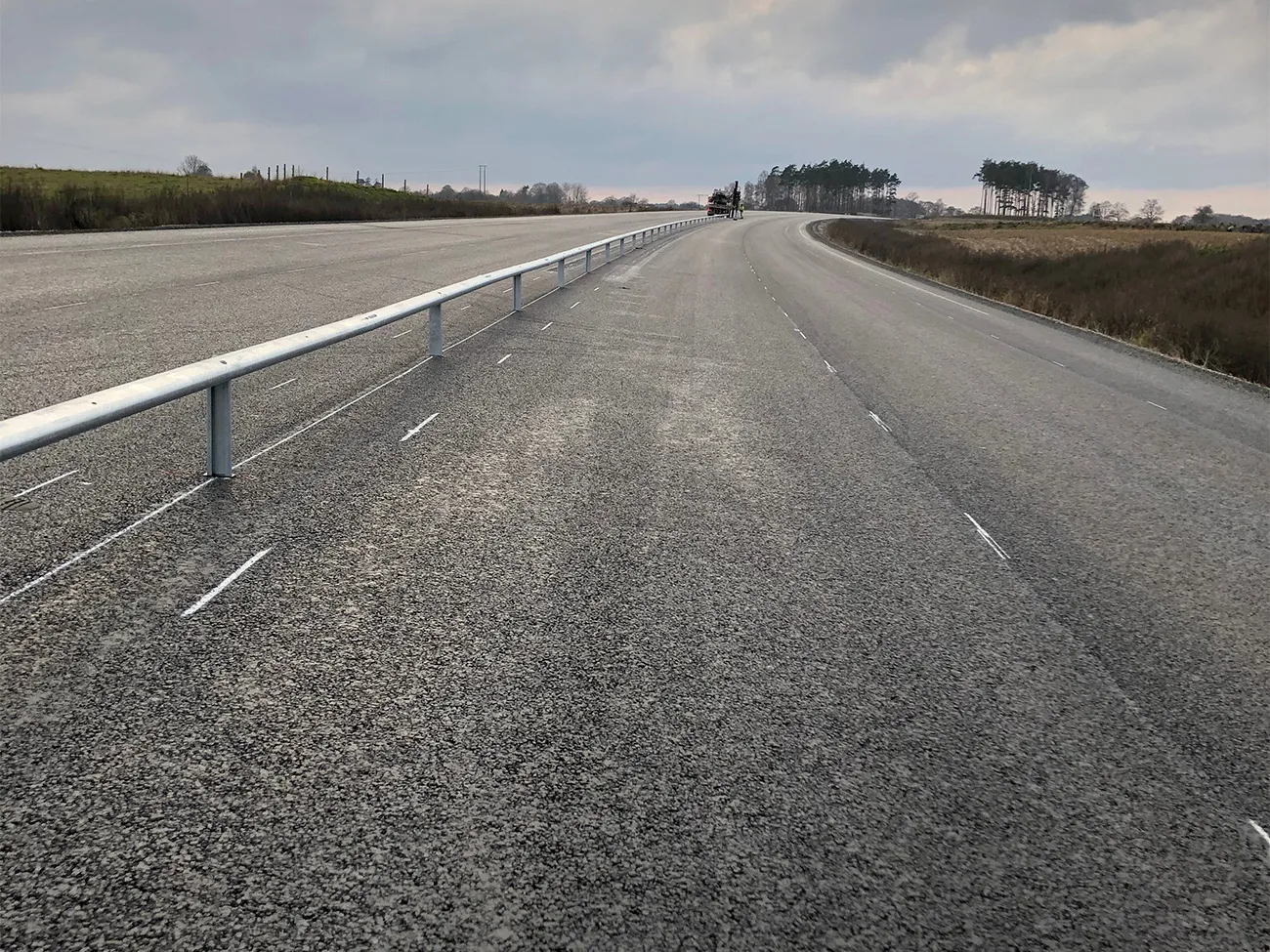
The bridge as a calling card
Saferoad places great emphasis on offering its solutions with a coating. “Our experience is that the more attractive a bridge is, the more likely it is that a barrier with a higher containment level and an attractive coating to suit the surroundings will be chosen. The bridge is the architect’s calling card, after all. The barrier can then have a robust appearance and a beautiful colour. A duplex coating, consisting of zinc and powder coating, also lasts for 50 years,” says Herman.
Saferoad can supply the right accessories for every barrier system. “We offer anti-climb protection in various designs,” Herman explains. “The mesh is matched to the relevant barrier type and can always be fitted neatly. It looks great and provides optimum safety.” Many bridges and small bridges date from the 1950s, 1960s and 1970s and need replacing. There is still plenty of work to be done, then. Herman nods and says: “If you are going to replace it, do it properly and safely straight away. The transitions we supply between the structure and the embankment work in all conditions. And there is plenty of choice when it comes to design. Take our Scandinavian SafeLine M, for example: the top rail is an oval tube that fits down over the posts. It looks excellent and can also be used on 100 km/h roads with a green strip in the middle, where physical separation of the carriageways is required. In short: make it safer, make it better-looking!”
Question about this story? Ask your question
Keep following this
Get an email when a new story is published. No account needed.
- ThemeViable projects and strong collaboration
- SubjectRoad construction







