









Innovative sealing system offers a high degree of flexibility
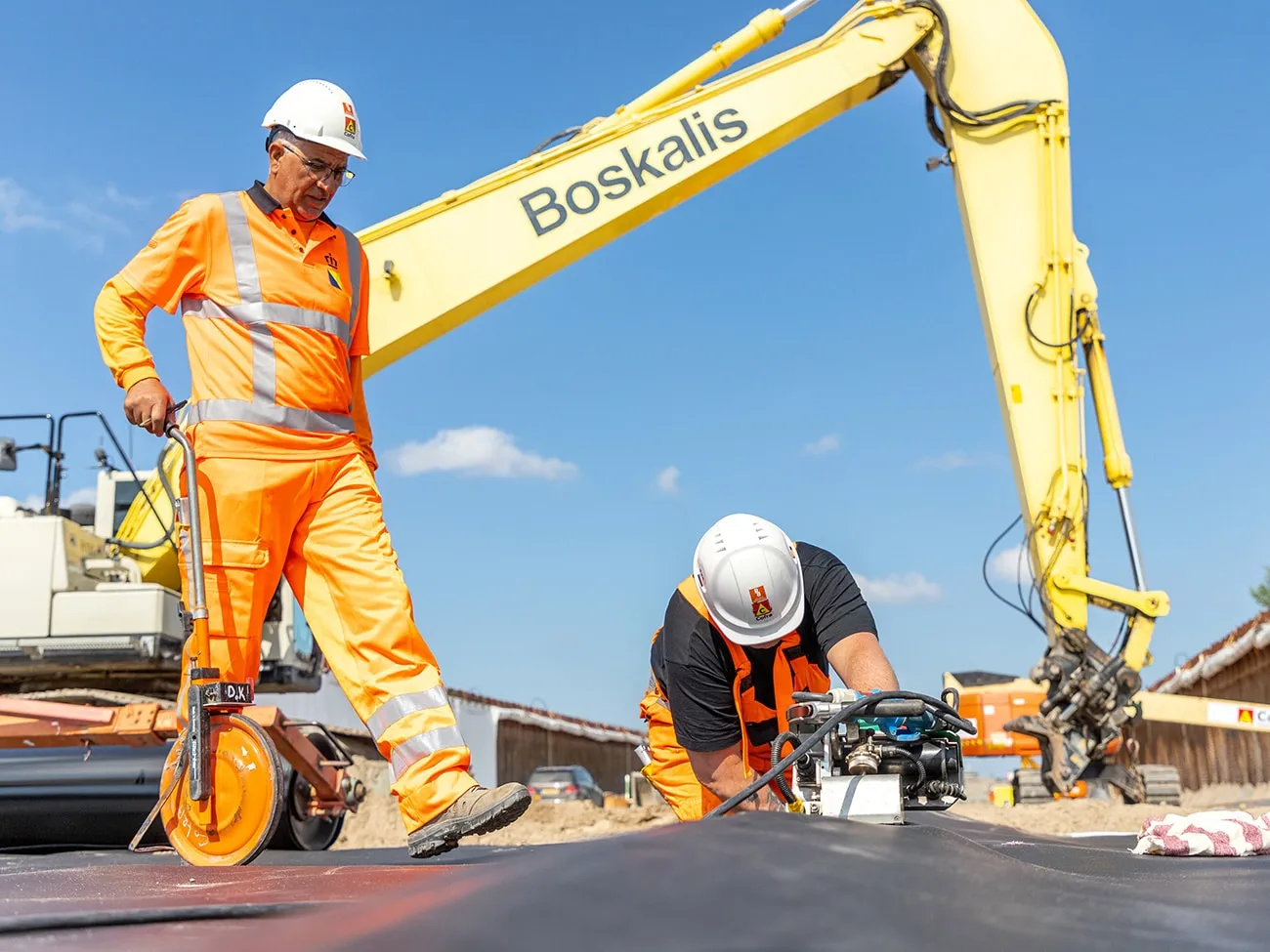
The sealing system consists of 2 mm-thick HDPE geomembrane, encased in a 500 g/m2 felt protection fleece on the underside and a 1,000 g/m2 fleece on the upper side.
Part of the new N206 ir. G. Tjalmaweg is being built at a lower level and, once complete, will lie below the groundwater level. Thanks to an innovative membrane system developed by Cofra, traffic will have a dry route along the 2-kilometre stretch. This is a unique sealing system, never before used in the Netherlands on this scale or with this construction method, and it gives main contractor Boskalis Nederland a high degree of flexibility.
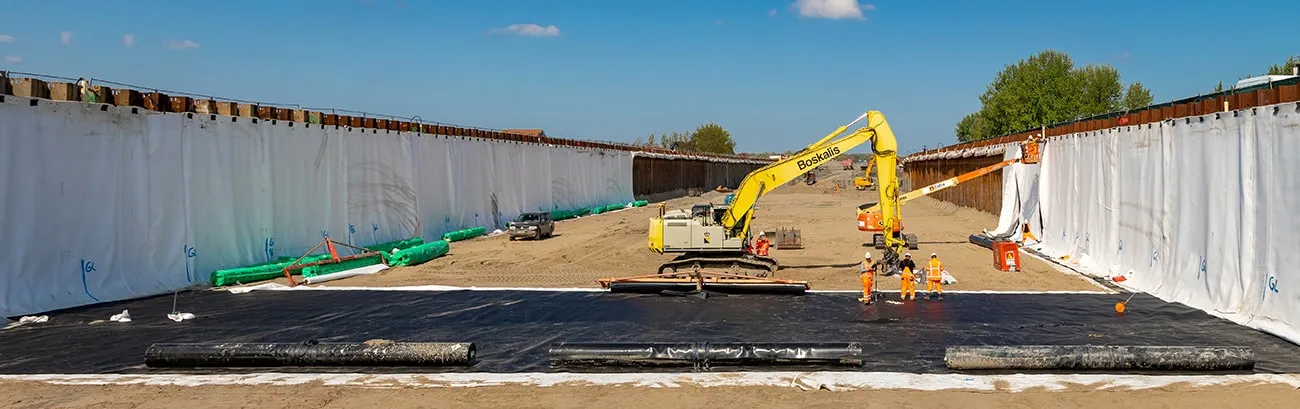
“The original plan was to excavate the construction pit below the water table and then install a conventional sunken membrane system,” says Wiegert Dijkkamp, project manager at Cofra. “We joined the tender process in 2018 and, at that stage, worked with Boskalis Nederland to develop an alternative that offers greater flexibility, takes up less space in cross-section and allows us to guarantee optimum quality.” The alternative plan gives Cofra two work packages: installing the PE tubes for the waterglass injection, and, after the excavation has been carried out in the dry, unrolling and welding the sealing system horizontally and vertically.
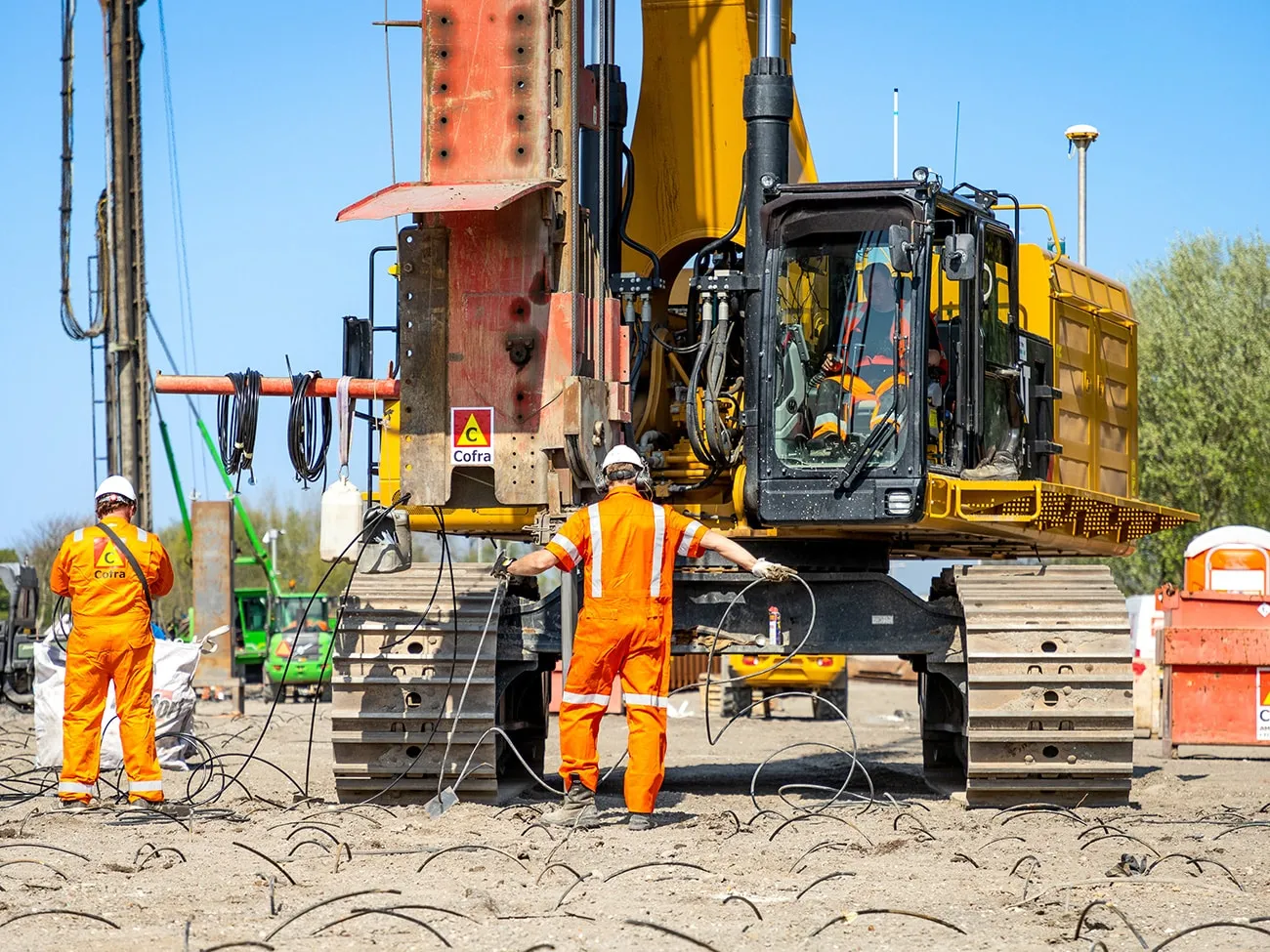
Waterglass injection
The sunken section of the N206 ir. G. Tjalmaweg is built around a sheet-pile wall. “A sheet-pile enclosure has been constructed over a length of around 2 kilometres and divided into thirteen sections. For each section, we effectively install the infrastructure for the waterglass injection,” explains Dijkkamp. “We do this for BE Inject, which is creating the water-retaining gel layer for Boskalis Nederland. Using vertical drain rigs, we drive the tubes down to the required depth with a lance. What makes our rigs unique is that, in addition to using GPS to determine their position at ground level and recording the insertion depth, we also measure the angle at which each tube is driven in. This tells us how the tube behaves in the ground all the way down to its final depth. If there are significant deviations, BE Inject and we can make timely adjustments to ensure a high-quality water-retaining layer after the gel has been injected.”
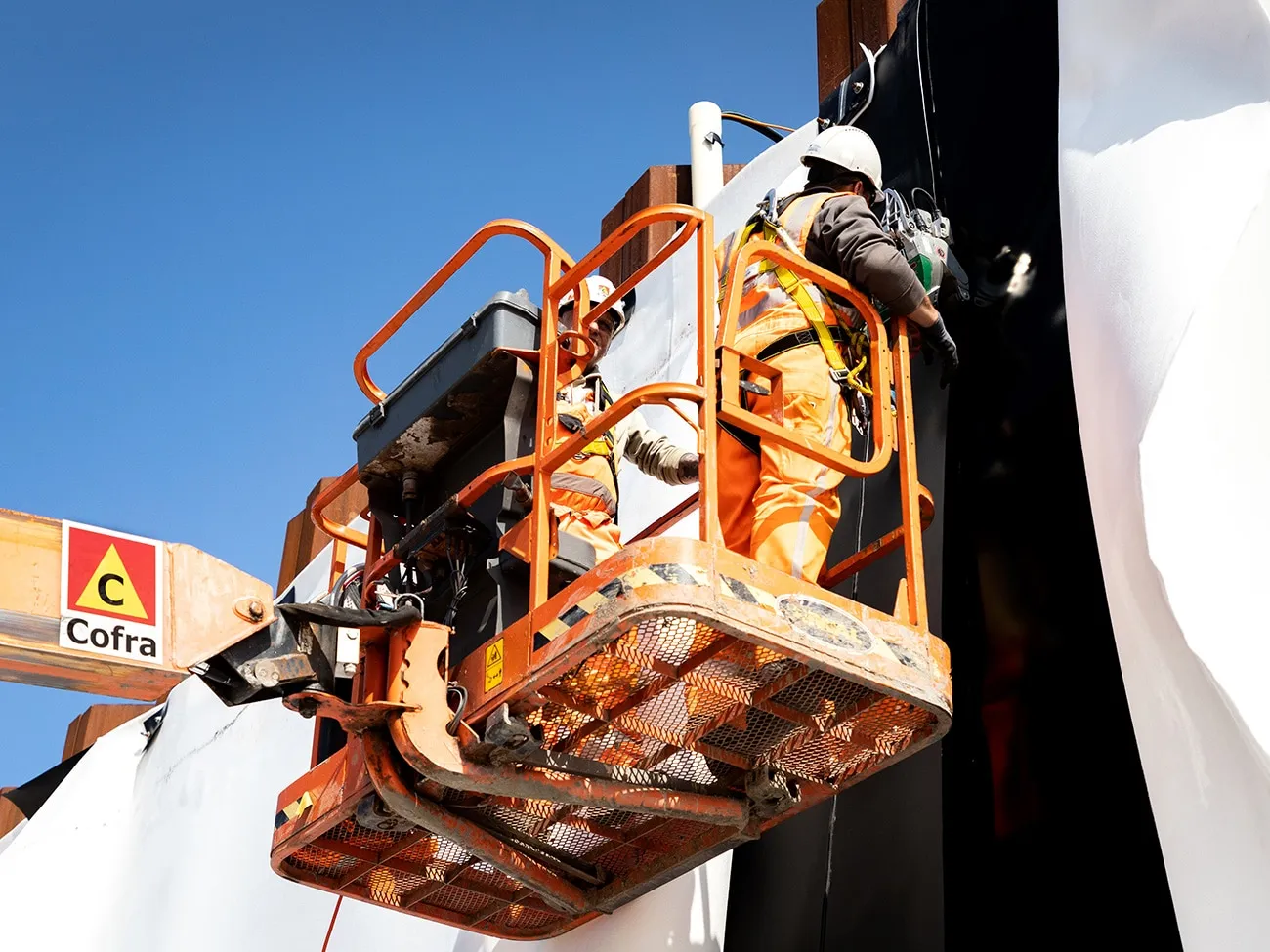
Vertical plastic welding
Once the water-retaining gel layer has been installed in each section, the water above it is pumped out. The U-shaped construction pit is then excavated and a clean sand bed laid, after which Cofra starts installing the sealing system. This consists of 2 mm-thick HDPE geomembrane, encased in a 500 g/m2 felt protection fleece on the underside and a 1,000 g/m2 fleece on the upper side. “Installing HDPE geomembrane vertically is unique in the Netherlands,” says Dijkkamp. “Usually, the ground has a gentle slope rather than a pit with vertical walls, as here in Katwijk. The sealing system for the walls is prefabricated at our facility in Amsterdam, then suspended, unrolled and welded vertically in the sections on site. The membrane system is then installed on the base in the conventional way and welded horizontally. The horizontal and vertical membranes are joined together to form a watertight enclosure. Around 100,000m2 of membrane will be installed in total, with a height difference of approximately 5.0-8.5 metres.”
Flexibility
“The main advantage of installing the sealing system in a dry construction pit is that you can clearly inspect the quality of the work,” Dijkkamp concludes. “We’re also much less dependent on the weather, which definitely benefits the quality. HDPE’s chemical resistance compared with other plastic membranes means there is no need for an additional emergency membrane layer in the system, which saves time.” In addition to Cofra’s internal quality assurance procedures, Enviro Quality Control carries out general process monitoring. The Geologger leak detection system is also installed to ensure optimum monitoring of watertightness during construction and, if required, during the operational phase too. Once inspections are complete, a section is backfilled with sand and Boskalis Nederland can continue with construction of the road. Dividing the sunken section into thirteen sections also provides the necessary flexibility. “If one of the contractors or subcontractors falls behind schedule, we simply move on to the next section. That would be virtually impossible when sinking a membrane system. It takes close coordination between the different activities, and we’re more than happy with our collaboration with the client,” says Dijkkamp.
The first sections of the sunken ir. G. Tjalmaweg are now fully complete for Cofra. “We’re already more than halfway through and right on schedule,” says Dijkkamp. He expects more projects of this kind in the coming years. “We’re seeing more and more roads in the Netherlands being built below ground level to reduce their impact on the landscape and prevent noise pollution. We’re certainly ready for it.”
A business enquiry for Cofra B.V.? Get in touch
Who worked on N206 ir. G. Tjalmaweg
- water-resistant gel layerBE InjectIn this story
- process controlEnviro Quality ControlIn this story
- specialist foundation contractorFranki GrondtechniekenMentioned in The Netherlands’ largest ground injection project
- specialist foundation contractor
 Voorbij FunderingstechniekMentioned in A solid foundation for the N206
- construction
 Voets Gewapende GrondconstructiesMentioned in N206 cutting: pushing the boundaries of reinforced soil
- Reinforced earth structureHUESKER NederlandMentioned in N206 cutting: pushing the boundaries of reinforced soil
- temporary infrastructureBouwtech BPIMentioned in Temporary medium- and low-voltage infrastructure for the N206
Keep following this
Get an email when a new story is published. No account needed.
- ProjectN206 ir. G. Tjalmaweg
- SubjectNews
- CompanyCofra B.V.
- CompanyBoskalis Nederland
- CompanyBE Inject
- CompanyEnviro Quality Control







