Tailor-made foundation solution with a special 452-pile pile mattress
Text Piet Andries Image Knol Akkrum
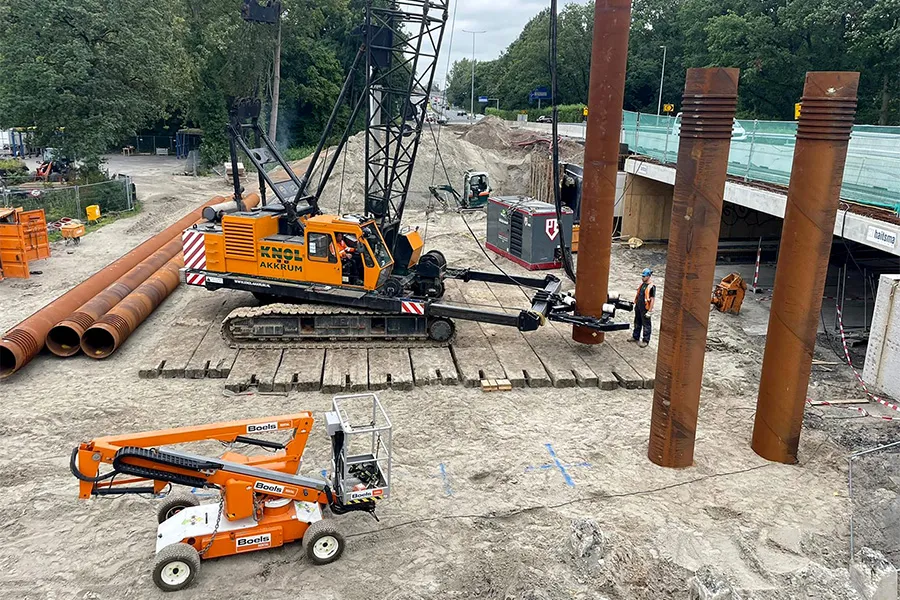
Contractor Knol Akkrum was responsible for the foundations of three structures and a green screen for Aanpak Ring Zuid. The company installed almost 550 piles by vibrating and driving them. “No fewer than 452 of these were used to build a pile mattress at the Paterswoldseweg viaduct, to prevent settlement of the newly delivered soil,” says project manager Jappie Koopmans.
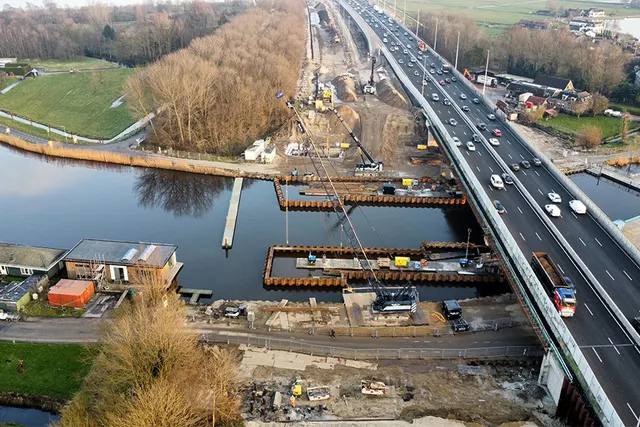
The 12-kilometre-long new southern ring road in Groningen has more than thirty structures. Knol Akkrum carried out the pile foundations at Europaweg (21), Paterswoldeweg (07) and Stadspark (06). “At Europaweg, we built an 80-metre combined wall with 35 tubular piles, each 25 metres long and 914 millimetres in diameter. Knol Akkrum’s construction workers fitted the piles with rings for the concrete reinforcement. All were driven near the motorway at night and installed in two phases to minimise disruption to traffic. The work took ten weeks, including the installation of sheet piling over a length of 90 metres, thirty tie-back anchors for extra stability and the structural work,” Jappie explains.
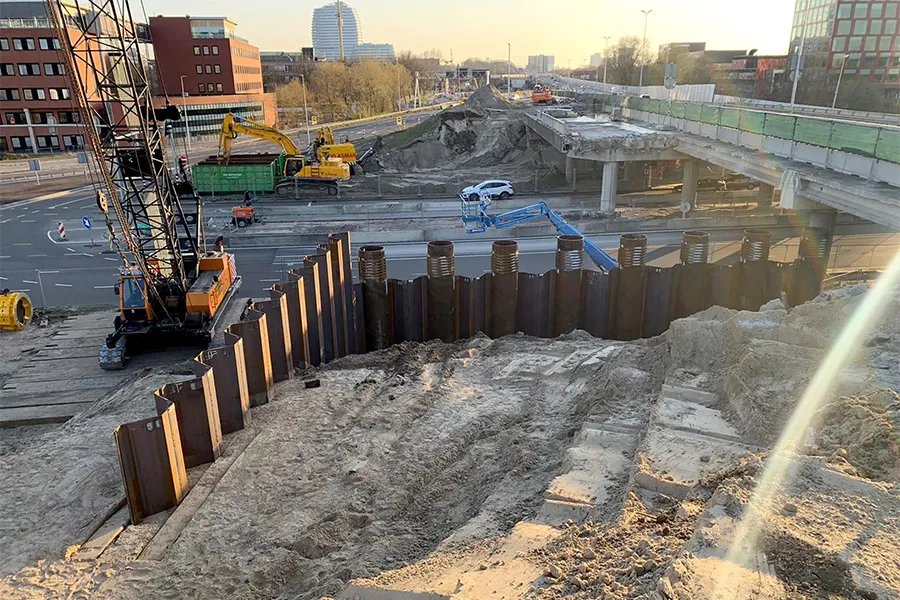
Not driven piles, but tubular piles
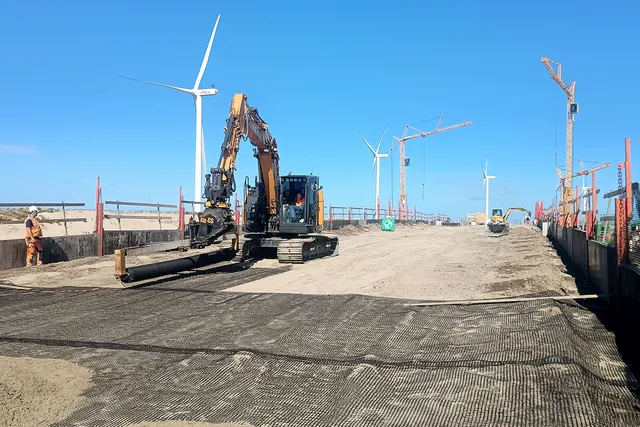
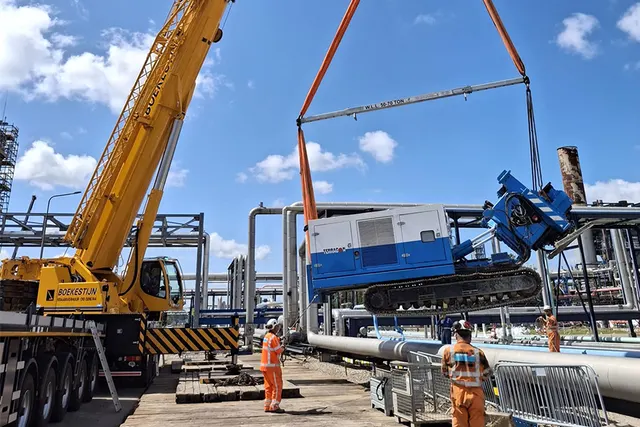
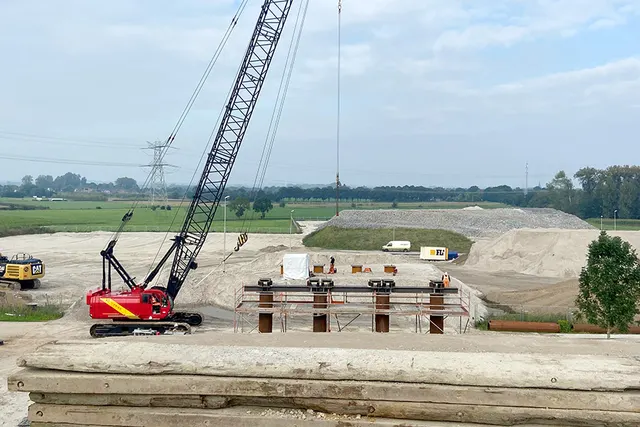
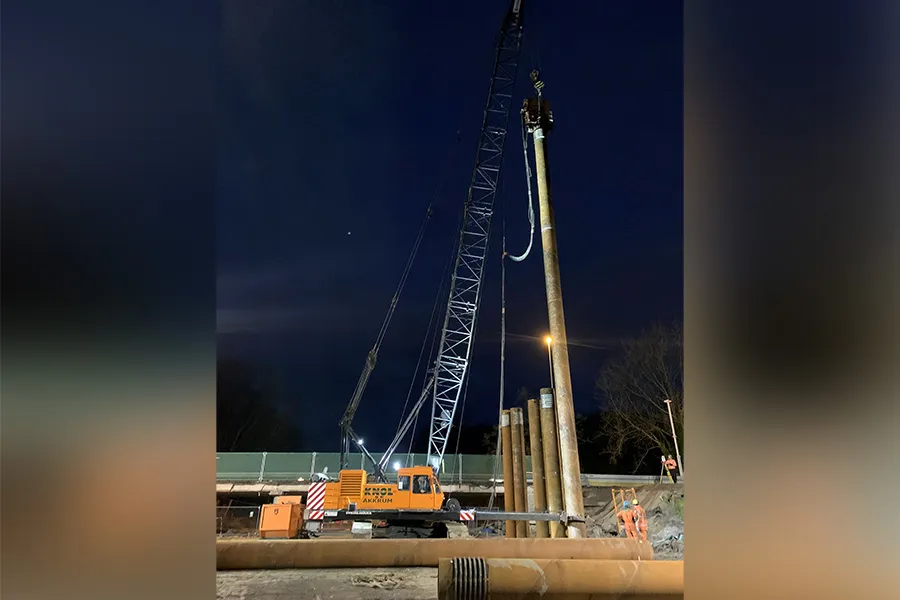
No expense was spared on the heavy machinery. “We used an 80-tonne Hitachi KH 230, the heaviest we had,” says Jappie. The company has since replaced this cable crane with a new Hitachi SCX 800. At structure 07, the piles reached a length of 28 metres. They were first vibrated in to a depth of 18 metres, then driven the remaining 10 metres. “To support the abutments, we vibrated in a pile mattress made up of 452 tubes to provide stability. With a single span, the new viaduct extends further inwards than the old one. The pile mattress has to prevent settlement of the newly delivered soil,” says Jappie. “As a precaution against nuisance, we had to use high-frequency vibration, so, exceptionally, we opted for tubular piles rather than driven piles.” The third structure required a further 28 tubular piles, 24 metres long and with a slightly smaller diameter of 762 millimetres.
Execution Class 3
Meeting Aanpak Ring Zuid’s stringent requirements was no problem for Knol Akkrum, one of the few piling companies to carry out structural work in-house to Execution Class 3, both in its own welding shops and on site. “This provides a rock-solid guarantee of a high-quality result, because the requirements involved are far-reaching. In addition to independent inspections, our welders must produce a test piece every six months. For inspection purposes, we can also trace every weld seam back to the person who made it.”
As well as working on the structures, Knol Akkrum also used its own specialist services to install part of the green screens along the Zuiderring, which required extra-deep foundations. “This involved 123 steel beams, 10 to 17 metres long, which we had to vibrate in with a highly precise tolerance of 25 millimetres. That is very precise for foundation work. We therefore used a leader-guided vibro hammer mounted on a mobile piling rig,” says Jappie.
Knol Akkrum is an all-round contractor with a particularly strong reputation for piling. “That meant we were well equipped to handle the large scale of the southern ring road’s reconstruction, including the challenges of working in the city, such as transporting 28-metre piles right through Groningen,” Jappie concludes.
Question about this story? Ask your question
Who worked on Aanpak Ring Zuid
- clientalliantie van Rijkswaterstaat, de gemeente en de provincie GroningenMentioned in Exceptional safety culture at Aanpak Ring Zuid
- contractorKnol AkkrumIn this story
- construction consortiumHerepoortMentioned in 11,000 m3 of underwater concrete for Groningen ring road


Keep following this
Get an email when a new story is published. No account needed.
- ProjectAanpak Ring Zuid
- ThemeUnderground construction
- SubjectFoundations
- CompanyKnol Akkrum