









Van Aalsburg sees growing role for nature-based water engineering
Text Susan Peek Image Van Aalsburg
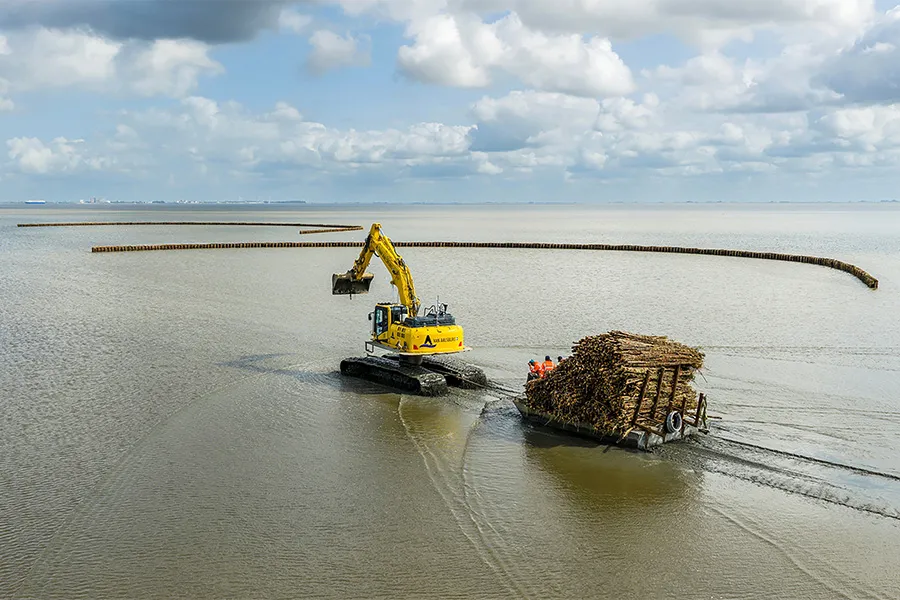
Water engineering has a major influence on what the Netherlands looks like today, and on how it will continue to exist tomorrow. After all, our country was shaped by water, but must also be continually protected from it. Keeping our feet dry has never been a given here, making the sector essential to the future. Dick van Aalsburg sees this every day in practice. Together with his five brothers, he runs the family business, which began as a traditional willow-wood merchant and has since become a modern water engineering company with a natural mission.
“Water engineering is in the midst of change,” says Van Aalsburg. “As attention to climate adaptation and ecological restoration grows, so does the demand for natural materials and smart construction methods. Clients are increasingly open to 100% natural and circular solutions. Ten years ago, people were surprised when we proposed willow structures; now they are being embraced and used much more widely again, just as they were 100 years ago.”
An integrated approach
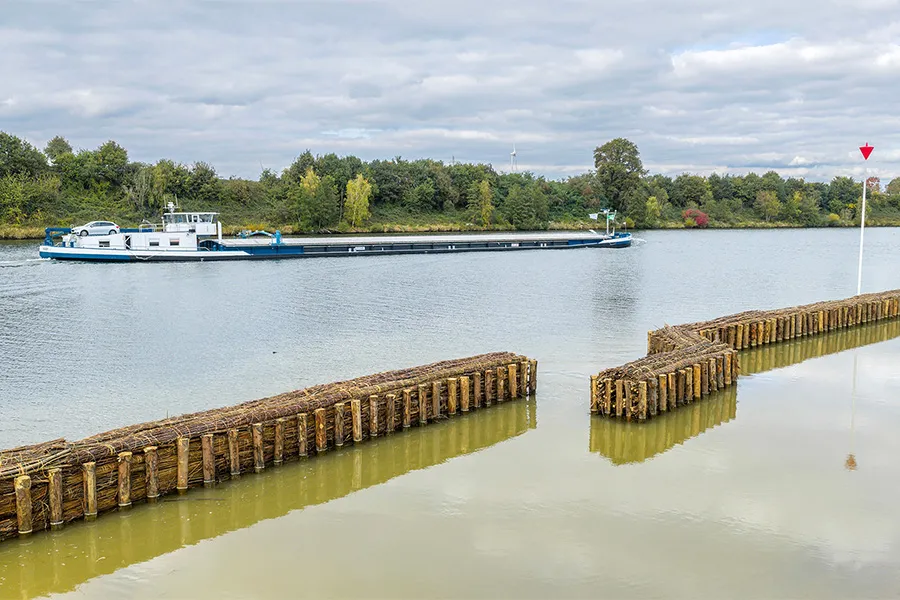
Van Aalsburg works, including internationally, on soil and bank protection along rivers, peripheral lakes and coastlines. He says there is an increasing search for an integrated approach that takes biodiversity and water quality into account. “Natural products and traditional Dutch structures are once again being seen as serious solutions to these issues. We are rediscovering what has always worked well.”
Pragmatic acceleration
Van Aalsburg also sees challenges, however. In his view, implementing the many measures under the Water Framework Directive requires realism and pace. “These are major tasks that are now coming to market. The challenge is to deliver them within the relevant parameters and timescales without getting bogged down in procedures, permit processes or lengthy studies. A pragmatic approach and good coordination with the right parties are crucial. If we work alongside one another more often instead of one after the other, we save valuable time.”
Craftsmanship with modern tools
At Van Aalsburg, innovation is not just about materials, but also about working methods. Electrification and robotics are making traditional craft work lighter and safer. “We combine traditional binding techniques with modern technologies such as automated fascine-making and mowing machines, and smart winches. This allows us to preserve the craft while bringing it up to date.” Experiments are also under way with materials. Jute and wool are natural alternatives to geotextiles: they have already proved successful underwater, while above-water applications are still in development.
A natural way forward
As a member of the Vereniging van Waterbouwers, Van Aalsburg contributes to knowledge-sharing across the sector. “We show that natural materials can provide full-fledged solutions, and benefit from the knowledge of others, for example on regulations or new technologies.”
In his view, the biggest challenge in the coming years will be getting willow recognised in technical standards. “There are clear calculation models for steel and concrete, but not for willow. That is why we are gathering data with knowledge partners to demonstrate the performance of our structures. This helps not only us, but the entire water engineering sector.”
A business enquiry for Van Aalsburg BV? Get in touch
Companies in this story
Keep following this
Get an email when a new story is published. No account needed.
- SubjectWater infrastructure
- CompanyVan Aalsburg BV







