









Using lake water for heat pump technology
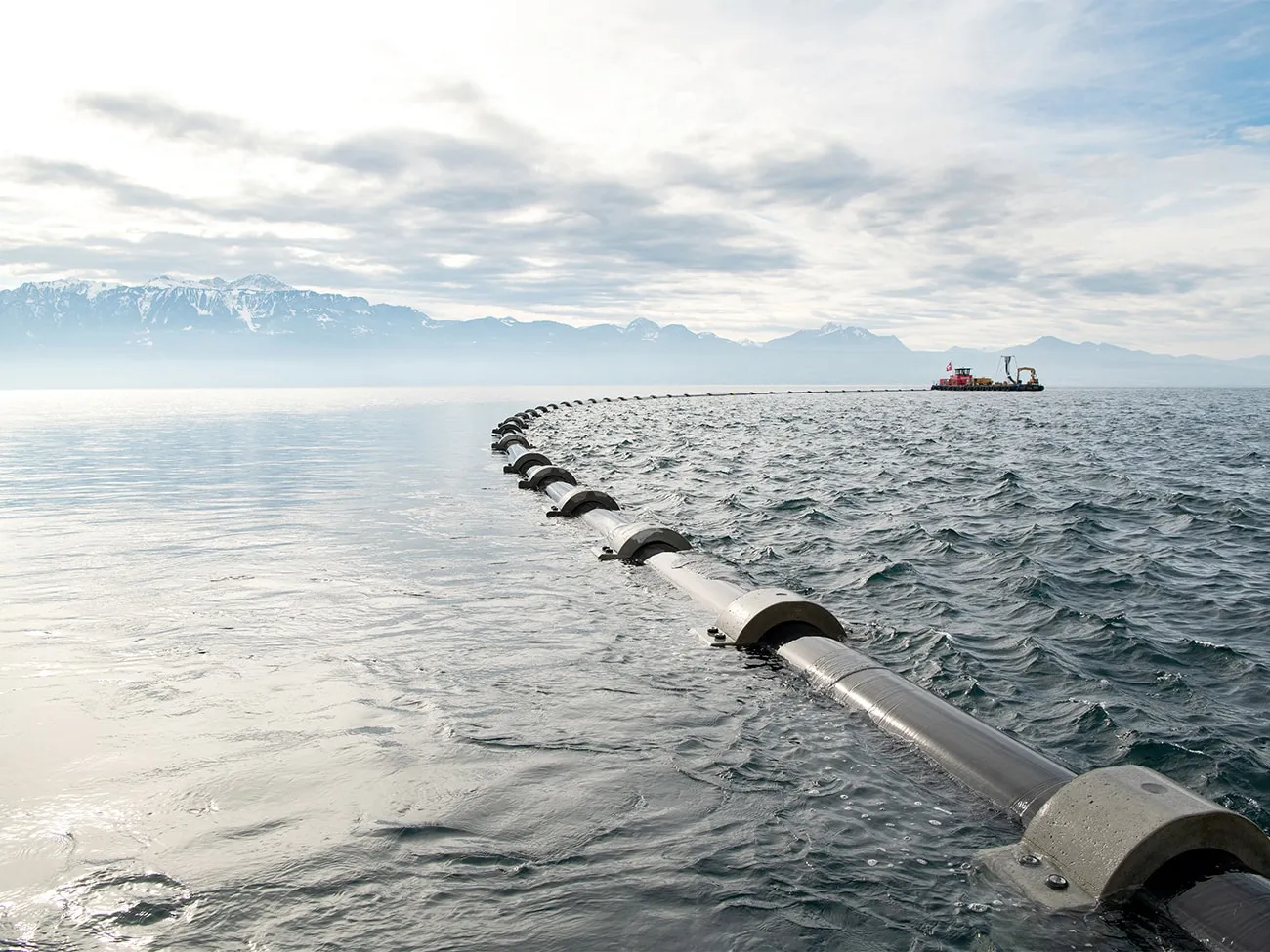
The “Centre Patronal” is a Swiss employers’ organisation based in Lausanne. The city lies on Lake Geneva, in the French-speaking Swiss canton of Vaud. To take a step closer to CO2 neutrality, it invested in a promising environmental technology. By using the deep water of Lake Geneva, it is now possible to heat and cool in an environmentally friendly way. AGRU Kunststofftechnik supplied suitable pipelines made from high-quality PE 100-RC plastic for use with lake water. Professional divers from Swiss company Hydrokarst Swiss installed the pipeline and lowered it to the bottom of the lake.
The principle behind using lake water is easy to explain: a heat pump extracts energy from the water and, through compression, raises it to a higher temperature that can be put to use. This produces several times the amount of heat represented by the electrical power used to run the heat pump, reducing the energy required for heating by up to 50%. Lakes and large rivers are vast reservoirs of heat that have barely been tapped to date. Even a frozen lake can supply environmentally friendly heating energy in the middle of winter. Heat pump technology can also be used for cooling, making energy-hungry air-conditioning systems entirely unnecessary.
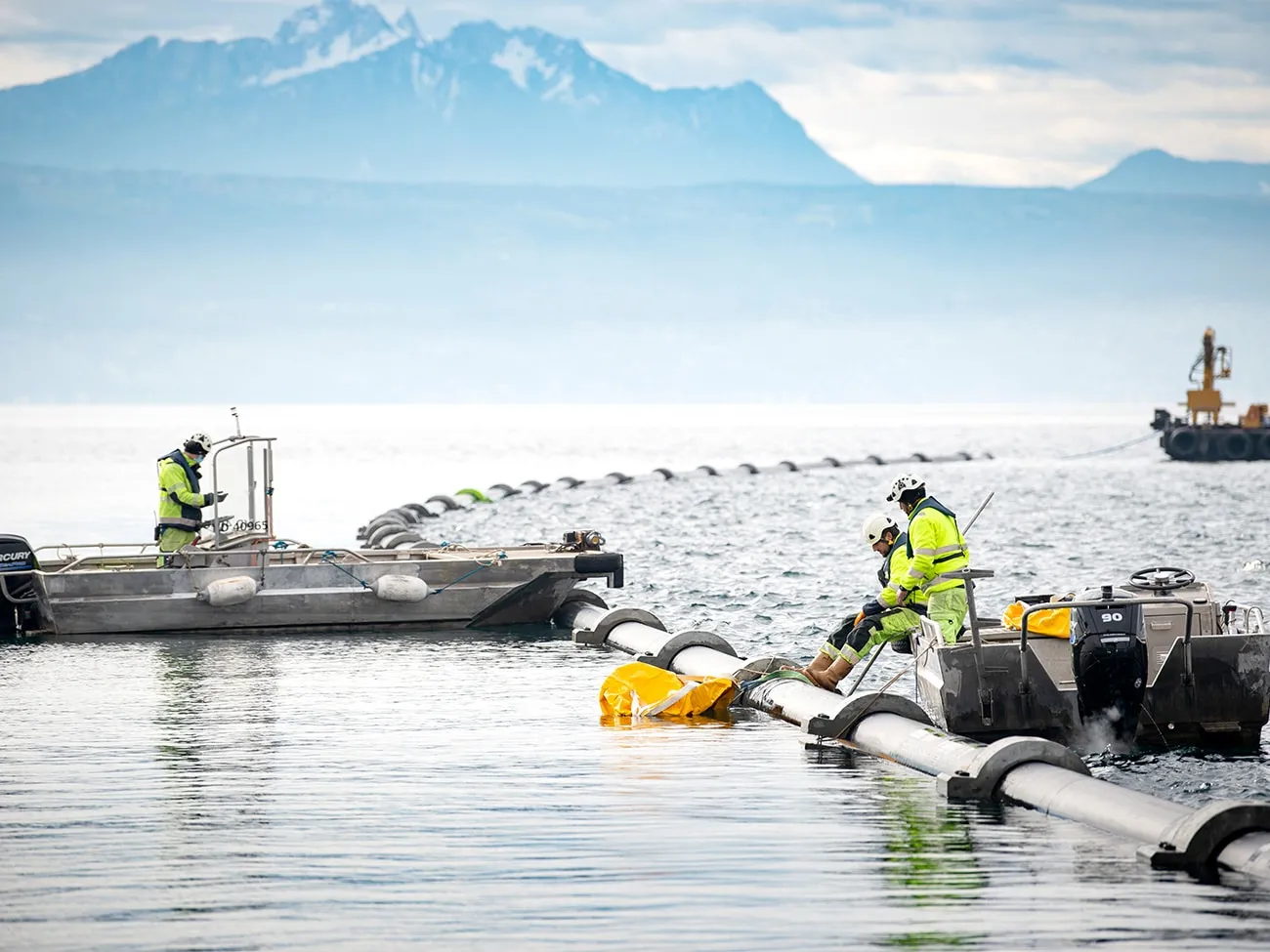
Lake Geneva lies on the border between Switzerland and France. It is the largest lake in both countries. Its deepest point, at 310 metres, is located off Lausanne, where the Centre Patronal is based. The organisation is investing in a new facility that will use water from Lake Geneva to cool and heat its building. Deep water is drawn in, heated or cooled using heat pump technology, and returned to the lake after use. For the construction work, which is scheduled to run from September 2020 to March 2021, AGRU supplied a total of 800 linear metres of AGRULINE pipes with an outside diameter of 500 mm and an SDR of 11.
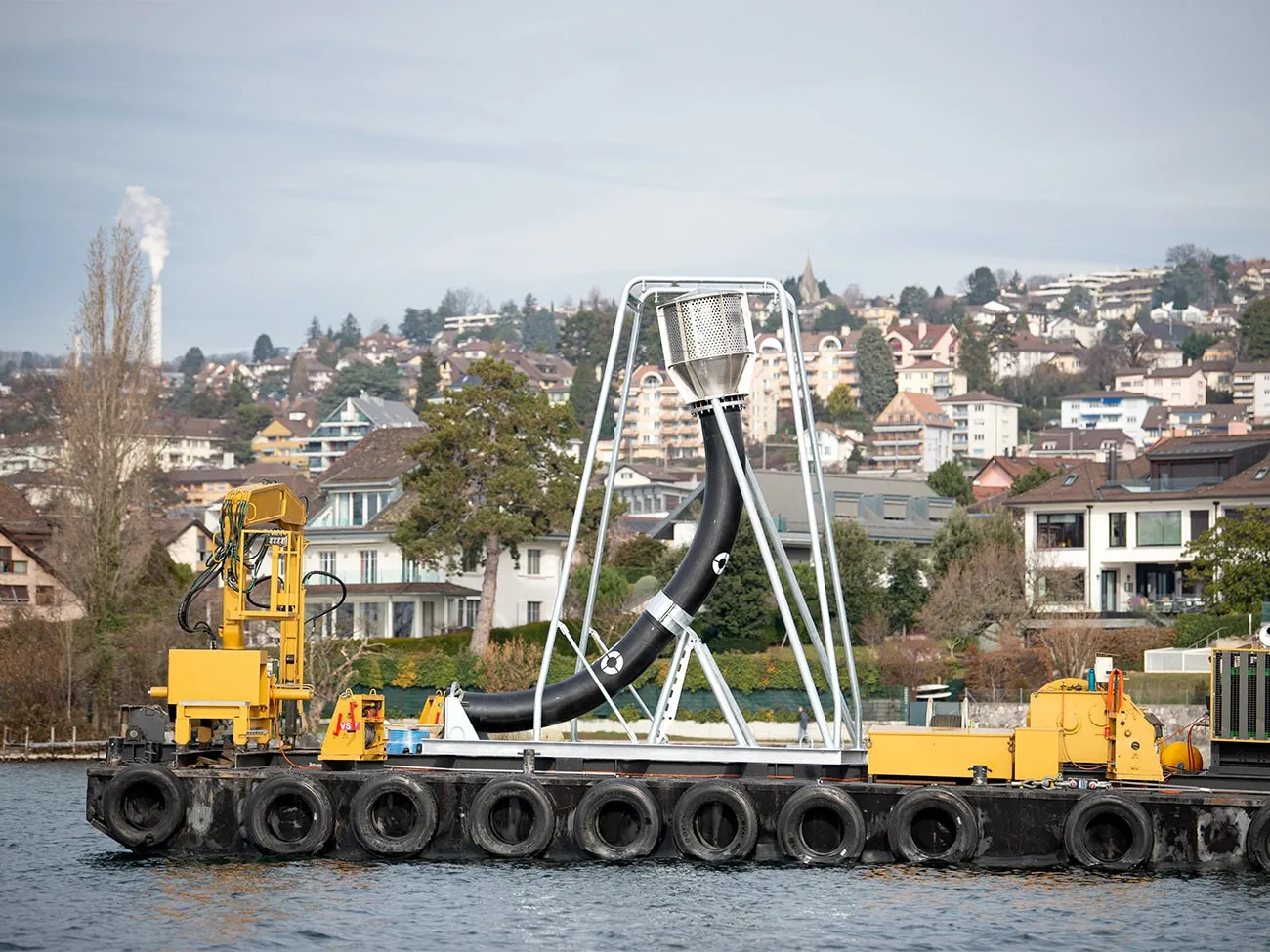
Hydrokarst Swiss, the company responsible for the installation, welded the pipe lengths supplied by AGRU into intake and outfall pipelines in the Rhône delta, at the mouth of France’s largest river by flow. AGRU supplied impressive special components, including 6-metre-high pressed bends, which are characterised by very low flow resistance. The pre-assembled pipeline was fitted with concrete ballast and towed across 20 km of open water to the site. To prevent kinking, specialist divers lowered the pipelines in an S-shaped curve to a depth of 80 m. The water temperature there remains very low throughout the year, almost constant at between 4° and 8° Celsius, making it ideal for operating a heat pump.
Markus Ebster, Head of BU XXL Piping Systems, says: “Competition for this exciting project was fierce. AGRU stood out for its quality, engineering and technical support during planning and implementation. We were able to convince the planner of the advantages of our extruded, solid-wall plastic pipes over the GRP pipes originally planned, even before work began. The end of fossil fuels is in sight, and AGRU supplies engineering-plastic technology for a climate-neutral energy supply.”
Question about this story? Ask your question
Keep following this
Get an email when a new story is published. No account needed.
- SubjectWater infrastructure







