









Unique combination of sealing principles makes self-closing barrier watertight
Text Roel van GilsImage Trelleborg Infrastructure
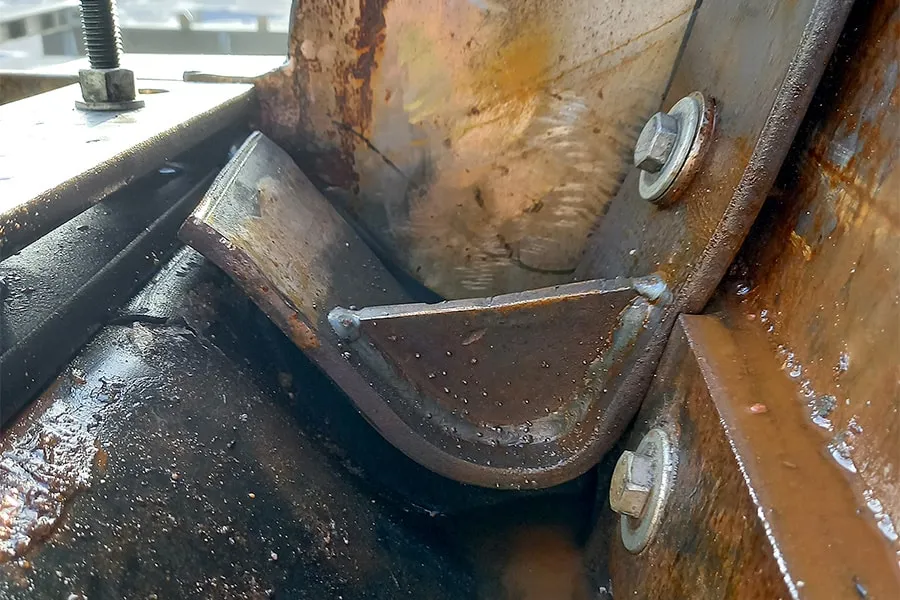
For Trelleborg Infrastructure, making a flood defence watertight is, so to speak, ‘all in a day’s work’. That is not the case, however, for the Vlotterkering® at the Steyl, Maashoek dike reinforcement project, where different forces are at play, literally and figuratively. Even so, Trelleborg’s experts have developed a bespoke rubber seal for this ‘tour de force’, using a combination of sealing principles never seen before.
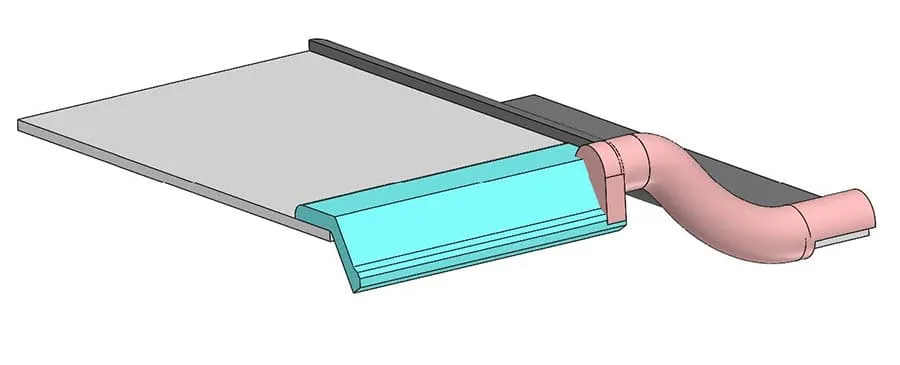
The Vlotterkering® at Steyl: Maashoek consists of a series of steel gates that rise autonomously from a concrete trough as the water level rises. “Hollandia Infra, as a member of the Dijkzone Alliantie, asked us to advise on the sealing principles needed to make the barrier sufficiently watertight,” begins Bob Rijnders, Global Sales Manager at Trelleborg. “There are basically three different rubber seals: between the steel gates, at the bottom between the gates and the fixed trough structure, and seals for the corners.”
Challenging junctions
Trelleborg is used to producing bespoke rubber seals. “The products we supply are not available off the shelf,” says Olivier Schuringa, Design Engineer at Trelleborg Infrastructure. “We are confident enough to work with the client on a project like this, in this case Hollandia Infra, to develop a design that will make an asset such as the Vlotterkering® sufficiently watertight. That is what we do well, and where our added value lies.” Even so, Trelleborg’s Design Engineers had to apply considerable thought and calculation to make the challenging junctions, particularly at the corners, watertight in accordance with the requirements set by Waterschap Limburg.
Corner solution
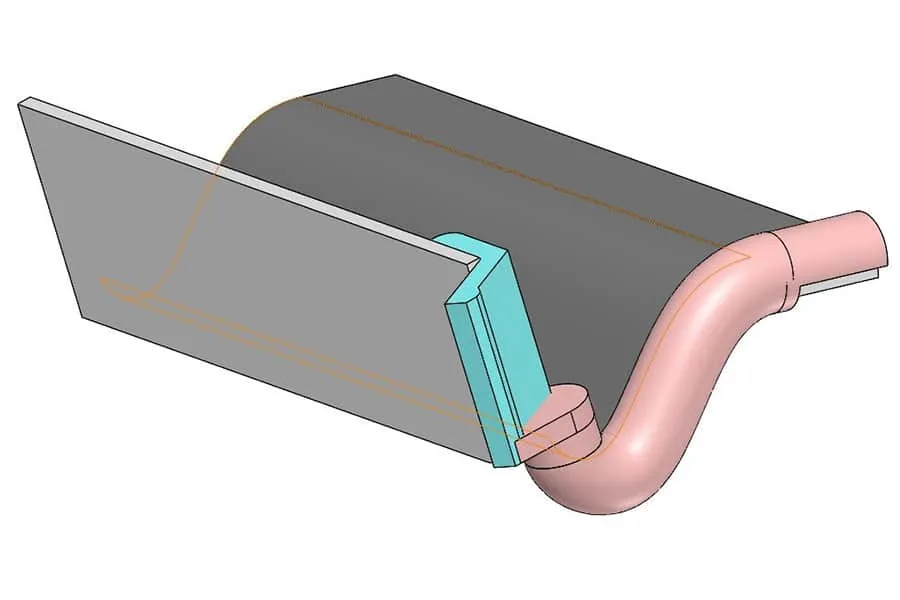
Trelleborg supplies several types of seal. “For the Vlotterkering®, we combine two sealing principles: a membrane seal and a self-activating seal,” explains Bob. Olivier adds: “What made this project special was that Hollandia Infra brought us in at an early stage, allowing us to optimise the design together. The result is a membrane seal between the concrete trough and the gates, while a different type of membrane seal, able to accommodate more movement, was chosen between the gates. We have solved the sealing at the corners with a combination of a membrane seal and a lip seal, together with a flexible ‘cord’ that is compressed as the gate rises, thereby creating the seal.” The compression of the corner piece required greater precision than initially expected. Ensuring the ‘cord’ was compressed evenly across the sealing surface was therefore a challenge in itself, but the combined expertise of Trelleborg and Hollandia Infra resulted in a robust design.”
A fine collaboration
The sealing methods were extensively tested in a mock-up. “We carried out numerous tests, each time refining the concept further,” Bob recalls. “It was a fine collaboration between Hollandia Infra’s expertise and project-specific design, Trelleborg Infrastructure’s theoretical and practical knowledge of rubber, and the designers’ problem-solving approach.” Trelleborg will also handle installation of the seals. “We have been involved in the project from design through to implementation. The seals are supplied in sections. Where necessary, the connecting pieces are measured and vulcanised on site in accordance with the design, so that the different types of rubber seal ultimately form one integrated system with a service life at least equal to that of the flood defence.”
Een zakelijke vraag aan Trelleborg Ridderkerk B.V.? Get in touch
Who worked on Dijkversterking Steyl-Maashoek
- combinantHollandia InfraIn this story

Keep following this
Get an email when a new story is published. No account needed.
- ProjectDijkversterking Steyl-Maashoek
- ThemeFlood protection and climate-resilient water management
- SubjectWater infrastructure
- CompanyTrelleborg Ridderkerk B.V.
- CompanyHollandia Infra







