









Underwater robots are gaining ground, including in the infrastructure sector
Text Roel van Gils Images DISA International
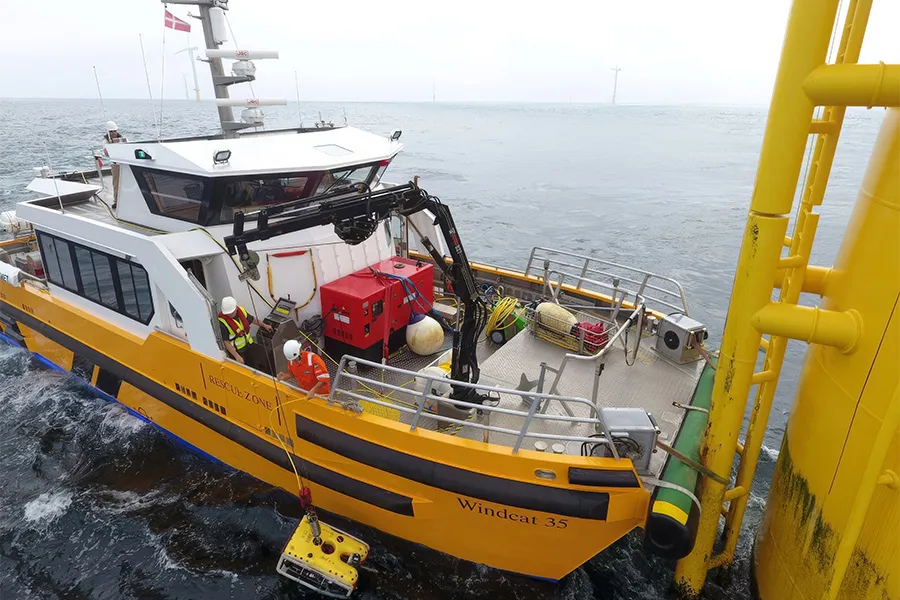
A leading provider of marine and underwater services for civil engineering, offshore wind, oil & gas and shipwreck recovery, DISA International has been using Remotely Operated Vehicles (ROVs) since 2006. These unmanned, remotely controlled underwater robots are designed and built entirely in-house. Managing director Didier de Graaff gives us a behind-the-scenes look at this high-tech part of the business and highlights the increasingly important role ROVs are playing in civil engineering.
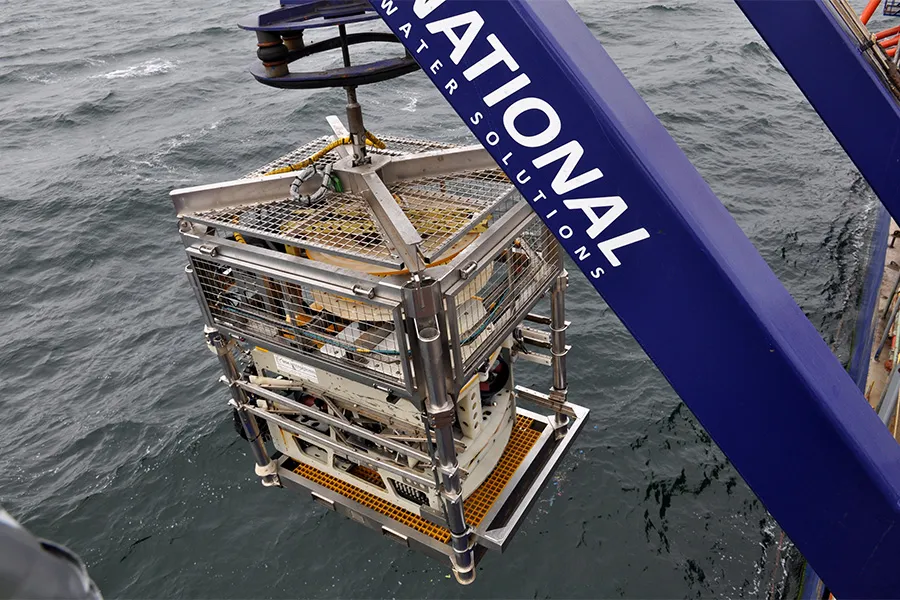
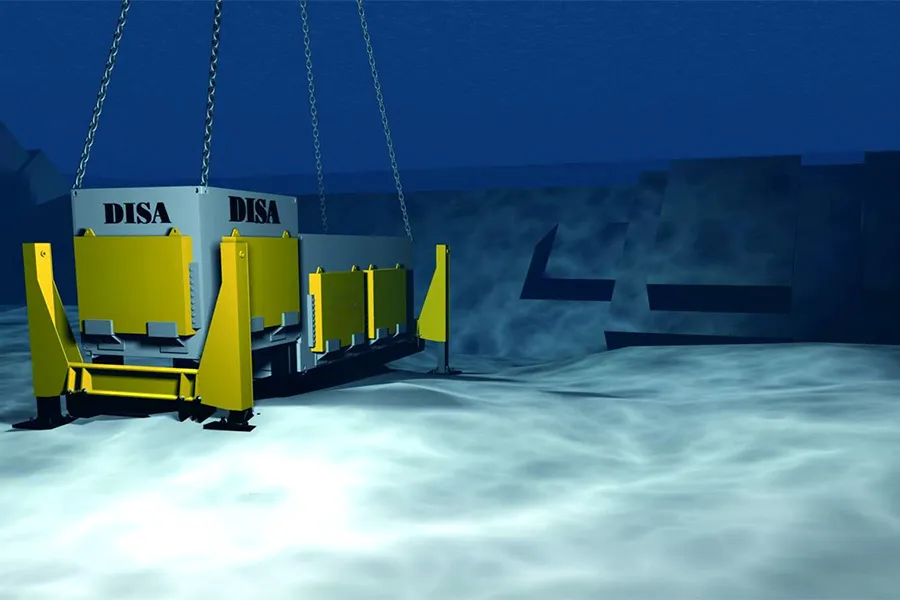
An ROV is essentially an underwater robot controlled by cable from the surface, whether from a quay, vessel or platform. Depending on the configuration, it is equipped with cameras, remotely controlled robotic arms (manipulators), sonar systems and other sensors, enabling it to collect images and data at great depths and in environments that are dangerous or inaccessible to human divers. DISA International developed its first ROV in 2006 to support its subsea operations: the LEDI Subsea Drilling. “It is a fully remotely operated underwater drilling unit. The unit is designed for horizontal directional drilling from the seabed, allowing another cable, chain or wire to be laid beneath wrecks, pipelines and cables, as well as for installing anchors on the seabed,” De Graaff explains.
Dedicated ROV department
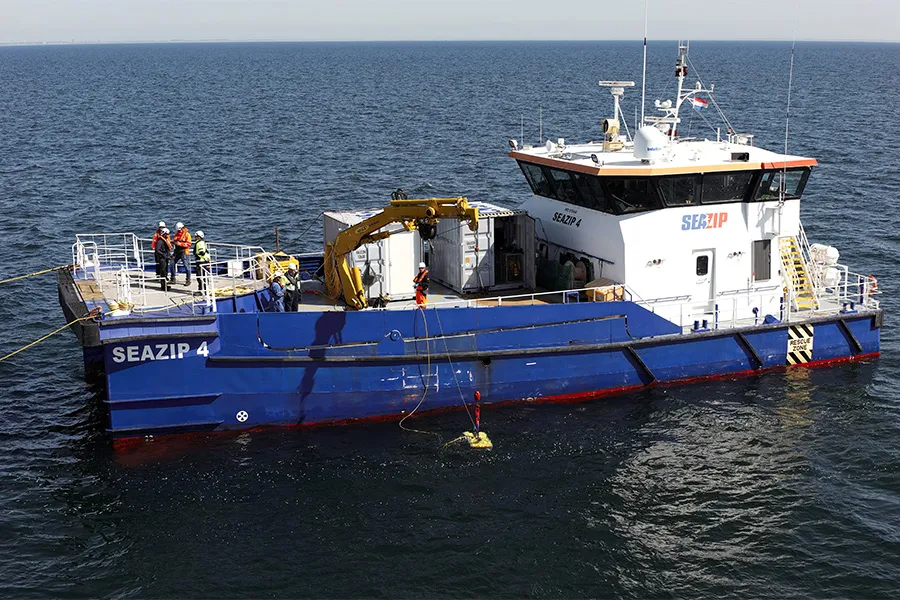
An ROV is an indispensable tool for underwater surveys and operations where safety and efficiency come first. DISA International has extensive experience operating and maintaining ROVs, and even set up its own ROV department in 2011. “All we do is operate ROVs and develop tooling, large and small, to support our underwater operations,” says De Graaff. “And all of this is driven by our ambition to carry out as much work as possible without divers.” DISA now has a wide range of subsea tooling available for all kinds of operations. According to De Graaff, such equipment is increasingly being used in ‘standard’ underwater operations in civil engineering too. For this purpose, DISA International has acquired several compact units, including the SEAEYE PANTHER, the SEAEYE LYNX, the SEAEYE COUGAR, the SEAEYE FALCON and the VIDEORAY PRO4. “These units make it easy to carry out work, measurements and visual or sonar inspections. And with our various multibeam systems and sub-bottom profilers, we can create accurate 3D images of the seabed, quay walls and banks.”
Drone solutions
DISA International has built up considerable experience with ROVs, but the company also has a strong presence in the air. “We have been a shareholder in SKEYE, a leading expert in aerial drone solutions, since 2022, and have integrated its innovative services into our portfolio,” says De Graaff. “From its offices in the Netherlands, Romania and Great Britain, the company provides advanced aerial support solutions, including geographic data collection, industrial inspections, premium imagery and remotely piloted aerial operations approved by LUC. Combined with ROVs, these technologies help us carry out our work ever more efficiently and safely. Safety is our top priority. Our strong track record in this area reflects that, as does our certification at level 4 of the Safety Culture Ladder (SCL).”
Have a business enquiry for DISA International? Get in touch
Companies in this story
Keep following this
Get an email when a new story is published. No account needed.
- SubjectWater infrastructure
- CompanyDISA International







