









The Netherlands’ most sustainable cast-iron drinking water pipeline installed in Zevenhuizen
Text Armand Landman Image Saint Gobain PAM
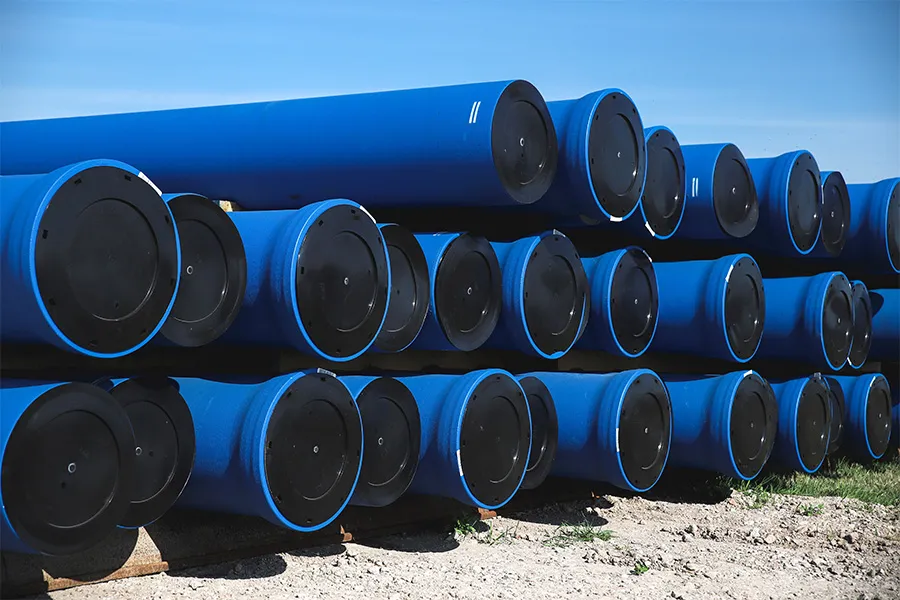
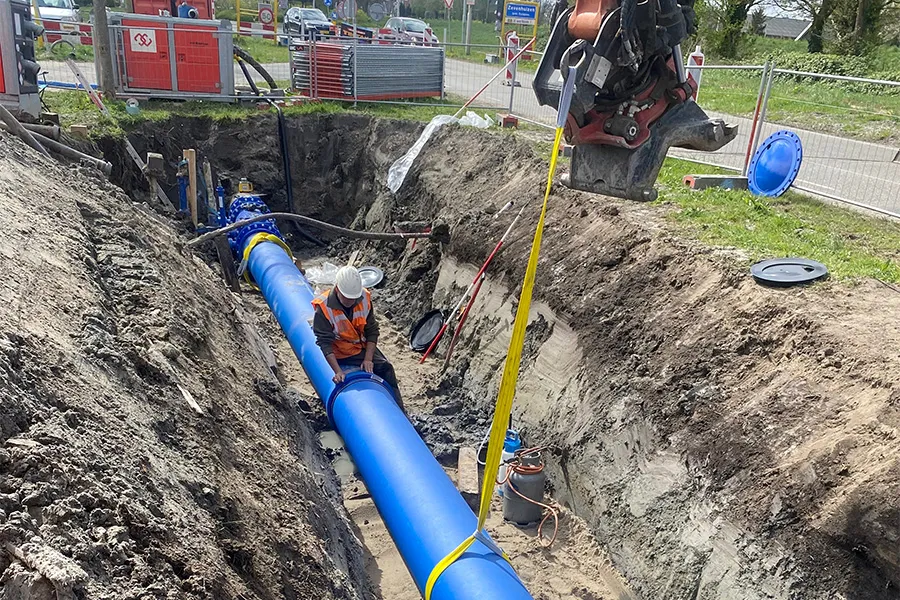
In the Swanladriehoek development area (Zevenhuizen, municipality of Zuidplas), Dunea has replaced an existing water transmission pipeline with a new ductile iron pipeline. Working with Saint-Gobain PAM, it opted for a package of measures to reduce environmental impact across the entire supply chain: from production using 100% secondary material and renewable energy to HVO transport and digital traceability.
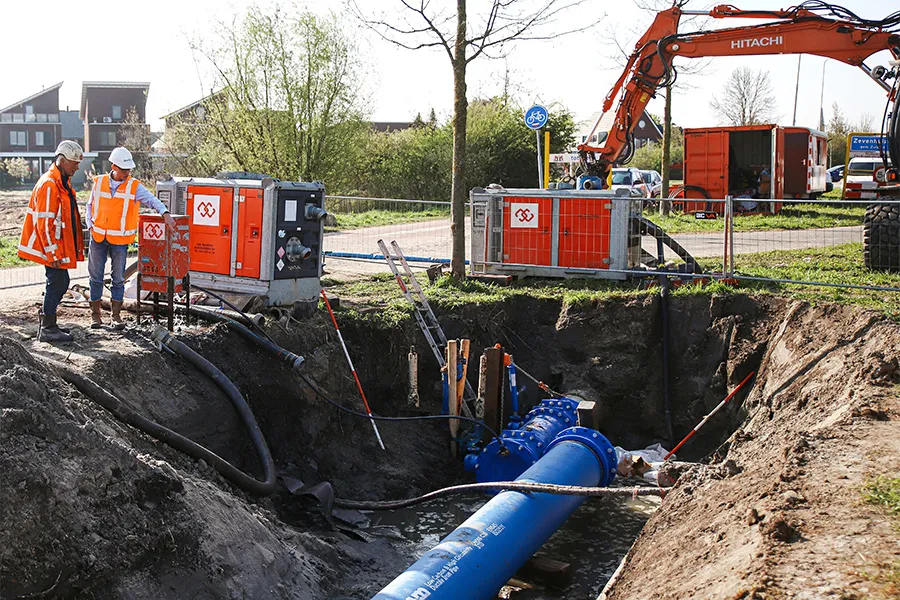
The replacement of the transmission pipeline is part of the Swanladriehoek development, where around 200 homes and sports facilities are being built. As the old pipeline would have crossed the new route, it was decided to replace it along a stretch of more than 800 metres. This allows Dunea to combine the necessary rerouting with a proactive replacement policy, preventing disruption and duplicate work in the future.
Work began in March, and the first section is now in service. The design took careful account of the surrounding area: 63 of the 67 trees along the route could be retained, and a phased approach was used for the temporary closure of a cycle path to minimise diversions. Trial trenches were excavated using an electric excavator.
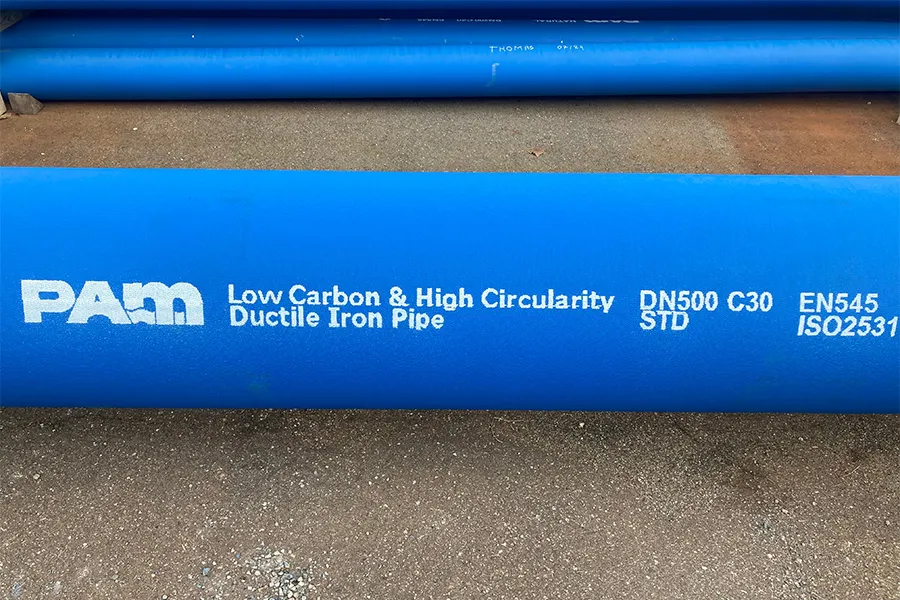
Materials and production: 100% secondary material, 60% less CO₂
At the heart of the pilot is the use of DN500 ductile iron pipes, made in an electric furnace from 100% secondary raw materials, including around 40% recycled scrap and residual materials from previous casting processes. Combined with a Power Purchasing Agreement (PPA) for electricity and a Biogas Purchasing Agreement (BPA) for heat treatment, total production emissions fall by around 60% compared with conventional blast furnace production (and ~20% compared with cupola production). For this project, that means approximately 140 tonnes of CO2 emissions avoided during the production phase.
“This project shows that cast iron and sustainability go hand in hand,” says Marloes Meer, Managing Director of Saint-Gobain PAM Nederland. “Using 100 per cent secondary material and renewable energy delivers substantial CO2 savings, without compromising on quality, service life or the hygiene requirements for drinking water.”
Logistics and construction
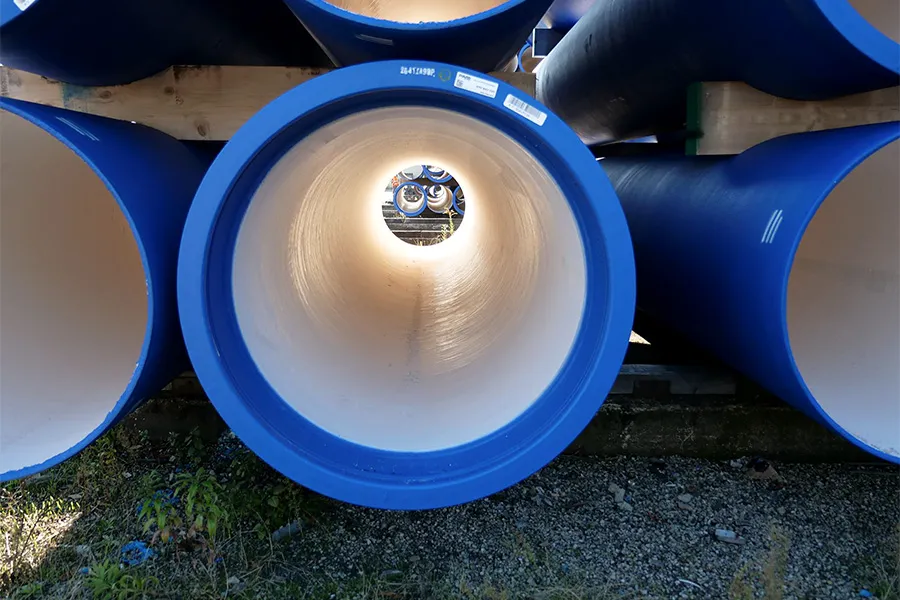
The pipes were transported from the factory in Pont-à-Mousson (FR) by truck running on HVO biofuel. This step, part of PAM’s Blueway transport concept, cuts logistics-related CO2 emissions by around 83% compared with conventional diesel transport. On site, the work was carefully phased, with short closures agreed with the local community, including a local sports club, to maintain access and safety.
All pipes supplied are traceable via PAM Track: a QR code or data matrix code links the physical pipes to digital project data, including location, batch and specifications. Pipes are scanned with a smartphone during transport, storage and installation. Dunea has lifetime access to the project database, including GPS positions.
“For network operators, this is worth its weight in gold,” says Meer. “You lay the foundations for asset management and faster maintenance right from installation. It also improves installation security: you can see exactly what is where.”
CSR: policy put into practice on site
For Saint-Gobain PAM, the pilot is a practical example of corporate social responsibility (CSR). The choices around circular raw materials, renewable energy, low-emission transport and data-driven management align with its broader CSR strategy: reducing environmental impact, ensuring safe and healthy working conditions, and fostering fair, transparent supply chain partnerships.
Meer: “Our mission, ‘Making the world a better home’, means reducing impact throughout the entire lifecycle: design for circularity, smarter production, cleaner transport and tools that make operations more sustainable. This project shows that an integrated approach like this works, and can be scaled up.”
Validation: LCA and certification
The environmental benefits have been substantiated by a Life Cycle Assessment (LCA) in accordance with ISO 14040/44 and EN 15804+A2/PCR 2019:14. Bureau Veritas certified the processes, material origins and compliance with EN 545. Energy certificates (PPA/BPA) and a Blueway report on transport emissions are also available. Transparency and third-party verification are essential to make claims comparable and verifiable.
The pilot in Zevenhuizen serves as proof of concept for a broader, modular low-carbon offering from PAM in Europe. At the same time, the parent company is working to further electrify its melting processes, with the aim of structurally reducing direct emissions.
“Our ambition is clear,” Meer concludes. “Cast-iron drinking water pipelines will remain the backbone of safe, reliable networks. By combining technology and supply chain collaboration with our CSR objectives, we are making that backbone measurably more sustainable.”
Question about this story? Ask your question
Keep following this
Get an email when a new story is published. No account needed.
- SubjectWater infrastructure







